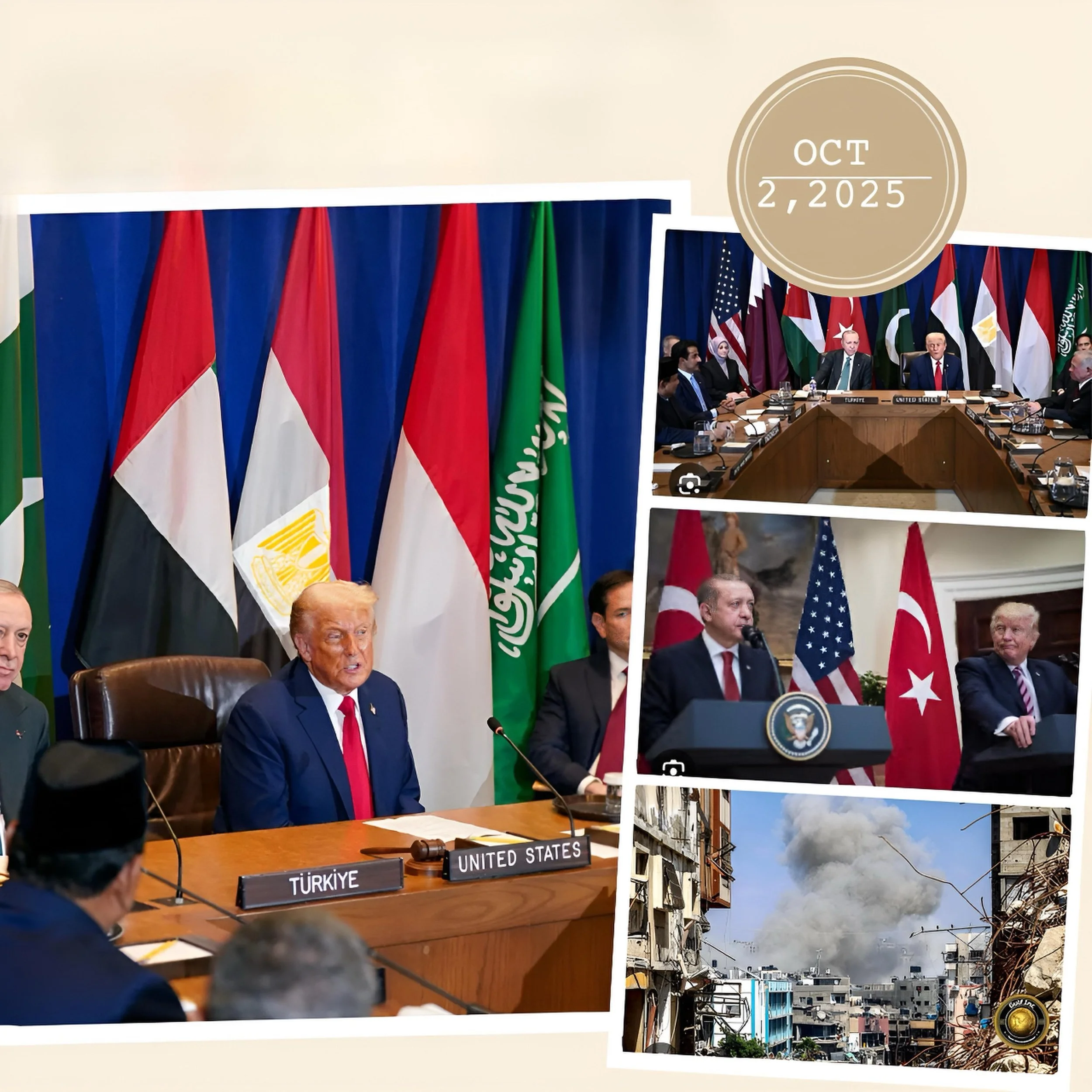
Erdogan’s White House Visit: Key Notes and Insights on Gaza Crisis and Diplomatic Implications
Introduction
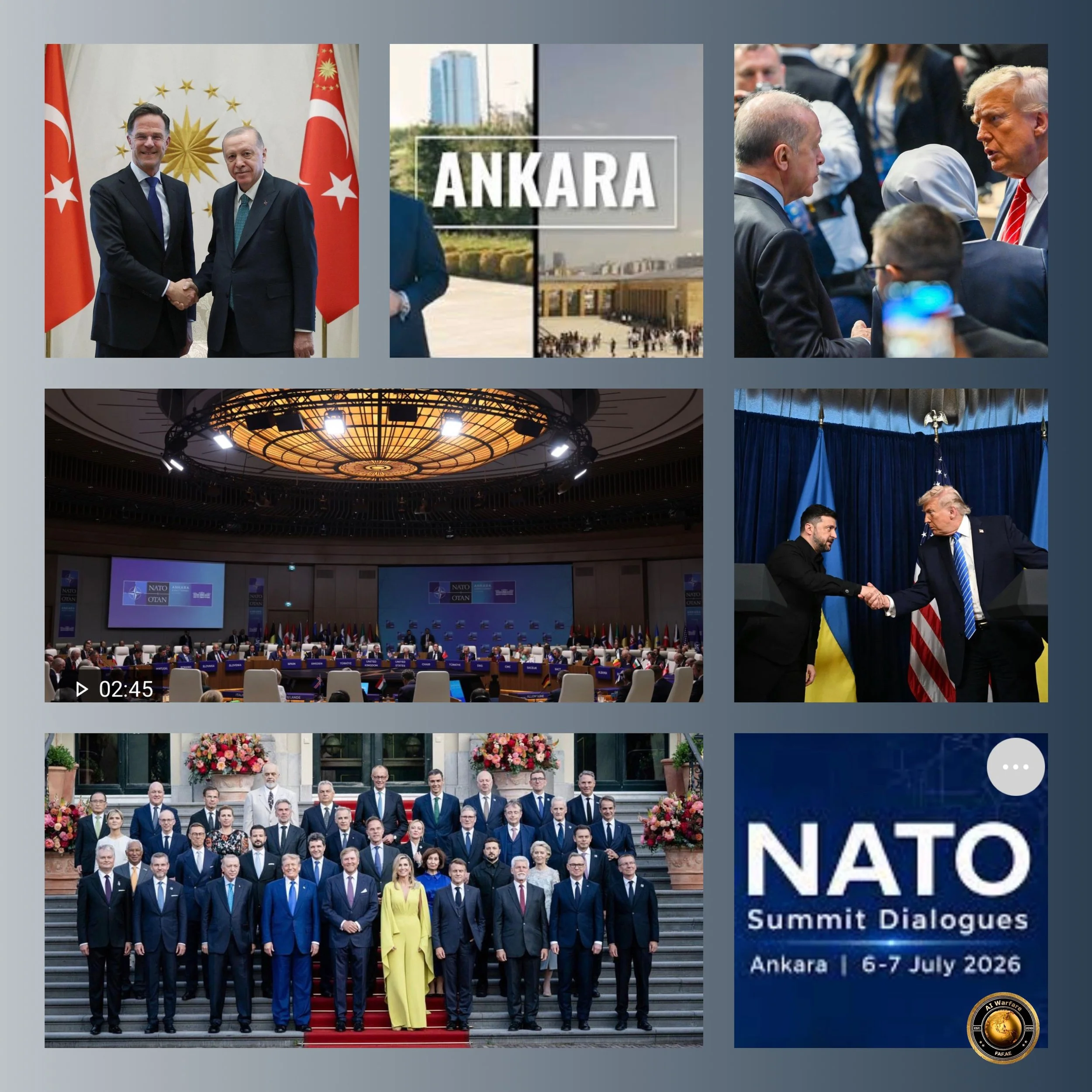
Turkish President Recep Tayyip Erdogan’s visit to the White House on September 25, 2025, marked his first meeting with President Donald Trump in six years and resulted in several significant developments across defense, trade, and regional security issues.
Key Outcomes from the Meeting
Defense Cooperation Breakthrough
The most significant development centered on military sales and sanctions relief.
Trump indicated strong willingness to lift Countering America’s Adversaries Through Sanctions Act (CAATSA) sanctions imposed on Turkey in 2020 and potentially allow Turkey back into the F-35 fighter jet program.
Trump stated optimistically: “He needs certain things, and we need certain things, and we’re going to come to a conclusion. You’ll know by the end of the day”.
The sanctions were originally imposed after Turkey purchased Russia’s S-400 surface-to-air missile defense system, leading to Turkey’s removal from the F-35 program due to concerns that Russian technology could compromise sensitive F-35 capabilities.
Major Commercial Deals
The visit produced substantial economic agreements, including a memorandum of understanding for civilian nuclear energy cooperation.
Most notably, Turkish Airlines announced a massive aircraft purchase from Boeing - up to 225 jets worth tens of billions of dollars, including 75 Boeing 787 aircraft and up to 150 Boeing 737 MAX planes.
This deal represents a significant step toward the leaders’ shared goal of reaching $100 billion in bilateral trade volume[reuters].
Syria Policy Alignment
Trump and Erdogan demonstrated unprecedented alignment on Syria policy.
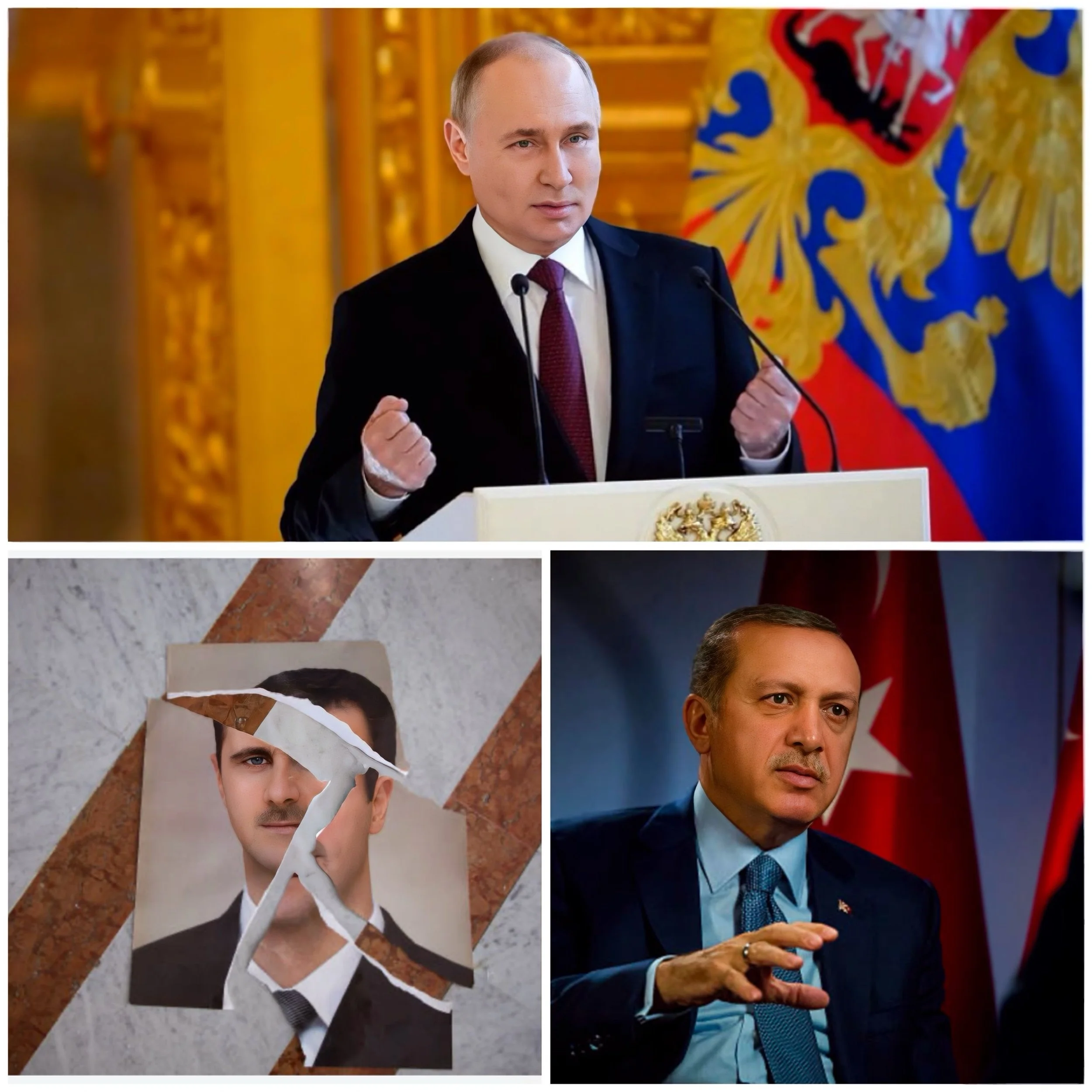
Trump acknowledged what he termed Turkey’s “victory” in Syria following the fall of Bashar al-Assad’s government, and both leaders supported the integration of U.S.-backed Syrian Democratic Forces (SDF) into the Syrian military structure.
U.S. Ambassador to Turkey Tom Barrack suggested this integration could be substantially achieved by the end of 2025.
The Gaza “Understanding” Explained
What Erdogan Meant by “Understanding”
On his return flight from Washington, Erdogan revealed the core of what he called a “shared understanding” with Trump on Gaza.
Speaking to journalists, Erdogan stated: “We explained how to first achieve a ceasefire in Gaza and across all of Palestine, and then move toward lasting peace. There was a shared understanding on this.”
The Turkish president emphasized that Trump acknowledged during their meeting “the need to end fighting in Gaza and reach lasting peace.”
Erdogan described their discussion as outlining a step-by-step approach: first establishing a ceasefire, then building toward permanent peace through a two-state solution.
Two-State Solution as Foundation
Central to this understanding was both leaders’ recognition that a two-state solution represents “the formula for lasting peace” in the Middle East.
Erdogan stressed that “the current situation cannot continue” and noted that “Mr. Trump is also aware that things cannot continue this way.”
This marks a major diplomatic step, as it shows Trump’s willingness to engage with the Palestinian issue despite his strong support for Israel.
Erdogan’s Vision for Gaza Peace
Erdogan outlined Turkey’s main goal as ending what he called “the massacres in Gaza as soon as possible.”
He emphasized that Turkey would keep Gaza on its agenda “until a just and lasting peace comes to Gaza.”
The Turkish leader highlighted growing global support for Palestine, noting that over 150 countries now recognize Palestinian statehood, including recent recognitions by the UK and France.
Strategic Context and Implications
Personal Diplomacy
The meeting showcased the personal relationship between Trump and Erdogan, with Trump calling the Turkish leader “a highly respected man” who is “very much respected in his country and all throughout Europe and throughout the world”.
This personal chemistry proved crucial in advancing discussions on sensitive issues that had stalled during the Biden administration.
Regional Realignment
The visit reflects broader regional realignments, with both leaders sharing similar approaches to Syria, Ukraine, and Middle East conflicts.
Trump appears to view Erdogan as a valuable mediator who could help resolve conflicts in both Gaza and Ukraine.
Their alignment on Syria policy, in particular, represents a significant shift from previous tensions over U.S. support for Kurdish forces.
Conclusion
Congressional Challenges Ahead
Despite President Donald Trump’s optimistic signals about potential F-35 fighter jet sales, Congress still opposes them significantly.
U.S. law clearly bans the transfer of F-35s to Turkey as long as the country keeps its Russian S-400 missile defense systems, which raise security concerns.
Bipartisan groups in Congress, including members from both the House and Senate, have expressed strong objections to the F-35 sales.
They point out Turkey’s continued purchase and deployment of Russian S-400 systems, which could threaten the security of the F-35 program, along with worries about Turkey’s human rights record, especially regarding recent crackdowns on dissent and press freedom.
Meanwhile, Turkish President Recep Tayyip Erdogan has talked about a recent “understanding' reached with Trump on the Gaza conflict, signaling a strategic shift.
Erdogan’s effort to position Turkey as a key mediator in Middle East peace talks has gained momentum, especially after hosting high-profile international conferences. This diplomatic stance helps Turkey increase its influence in regional matters.
At the same time, Erdogan has achieved notable progress in defense cooperation and trade ties with the United States and other Western nations, including agreements on military procurement and economic partnerships.
However, turning these diplomatic and defense deals into actual policy changes faces significant challenges within Washington’s complex and often partisan political system.
Skepticism in Congress, bureaucratic delays, and competing national security priorities could hinder the implementation of these initiatives.