Iran’s Perilous Desperation: A Comprehensive Examination of the Twelve-Day War in June 2025 and Its Consequences for Nuclear Stability
Executive Summary
In June 2025, the world witnessed a harrowing conflict known as the Twelve-Day War, which unfolded in quick succession and exposed the extreme lengths to which Iran would go in pursuit of its geopolitical ambitions.
This brief yet intense military engagement, characterized by rapid troop movements and strategic strikes, sent shockwaves across the region and raised critical questions about nuclear security.
During those twelve days, Iran, feeling cornered by intensified international sanctions and diplomatic isolation, launched a series of aggressive maneuvers aimed at both asserting its influence and diverting attention from internal turmoil.
The conflict drew in neighboring states and global powers, leading to a complex battlefield environment where conventional warfare collided with the underlying threat of nuclear proliferation.
As the war escalated, concerns grew over Iran's nuclear program, particularly in light of its history of secrecy and defiance regarding international oversight.
Observers noted a significant uptick in rhetoric surrounding Iran's nuclear capabilities, prompting fears that the conflict could serve as a pretext for a hasty advancement in nuclear weapons development.
The implications of the Twelve-Day War were profound, as they not only destabilized the already fragile Middle Eastern landscape but also underscored the urgent need for renewed dialogue about nuclear governance.
The events of those turbulent days are a stark reminder of the potential ramifications that arise from a nation driven by desperation, particularly when it comes to the delicate balance of nuclear power in a volatile region.
Introduction
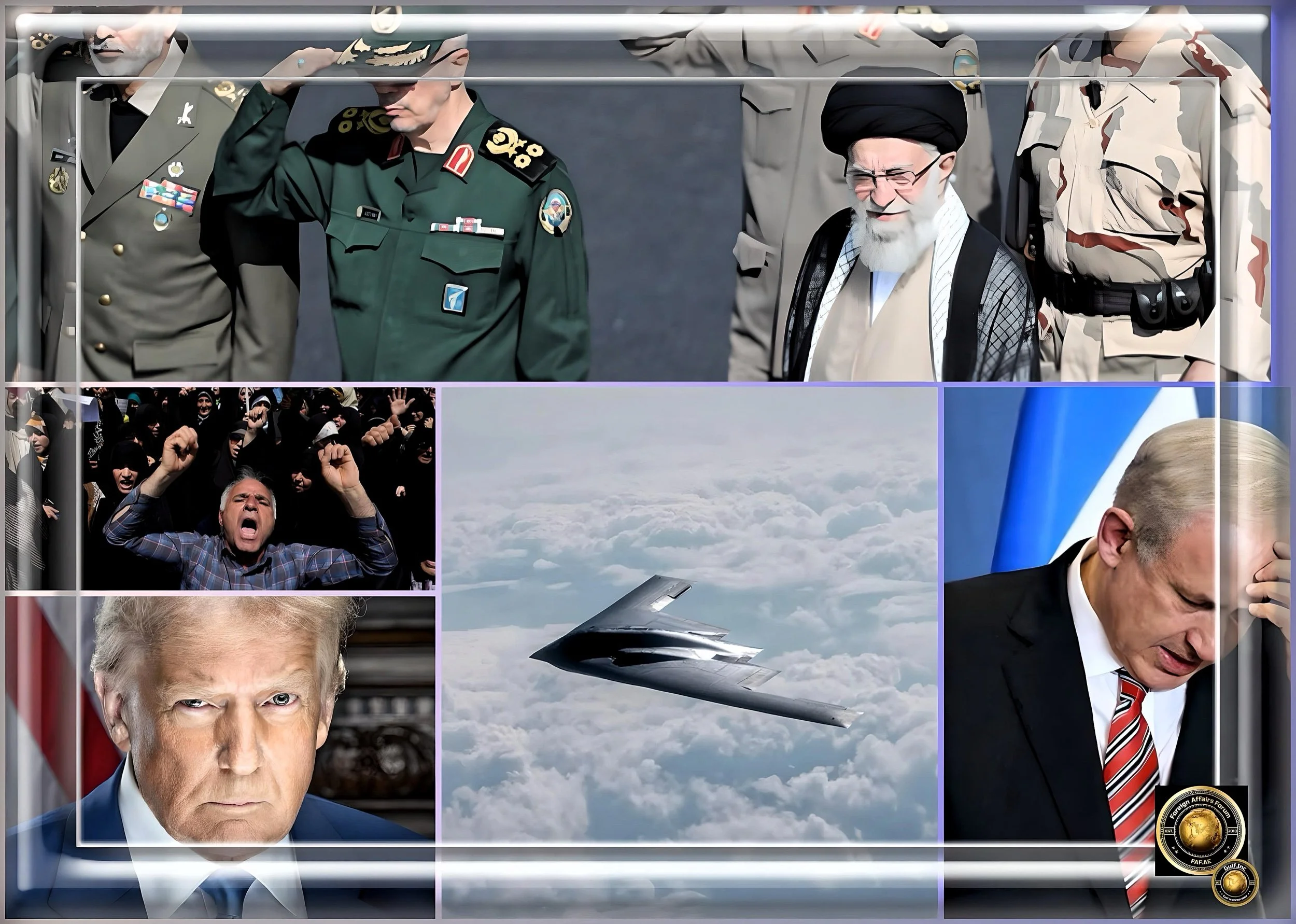
The June 2025 conflict between Israel, Iran, and the United States—now known as the “Twelve-Day War”—represents a pivotal moment in Middle Eastern geopolitics and nuclear proliferation dynamics.
This brief but intense military confrontation has fundamentally altered the regional balance of power while simultaneously heightening concerns about Iran’s nuclear ambitions.
Rather than permanently resolving the Iranian nuclear threat, the strikes may have inadvertently accelerated the very outcome they sought to prevent: a more desperate and potentially nuclear-armed Iranian regime.
The Strategic Context and Escalation
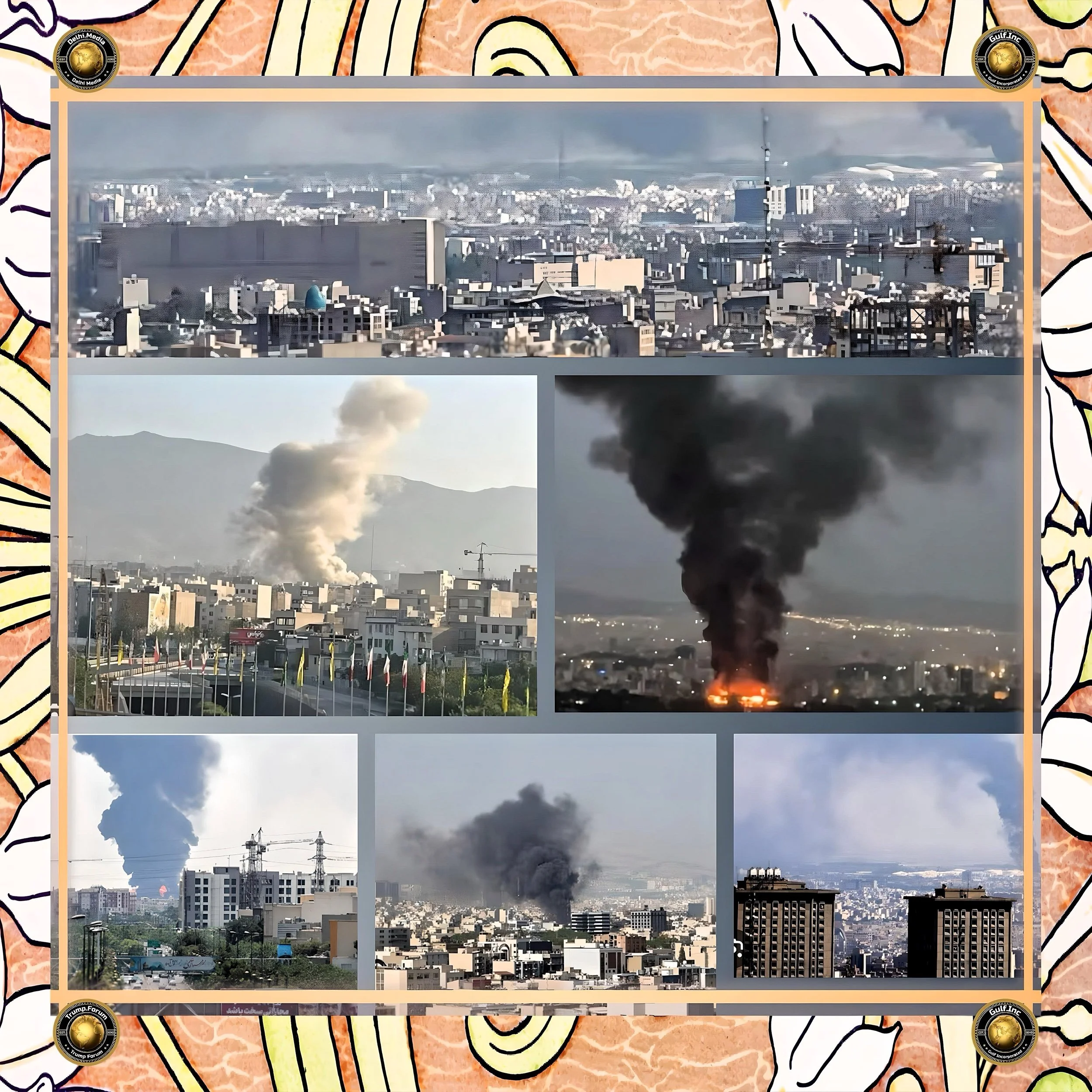
The conflict erupted on June 13, 2025, when Israel launched Operation Rising Lion, conducting unprecedented strikes across Iranian territory targeting nuclear facilities, military installations, and key personnel.
This marked the culmination of years of escalating tensions, failed diplomatic negotiations, and Iran’s steady progress toward nuclear weapons capability.
By May 2025, Iran had accumulated over 408 kilograms of uranium enriched to 60%—just one technical step away from weapons-grade material.
The immediate trigger was the International Atomic Energy Agency’s (IAEA) June 12 declaration that Iran was non-compliant with its nuclear obligations for the first time in two decades.
Intelligence assessments suggested Iran was potentially weeks away from acquiring nuclear weapons components, prompting Israel to act preemptively.
The Israeli operation was followed by direct U.S. military intervention on June 21, when American forces bombed three key Iranian nuclear sites using massive bunker-busting ordnance.
Scholarly Analysis of Military Effectiveness
Academic assessments of the conflict reveal a complex picture of both tactical success and strategic limitations.
The Sasakawa Peace Foundation’s detailed satellite imagery analysis concluded that while the strikes inflicted “significant damage” to Iran’s nuclear infrastructure, they failed to completely eliminate the program.
The study noted that Iran’s nuclear facilities were deliberately constructed with redundancy and hardening specifically to survive such attacks.
Defense experts at the Center for Strategic and International Studies emphasized that the operation represented “the most consequential decision of Trump’s second-term presidency,” with potential to either compel Iranian negotiations or trigger wider regional conflict.
The Institute for the Study of War’s analysis highlighted that while U.S. and Israeli strikes “severely set back Iran’s enrichment capabilities,” Iran’s stockpile of enriched uranium poses a persistent long-term threat.
Research from Chatham House characterized the conflict as exposing Iran’s strategic weakness, noting that “Iran and its regional Axis of Resistance network have been severely weakened” and that Iran “has run out of good options”.
This assessment aligns with academic evaluations that Iran’s conventional deterrence capabilities have been significantly degraded, potentially pushing the regime toward nuclear weapons as a survival mechanism.
Nuclear Program Assessment: Current Capabilities and Future Prospects
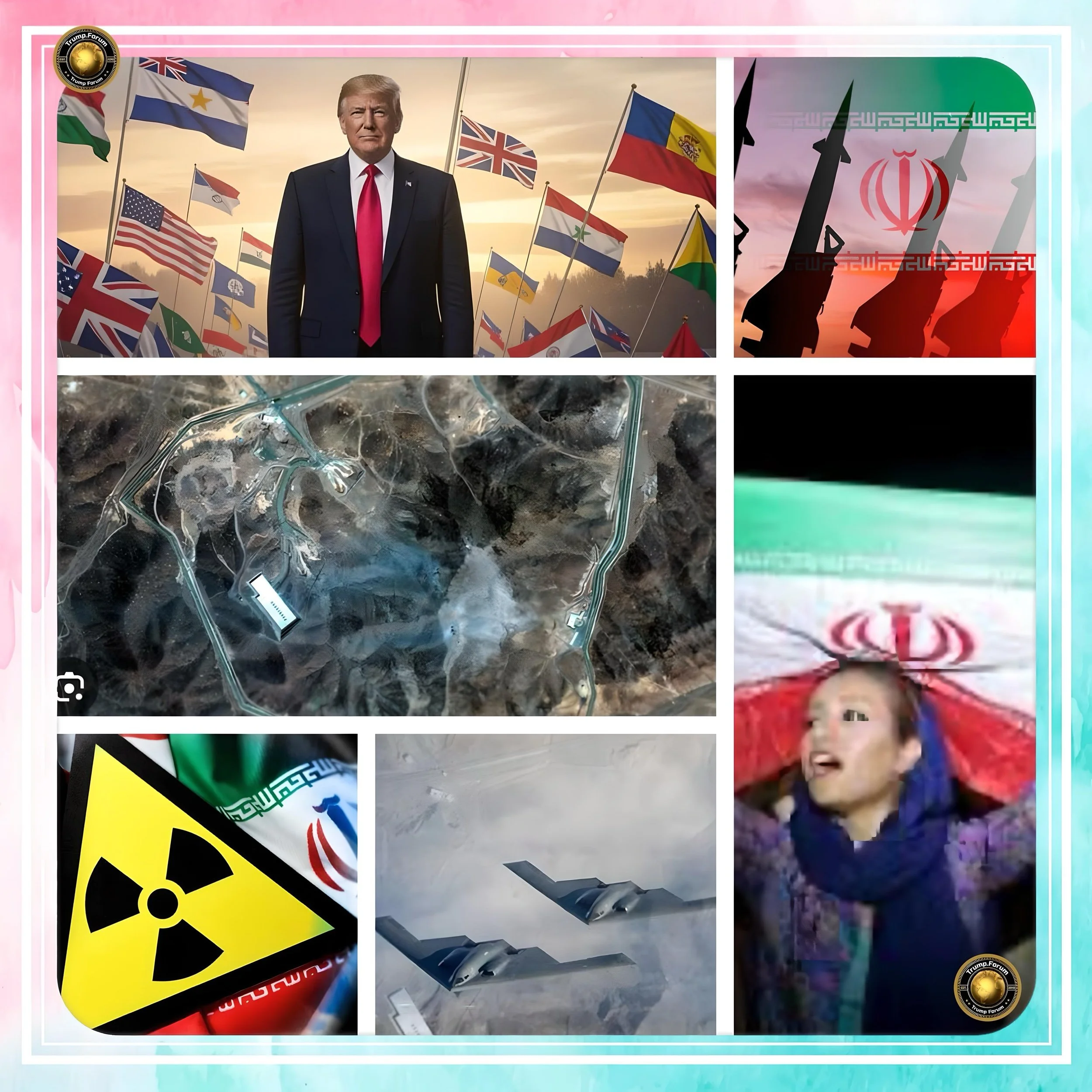
The strikes targeted Iran’s most critical nuclear infrastructure, including the Natanz fuel enrichment plant, the underground Fordow facility, and the Isfahan nuclear technology center.
Satellite analysis reveals varying degrees of damage across these sites, with some facilities completely destroyed while others retain partial operational capacity.
The Institute for Science and International Security assessed that the attacks “effectively destroyed Iran’s centrifuge enrichment program” in the short term.
However, their analysis also warned that “residual capabilities” remain, including existing uranium stockpiles and manufactured but uninstalled centrifuges.
Most critically, intelligence reports indicate that Iran successfully relocated much of its enriched uranium stockpile before the strikes, with an estimated 350+ kilograms remaining—enough material for multiple nuclear weapons.
Expert estimates on Iran’s nuclear breakout timeline vary significantly.
The U.S. Defense Intelligence Agency initially assessed that the strikes set back Iran’s program by only “a few months,” contradicting President Trump’s claims of complete destruction.
However, later Pentagon assessments suggested a longer timeframe of one to two years to restore full capabilities.
The critical variable remains Iran’s hidden stockpiles and potential covert facilities that may have escaped detection and targeting.
Iran’s Strategic Calculus: Regime Survival and Nuclear Incentives
The conflict has fundamentally altered Iran’s strategic calculations regarding nuclear weapons acquisition.
Academic analysis from the Washington Institute for Near East Policy suggests that “with its conventional deterrence diminished, Iran may go for the bomb”.
The strikes have eliminated many of the alternative deterrence mechanisms that previously allowed Iran to maintain strategic ambiguity about its nuclear intentions.
Iranian regime stability remains a crucial factor in nuclear decision-making.
Research from the Institute for National Security Studies indicates that while the regime demonstrated “internal cohesion and relatively quick recovery” from the initial strikes, “internal criticism has intensified” among hardline factions.
These voices increasingly advocate for nuclear weapons development as essential for regime survival.
The Royal United Services Institute’s analysis emphasizes that Iran is now “more incentivised than ever to pursue the ultimate deterrent”. This assessment is supported by statements from Iranian officials suggesting a shift in nuclear doctrine.
Former Foreign Minister Kamal Kharrazi’s November 2024 warning that “if an existential threat arises, Iran will modify its nuclear doctrine” appears increasingly prophetic in light of subsequent events.
Regional and International Implications
The conflict has broader implications for Middle Eastern stability and global nuclear proliferation norms.
Academic analysis from ACLED describes the war as potentially catalyzing “the region’s trajectory” toward either de-escalation or “widening conflict with regional and even global reverberations”.
The strikes have normalized attacks on nuclear facilities, potentially setting precedents for similar preemptive actions by other regional powers.
The collapse of traditional deterrence mechanisms has created what scholars term a “threshold war” scenario—a dangerous new form of conflict where nuclear powers use force to prevent adversaries from achieving nuclear status.
This dynamic creates fundamental instability, as Iran increasingly believes it cannot deter Israeli aggression without nuclear weapons, while each step toward nuclearization provokes more intense military responses.
Energy security concerns compound these strategic risks. The proximity to the Strait of Hormuz—through which nearly 20% of global oil transits—means that any Iranian retaliation could dramatically affect global energy markets.
The conflict has already triggered oil price increases of approximately 12% and raised concerns about commercial shipping in contested waters.
The Paradox of Prevention
The June 2025 strikes exemplify what security scholars identify as the “preventive war paradox”—military actions designed to prevent proliferation may instead accelerate it.
Carnegie Endowment analysis suggests that Iran’s nuclear program “was built with redundancy in mind, specifically so it could survive this type of scenario” and has “largely survived” the attacks.
Moreover, the strikes have provided Iran with stronger incentives to fear external threats and pursue nuclear deterrence.
James Baldwin’s observation that “the most dangerous creation of any society is the man who has nothing to lose” appears particularly relevant to Iran’s current predicament.
With proxy networks degraded, air defenses destroyed, and international isolation deepened, Iranian leaders may calculate that nuclear weapons represent their only viable path to regime survival.
This logic mirrors the “Pakistani model” referenced by Israeli think tanks, where nations accept extreme economic hardship to acquire nuclear deterrence.
Academic research on nuclear proliferation dynamics suggests that regimes facing existential threats often accelerate rather than abandon weapons programs when subjected to military pressure.
The strikes may have shortened rather than extended Iran’s timeline to nuclear capability by eliminating alternative security arrangements and concentrating decision-making authority among the most hardline elements of the regime.
Conclusion
An Uncertain Deterrence Landscape
The Twelve-Day War has created a fundamentally unstable strategic environment in which traditional deterrence calculations no longer apply reliably.
While the military operation achieved significant tactical objectives in degrading Iran’s nuclear infrastructure, it has simultaneously strengthened the regime’s motivations for acquiring nuclear weapons while demonstrating the limitations of conventional military solutions to proliferation challenges.
The conflict’s ultimate outcome will likely depend on factors beyond military capabilities: Iran’s internal political dynamics, the regime’s assessment of existential threats, and the international community’s ability to provide credible security guarantees.
As multiple academic assessments conclude, Iran retains sufficient residual capabilities to reconstitute its nuclear program within months to years, while possessing stronger incentives than ever to pursue the “ultimate deterrent.”
The international community now faces the challenging task of managing a potentially more dangerous Iranian regime that has been simultaneously weakened militarily but strengthened in its resolve to acquire nuclear weapons.
This paradoxical outcome underscores the complexity of using military force to prevent proliferation and suggests that the world may be entering a new and more precarious phase of nuclear competition in the Middle East.
Rather than marking the end of Iran’s nuclear ambitions, the June 2025 conflict may prove to be the beginning of their most dangerous phase—transforming a hedging strategy into an urgent survival imperative for a regime that now sees nuclear weapons as its only reliable guarantee against future attacks.