‘Crouching Tiger': Analyzing China's Militaristic Aspirations and Their Contemporary Geopolitical Consequences
Executive Summary
Peter Navarro's work, titled "Crouching Tiger," delves into the intricate and often concerning expansion of China's military capabilities and the broader geopolitical consequences that arise from this trend.
FAF intricately analyzes how China's assertive military policies reflect a strategic posture of power and influence in the Asia-Pacific region and beyond. Navarro articulates the nuances of China's militarization, discussing advancements in technology, increased defense spending, and the establishment of military bases in contested areas.
Moreover, the implications of this militarism are explored in depth, highlighting the potential threats to global stability and the balance of power.
The book underscores the reactions from other nations, particularly the United States, as they navigate the challenges posed by China’s rising assertiveness.
Through detailed examinations of military exercises, territorial disputes in the South China Sea, and diplomatic standoffs, Navarro underscores the urgent need for a reassessment of foreign policy strategies in light of this evolving landscape.
Overall, "Crouching Tiger" serves as a critical commentary on the intersection of military power and global diplomacy in contemporary times.
Foreward
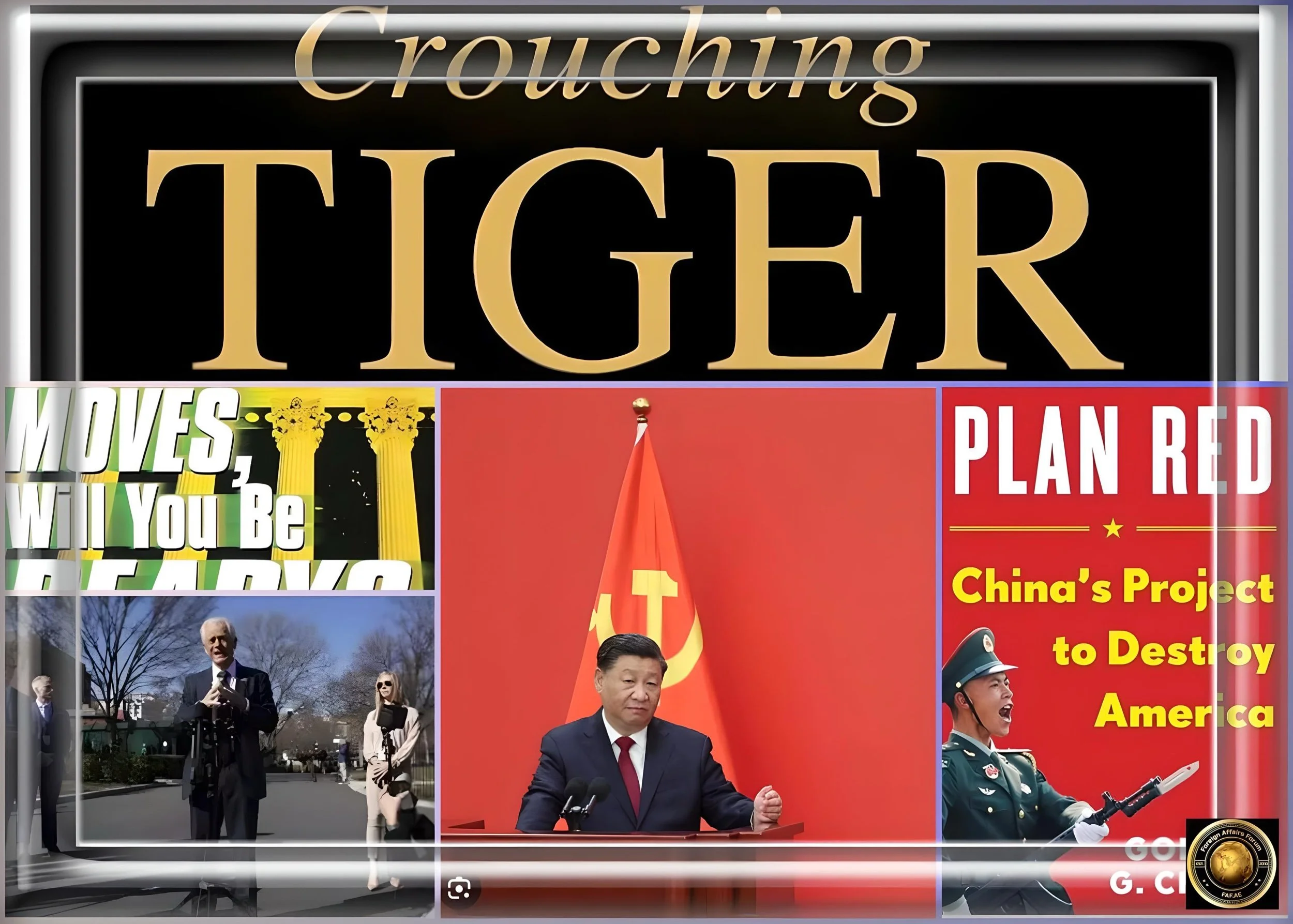
In his 2015 book, “Crouching Tiger: What China’s Militarism Means for the World,” Peter Navarro delivers an incisive examination of China’s military expansion and its ramifications for global security, making it one of the most impactful yet contentious analyses of U.S.-China relations in the 21st century.
The text encapsulates Navarro’s long-standing intellectual campaign, which portrays China as an existential threat to American hegemony and the liberal international order.
Initially dismissed as fringe, Navarro’s arguments have gained considerable traction in contemporary geopolitical discourse, influencing U.S. trade and security policy and reshaping the international dialogue on great power competition.
Core Arguments and Central Thesis
China as a Revisionist Power
Navarro posits that China embodies a “heavily armed, totalitarian regime intent on regional hegemony and global domination.”
He contextualizes China’s current assertiveness as a reaction to what he terms a “century of humiliation,” fostering a “never again” mentality that propels its military modernization and aggressive foreign policy.
This historical narrative serves as a foundation for understanding China not as a status quo power but rather as a revisionist state aiming to disrupt the global balance of power.
He categorically rejects the concept of China’s “peaceful rise,” asserting instead that “China’s rise is not peaceful, and it is not inevitable.”
This perspective critically challenges pervasive Western assumptions that economic engagement would naturally lead to political liberalization and peaceful coexistence.
Military Modernization and Asymmetric Capabilities
At the core of Navarro's analysis lies a focus on China's evolving military capabilities and strategic doctrines.
He underscores the development of advanced systems, including the “carrier killer” ballistic missiles, specifically mentioning the DF-21D and DF-26, which he argues could significantly undermine U.S. naval capabilities in the Asia-Pacific theater.
The DF-26, dubbed the “Guam Express,” represents a pivotal concern regarding China's capacity to target U.S. forces and allies at extended ranges.
Navarro emphasizes that, while China may lack the conventional military force to defeat the U.S. in direct engagements, its strategic emphasis on asymmetric capabilities—such as mass-producing cost-effective weaponry like sea mines and cruise missiles—aims to deter or complicate American military intervention during regional conflicts.
This strategy aligns with the Anti-Access/Area Denial (A2/AD) framework, designed to establish contested operational environments that inhibit U.S. force mobility.
The Concept of Non-Kinetic Warfare
A critical contribution of Navarro's work is his examination of China’s “Three Warfares” doctrine, which adopts a non-kinetic approach to conflict—encompassing psychological, media, and legal warfare.
Drawing from Sun Tzu’s maxim that “the acme of warfare is to win without firing a shot,” he argues that China has operationalized these methods to pursue strategic objectives while circumventing direct military confrontations.
The Three Warfares strategy, formally instituted by China’s Central Military Commission in 2003, represents a holistic approach aimed at undermining adversaries through means that extend beyond the realm of traditional military engagement.
Psychological warfare seeks to deter or demoralize an opponent and its civilian population, whereas media warfare is focused on shaping international narratives and public perceptions.
Legal warfare leverages international law and institutions to constrain adversaries’ actions, simultaneously legitimizing China’s own maneuvers.
Economic Dimensions of the Security Challenge
Economic Warfare and Strategic Analysis
Navarro broadens the discourse surrounding security by introducing the concept of “economic warfare.”
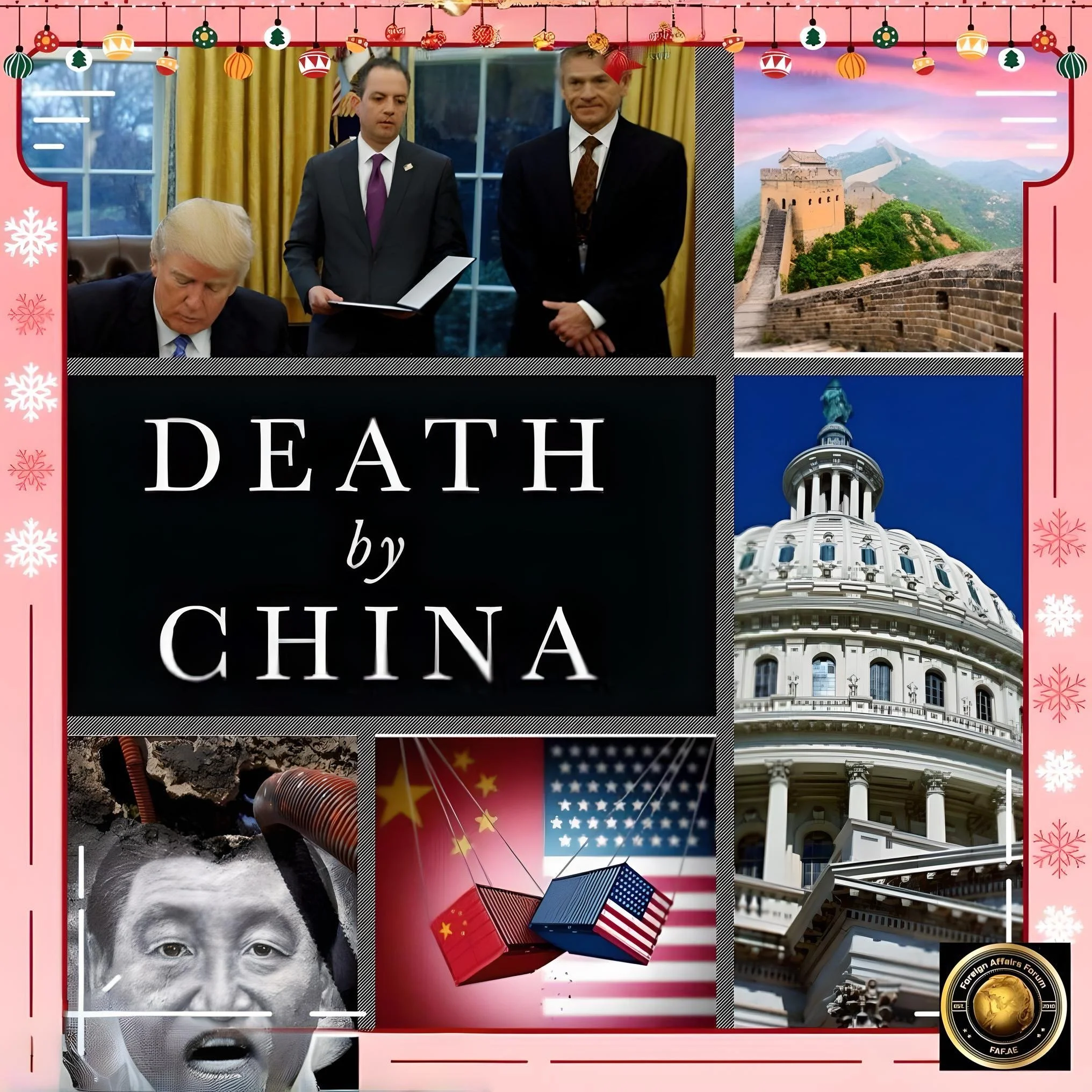
In his foundational work “Death by China,” he articulates the premise for many assertions in “Crouching Tiger,” detailing “eight pillars” or “weapons of economic destruction” China purportedly wields against the United States.
These mechanisms encompass illegal export subsidies, currency manipulation, intellectual property theft, evasion of environmental regulations, substandard worker safety protocols, import tariffs and quotas, predatory pricing practices, and protectionist measures that obstruct foreign competitors.
Navarro’s framework underscores the intersection of economic and security concerns as pivotal to his analysis. He posits that each dollar spent by Americans at Walmart on artificially low-priced Chinese imports exacerbates the threat level posed by China, as the resulting economic benefits directly underwrite China’s military enhancements.
This perspective reframes trade from a mutually beneficial exchange to a zero-sum scenario where China's economic ascent converts into tangible security risks for the United States.
Supply Chain Vulnerabilities
Central to Navarro’s argument is the issue of China's hegemony over global supply chains, which engenders significant strategic vulnerabilities for the U.S. and its allies.
He articulates concerns regarding China's monopolistic control of critical resources and manufacturing capabilities, positing that this dominance provides Beijing with significant leverage over both global supply chains and market dynamics.
Contrary to classical liberal theories that suggest economic interdependence fosters peace, Navarro argues it instead equips China with coercive tools that erode Western strategic autonomy.
Policy Recommendations and Strategic Responses
Military Strengthening
Navarro calls for a comprehensive strategy oriented around the doctrine of “peace through strength” in reaction to China’s military escalation.
His recommendations advocate for terminating technology transfers between U.S. firms and the Chinese government, enhancing and diversifying U.S. military installations in Asia, bolstering space capabilities, advancing aircraft production, and reinforcing regional alliances.
The thesis centers on the imperative of preserving U.S. military technological preeminence, especially in realms where China is developing counterbalancing capabilities.
Navarro cautions against “debilitating cutbacks” in military spending, asserting that such actions communicate a lack of American resolve regarding its “pivot to Asia.”
This perspective has significantly shaped current debates surrounding defense expenditure and military modernization trajectories.
Trade Rebalancing
A critical facet of Navarro’s framework involves what he terms “trade rebalancing,” aimed at mitigating China’s economic advantages that fuel its military progress.
He advocates for strategies to reduce the trade deficit with China, positing that purchasing fewer Chinese goods can diminish the financial resources allocated to military development.
This approach intrinsically links trade policy with national security strategies, challenging traditional economic paradigms that compartmentalize commercial and security interests.
Navarro’s notions in this domain have been influential in shaping actual policy outcomes, as evidenced by the imposition of tariffs during the Trump administration—reaching up to 25% on substantial volumes of Chinese imports.
Contemporary Geopolitical Significance and Impact
Influence on U.S. Policy
Navarro’s insights have transcended academic circles, becoming integral to U.S. strategic policy vis-à-vis China.
His roles as head of the White House National Trade Council and subsequently as Director of the Office of Trade and Manufacturing Policy during the Trump administration afforded him considerable sway over American policy towards China.
The implementation of extensive tariffs on Chinese products, some exceeding 104% in select sectors, manifests the application of Navarro's theoretical constructs.
The Biden administration, despite a differing ideological stance, has largely continued the tariff and competitive posture toward China that Navarro has significantly influenced.
This continuity suggests that Navarro’s analysis of China as a strategic rival has garnered substantial traction within the U.S. policy framework, surpassing partisan divides.
Global Strategic Competition
Navarro's analytical lens has contributed to a broader reassessment of China’s implications within the international order.
His assessments regarding China’s military expansion and revisionist objectives have resonated with allies and partners, informing collaborative frameworks such as the Quad (U.S., Japan, Australia, India) and AUKUS (Australia, UK, U.S.) aimed at countering Chinese predominance in the Indo-Pacific.
The book’s emphasis on alliance-building underscores its relevance in contemporary geopolitical strategizing.
Technological Competition
Peter Navarro's assertions regarding technology transfer and intellectual property infringement have been pivotal in shaping the notion of a “tech cold war” between the United States and China.
His campaign for limiting Chinese access to advanced technologies, particularly those applicable to military advancements, has directly influenced the implementation of policies such as export controls on semiconductors and stringent regulations on Chinese tech firms operating on U.S. soil.
The notion of "economic security," championed by Navarro, has become increasingly integral to policy formulation, as governments begin to reframe technological competitiveness and supply chain resilience as critical components of national security instead of mere economic considerations.
Critical Assessments and Limitations
Scholarly Criticism
Navarro's analyses have garnered considerable criticism from specialists in Chinese studies and economic theory.
Experts argue that his interpretations are overly simplistic, relying on worst-case narratives about Chinese intent.
James McGregor, former chairman of the American Chamber of Commerce in China, characterized Navarro’s works as possessing “close to zero credibility with individuals well-versed in the country,” asserting they are rife with “hyperbole, inaccuracies,” and offer a “caricatured representation of China.”
Similarly, Kenneth Pomeranz, a Chinese History professor at the University of Chicago, criticized Navarro for generally avoiding engagement with credible scholars and practitioners familiar with China.
This critique underscores a fundamental limitation in Navarro's analysis: a stark absence of engagement with Chinese perspectives, compounded by personal limitations such as language proficiency and in-country experience.
Economic Analysis Concerns
Mainstream economists have articulated significant objections to Navarro’s economic arguments, especially concerning trade deficits and the effectiveness of tariffs.
Glenn Hubbard, who previously chaired the Council of Economic Advisers, contends that tariffs tend to induce “higher prices, disrupted supply chains, job losses, and reduced output,” potentially curtailing GDP growth by approximately one percentage point.
This economic critique implies that Navarro's policy recommendations could inflict substantial costs on the U.S. economy while offering ambiguous security advantages.
Methodological Issues
Critics have highlighted notable methodological shortcomings in Navarro’s research, including the revelation of a fabricated expert named “Ron Vara” (an anagram of Navarro) whom he frequently cited in his writings.
This ethical lapse raises profound questions about the scholarly rigor underlying his analyses, although it has not significantly undermined his political influence.
Contemporary Relevance and Future Implications
Evolving Security Environment
Recent developments lend credence to several of Navarro's warnings regarding China's military enhancements and strategic posturing.
China's ongoing military modernization—exemplified by the advancement of hypersonic weaponry and the expansion of its nuclear capabilities—corroborates Navarro’s assertions about Beijing's increasing military assertiveness.
The establishment of a “kill web”—a sophisticated integrated network of sensors and weapon systems that enhances operational targeting—is indicative of the systematic military development Navarro foresaw.
China’s actions in the South China Sea—particularly artificial island construction and the militarization of contested areas—validate Navarro’s apprehensions surrounding Beijing’s revisionist ambitions.
The escalating tensions over Taiwan, which Navarro identified as a critical flashpoint, further underscore the pertinence of his analyses in addressing contemporary security dilemmas.
Institutional and Alliance Responses
The international community's response to China's rise increasingly mirrors elements of Navarro's strategic framework.
The U.S. national security strategy has adopted the concept of "strategic competition," prompting allies to exercise greater caution in economic engagements with China.
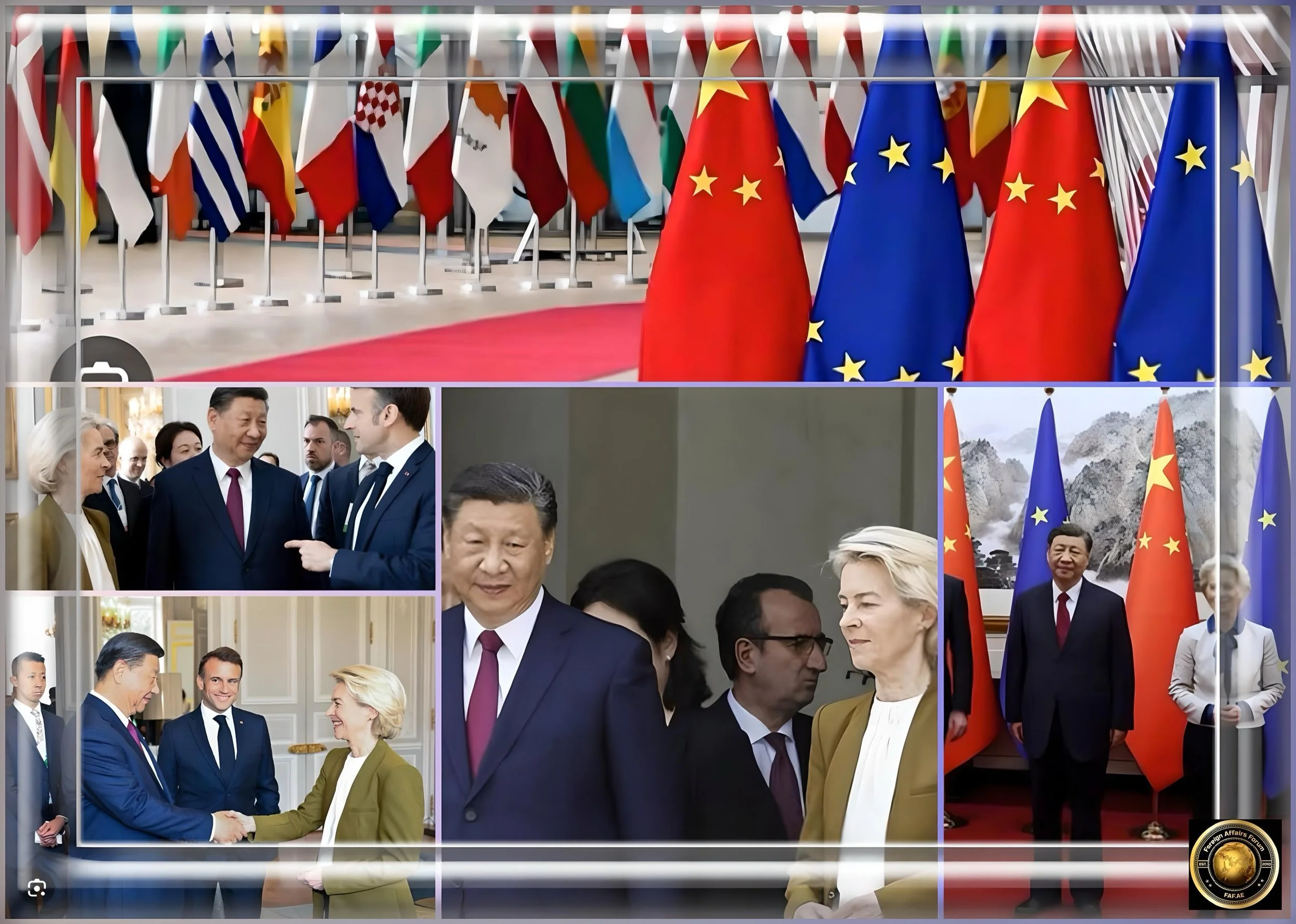
The European Union’s classification of China as a “systemic rival,” Japan’s bolstering of defense budgets, and Australia’s more assertive posture towards China all reflect a growing alignment with Navarro’s concerns.
Conclusion
Peter Navarro’s book "Crouching Tiger" makes a noteworthy contribution to the ongoing discourse surrounding contemporary strategic thought, particularly regarding the complexities of China’s military modernization and the consequential effects on global security dynamics.
While some critics have pointed to deficiencies in depth and academic rigor, the book's core arguments—positioning China as a formidable strategic competitor and underscoring the urgent need for comprehensive countermeasures—have had a profound impact on policy discussions and the decisions made within governmental circles.
The significance of "Crouching Tiger" extends beyond its specific predictions or policy suggestions; it plays a crucial role in transforming the lens through which Western policymakers and the broader public understand the multifaceted challenges that China presents.
By weaving together the economic, military, and political dimensions of Chinese power into a cohesive narrative of strategic competition, Navarro not only clarifies the intricacies of these relationships but also enhances our comprehension of the broader challenges characterizing current international relations.
His work prompts a reevaluation of existing strategies and encourages a more nuanced awareness of the evolving landscape of global power dynamics shaped by China's ascent.