The hundred year marathon- Century-Long Strategy: Analyzing China's Geopolitical Tactics and America's Strategic Countermeasures
Executive Summary
"The Hundred-Year Marathon: China’s Strategy and America’s Response" delves into China's intricate and lengthy path to ascend as a dominant global power.
FAF delves into a compelling analysis of China's strategic approach, which is rooted in historical context and aims to fundamentally reshape the balance of power in the international arena.
It meticulously outlines Chinese leaders' tactics to leverage economic growth, technological advancements, and geopolitical influence.
The narrative highlights the responses and reactions of the United States as it navigates this profound shift in global dynamics.
FAF marks the author’s attempt to scrutinize the strategic missteps and potential strategies that America might adopt to counteract China's formidable ascent, examining a range of political, economic, and military considerations.
Through this detailed exploration, the book provides readers with a comprehensive understanding of the unfolding rivalry between the two nations, stressing the urgency for America to reassess its position on the world stage in light of China's ambitions.
Foreward
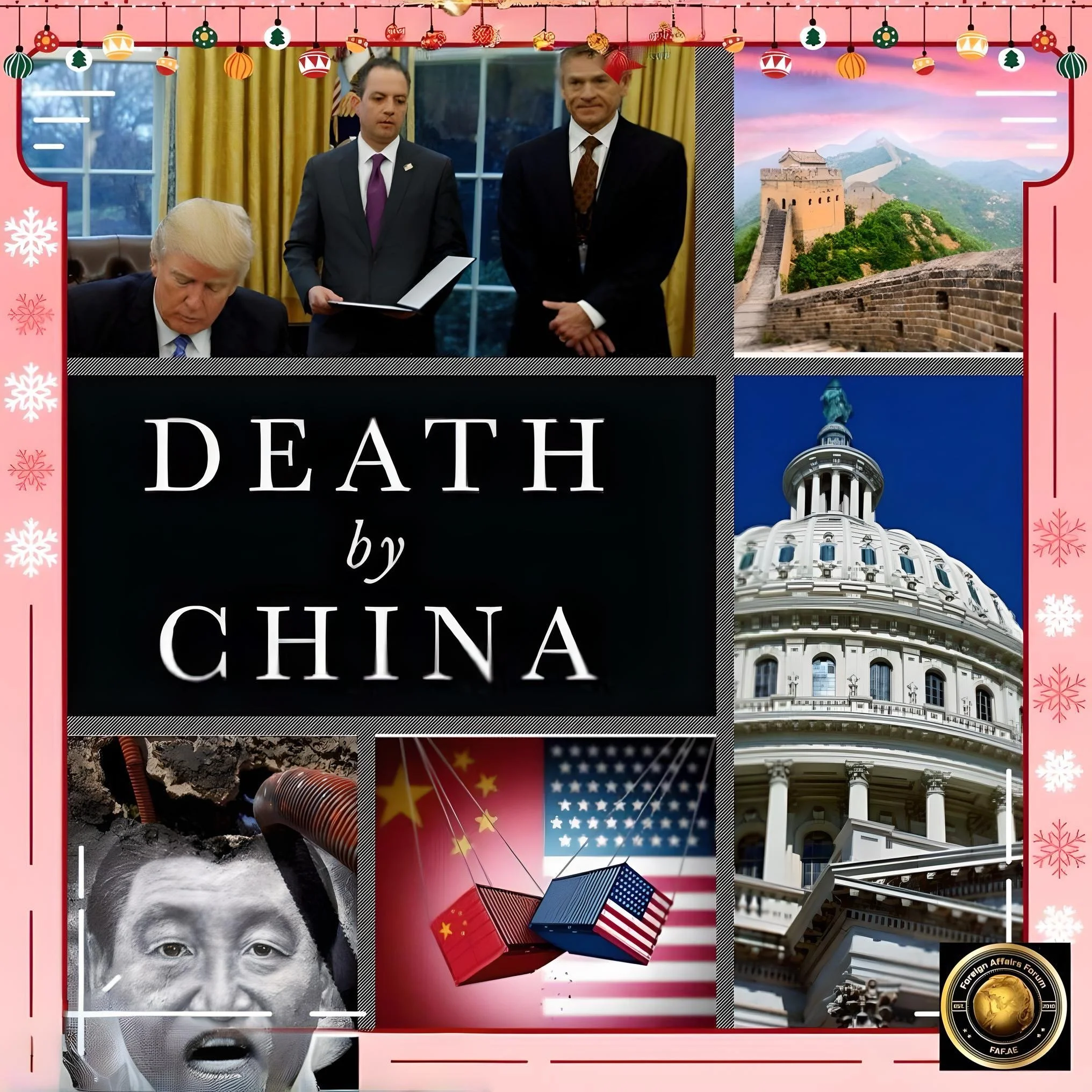
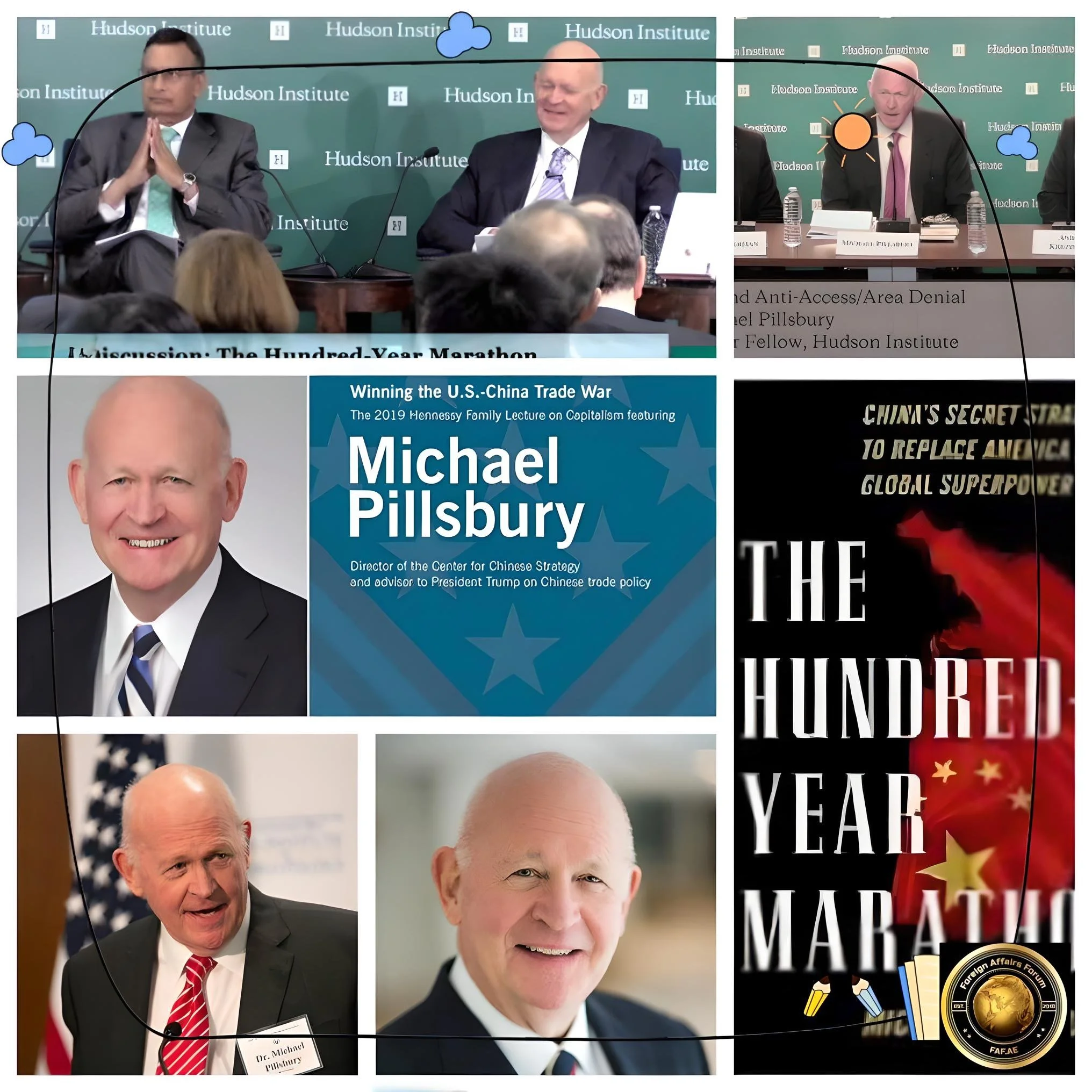
The Hundred-Year Marathon: China’s Secret Strategy to Replace America as the Global Superpower by Michael Pillsbury is one of the most controversial and influential books on U.S.-China relations in recent years.
Published in 2015, this work by the former Pentagon official and China expert presents a provocative thesis about China’s long-term strategic ambitions, which has significantly shaped American discourse on the China challenge.
Core Thesis and Arguments
Pillsbury’s central argument revolves around China’s “hundred-year marathon” – a secret, century-long strategy beginning in 1949 to systematically replace the United States as the world’s dominant superpower by 2049, the centennial of the People’s Republic of China.
The book presents several key claims
The Strategic Deception
Pillsbury argues that China has successfully deceived American policymakers for decades by presenting itself as a peaceful, developing nation while secretly pursuing hegemonic ambitions.
He contends that Chinese leaders have drawn inspiration from ancient Chinese strategic texts, particularly from the Warring States period, emphasizing deception and using an opponent’s strength against them.
The “Hawks” Influence
The book suggests that Chinese “hawks” (Ying Pai) within the military and intelligence establishment have successfully convinced the leadership to view America as a dangerous hegemon that must be replaced.
These hardliners allegedly control key organs of the Chinese state apparatus and have developed a comprehensive strategy for overtaking the United States.
American Complicity
Perhaps most controversially, Pillsbury argues that the United States has unwittingly aided China’s rise through technology transfers, economic assistance, and misguided policies based on the assumption that China would democratize and become a responsible stakeholder.
Evidence and Sources
Pillsbury bases his claims on several sources: interviews with Chinese defectors and military officials, declassified U.S. national security documents, and his translation of Chinese strategic writings.
As a fluent Mandarin speaker with decades of experience in U.S. national security positions, he argues he has had “arguably more access to China’s military and intelligence establishment than any other Westerner”.
The book presents nine principles allegedly derived from the Warring States period that supposedly guide China’s current strategy, including inducing U.S. complacency, manipulating American elites, concealing military advancements, and exploiting America’s openness.
Critical Reception and Scholarly Assessment
The book has received significant criticism from China experts and scholars for several methodological and analytical flaws:
Unverifiable Claims
Critics point out that many of Pillsbury’s most dramatic assertions rely on private conversations with unnamed sources, making them impossible to verify.
Academic reviewers have noted the absence of proper citations for key claims and the reliance on anecdotal evidence.
Oversimplification
Scholars argue that Pillsbury presents an overly simplistic view of Chinese strategic culture, focusing exclusively on deception-based texts from the Warring States period while ignoring other philosophical traditions like Confucianism and Daoism that influence Chinese thinking.
Conspiratorial Elements
The book has been criticized for its conspiratorial language and assumptions, suggesting a century-long secret cabal spanning multiple Chinese governments and leadership changes – a claim many find implausible given China’s tumultuous 20th-century history.
Cherry-picking Evidence
Critics note that Pillsbury selectively uses evidence to support his thesis while dismissing contradictory information and often mischaracterizes other scholars’ work.
Current Relevance and Accuracy
Nearly a decade after publication, several aspects of Pillsbury’s predictions merit examination:
Economic Competition
While China has indeed become America’s primary economic competitor, recent assessments suggest the timeline for Chinese economic dominance may be more uncertain than Pillsbury predicted.
The U.S. and China appear headed toward rough economic parity rather than clear Chinese supremacy.
Military Development
China has made significant advances in military capabilities, with some assessments indicating it has surpassed America in some defense-related areas.
However, comprehensive military analysis suggests China’s defense spending remains substantially below U.S. levels when properly calculated.
Technology Competition
The intensifying technology rivalry between the two nations, particularly in semiconductors and artificial intelligence, aligns with Pillsbury’s warnings about strategic competition.
Recent developments like China’s DeepSeek AI breakthrough demonstrate continued technological competition.
Strategic Behavior
China’s more assertive foreign policy under Xi Jinping, including territorial claims in the South China Sea and pressure on Taiwan, supports some of Pillsbury’s concerns about Chinese strategic intentions.
Contemporary Policy Impact
Pillsbury’s arguments have significantly influenced U.S. policy discourse and decision-making:
Strategic Competition Framework
The concept of “strategic competition” with China, prominently featured in the 2017 National Security Strategy and subsequent policy documents, reflects ideas similar to those in Pillsbury’s work.
Bipartisan Consensus
The book contributed to the emerging bipartisan consensus in Washington that China poses a significant challenge to American interests.
Policy Responses
Elements of current U.S. policy toward China—including technology restrictions, military modernization, and alliance strengthening—align with Pillsbury's recommendations for countering Chinese strategy.
American Preparedness and Response
Regarding whether America is prepared to “take the back seat,” current evidence suggests a complex picture:
Strategic Awareness
The U.S. government has recognized China as a strategic competitor and is moving away from the engagement paradigm that Pillsbury criticized.
Both Republican and Democratic administrations have maintained tough stances toward China.
Institutional Responses
The U.S. has implemented significant policy changes, including export controls on advanced technology, restrictions on Chinese investment in sensitive sectors, and increased military spending to counter China’s growing capabilities.
Alliance Building
America has strengthened partnerships with allies in the Indo-Pacific region and globally to counter Chinese influence, suggesting a recognition of the challenge.
Domestic Investments
Legislative initiatives like the CHIPS and Science Act represent efforts to rebuild American technological and manufacturing capabilities in competition with China.
However, challenges remain
Economic Interdependence
Despite tensions, the U.S. and China remain economically interdependent, with American investment in China increasing despite political tensions.
Long-term Commitment
Some experts question whether the U.S. has the sustained political will for a long-term strategic competition, particularly given domestic political divisions and changing administrations.
Assessment of Core Predictions
The 2049 Timeline
While China has stated goals for national rejuvenation by 2049, many experts now view this timeline as overly ambitious given China’s economic challenges, demographic problems, and international resistance.
Economic Dominance
Earlier predictions of inevitable Chinese economic supremacy have been tempered by recognition of China’s structural challenges and America’s continued advantages in innovation and technology.
Military Supremacy
While China has made significant military advances, comprehensive assessments suggest it has not achieved overall military superiority and faces substantial challenges in projecting global power.
Conclusion
The Hundred-Year Marathon raised essential questions about China’s long-term intentions and America’s strategic approach, even if many of its specific claims and methodologies have been criticized.
The book’s core insight – that China views itself as engaged in long-term strategic competition with the United States – has proven prescient, even if the details of Pillsbury’s “secret strategy” narrative remain disputed.
The current state of U.S.-China relations suggests that while America may not be “taking the back seat” in passively accepting Chinese dominance, it is engaged in what both sides recognize as prolonged strategic competition.
The question is not whether America is prepared to cede leadership but how effectively it can compete in this new era of great power rivalry.
The book’s lasting contribution may be less specific claims about Chinese deception and more a broader argument for taking China’s strategic ambitions seriously and preparing for sustained competition.
Regardless of its analytical flaws, The Hundred-Year Marathon has proven influential in shaping a more realistic American approach to the China challenge.