The West’s Turn Against Israel Germany halts arms exports as more countries mark a shift in opinion on Israel’s offensive in Gaza
Executive Summary
Growing Discontent in the West Towards Israel
Germany has announced a significant halt in its arms exports, reflecting a broader trend among various nations that are increasingly critical of Israel’s military actions in Gaza.
This shift in sentiment marks a notable change in diplomatic and humanitarian perspectives, as public outcry over the violence has intensified.
Reports indicate that several countries are reevaluating their support for Israel, influenced by the mounting casualties and the humanitarian crisis unfolding in the region.
As protests erupt globally, voices advocating for a ceasefire and a reassessment of military alliances are becoming louder, signaling a potential realignment in international relations concerning the Israeli-Palestinian conflict.
Introduction
Germany Suspends Arms Exports
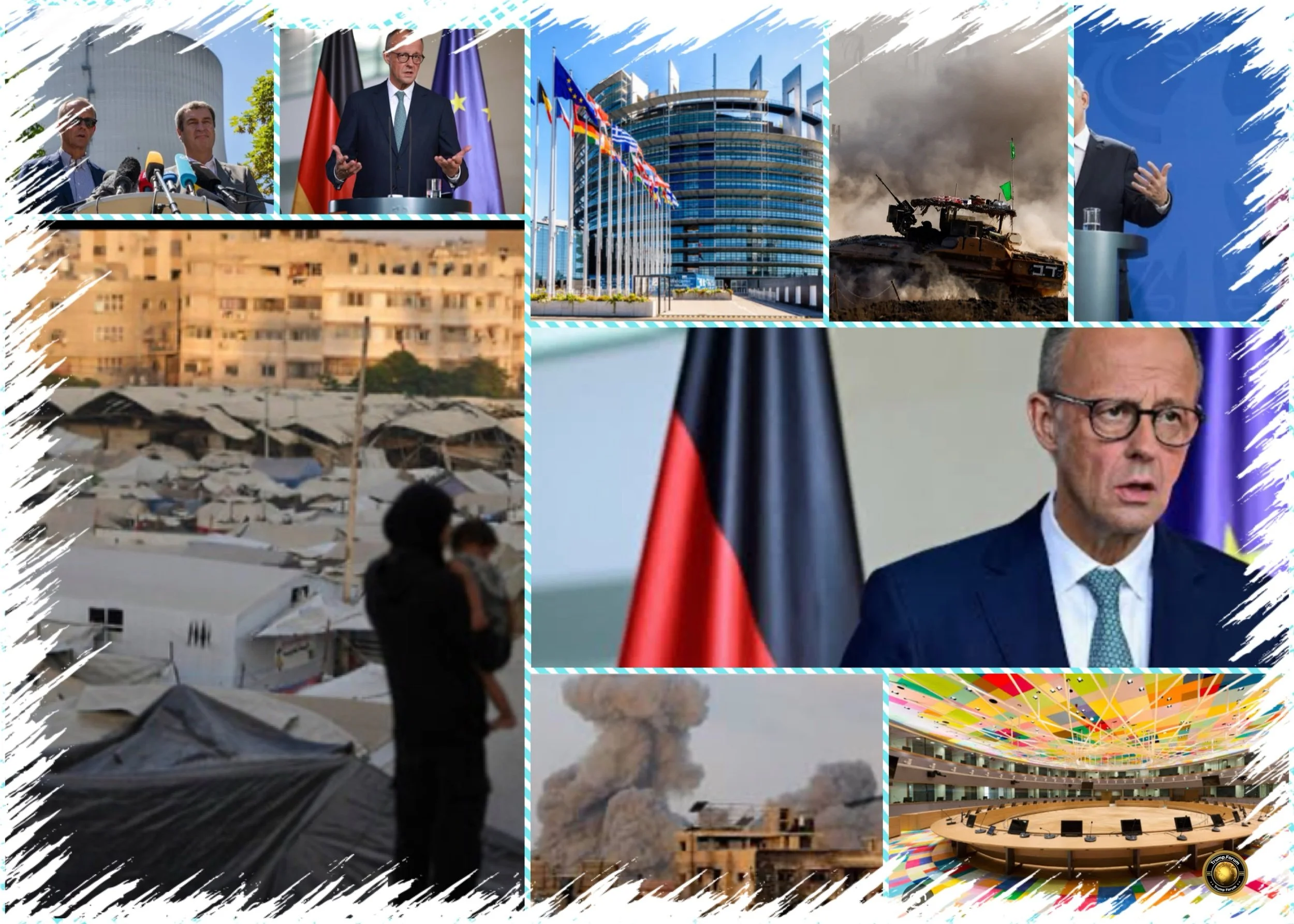
On August 8, 2025, Germany announced a significant policy shift that reverberates beyond mere military cooperation.
Chancellor Friedrich Merz declared that Germany would halt all military equipment exports to Israel that could be used in the Gaza Strip “until further notice”.
This decision came in direct response to Israel’s security cabinet approving plans to expand military operations and take control of Gaza City.
The timing and symbolism of this move cannot be understated.
Germany, historically Israel’s most steadfast European ally and second-largest arms supplier after the United States, had provided approximately 30% of Israel’s major weapons imports between 2020-2024.
Since October 7, 2023, Germany approved €485 million ($564 million) worth of arms export licenses to Israel, making this suspension particularly impactful.
Historical Context: Germany’s “Special Relationship” with Israel
Germany’s support for Israel has been anchored in the concept of “Staatsräson” (reason of state), a policy dating back to Chancellor Angela Merkel’s 2008 Knesset address where she declared Israel’s security as fundamental to German national interest.
This commitment stems from Germany’s historical responsibility for the Holocaust, creating what officials describe as a “special relationship” built on moral obligation.
Chancellor Merz emphasized this historical foundation while announcing the arms suspension, stating: “Israel has the right to defend itself against Hamas terrorism,” but added that Israel’s planned military escalation “makes it increasingly difficult to see how these goals can be achieved”.
His statement reflects the tension between Germany’s historical commitment and growing concerns about civilian casualties in Gaza.
A Broader Western Diplomatic Shift
Germany’s decision is part of a coordinated Western response that extends far beyond arms exports.
Three major Western powers have announced plans to recognize Palestinian statehood at the September 2025 UN General Assembly.
France became the first G7 nation to commit to Palestinian recognition, with President Emmanuel Macron announcing in July that France would formally recognize Palestine in September.
This decision makes France the first permanent UN Security Council member to take this step.
The United Kingdom followed with a conditional announcement: it would recognize Palestinian statehood unless Israel agrees to a ceasefire, ends annexation plans in the West Bank, and engages in meaningful peace efforts.
Canada joined this diplomatic initiative, with Prime Minister Mark Carney declaring that Canada would recognize Palestine at the September UN General Assembly, contingent on Palestinian Authority reforms and elections without Hamas participation.
Malta has also announced its intention to recognize Palestine in September, while Portugal is considering similar action.
This coordinated timing suggests a deliberate strategy to maximize diplomatic pressure on Israel.
Shifting German Public Opinion
The arms embargo reflects dramatic changes in German public sentiment.
A recent ARD poll revealed that 66% of Germans believe their government should increase pressure on Israel regarding Gaza.
More significantly, 62% of Germans now reject the notion that Germany bears special responsibility for Israel’s protection due to its historical past - a fundamental challenge to the “Staatsräson” principle.
This represents a remarkable transformation in German public opinion.
While German politicians across the political spectrum have historically supported Israel as part of the country’s post-war identity, younger Germans increasingly view universal human rights obligations as superseding historical commitments to any single nation.
American Public Opinion: Erosion of Support
The German shift mirrors broader changes in American attitudes toward Israel. Recent polling data reveals unprecedented skepticism among American voters:
An Economist/YouGov survey from August 2025 found that 84% of Americans favor an immediate ceasefire in Gaza, while 70% believe there is a hunger crisis in the region.
Perhaps most strikingly, 45% of Americans believe Israel is committing genocide against Palestinians - a significant increase from 35% in January 2024.
American support for Israel’s military actions has plummeted to 32%, the lowest level since polling began in November 2023.
This decline is particularly pronounced among Democrats (8% approval) and young Americans aged 18-34 (9% approval).
Even among Republicans, traditionally Israel’s strongest supporters, approval has declined from initial levels of support.
The generational divide is stark: only 9% of Americans under 35 approve of Israel’s Gaza operations, compared to 49% of those 55 and older.
This suggests that Israel’s standing with the next generation of American leaders may be fundamentally compromised.
Understanding Germany’s Policy Evolution
Germany’s decision represents a convergence of historical responsibility and contemporary humanitarian concerns.
The country’s post-war identity has been built on two pillars: support for Israel as atonement for the Holocaust, and commitment to international humanitarian law as a lesson from Nazi atrocities.
These two interpretations of German historical responsibility, once complementary, now increasingly conflict.
As one academic analysis noted, “the majority of young interviewees, though they did not feel any personal responsibility for the Holocaust, expressed that they felt they had an obligation to not forget the lessons of the past” - lessons they interpret as requiring condemnation of human rights violations “regardless of who committed them”.
Chancellor Merz’s statement reflects this tension, maintaining that Israel has a right to self-defense while arguing that its military expansion makes achieving legitimate goals “increasingly difficult”.
He specifically called for comprehensive humanitarian aid access and warned against any moves toward West Bank annexation.
International Isolation and Diplomatic Consequences
The arms embargo places Israel in growing diplomatic isolation. Beyond Germany’s decision, multiple countries have implemented arms restrictions.
Slovenia banned all arms trade with Israel in 2025, becoming the first EU member to do so
Canada suspended new arms export licenses in March 2024
Italy enforced a complete arms export suspension
The Netherlands stopped F-35 fighter jet component exports
Spain ended all arms exports in 2023
The United Kingdom halted approximately 30 of 350 arms licenses
This coordinated response suggests Western governments are responding to both domestic pressure and genuine policy concerns about Israel’s conduct in Gaza.
Conclusion
Looking Forward: September as a Diplomatic Inflection Point
The September 2025 UN General Assembly looms as a critical moment for Israeli diplomacy.
With France, the UK, Canada, and Malta planning Palestinian recognition, Israel faces the prospect of losing support from key Western allies simultaneously.
Currently, 147 of 193 UN member states recognize Palestine.
The addition of major Western powers would represent a significant shift in the diplomatic balance, potentially affecting Israel’s position in international forums and its ability to maintain current policies.
The German arms embargo, while not a complete weapons ban, signals that even Israel’s most historically committed allies are reconsidering unconditional support.
As one German military analyst noted, “Morally, it’s a huge shift for Germany but practically it’s not that relevant” regarding immediate military capabilities.
However, the symbolic weight may prove far more significant than the practical impact.
This diplomatic realignment suggests that Western patience with Israel’s Gaza operations has reached a breaking point, driven by a combination of humanitarian concerns, domestic political pressure, and changing generational attitudes toward the Israeli-Palestinian conflict.
For Israel, maintaining Western support will likely require significant policy adjustments that address these growing concerns while preserving its security interests.