Germany’s Political Crisis: Merz’s Historic Chancellor Vote Failure and Recovery
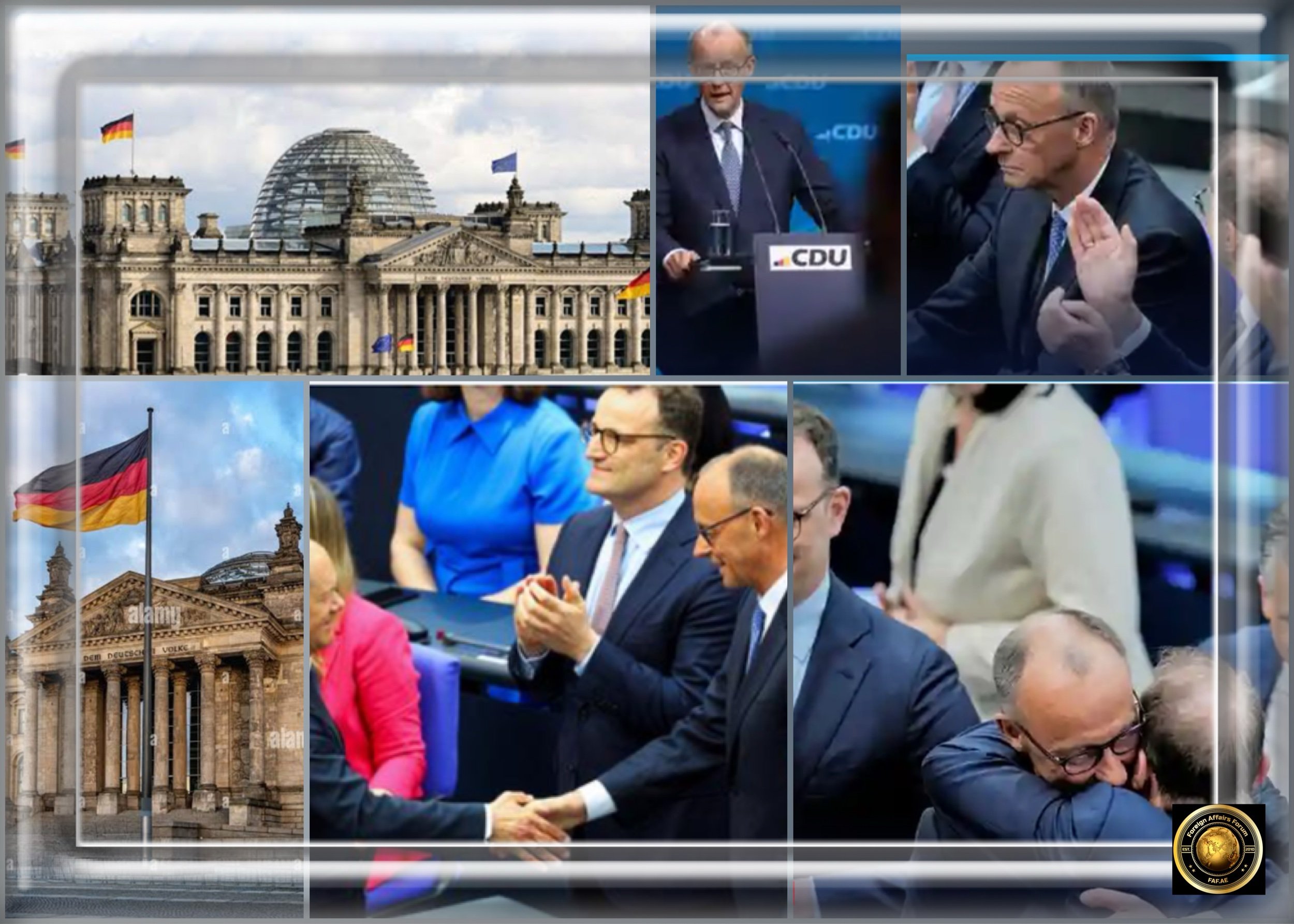
On May 6, 2025, Germany experienced an unprecedented political moment when conservative leader Friedrich Merz failed to secure enough votes in the first round of parliamentary voting to become chancellor, marking the first such failure in post-war German history.
In a dramatic turn of events, Merz later succeeded in a second round of voting, securing 325 votes-more than the required 316-to officially become Germany’s new chancellor.
This historic stumble has cast a shadow over the beginning of his chancellorship, raising questions about the stability of his coalition government and his ability to address Germany’s pressing economic and political challenges.
The incident reflects the fragile nature of the coalition formed between Merz’s Christian Democratic Union (CDU) and the center-left Social Democrats (SPD) following February’s federal elections and the collapse of former Chancellor Olaf Scholz’s government in November 2024.
The Collapse of the Previous Government
Germany’s political instability began in November 2024 when then-Chancellor Olaf Scholz’s “traffic light” coalition collapsed after he fired Finance Minister Christian Lindner, who headed the pro-business Free Democrats (FDP).
The breakdown occurred amid disagreements over the 2025 budget, with Germany facing its second consecutive year without economic growth. Scholz cited a lack of trust in Lindner, stating that the finance minister had prioritized party interests over national ones.
The collapse plunged Europe’s largest economy into political chaos shortly after Donald Trump’s U.S. election victory, which had already created uncertainty about Europe’s economic and security future.
German President Frank-Walter Steinmeier called for “reason and responsibility” rather than “tactics and squabbling” during this critical time.
Following the coalition’s collapse, Scholz scheduled a vote of confidence for December 16, 2024, leading to early elections on February 23, 2025.
This political upheaval created a leadership vacuum when Germany faced multiple crises requiring decisive action.
February 2025 Elections and Coalition Formation
The February federal elections resulted in a significant victory for Friedrich Merz’s center-right Christian Democratic Union (CDU), which emerged as the largest party with 28.6% of the vote.
The far-right Alternative for Germany (AfD) secured second place, achieving its best-ever result in a federal election.
Despite the CDU’s strong showing, forming a government proved challenging. Merz eventually negotiated a coalition agreement with the center-left Social Democrats (SPD), creating what many described as an unusual alliance between Germany’s two establishment parties.
This coalition was mainly formed to sideline the rising AfD, with all mainstream parties refusing to collaborate with the far-right party due to Germany’s painful Nazi history.
The CDU/CSU and SPD held 328 seats in the 630-member Bundestag, providing what appeared to be a narrow but secure majority.
This coalition was not formed from ideological alignment but as a consensus to exclude the increasingly influential AfD.
The Historic Vote: An Unprecedented Failure
On May 6, 2025, what was expected to be a routine confirmation vote turned into a political crisis. In a secret ballot in the Bundestag, Merz received only 310 votes, falling six short of the required 316 for an absolute majority.
Nine lawmakers abstained, while 307 voted against him. This marked the first time in Germany’s 76-year post-war history that a chancellor-designate failed to secure majority backing in the first vote.
The defeat was particularly humiliating given that Merz’s coalition theoretically commanded 328 votes in the parliament.
The outcome indicated that at least 18 coalition members had defected, abstained, or voted against him. This unexpected result stunned political observers and Merz himself, who was visibly shocked.
Bundestag President Julia Klöckner suspended the parliamentary session to allow parties to consider their next steps.
The failure forced Merz to postpone planned visits to France and Poland, which were intended to signal international stability.
Recovery in the Second Round
Following the initial setback, a second round of voting was scheduled for later the same day. Merz secured 325 votes in this repeat ballot, comfortably exceeding the required threshold of 316.
This recovery allowed him to officially become Germany’s chancellor, though his authority considerably diminished.
Despite the eventual success, the initial failure had already significantly affected Merz’s credibility.
Christian Democrat colleague Johann Wadephul, Merz’s pick for foreign minister, attempted to downplay the setback, calling it “an obstacle but not a catastrophe.”
Similarly, Carsten Linnemann, secretary general of the Christian Democrats, expressed surprise at the result but emphasized ongoing party support for Merz.
Friedrich Merz: A Conservative Comeback
Friedrich Merz, now 69, has had a long and sometimes interrupted political career. Born in 1955 into a conservative Catholic family in North Rhine-Westphalia, Merz joined the CDU’s youth wing while still in school.
His political career was notably marked by rivalry with former Chancellor Angela Merkel, who ousted him from his role as the party’s parliamentary leader in the early 2000s.
After Merkel became CDU's leader, she never appointed Merz to a ministerial position, and he eventually decided not to run for parliament again in 2009, focusing instead on private sector interests as a lawyer and company board member.
During his absence from politics, Merz was critical of Merkel’s decision to shift the CDU toward the center ground, arguing it would create space for the far-right AfD.
Merz returned to politics following Merkel’s departure, eventually winning the CDU leadership in 2022 with 62% of the vote.
Since then, he has been rewriting the party’s program more conservatively, shifting it further right than during the Merkel era.
Economically, Merz is known as a liberal who advocates for deregulation and tax cuts to boost Germany’s sluggish growth.
In 2003, he famously argued for a radical simplification of Germany’s tax rules, claiming a tax return could be calculated “on the back of a beer mat.” He also supports more restrictive policies on welfare recipients.
Challenges to Merz’s Leadership
Despite his electoral success, Merz faces significant challenges to his leadership. Polling data indicates he is particularly unpopular among women, with only a small percentage of women aged 18 to 29 viewing him as their preferred candidate for chancellor.
He has faced accusations of misogyny, notably for voting against the recognition of marital rape as a crime in 1997 and for dismissing the concept of gender-balanced cabinets.
Merz has also struggled to gain support in eastern Germany, often polling behind AfD’s Alice Weidel and former Chancellor Olaf Scholz before the election. His confrontational stance toward Russia has contributed to this lack of popularity in the East.
His strategy appears to be based on the belief that straightforward leadership is what the public seeks in an era of rising right-wing populism.
However, this approach has not translated into increased support. Since Merz resumed the CDU leadership in January 2022, the party’s polling has stagnated at around 24%, while the AfD’s support has surged from 11% to 24%.
Political Implications and Reactions
The unprecedented failure in the first round of voting has significant implications for German politics.
The far-right AfD quickly capitalized on Merz’s setback, with party leader Alice Weidel declaring it demonstrated “the weakness of the conservative-SPD coalition” and calling for Merz’s resignation.
Weidel also called for fresh elections, suggesting that her party would win a new contest.
Analysts have suggested that the defectors in the vote likely included coalition lawmakers who disagree with Merz’s plan to take on significant debt to boost defense capacity and revitalize economic growth.
This indicates potential policy conflicts within the coalition that could hamper governance.
Holger Schmieding, Chief Economist at Berenberg in London, noted that while Merz was still likely to be elected, the first-round failure indicated that “the coalition lacks unity, which could undermine his capacity to implement policies.”
Challenges Ahead for Germany
Merz assumes the chancellorship at a critical juncture for Germany and Europe. The country is battling its most prolonged post-war economic downturn, with a potential global trade conflict initiated by former U.S. President Donald
Trump’s extensive import tariffs threatened a third consecutive year of economic decline. Germany is also still dealing with the cessation of cheap Russian gas since 2022 and increasing competition from China.
Sudha David-Wilp from the German Marshall Fund of the United States has emphasized the pressure on Merz to demonstrate effective leadership, noting that “Germany has been called upon to take the lead for quite some time, and there is no longer room to ignore that demand.”
She had, “the foundations that supported post-war Germany for the last eighty years have eroded, whether in terms of open markets and free trade or the U.S. military presence in Europe.”
In addition to economic challenges, Merz must navigate Germany’s response to the ongoing situation in Ukraine and manage relations with the Trump administration, all while addressing domestic issues such as the rise of the far-right, anti-immigrant AfD party.
Conclusion
Friedrich Merz’s historic stumble on his path to becoming Germany’s chancellor reflects the fragile nature of German politics following years of instability.
While he ultimately secured the position in a second round of voting, the unprecedented first-round rejection has damaged his authority before he even begins to govern.
The incident highlights the challenges of coalition politics in an increasingly fragmented German political landscape, where traditional parties are losing ground to populist alternatives.
As Merz takes office, he faces the daunting task of uniting a reluctant coalition, revitalizing Germany’s stagnant economy, and restoring German leadership in an uncertain European and global context.
It remains to be seen whether Merz can overcome this initial setback and establish effective governance.
QWhat is clear is that Germany has entered a new and unpredictable political era, with potential implications for Europe’s stability and international relations.