Putin’s Victory Day Rhetoric: Weaponizing World War II Memory to Justify the Ukraine Conflict
Introduction
This comprehensive analysis examines how Russian President Vladimir Putin has systematically leveraged Victory Day commemorations and World War II memory to justify and sustain Russia’s military operations in Ukraine.
FAF, Defense.Forum analyzes Putin’s speeches from 2022 to 2025 reveal a deliberate strategy of historical revisionism, where Soviet victory over Nazi Germany is reframed to legitimize contemporary Russian aggression.
The research demonstrates how Putin directly addresses soldiers fighting in Ukraine during these ceremonies, positioning the current conflict as a continuation of the Great Patriotic War against fascism while simultaneously scaling back military displays due to ongoing operational demands and security concerns from Ukrainian drone attacks.
Historical Context and Significance of Victory Day
Victory Day represents Russia’s most significant secular holiday, commemorating the Soviet Union’s triumph over Nazi Germany on May 9, 1945.
The holiday honors the immense sacrifice of at least 26 million Soviet citizens who perished during World War II, making it one of the most revered and widely celebrated public holidays in Russia.
Under Putin’s presidency, Western observers have noted that the holiday has increasingly been utilized for propaganda purposes, particularly since Russia’s invasion of Ukraine.
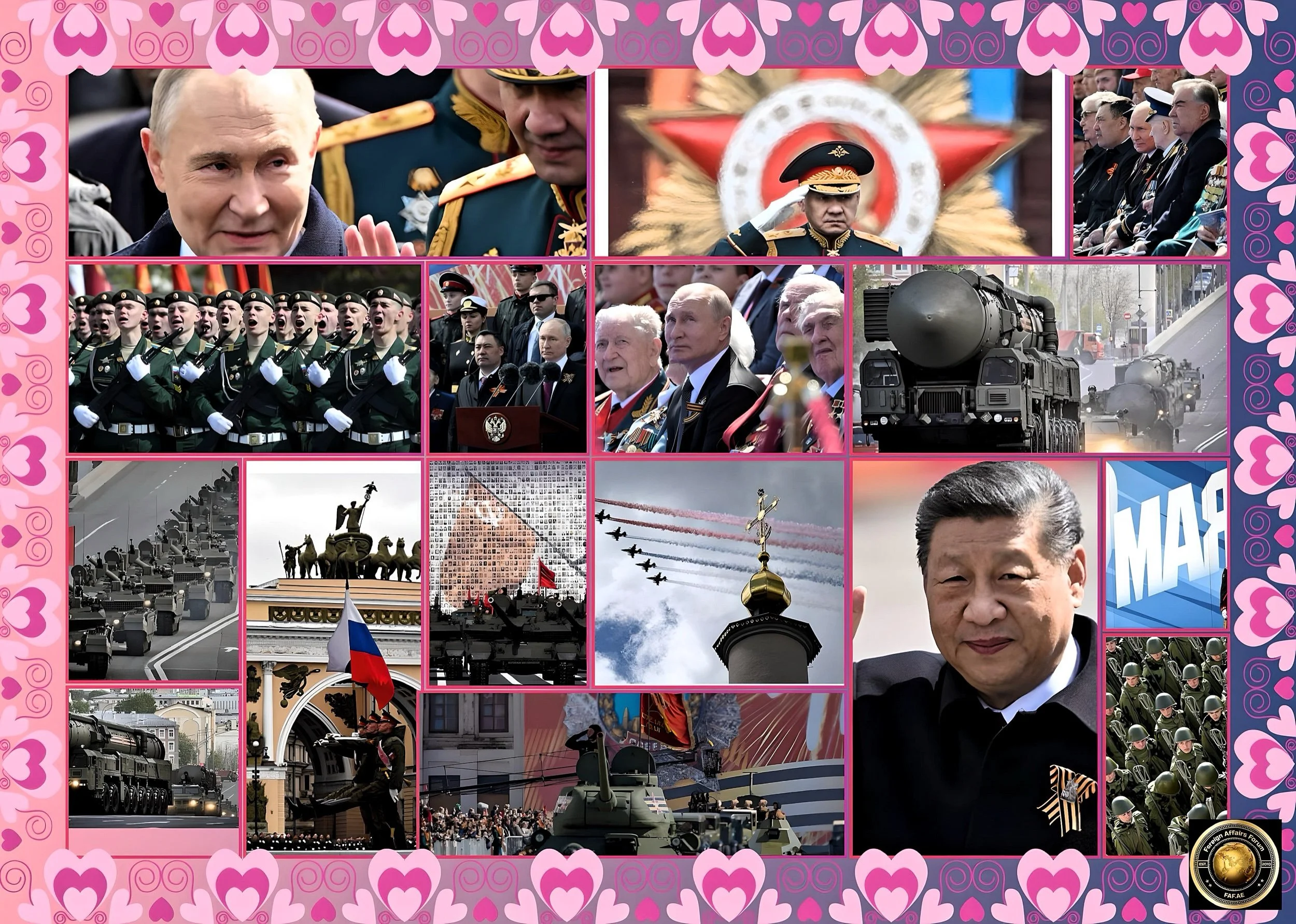
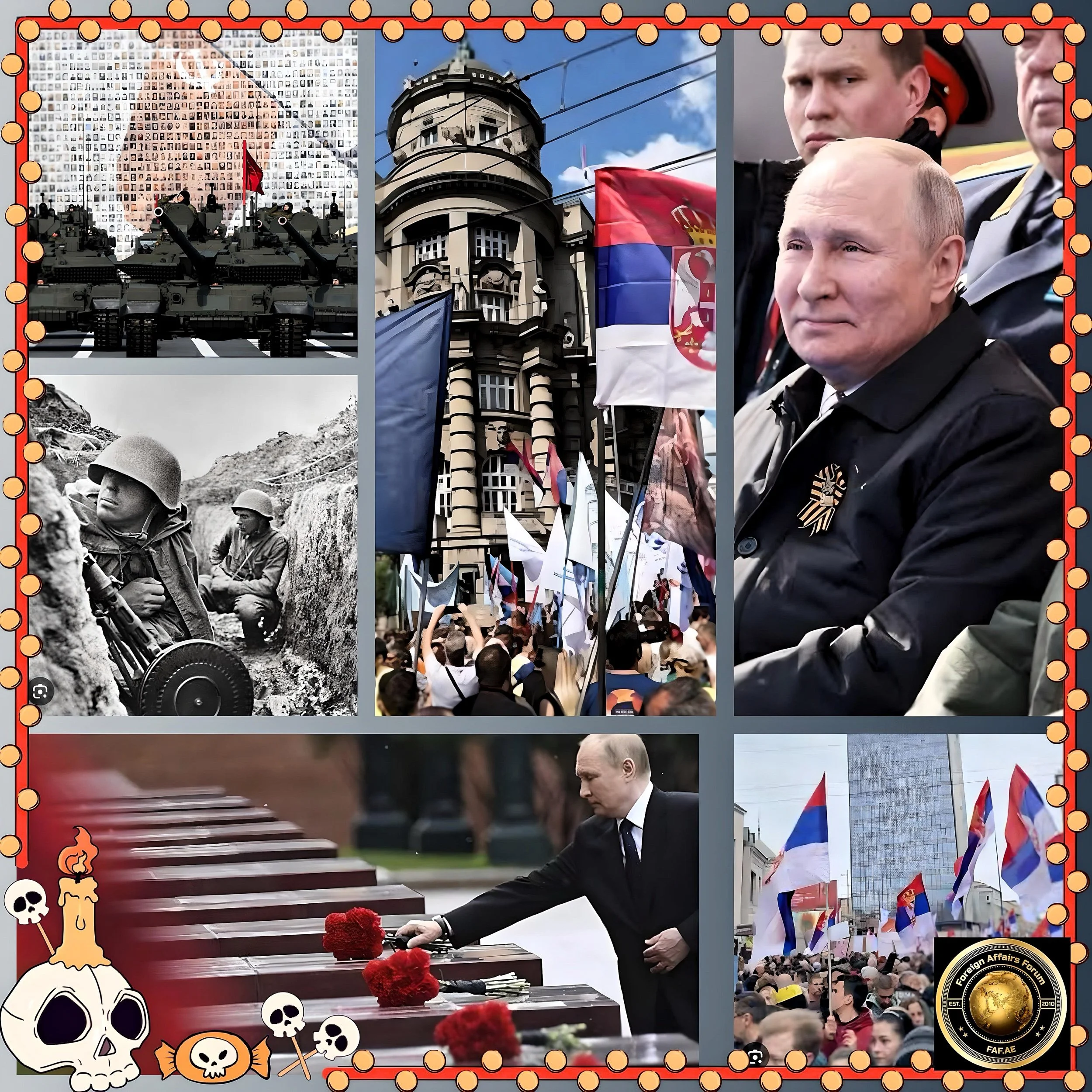
The annual celebration traditionally features elaborate military parades on Moscow’s Red Square, showcasing Russia’s military capabilities through displays of tanks, missile systems, and aerial demonstrations.
These events serve multiple functions: honoring wartime sacrifices, demonstrating state power, and reinforcing patriotic narratives that support current government policies.
The significance of Victory Day extends beyond mere commemoration, functioning as a cornerstone of Russian national identity and a tool for political legitimacy.
Putin’s approach to Victory Day has evolved considerably during his tenure. What was once primarily a day of remembrance has become a platform for asserting Russian strength and justifying contemporary military actions.
The holiday’s emotional resonance with the Russian population makes it particularly effective for rallying support for state policies, including military operations abroad.
Putin’s Strategic Use of World War II Memory in Ukraine Conflict Justification
The 2022 Victory Day Speech: Direct War Justification
Putin’s 2022 Victory Day address marked a pivotal moment in his rhetorical strategy. In it, he explicitly connected the ongoing Ukraine conflict to the Soviet victory over fascism.
Speaking to mass ranks of military personnel on the 77th anniversary of victory over Nazi Germany, Putin declared that Russian forces in Ukraine were “fighting for the Motherland, for its future, so that no one forgets the lessons of World War II.”
This direct linkage between historical memory and contemporary military action represents a sophisticated form of propaganda that exploits deep-seated cultural narratives.
Putin’s speech notably avoided mentioning Ukraine by name, instead referring to the conflict as a defensive measure against Western threats.
He claimed that NATO was creating “threats right next to its borders” and described Russia’s invasion as a “preemptive rebuff to aggression.”
This framing positions Russia as the victim rather than the aggressor, inverting the conflict's dynamics through careful rhetorical manipulation.
The Russian leader directly addressed soldiers fighting in the Donbas region, stating: “You are fighting for the Motherland, for its future, so that no one forgets the lessons of World War II.
So that there is no place in the world for executioners, punishers and Nazis”.
This direct communication with active combatants during a ceremonial occasion demonstrates how Victory Day serves as both commemoration and active military motivation.
Evolution of Messaging Through 2025
By 2025, Putin’s Victory Day rhetoric had intensified, with the 80th anniversary providing an even more significant platform for his messaging. In his 2025 address, Putin declared that “Russia has been and will be the barrier in the way of Nazism, Russophobia, anti-semitism” and would “continue to fight atrocities perpetrated by followers of those destructive ideas.”
This language escalates the moral stakes of the conflict, positioning Russia as a defender of universal values rather than a regional aggressor.
The 2025 speech also included more explicit territorial claims, with Putin referencing Ukrainian cities Sevastopol and Odesa as part of Russia’s “heroic legacy.”
This represents a significant escalation in rhetorical aggression, suggesting expanded territorial ambitions beyond the currently contested regions.
Such statements serve to normalize the concept of Ukrainian territories as inherently Russian, preparing domestic audiences for potential future military actions.
Putin’s 2025 address emphasized unity and sacrifice, declaring that “the entire country, the whole society, the whole nation support the participants of the special military operation.”
This language seeks to project unanimous domestic support for the war effort despite evidence of growing war fatigue and economic strain within Russian society.
Military Displays and Symbolic Messaging
Scaled-Back Demonstrations Reflecting War Impact
The Victory Day parades have undergone significant changes since the beginning of the Ukraine conflict, reflecting the real costs of prolonged military engagement.
The 2022 parade featured approximately 129 units of military equipment crossing Red Square, compared to 191 vehicles the previous year.
Similarly, the number of participating civilians decreased from 12,000 to approximately 10,000, indicating the conflict’s impact on available personnel and resources.
These reductions extend beyond mere numbers to symbolic elements as well.
The anticipated aerial displays, traditionally featuring sophisticated fighter jets in formation, have been repeatedly canceled due to what officials term “adverse weather conditions.”
However, weather reports during these events often contradicted official explanations, with clear skies and minimal wind recorded during supposed cancellations.
This suggests that operational demands and security concerns, rather than weather, drive these decisions.
Security Concerns and Drone Threats
The 2025 Victory Day celebrations occurred under unprecedented security challenges, with Ukrainian drone attacks targeting Moscow in the days leading up to the parade.
These attacks forced airspace closures at all four Moscow airports and heightened anxiety across the Russian capital.
The threat environment represents a fundamental shift from previous years when Victory Day was an uncontested display of Russian power.
Ukrainian drone operations have forced Russian authorities to reconsider traditional parade elements, with some regional celebrations canceled entirely due to security concerns.
The ability of Ukrainian forces to threaten Moscow during Russia’s most important national holiday demonstrates the evolving military balance and challenges Putin’s narrative of Russian strength and security.
International Participation and Diplomatic Signaling
Foreign Leader Attendance as Geopolitical Messaging
The roster of international attendees at Victory Day celebrations is a barometer of Russia’s diplomatic standing and alliance networks.
The 2025 ceremony attracted nearly 30 world leaders, including China’s Xi Jinping, Brazil’s Luiz Inácio Lula da Silva, and Venezuela’s Nicolás Maduro. This attendance list reflects Russia’s effort to demonstrate international support despite Western sanctions and isolation.
Serbia’s Aleksandar Vučić and Slovakia’s Robert Fico were the only European leaders at the 2025 celebrations.
Their attendance is particularly significant given their countries’ EU membership aspirations and the political risks of appearing alongside Putin during an active military conflict.
The Brussels establishment warned Vučić that his participation could violate EU membership criteria and potentially harm Serbia’s accession process.
Troops from “friendly nations” participating in the parade represent another symbolic level of alliance-building.
The 2025 parade featured thirteen foreign contingents, including first-time participants from Egypt, Laos, Myanmar, and Vietnam.
This international military participation legitimizes Russian actions and projects an image of global support for Russian positions.
Strategic Communications Through Ceremonial Diplomacy
Putin’s hosting of foreign leaders during Victory Day extends beyond mere ceremonial functions to active diplomatic engagement.
The 2025 celebrations included official visits by leaders from China, Venezuela, and Vietnam, alongside 20 bilateral meetings with heads of state from various regions.
These meetings, conducted in what Putin described as a “special, solemn, festive atmosphere,” enable substantive policy discussions while leveraging the emotional resonance of the Victory Day context.
The timing and setting of these diplomatic engagements enhance their symbolic impact, allowing Putin to present Russia as a leader of a coalition opposing Western hegemony.
The historical context of Victory Day provides a powerful backdrop for discussions about contemporary geopolitical challenges, enabling Putin to frame current conflicts within the broader narrative of resistance to fascism and Western aggression.
Rhetorical Strategies and Propaganda Techniques
Historical Revisionism and Narrative Control
Putin’s Victory Day speeches employ sophisticated rhetorical techniques to reframe historical narratives supporting contemporary political objectives.
By consistently referring to Ukrainian forces and Western supporters as “Nazis” and “fascists,” Putin inverts the moral framework of the current conflict.
This strategy exploits the deep emotional trauma associated with World War II in Russian collective memory, making opposition to current Russian actions appear tantamount to supporting fascism.
The speeches also demonstrate careful attention to audience segmentation, with different messages directed toward domestic populations, military personnel, and international observers.
Putin’s direct addresses to soldiers fighting in Ukraine serve as morale-building exercises while simultaneously reinforcing the legitimacy of their mission in the eyes of domestic audiences.
Linguistic Framing and Symbolic Language
Putin’s consistent use of terms like “special military operation” rather than “war” represents a deliberate linguistic strategy to minimize the perceived severity of the conflict.
However, his 2023 Victory Day speech marked a notable shift when he explicitly stated that “a real war has once again been unleashed against our Motherland,” acknowledging the conflict’s true nature while maintaining that Russia is the victim rather than the aggressor.
The incorporation of religious and cultural terminology, such as references to “sacred” duties and “traditional values,” enhances Putin’s messaging's emotional appeal.
These linguistic choices connect contemporary military actions to deeper cultural narratives about Russian identity and purpose, making opposition to state policies appear as attacks on fundamental cultural values.
Impact on Military Morale and Domestic Support
Direct Communication with Combat Forces
Putin’s practice of directly addressing soldiers fighting in Ukraine during Victory Day ceremonies represents an unprecedented blending of commemorative and operational functions.
These direct communications serve multiple purposes: maintaining morale among active combatants, reassuring their families about the nobility of their mission, and demonstrating state support for military personnel to domestic audiences.
The 2022 speech included explicit promises of state support for military families, with Putin declaring that “the death of each one of our soldiers and officers is our shared grief and an irreparable loss for their friends and relatives” while pledging that the state would care for their children and families.
Such commitments serve as morale-building measures and implicit acknowledgments of the significant casualties sustained in the conflict.
Reinforcing Narratives of Inevitability and Righteousness
Putin’s speeches consistently frame the Ukraine conflict as inevitable and morally necessary, employing historical parallels to justify contemporary actions.
By positioning the current war as a continuation of the struggle against fascism, Putin creates a narrative framework that makes opposition to Russian actions appear as a betrayal of historical sacrifice and moral principles.
The effectiveness of this messaging strategy depends heavily on the Russian population’s deep emotional connection to World War II memory and their trust in state narratives about external threats.
Putin’s ability to maintain domestic support for the Ukraine conflict relies significantly on his success connecting contemporary military actions to revered historical struggles.
International Reactions and Geopolitical Implications
Western Response to Militarization of Memory
Western governments and international organizations have increasingly criticized Putin’s use of Victory Day as a platform for war justification and propaganda.
The transformation of a day dedicated initially to peace and remembrance into a vehicle for military mobilization has drawn particular condemnation from countries that participated in the original anti-fascist coalition.
Ukrainian officials have responded by establishing alternative commemoration dates, with President Zelensky proposing May 8 as Ukraine’s Day of Remembrance and Victory over Nazism in the Second World War.
This initiative represents an attempt to reclaim the historical narrative from Russian control and establish independent Ukrainian commemoration traditions.
Regional Security Implications
The militarization of Victory Day celebrations has broader implications for regional security dynamics, particularly regarding Russia’s relationships with neighboring countries.
The presence of leaders from former Soviet states at Moscow celebrations signals their continued dependence on Russian security guarantees and economic relationships despite international pressure to distance themselves from Putin’s regime.
Canceling some regional Victory Day events due to security concerns demonstrates how the Ukraine conflict has fundamentally altered the security environment across the former Soviet space.
Even traditionally secure areas now face potential threats, forcing Russian authorities to reconsider long-standing ceremonial traditions.
Conclusion
Putin’s systematic use of Victory Day celebrations to justify and sustain the Ukraine conflict represents a sophisticated form of historical manipulation that exploits deep cultural memories for contemporary political purposes.
Through careful rhetorical framing, Putin has transformed Russia’s most sacred commemoration into a vehicle for war propaganda, directly addressing combat forces while reinforcing domestic narratives about Russian victimization and moral superiority.
The evolution of these celebrations from 2022 to 2025 reveals the escalation of Putin’s territorial ambitions and the growing costs of sustained military engagement.
The scaling back of traditional military displays, combined with increasing security concerns from Ukrainian drone attacks, demonstrates how the conflict has fundamentally altered even Russia’s most important national ceremonies.
The international dimension of these celebrations, particularly the attendance of foreign leaders and military contingents, serves Putin’s broader strategy of projecting Russian leadership of a global coalition opposing Western hegemony.
However, the limited European participation and the need to issue diplomatic warnings about attendance suggest that Putin’s efforts to legitimize Russian actions through ceremonial diplomacy face significant constraints.
Looking forward, Putin’s increasingly explicit territorial claims and his framing of the conflict as an existential struggle against fascism suggest that Victory Day will continue serving as a platform for escalating rhetoric and war justification.
The transformation of this historically sacred day into a tool of military propaganda represents one of the most significant examples of how authoritarian leaders manipulate collective memory to sustain unpopular policies and maintain political control.
This strategy's ultimate success or failure will likely depend on Russia’s ability to achieve meaningful military victories that can be credibly presented as worthy successors to the great triumph of 1945.