The World After Western Hegemony: Winners, Losers and Pathways to Self-Reliance
Executive Summary
In the evolving geopolitical arena that succeeds the era of Western hegemony, nations and regions are undergoing significant transformations.
This shift presents a complex tapestry of opportunities and challenges. Some countries emerge as winners, capitalizing on newfound independence and influence, while others find themselves marginalized or disadvantaged.
As Western power dynamics recede, countries historically under Western influence are exploring new pathways towards self-reliance.
This involves redefining their economic strategies, forging new alliances, and nurturing local industries that can thrive in a global market increasingly favorable to diverse voices.
Some nations are harnessing their natural resources more judiciously or investing in technology to boost their productivity and innovation, which allows them to avoid dependency on Western economies.
Conversely, the losers in this transition may include those nations that fail to adapt to the changing global order.
They might grapple with political instability, economic hardships, or ongoing reliance on outdated systems that no longer serve their best interests in a multipolar world.
The disparity in resources, technological advancements, and educational opportunities could widen the gap between the winners and losers, leading to potential geopolitical conflicts and social unrest.
This evolving world landscape necessitates a deeper understanding of the various pathways to self-reliance that different nations pursue.
By examining case studies of successful countries that have diversified their economies, invested in sustainable practices, or leveraged regional collaborations, FAF glean’s valuable insights into practical strategies for navigating a post-hegemonic world.
The journey toward self-sufficiency is not solely a political or economic endeavor; it also encompasses cultural revitalization and the reclamation of identity in a rapidly changing global context.
In summary, the world emerging from the shadow of Western hegemony is characterized by unique challenges and immense opportunities for transformation.
Recognizing the distinct trajectories of various nations can empower them to claim their place in a more equitable global system.
Introduction
The contemporary international system is undergoing a significant transformation as Western hegemony, which has predominantly shaped global affairs for over three centuries, experiences an irreversible decline.
This shift represents the most substantial reconfiguration of global power dynamics since World War II.
It ushers in a multipolar era characterized by the emergence of new state and non-state actors, compelling traditional powers to adapt to a radically altered geopolitical landscape.
The Decline of Western Dominance
Erosion of Economic Foundations
The structural underpinnings of Western hegemony are deteriorating under the weight of multifaceted pressures.
The proportion of global GDP attributed to the United States has dramatically decreased from approximately 50% in the mid-20th century to around 15% today when adjusted for purchasing power parity (PPP).
Likewise, the European Union’s share has diminished from 27% to 14.5% over the past 45 years, while China's share has ascended from 2% to 19%.
This transformative redistribution of economic power fundamentally undermines the material foundations of Western global leadership.
Crisis of Institutional Legitimacy
Institutions traditionally dominated by Western powers are grappling with profound legitimacy and operational effectiveness challenges.
The Bretton Woods institutions—the International Monetary Fund (IMF), the World Bank, and the World Trade Organization (WTO)—were established in a bygone era and are increasingly scrutinized for their relevance in contemporary global governance.
Nations of the Global South often perceive these institutions as perpetuating inequitable representation, with Western powers maintaining disproportionate sway through mechanisms such as the P-5's permanent membership in the UN Security Council.
Internal Contradictions
Within Western democracies, growing internal dysfunctions manifest as rising inequality, political polarization, and diminishing consensus around liberal democratic values.
Successive administrations' inability to effectively tackle issues such as wage stagnation, healthcare disparities, and deteriorating infrastructure has substantially weakened the United States' capacity to exert sustainable global leadership.
External pressures, such as the rise of non-Western powers, exacerbate these domestic vulnerabilities.
Winners in the Multipolar Order
China's Ascendancy
China emerges as the principal beneficiary of this evolving global order.
As the world’s second-largest economy, China has experienced exceptional growth, positioning itself as a manufacturing epicenter while expanding its geopolitical influence through initiatives like the Belt and Road Initiative (BRI).
The BRI directly challenges Western-led frameworks by providing alternative development financing and infrastructure investments in Asia, Africa, and Europe.
Moreover, China capitalizes on the economic heft of BRICS+ nations—now outpacing the G7 in terms of GDP (PPP)—to bolster its energy, food, and supply chain security.
India’s Strategic Positioning
India has become a pivotal swing power, leveraging its demographic advantages and technological prowess while pursuing a nuanced multi-alignment strategy.
New Delhi adeptly manages partnerships with Western coalitions such as the Quadrilateral Security Dialogue (Quad) and Eurasian groups like the Shanghai Cooperation Organization while maintaining strategic autonomy and eschewing complete alignment with any singular power.
India’s ascendant global influence positions it as a key player in the multipolar framework, countering Chinese dominance within BRICS+.
Emerging Middle Powers
Countries like Brazil, Indonesia, Turkey, and South Africa exemplify emerging middle powers that occupy critical positions within the new order.
These nations serve as regional leaders and advocates for Global South interests, pushing for reforms in international institutions while fostering South-South cooperation networks.
Their strategic leverage enables them to capitalize on the opportunities presented by multipolarity and regional fragmentation.
Regional Organizations and Alliances
BRICS+ Expansion
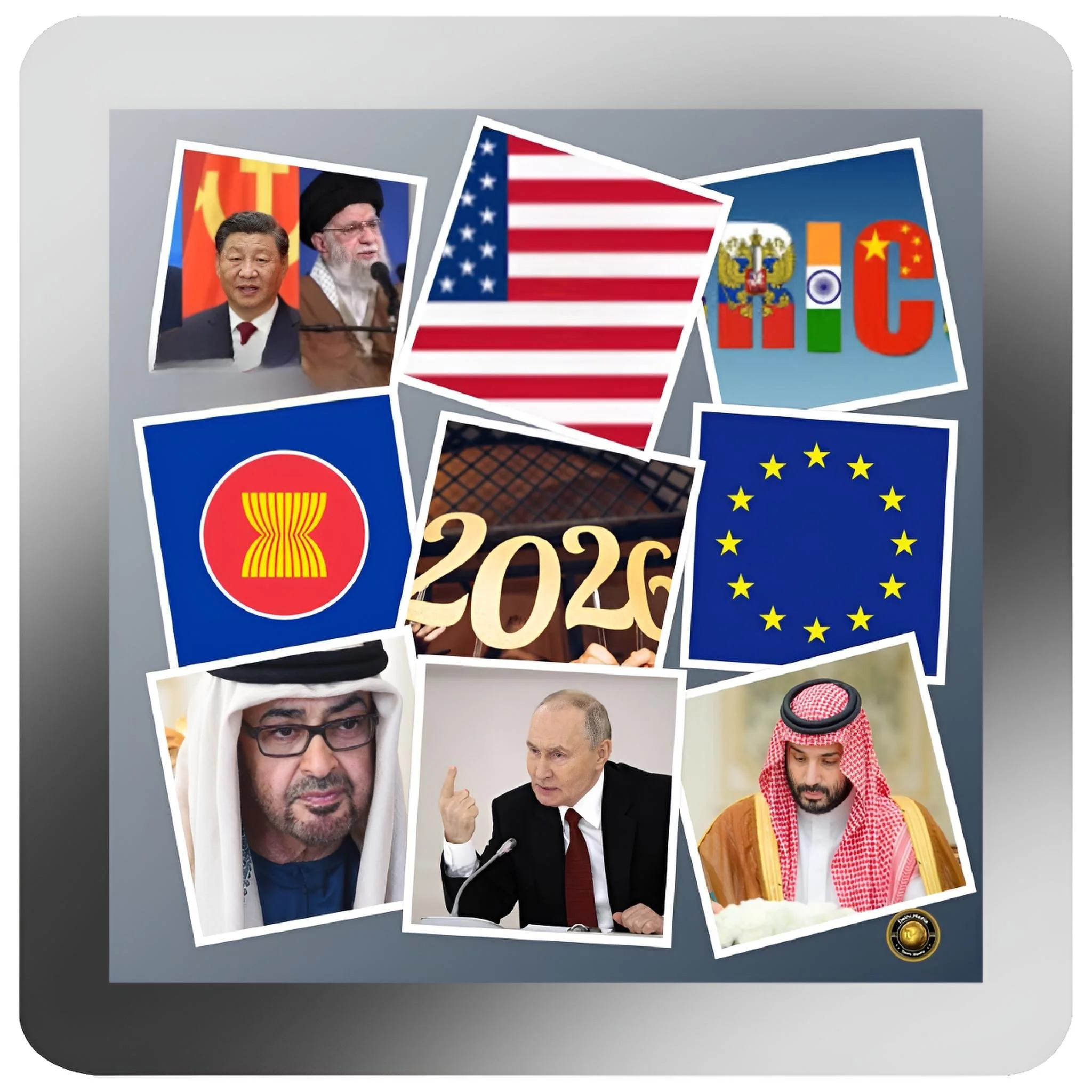
The BRICS coalition has expanded to incorporate Brazil, Russia, India, China, South Africa, Egypt, Ethiopia, Iran, Saudi Arabia, and the United Arab Emirates, collectively representing 35.6% of global GDP in purchasing power parity.
This grouping serves as a forum for reconstituting the global order and redefining engagement protocols in pursuit of political and economic multipolarity.
Over 30 nations have expressed interest in joining the BRICS framework, seeking new avenues for economic growth and reduced reliance on Western financial systems.
ASEAN’s Strategic Autonomy
The Association of Southeast Asian Nations (ASEAN) showcases the potential for successful regional integration while preserving strategic autonomy.
ASEAN’s strategy of engaging multiple global powers without rigid alignments makes it an appealing partner for established and emerging powers.
Its achievements in economic integration and diplomatic flexibility position it favorably in the emerging multipolar context.
African Continental Integration
The African Union’s initiatives, such as the African Continental Free Trade Area (AfCFTA) and the New Partnership for Africa's Development (NEPAD), exemplify the continent’s commitment to unity and self-reliance.
Despite significant challenges, Africa’s integration efforts aim to more effectively leverage its demographic growth and rich natural resources.
Conclusion
In summary, the decline of Western hegemony alongside the ascent of a multipolar world marks a pivotal and transformative juncture in international relations.
As a growing array of states assert their influence on the global stage, it is essential that current geopolitical frameworks and institutions undergo comprehensive reevaluation and reform.
This reassessment is vital to ensure they are aligned with the evolving power dynamics and governance structures that define our contemporary landscape.
The international community finds itself at a critical crossroads, poised to navigate the intricacies of this transformation.
As we enter an era defined by a blend of challenges and opportunities, it is imperative to cultivate an environment that promotes enhanced collaboration and constructive engagement between nations.
This new paradigm demands innovative, multifaceted approaches to diplomacy and conflict resolution, moving beyond traditional methodologies to effectively address the complexities of modern international interactions.