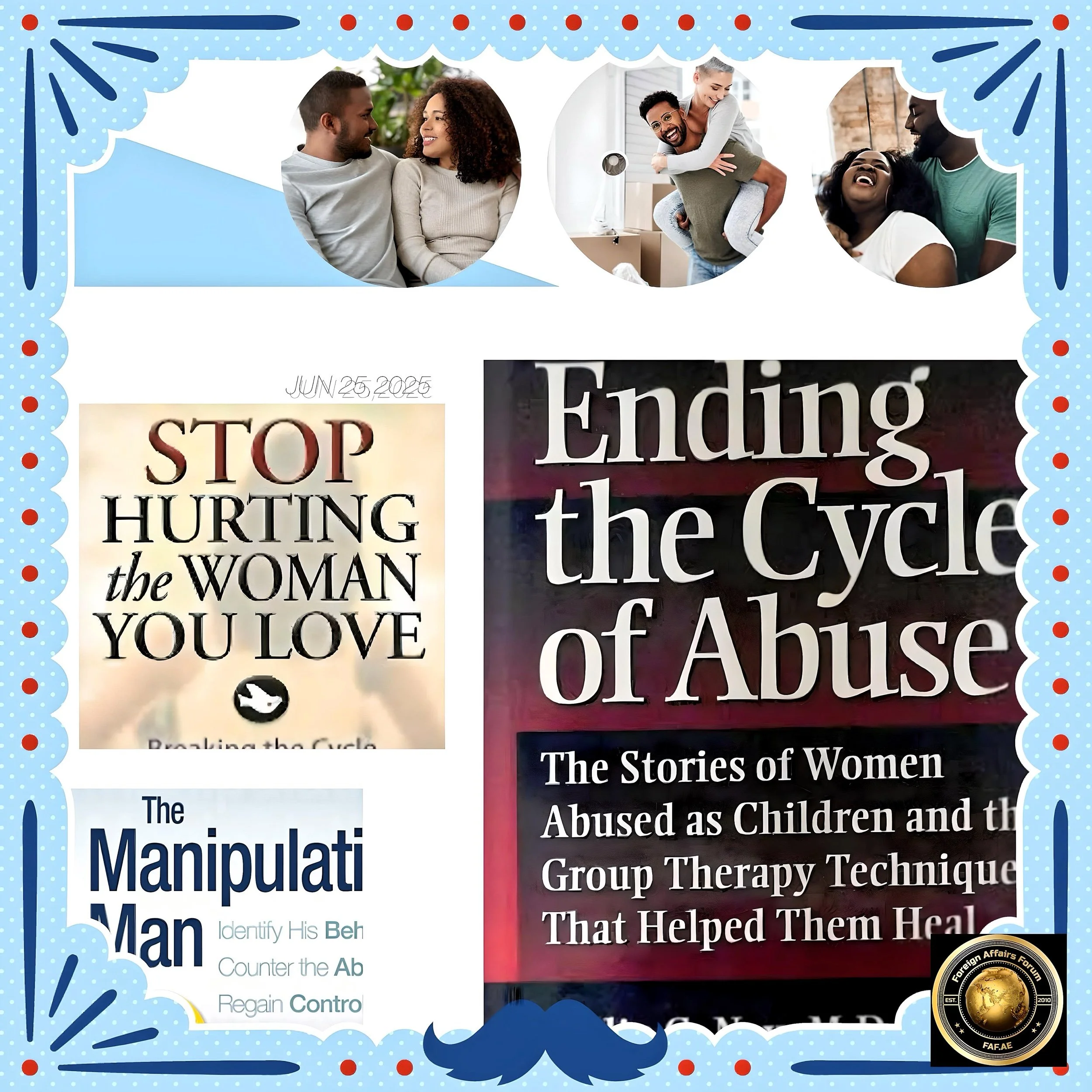
Insights Derived from “Stop Hurting the Woman You Love” and “The Manipulative Man” for Contemporary Relationship Dynamics: Recognizing, acknowledging, nurturing love and Affection
Introduction
“Stop Hurting the Woman You Love” by Charlie Donaldson and Randy Flood, alongside “The Manipulative Man” by Dorothy McCoy, provide essential frameworks for identifying and mitigating dysfunctional relationship dynamics.
In analyzing the complexities of modern relationships, these texts present critical frameworks for understanding emotional dynamics.
They emphasize the importance of acknowledging destructive behaviors and their impact on interpersonal connections, while advocating for the cultivation of genuine affection as a foundational element for healthy partnerships.
Understanding these principles is essential for fostering resilience and mutual respect in romantic engagements.
Understanding Abusive and Manipulative Patterns
The Cycle of Abuse
Abusive relationships typically adhere to a discernible four-phase cycle: tension building, acute abuse (acting out), reconciliation (characterized by a “honeymoon phase”), and a period of calm.
This cyclical nature obscures the reality of the situation; the intervals of contrition and affection can lead victims to develop a false sense of hope that the abusive behavior will cease.
Recognizing this cycle is pivotal for early intervention and support.
Types of Manipulative Behavior
McCoy’s text categorizes several manipulative personality archetypes worthy of scrutiny:
Mama’s Boys
Individuals overly reliant on maternal figures, struggling to engage in mature interpersonal relationships.
Narcissist
Those exhibiting extreme self-absorption alongside an inflated self-image.
Workaholics
Individuals who use occupational demands as a shield against emotional intimacy.
Passive-Aggressives
People who express animosity and exert control through indirect means.
Womanizers
Serial opportunists who engage in manipulative behaviors across multiple partnerships.
Psychopaths
Charismatic yet devoid of genuine empathy and moral sensibility.
Red Flags to Recognize Early
Warning Signs of Controlling Behavior
Prior to committing to a relationship, it's critical to identify salient red flags that may indicate potential manipulation:
Emotional Manipulation
Gaslighting
Causing doubt in one’s perceptions and realities.
Love Bombing
Intense expressions of affection early in the relationship, fostering dependency.
Guilt-Tripping
Inducing unnecessary guilt for the manipulator’s emotional state.
Playing the Victim
Utilizing a narrative of victimhood to deflect accountability.
Isolation Tactics
Undermining or obstructing contact with family or friends.
Instigating conflicts to alienate the partner from their support systems.
Cultivating guilt for maintaining external relationships.
Control and Dominance
Exhibiting extreme jealousy and possessiveness.
Monitoring communications, activities, or whereabouts.
Making unilateral decisions regarding finances, personal appearance, or activities.
Using threats or intimidation to ensure compliance.
Physical and Sexual Warning Signs
Donaldson and Flood emphasize that domestic violence transcends physicality. Indicators include:
Any form of unwanted physical contact or threats of violence.
Sexual coercion or actions taken without explicit consent.
Intimidation tactics such as aggressive outbursts, destruction of property, or threats involving self-harm or weapons.
Lessons for Healthy Relationship Building
Characteristics of Healthy Relationships
Prior to engaging in any relationship, it is crucial to understand the attributes of healthy dynamics:
Foundational Elements
Mutual Respect
Acknowledging each other’s boundaries and value.
Trust
Confidence in each other’s fidelity and integrity.
Open Communication
The ability to express emotions candidly without fear of retribution.
Individual Autonomy
Maintaining personal interests, friendships, and identities.
Communication Skills
Essential competencies include
Active Listening
Prioritizing comprehension over defensive retorts.
Conflict Resolution
Navigating disagreements with respect and without personal attacks.
Empathy
Validating and understanding each other’s viewpoints.
Setting and Maintaining Boundaries
Effective boundary-setting is integral to emotional safety:
Clear communication of limits and expectations is vital.
Consistent reinforcement of boundaries when breached is crucial.
Self-awareness concerning personal needs and triggers must be prioritized.
Mutual respect for each partner’s boundaries is essential.
Important Note
When to Seek Professional Help or Exit a Relationship
Indicators of an Unsalvageable Relationship
Safety Concerns
Any threats to your physical or emotional safety warrant immediate attention.
Resistance to Change
If the other party exhibits a persistent unwillingness to address or amend harmful behaviors, this is a significant red flag.
Chronic Anxiety
A consistent state of feeling as though you’re “walking on eggshells” indicates an unhealthy dynamic and potential for escalation.
Modern Applications and Protective Strategies
Building Self-Awareness
Prior to entering into relationships, individuals should develop a heightened emotional intelligence to recognize personal patterns and triggers.
Engaging in self-reflection through practices such as journaling or mindfulness can illuminate past experiences that may influence relational choices.
A robust sense of self, independent of romantic entanglements, is crucial.
Creating Support Networks
Maintaining external connections is essential. Continued engagement with friends and family, alongside soliciting objective counsel from trusted confidants, can provide critical perspectives.
Isolation, even when intensely infatuated, is dangerous, and professional counseling should be considered when necessary.
Trust Your Instincts
Both texts underscore the importance of heeding intuition:
If a situation feels inherently wrong, it warrants investigation rather than dismissal.
Prioritize behaviors over words; actions are more indicative of intent.
Avoid rationalizing concerning behavior; address red flags proactively.
When to Seek Professional Help or Exit a Relationship
Indicators of an Unsalvageable Relationship
Safety Concerns
Any threats to your physical or emotional safety warrant immediate attention.
Resistance to Change
If the other party exhibits a persistent unwillingness to address or amend harmful behaviors, this is a significant red flag.
Chronic Anxiety
A consistent state of feeling as though you’re “walking on eggshells” indicates an unhealthy dynamic and potential for escalation.
Conclusion
Reflection on the Erosion of Foundational Values in Contemporary Society: Acknowledging and Cultivating Love
This analysis addresses the pressing issue of the systemic decline of core values—specifically, love and compassion, which exist; at times, they are configurations.
A rigorous examination of ancestral wisdom is crucial when synthesizing it with contemporary frameworks and practices.
This critical juxtaposition of traditional values against modern paradigms can engender a balanced, meaningful existence.
Historically, individuals and communities were deeply embedded in relational networks, driven by a profound sense of duty and emotional engagement.
Ancestral wisdom should serve as a foundational element informing interpersonal relationships. This intrinsic value system acted as a cohesive force, positioning love as an ephemeral emotion and a commitment expressed through intentional actions.
Expansive compassion is vital to this discourse, as it transcends individualistic paradigms, thereby enhancing collective resilience. Previously, societies ingrained gratitude practices as foundational rituals, promoting a mindset steeped in humility and appreciation for everyday experiences.
However, the current sociocultural landscape presents formidable challenges to these essential values. Our hyper-connected, fast-paced environment promotes a prevalence of transactional relationships, with contemporary interactions often landing in superficiality devoid of genuine commitment, skewed toward immediate gratification.
This propensity for instant rewards risks impeding the cultivation of long-term relational investments.
Information overload, a continuous influx of stimuli, has been shown to diminish our empathic capacities and responsiveness to others' emotional needs.
Thus, a synergistic approach that marries modern tools with timeless values is paramount. Business acumen can enhance strategic decision-making, ethical leadership, and deliberate long-term planning within personal and professional relationships.
Shifting the focus to value creation through trust and mutual benefit becomes essential, countering contemporary tendencies toward short-term transactional gains.
Emphasizing a spiritual dimension can foster mindfulness, enriching active participation and authentic empathy in interpersonal exchanges.
This alignment of purpose goes beyond mere utility, enhancing relational depth.
Moreover, insights derived from attachment theory offer a framework for understanding how early relational experiences shape adult relationship dynamics.
Our strategic approach must prioritize a growth mindset, conceptualizing interpersonal challenges as opportunities for deeper connection and understanding. Emotional intelligence (EQ) and self-awareness have emerged as critical competencies; recognizing one's emotional states and triggers significantly augments our capacity for empathy, allowing for a more nuanced engagement with others' experiences.
Actionable strategies must be implemented to revive core values like love, compassion, and gratitude. Daily reflection practices should incorporate dedicated time to assess moments of kindness and appreciation.
Intentional communication is necessary for fostering meaningful dialogues across personal and professional spheres.
Additionally, regular acts of unconditional service can be impactful; these spontaneous expressions of kindness contribute significantly to re-establishing deep social bonds.
Creating opportunities for engagement with elders can facilitate the transmission of narratives and wisdom that provide contextual understanding essential for community cohesion.
We can construct a more empathetic and enriched approach to our collective existence by integrating ancient insights with modern methodologies.
This integrated perspective not only enhances individual well-being but also fortifies the structural integrity of our communities.
As scholars, practitioners, and engaged citizens, we must model and cultivate these foundational values, addressing pressing social issues and reflecting critically on the complexities of modern relationships.
Adopting a mindset aimed at preventing harm to those we seek to love is crucial, thereby actively fostering connections characterized by empathy and tenderness.
Ultimately, many unresolved questions surrounding love, such as “Does love exist for me?” or “Where can love be found?”—will surface as we conduct deeper self-reflection.
Embracing an open attitude can reveal that love exists; at times, our expectations or perceptions blur it.
Life is expansive in its capacity for love, and societal norms should not constrain our understanding of this truth.
As some wise individuals suggest, setting aside contemporary distractions and engaging with one's heart can yield profound insights.
Embracing this perspective can transform our relational experiences dramatically for the better.