Voicing the Silenced: A Comprehensive Scholarly Examination and Geopolitical Evaluation of the Cultural Genocide in Tibet - His Holiness the Dalai Lama
Foreward
Title: “Voice for the Voiceless”
A Political Memoir by the 14th Dalai Lama
Overview and Scholarly Importance
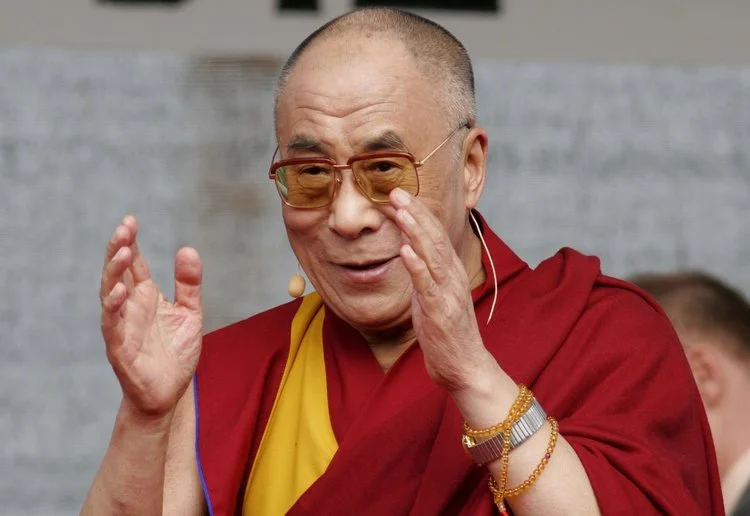
“Voice for the Voiceless: Over Seven Decades of Struggle with China for My Land and My People,” published in March 2025, marks a significant political memoir from the 14th Dalai Lama.
This work diverges from his previously published texts on Buddhism and spirituality, offering an extensive political narrative encapsulating his seven-decade engagement with Chinese Communist leadership.
The memoir presents an invaluable historical record, providing meticulous documentation of high-level diplomatic negotiations between Tibet and China from 1950 to the contemporary era.
The Dalai Lama details encounters with all the foremost Chinese leaders from Mao Zedong to Xi Jinping, yielding primary source material essential for historians and political scientists examining Sino-Tibetan relations. Professor Tenzin Dorjee highlights this memoir as the “Dalai Lama’s definitive report on the Sino-Tibetan conflict resolution.”
Key Academic Contributions
Historical Documentation
The memoir charts the progression of Chinese policies in Tibet, tracing the trajectory from initial rhetoric of “liberation” to the contemporary strategies of cultural assimilation under Xi Jinping.
The Dalai Lama illustrates how negotiations consistently centered on pressuring him to relinquish Tibet’s aspirations for independence.
Political Strategy Analysis
The text outlines the Dalai Lama’s strategic evolution from seeking total independence to endorsing the “Middle Way Approach,” which advocates for genuine autonomy within the framework of the Chinese state.
This strategic pivot, formalized in 1974, reflects a significant compromise that has been persistently rejected by Beijing.
Succession Planning
The memoir addresses the politically sensitive topic of the Dalai Lama’s reincarnation, asserting that his successor will emerge “in the free world,” outside the reach of Chinese influence. This statement serves as a strategic measure to preempt Beijing’s potential to appoint a state-sanctioned successor.
Contemporary Geopolitical Implications
Strategic Tibet
The “Third Pole” Tibet’s geopolitical relevance transcends its religious value, earning the designation of the “Third Pole” and “Water Tower of Asia.”
Tibet controls an annual flow of 718 billion cubic meters of surface water to neighboring nations, with a significant portion diverted to India, granting China substantial leverage over South Asian water security.
Military and Infrastructure Developments
China has systematically militarized Tibet, deploying advanced weaponry such as Type-15 tanks and 155 mm vehicle-mounted howitzers in recent exercises.
The construction of dual-purpose infrastructure facilitates both military and civilian operations, enabling quick troop deployments to strategic locations, which poses direct threats to India’s northern borders and enhances Chinese military projection into South Asia.
Demographic and Cultural Transformation
Under Xi Jinping's governance, the demographic alteration of Tibet has intensified through the settlement of Han Chinese and the implementation of policies that compel Tibetan children into state-run Chinese-language boarding schools.
Such measures have drawn criticism, with experts classifying them as cultural genocide.
Succession Controversy
A Geopolitical Flashpoint
Historical Context and Religious Authority
The succession conundrum is rooted in the dichotomy between Tibetan Buddhist reincarnation beliefs and Chinese Communist ideology.
Conventional practices dictate that the quest for a new Dalai Lama commences only post-mortem, a process characterized by spiritual signs and consultations among senior monks, taking years to confirm.
China’s Control Mechanisms
Legal Framework
The “Golden Urn method” mandates state approval for all reincarnations, asserting that any future Dalai Lama must be selected in accordance with Chinese laws and regulations.
Precedent Setting
The 1995 abduction of the Panchen Lama, whose reincarnation was acknowledged by the Dalai Lama, illustrates Beijing’s readiness to exercise coercion; the child remains missing, while China instituted its own candidate.
Institutional Control
The Chinese government has deployed nearly 300,000 personnel across rural Tibet as part of the “resident cadre system” to maintain oversight during potential succession crises.
Counter-Strategic Position of the Dalai Lama
On July 2, 2025, in advance of his 90th birthday, the Dalai Lama declared that the Gaden Phodrang Trust possesses “sole authority” to identify his reincarnation, directly contesting Beijing's claims and foreshadowing a confrontation concerning competing successors.
The strategic repercussions of this declaration are substantial; as noted by Tibet expert Tashi Rabgey, it introduces a scenario with significant geopolitical implications.
Regional and Global Implications of India-China Relations
The impending succession of the Dalai Lama presents a complex strategic challenge for India. As the host of the Dalai Lama and the Central Tibetan Administration (government-in-exile), India is under significant pressure from China to obstruct any reincarnation processes occurring within its borders.
Intelligence assessments indicate that China aims to apply its "one China" doctrine to garner international endorsement for its chosen successor to the Dalai Lama.
This move is expected to reinforce Beijing’s narrative regarding its sovereignty over Tibet.
Conversely, India has staunchly supported the Dalai Lama’s prerogative in matters of succession.
Indian Union Minister Kiren Rijiju has emphasized that decisions regarding succession are vested solely in the established institutions and the Dalai Lama himself.
International Response
The United States has proactively addressed this issue through the Tibetan Policy and Support Act of 2020, which imposes repercussions on Chinese officials who interfere with the reincarnation process.
Additionally, bipartisan support in Congress has led to the designation of July 6, 2025, as “A Day of Compassion” in honor of the Dalai Lama, highlighting the legislative commitment to Tibetan autonomy.
Long-term Strategic Consequences
This succession crisis is poised to give rise to a historical precedent: the potential for two competing Dalai Lamas.
The ramifications of this schism might endure for decades, fundamentally reshaping Tibetan Buddhism and perpetuating Sino-Indian tensions.
China’s strategic calculus seems to hinge on the notion that it can capitalize on the post-Dalai Lama period to extinguish Tibetan dissent.
However, proactive measures by the current Dalai Lama may effectively mitigate this risk while globalizing the discourse surrounding Tibet, especially at a time when China is keen on presenting itself as stable and rational in the sphere of international governance.
Conclusion
The Enduring Tibet Question
The publication of “Voice for the Voiceless” transcends a mere memoir; it encapsulates a strategic framework aimed at navigating the complexities of the post-Dalai Lama landscape.
The book’s release aligns with escalating geopolitical rivalries and heightened scrutiny of China’s human rights violations.
The ongoing succession debate is likely to serve as a perpetual reminder of China’s legitimacy crisis in Tibet, which could be detrimental to Beijing's diplomatic aspirations.
The work articulates a continued advocacy for the cultural preservation and autonomy of the Tibetan people, despite the evolving demographic and political transformations under Chinese governance.
The resolution of these highly nuanced issues will ultimately hinge not only on religious and cultural dynamics but also on the trajectory of Sino-Indian relations, China’s global ambitions, and the international community’s commitment to supporting Tibetan self-determination in an increasingly multipolar global order.