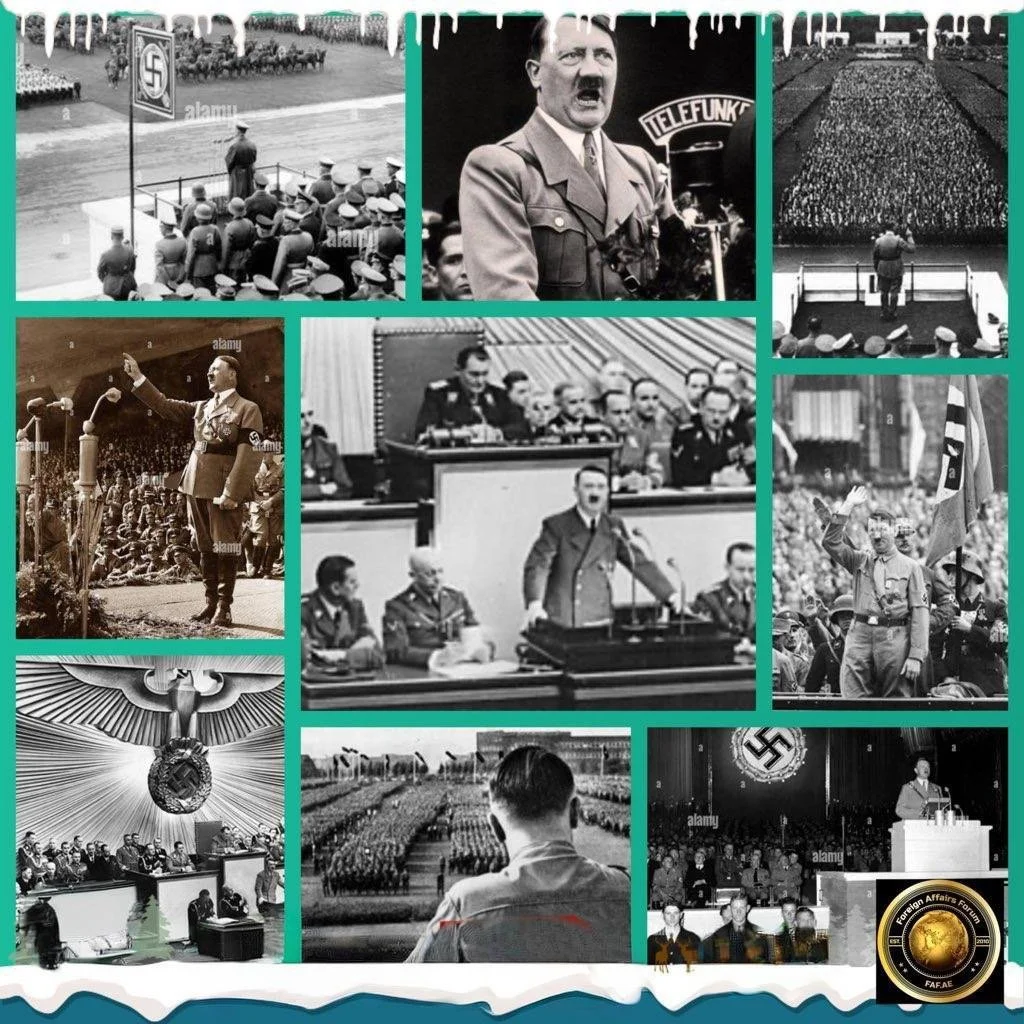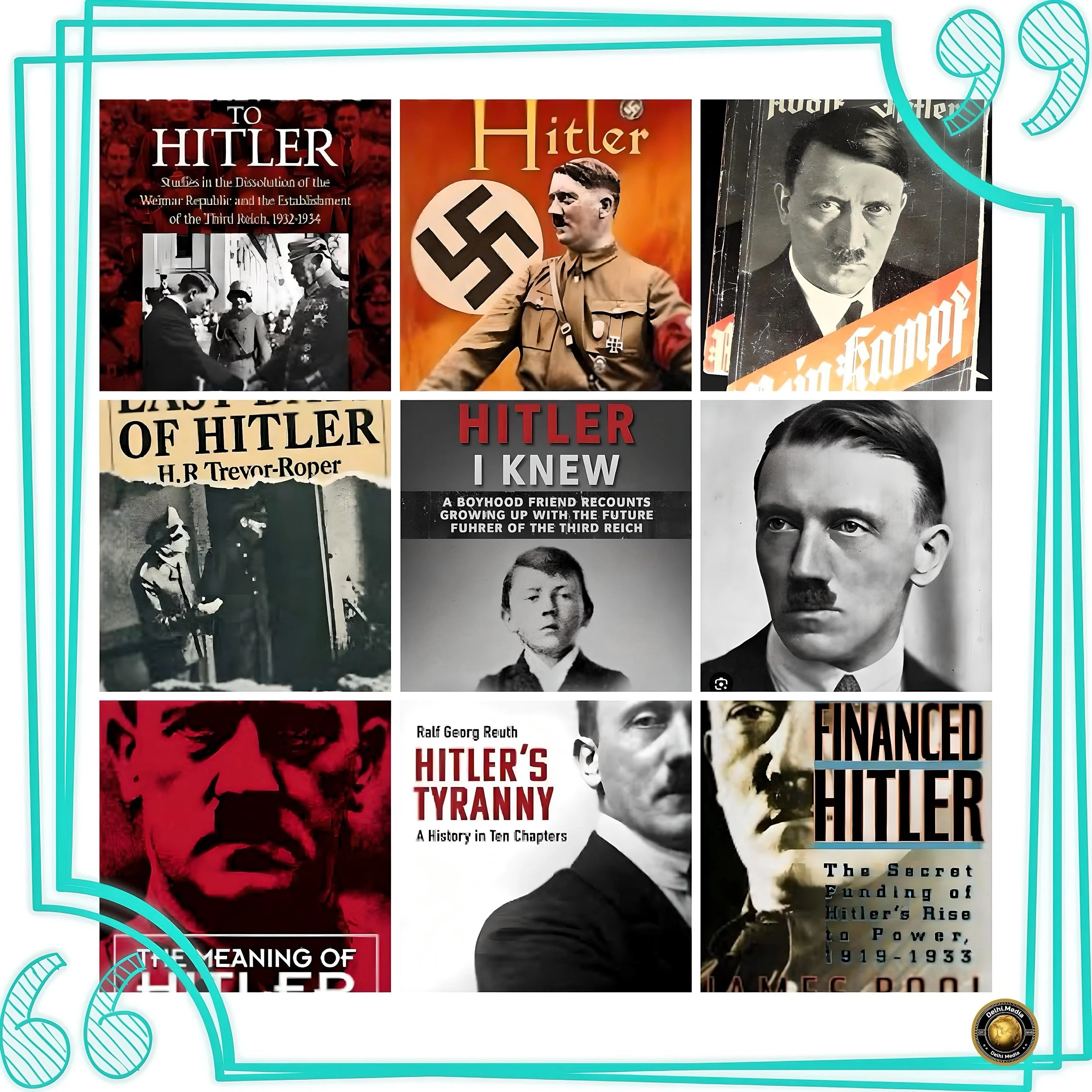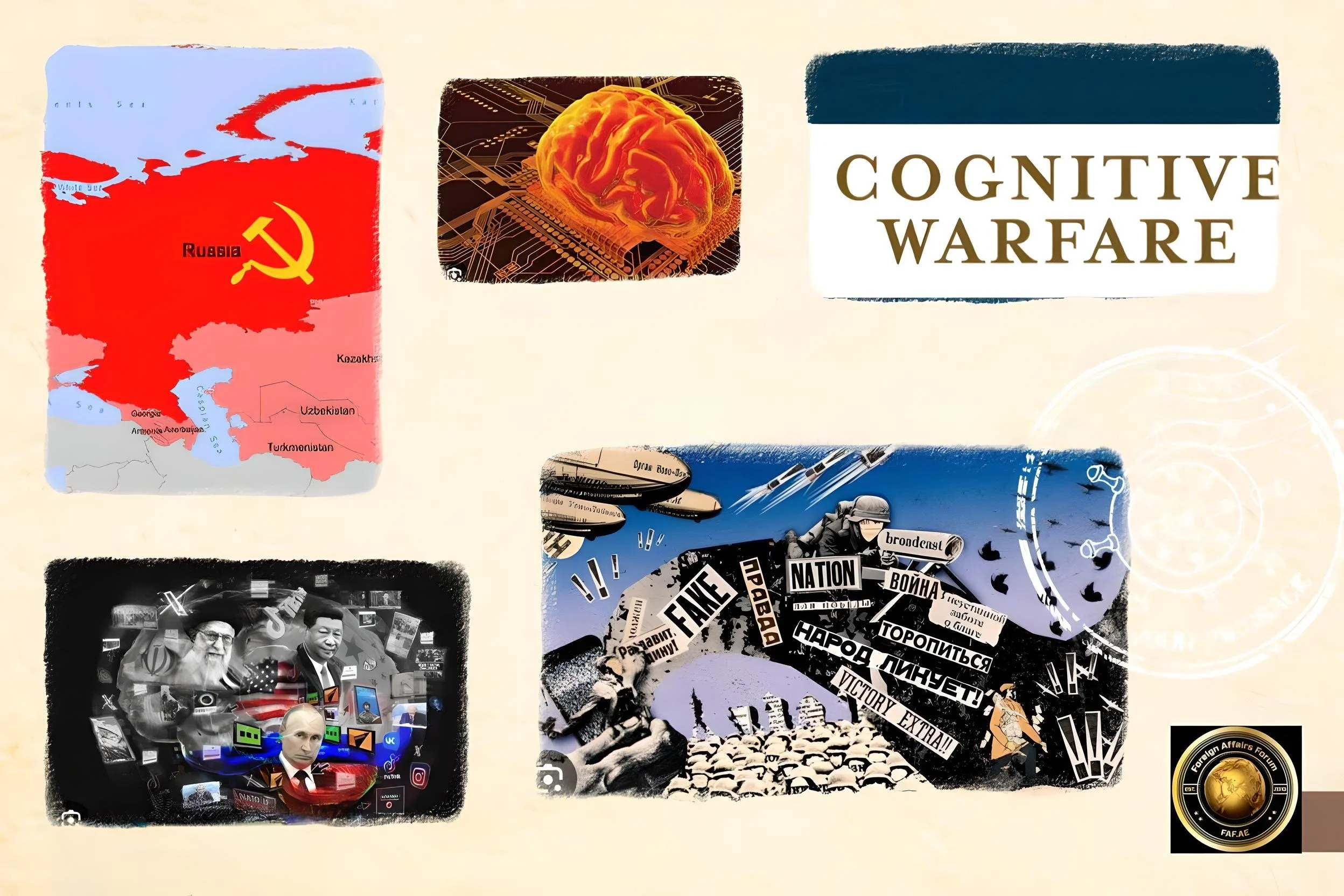
"Mein Kampf": A Scholarly Analysis of Hitler's Nationalistic Ideology and Its Underpinnings: An Exploration of Hitler's Leadership Dynamics and Their Historical Consequences.
Introduction
Adolf Hitler’s *Mein Kampf*, authored during his incarceration in 1924, remains a profoundly dangerous yet analytically rich text.
Despite its widely condemned hateful ideology, the book offers crucial insights into the mechanisms of authoritarian strategic thinking, the effects of which reverberate through contemporary geopolitical conflicts and political movements.
Analyzing these frameworks is vital for accurately identifying and effectively countering analogous threats in today’s political landscape.
Hitler’s Strategic Mindset and Its Modern Relevance
The Blueprint for Territorial Expansion
Hitler’s strategic framework was deeply rooted in the notion of Lebensraum (“living space”), encompassing more than territorial acquisition.
In Mein Kampf, Hitler articulated that Lebensraum transcended mere land acquisition; it involved the systematic extermination of perceived inferior races and the facilitation of the ascendance of the German master race.
This geopolitical paradigm integrated social Darwinism with pragmatic military planning, a synthesis modern strategists must scrutinize to discern recurring patterns.
Key elements of Hitler's strategic doctrine included the imperative of resource control for national survival, a preference for continental over colonial expansion, and the calculated displacement of existing populations.
His assertion that “the sword will become our plow, and from the tears of war the daily bread of future generations will grow” illustrates the intertwining of territorial conquest with racial ideology and economic scheming.
Military Strategy and the Blitzkrieg Doctrine
Hitler's strategic innovations, particularly the formulation of Blitzkrieg (“lightning war”), underscored his comprehension of modern warfare's psychological and technological nuances.
This strategy prioritized speed, surprise, and force concentration at crucial points, circumventing traditional defensive fortifications and penetrating deep into opposing territories.
The effectiveness of these tactics was starkly evident in the invasions of Poland (1939) and France (1940), which fundamentally transformed military doctrine on a global scale.
However, Hitler’s strategic limitations became pronounced when he ventured beyond his primary competencies.
His decision to invade the Soviet Union while still engaged with Britain, the declaration of war on the United States, and his inability to adapt tactics to varied geographical and political landscapes illuminated the perils of ideological rigidity in strategic planning.
Why Global Leaders Study “Mein Kampf” Despite Its Hateful Ideology
Understanding Authoritarian Patterns
Contemporary political leaders and scholars examine *Mein Kampf* not for its ideological tenets but for its instructive insights into authoritarian strategy and propaganda methodologies.
The text is a historical cautionary tale about how extremist movements can ascend and entrench power through ostensibly democratic mechanisms.
Dr. Lisa Pine’s recent analysis underscores that Hitler was “remarkably transparent about his intentions,” rendering the work significant for understanding how authoritarian leaders convey their strategic objectives.
The book's dual-layered architecture—providing simplistic scapegoating narratives for mass consumption alongside sophisticated propaganda techniques for political elites—illuminates the operational modality of authoritarian movements at multiple levels.
This comprehension is essential for modern political analysts and policymakers, who must recognize early indicators of democratic backsliding.
Academic and Security Analysis
Modern intelligence agencies and academic institutions study Mein Kampf as a case study of strategic communication and political manipulation.
The text elucidates how Hitler systematically eroded democratic institutions, established alternative information ecosystems, and garnered widespread support through emotional rather than rational manipulation.
These methods bear striking parallels to contemporary political movements globally.
The propaganda theories espoused in the book remain alarmingly pertinent to modern information warfare.
Hitler emphasized that propaganda “must be limited to a very few points and must harp on these in slogans until the last member of the public understands what you want him to understand by your slogan,” a concept that resonates with current political messaging strategies.
Influence on Modern Information Warfare
Propaganda Techniques and Contemporary Application
*Mein Kampf* unintentionally serves as a manual for contemporary propaganda strategies that remain effective today.
Hitler’s strategic orientation towards information warfare encompassed several principles that contemporary authoritarian movements have appropriated
The Big Lie Technique
Adolf Hitler asserted, “The great masses of the people will more easily fall victim to a big lie than a small one.”
This notion has been strategically leveraged in contemporary disinformation initiatives, where egregious falsehoods are disseminated to establish credibility through incessant repetition.
Current political discourse in Russia, China, Pakistan, Israel, and the United States exemplifies this phenomenon, as it often aligns with the principles of large-scale misinformation strategies.
Emotional Over Rational Appeal
Hitler emphasized that propaganda must “consider the emotions of the masses” rather than intellectual arguments.
Current political messaging increasingly hinges on emotional manipulation, fear-mongering, and identity-based appeals, often overshadowing substantive policy discourse
Dual-Messaging Systems
The text illustrates how authoritarian movements can concurrently target diverse audiences with tailored messaging, providing simplistic scapegoating narratives for the general populace while delivering intricate power strategies to elites.
This duality is observable in contemporary political movements that employ varied messaging across multiple platforms to reach different demographic cohorts.
Digital Age Adaptations in Information Warfare
Contemporary information warfare has effectively transposed the propaganda strategies pioneered by Hitler onto digital platforms and social media ecosystems.
Authoritarian movements today employ algorithmic amplification, precision-targeted messaging, and the establishment of alternative information landscapes to replicate the propaganda results Hitler achieved through mass rallies, radio broadcasts, and print media.
One notable tactic is “flooding” information environments with positive or distracting content instead of merely censoring unfavorable information, mirroring techniques outlined in Mein Kampf.
Modern authoritarian regimes leverage social media bots, coordinate inauthentic behavior, and unleash information overload to achieve effects analogous to traditional propaganda methods.
Identify Early Warning Signs of Nationalist Rhetoric
Research conducted by institutions like the U.S. Holocaust Museum identifies twelve early warning signs of fascism, many of which resonate with the methods described in *Mein Kampf*:
Powerful and enduring nationalism
Disdain for human rights
Casting enemies as a unifying cause
Controlled mass media
Obsession with national security
Scorn for intellectual discourse and the arts
These patterns are evident in the contemporary political landscapes of Hungary, Poland, India, and Brazil.
A crucial understanding from the analysis of *Mein Kampf* is recognizing that these authoritarian techniques can develop incrementally, often within legal frameworks of democratic systems.
Modern Nationalist Rhetoric Patterns
Recent studies have identified rhetorical strategies that echo those in *Mein Kampf*:
Victimization Narratives
Populist leaders frequently portray their nations as exploited victims of external threats, akin to Hitler’s reframing of Germany’s post-WWI plight.
This fosters emotional justification for aggressive domestic policies and international disengagement.
Blame Game Politics
The strategy of attributing complex socioeconomic issues to designated scapegoat groups—such as immigrants, minorities, or political adversaries—mirrors the scapegoating of Jews and communists that Hitler employed.
Strongman Positioning
Contemporary authoritarian populists often frame themselves uniquely qualified to resolve national issues, channeling Hitler’s *Führerprinzip*, which concentrated power in a single individual.
Digital Era Warning Signs
Modern technology has spawned new avenues for propagandistic techniques found in “Mein Kampf”.
Social media platforms facilitate the swift dissemination of nationalist rhetoric, the creation of echo chambers, and targeted public opinion manipulation.
Researchers have identified pertinent signs of this digital-age threat.
Tactics employed in information warfare that inundate media environments with false or misleading content
Algorithmic amplification of polarizing content that aligns with the repetition techniques advocated by Hitler
Coordinated harassment campaigns directed at journalists and political adversaries
Creation of alternative information ecosystems reminiscent of the Nazi party's control over media.
Strategic Lessons for Democratic Resilience
Institutional Safeguards
The scrutiny of *Mein Kampf* underscores the need for resilient democratic institutions capable of thwarting authoritarian encroachment.
Hitler's ascent was enabled mainly by the fragility of Weimar Germany's democratic institutions and the complicity of conservative politicians willing to ally with extremists for immediate political advantage.
Contemporary democracies must fortify checks and balances, uphold press freedom, ensure judicial independence, and maintain civilian oversight of military forces.
The incremental erosion of these safeguards poses a principal threat to modern democratic frameworks rather than sudden coups.
Media Literacy and Information Defense
Understanding Hitler’s propaganda techniques highlights the vital importance of media literacy in sustaining democratic integrity.
Citizens must recognize manipulation tactics, critically evaluate information sources, and resist emotional appeals rooted in nationalism.
Educational curricula should prioritize critical thinking and preserve historical awareness of the repercussions of authoritarian governance.
As indicated by the analysis of *Mein Kampf*, extremist movements often initiate with seemingly legitimate appeals to national pride and valid grievances before advancing toward more perilous rhetoric and policies.
Conclusion
The continued relevance of *Mein Kampf* lies not in its ideological assertions but in its exposition of authoritarian strategic thinking and propaganda methodologies.
Modern democratic societies must scrutinize these observable patterns to identify early indicators of democratic backsliding and to devise effective counter-strategies against contemporary threats.
This examination is a stark reminder that democracy demands consistent vigilance and proactive defense.
Dr. Pine articulates that “vigilance is essential to avert the rise of extreme political movements and autocratic leaders who propagate dangerous and, indeed, lethal ideologies.”
Understanding the strategic framework presented in *Mein Kampf* is crucial for contemporary democratic resilience.