Domestic Violence Against Men: A Global Analysis- A perfect game of chess - Women’s card - Part 2 Series
Overview of Male Victimization in Domestic Violence
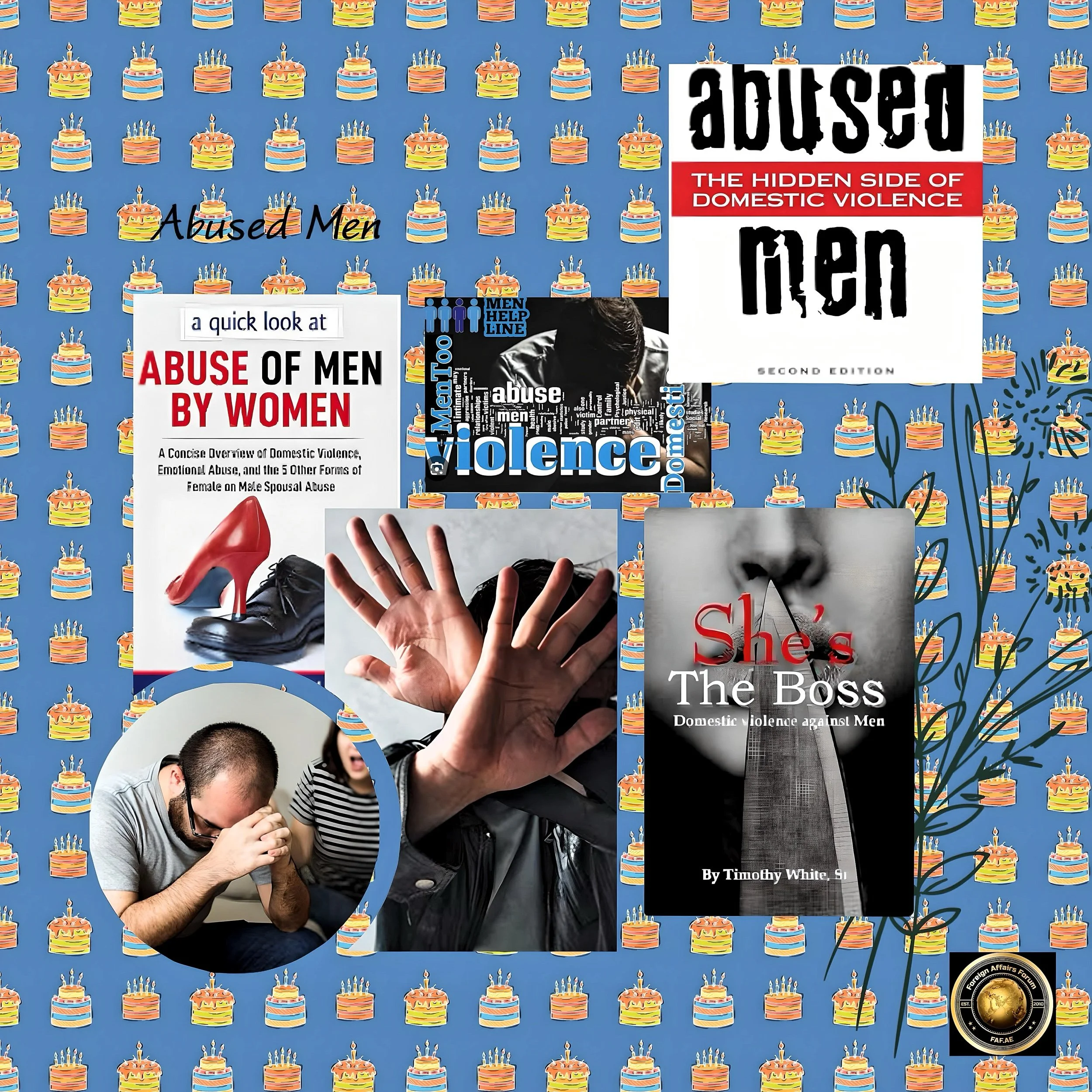
Contrary to prevailing beliefs, domestic violence against men constitutes a substantial and significantly underreported global concern.
FAF Research indicates that approximately one in three victims of domestic violence are male.
Within the United States, studies estimate that about one in ten men have experienced contact sexual violence, physical violence, and/or stalking from an intimate partner. However numbers are more alarming in South America and Indo-pacific.
The patterns of both underreporting and social stigmatization concerning male victimization remain pervasive across various cultures and regions.
Regional Analysis
Western Nations
United States and Canada
The Centers for Disease Control and Prevention (CDC) reports that nearly one in four men has encountered some form of contact sexual violence in their lifetimes.
Approximately one in three men experiences contact sexual violence, physical violence, and/or stalking by an intimate partner during their lives. In Canada, male victims constituted roughly 21% of police-reported intimate partner violence cases in 2018.
United Kingdom and Europe
Data from the UK indicates that around one-third of domestic abuse victims are male. In England and Wales, an estimated 2.1% of men over 16 years of age reported experiencing partner abuse in the year ending March 2023.
Across the European Union, incidence rates of male sexual assault victims vary by country, from 3.4% in Finland to 23.4% in Ireland. Australian statistics from 2016 reveal that about 2.4% of men experienced physical or sexual violence from a female perpetrator in the previous year.
The broader context indicates that approximately 42% of men (around 4 million) have experienced physical violence, with 34% (3.3 million) encountering physical assault.
Indo-Pacific Region
Japan
Japan is witnessing a growing acknowledgment of male victimization, with the number of male victims seeking assistance increasing 2.5 times between 2019 and 2020 (from 2,902 to 7,354 cases).
Evidence suggests that male victims of intimate partner violence (IPV) in Japan are more susceptible to psychological abuse than to physical violence; the proportion of men among IPV victims has risen from 21.7% in 2019 to 26.9% in 2022.
Australia (Indo-Pacific Context)
Within the Indo-Pacific framework, data indicates that at least one in three victims of family violence are male, with a striking 94% of male victims reporting female perpetrators.
Eastern Nations and Developing Regions
India
India exhibits alarmingly high rates of domestic violence against men.
A comprehensive study found that 52.4% of men reported experiencing gender-based violence, with 51.5% facing violence from their wives or intimate partners at least once in their lives. Emotional abuse was the most prevalent form reported (51.6%), followed by physical abuse (6%).
Middle East and Eastern Europe
Complex patterns emerge in the Middle East, where studies across ten MENA countries show over 63% of respondents reported increased violence during the COVID-19 pandemic. Notably, in half of these countries, a greater proportion of male respondents reported experiencing physical altercations than their female counterparts.
Greece
Research conducted during the COVID-19 pandemic in Greece revealed that among male victims, 24.2% experienced physical abuse, 18.0% sexual abuse, 74.7% psychological abuse, and 58.1% socioeconomic abuse.
Methods Employed by Women Against Men
Physical Violence Techniques
Evidence indicates that female perpetrators employ a variety of physical violence methods, including biting, scratching, kicking, punching, slapping, pushing, and shoving.
Notably, some female IPV perpetrators adopt strategies to mitigate strength disparities, such as using weapons or attacking while the male victim is asleep. Specific findings include:
Slapping is the most prevalent form of physical violence (98.3%), whereas being beaten with a weapon is the least common (3.3%).
The use of weapons (e.g., guns or knives) or striking with objects is documented.
Attacks often occur while the victim is in a vulnerable state, such as asleep.
The act of throwing objects or damaging possessions is also reported.
Family Dynamics
A continent of ‘Women’s card’
A game of chess
In many Pacific and Indo-Pacific nations, adult single siblings often remain reliant on their parents, stemming from cultural traditions that emphasize the necessity of marrying off children.
This phenomenon perpetuates a joint or nuclear family structure.
Consequently, adult children may struggle to assume full responsibility or foster independence in their relationships, including marriages.
The ingrained traditional norms can inhibit personal growth, which may then translate into their marital relationships.
Additionally, parental involvement often complicates marital dynamics, with parents sometimes dictating aspects of the young couples' lives.
Furthermore, in various circumstances, widowed, divorced, or single mothers cohabitate with their adult children, complicating relational structures under the guise of tradition.
While these familial norms may carry historical significance, they increasingly clash with contemporary social contexts, warranting a reevaluation of their impact on interpersonal relationships.
Psychological and Emotional Abuse in Female IPV Perpetrators
Research indicates that female perpetrators of Intimate Partner Violence (IPV) often engage in more coercive and controlling tactics compared to their male counterparts, with a significant focus on psychological methods.
Key tactics include
Gaslighting and Manipulation
Creating doubt in the victim’s perception or memory of events.
Social Isolation
Systematically cutting the victim off from friends, family, and community networks to foster dependency.
Financial Control
Imposing restrictive financial allowances, demanding documentation of spending, or controlling access to resources.
Behavioral Monitoring
Surveillance of communications (texts, calls, emails) to maintain control.
Threats of False Allegations
Leveraging the threat of making unfounded claims of abuse to coerce compliance.
Verbal Abuse
Utilizing name-calling, humiliation, and relentless criticism to diminish self-esteem.
Legal and Administrative Abuse
A troubling trend observed among female IPV perpetrators is the prevalence of legal and administrative abuse, which encompasses:
False Allegations of Domestic Violence
Threatening the victim with fabricated claims.
Manipulation of Legal Processes
Exploiting legal systems during custody battles to gain leverage or harm the partner.
Administrative Harassment
Using bureaucratic procedures as a tool for control or intimidation.
Early Warning Signs of Domestic Abuse
Relationship Dynamics
Several early warning indicators apply across both genders:
Isolation Tactics
Restricting the victim's relationships and interactions, including discouraging contact with others.
Control and Monitoring
Excessive inquiries about whereabouts, unauthorized access to devices, and unilateral financial decision-making.
Emotional Manipulation
Engaging in consistent criticism, emotional games, and gaslighting tactics.
Escalation Patterns
Rapid commitment strategies intended to establish control, alongside an unrealistic expectation of fulfilling all emotional needs.
Gender-Specific Warning Signs for Male Victims
Challenging Masculinity
Key indicators of abuse against male victims include:
Undermining Masculine Identity
Comments designed to challenge traditional notions of masculinity.
Exploiting Vulnerabilities
Threatening to publicly expose perceived weaknesses.
Stereotypical Resistance
Leveraging societal expectations that men should cope with issues independently, which compounds their victimization.
Barriers to Reporting and Help-Seeking
Societal and Cultural Barriers
Reluctance Rooted in Masculinity
The fear of compromising masculinity often deters male victims from seeking help.
Skepticism about Credibility
Victims may worry about being disbelieved or ridiculed, and they often face stigma that complicates recognition of their victim status.
Legal and Institutional Barriers
Custody Fears
Concerns about potential loss of child custody may dissuade men from reporting abuse.
Arrest Risk
The fear of being arrested rather than receiving aid can act as a significant deterrent.
Lack of Resource Visibility
Male-focused services are often inadequately represented in support networks.
Regional Variations in Reporting
Cultural Context
In certain traditional societies, adherence to social norms can prevent men from seeking assistance.
For instance, in Japan, male IPV victims are more likely to seek help post-physical violence but are reticent to report non-physical forms of abuse.
Impacts and Consequences
Health Effects
Male victims of domestic abuse experience long-term physical and psychological repercussions akin to those faced by female victims.
Studies report that over 70% of male victims have contemplated suicide, with many suffering from depression and anxiety.
Underreporting Trends
More than half of male victims do not disclose their abuse experiences, and studies indicate that men are 2 to 3 times more likely than women to remain silent about their victimization.
Conclusion
Domestic violence against men is a significant global concern that transcends cultural, economic, and geographical boundaries.
Despite varying prevalence rates—ranging from 52.4% in rural India to 10.5% in developed nations—the issues of underreporting, stigma, and the inadequacy of support services are widely shared.
The methodologies employed by female perpetrators often exploit physical vulnerabilities and entrenched gender norms, while the early warning signs reflect those observed in violence against women, further complicated by societal stereotypes about masculinity that hinder recognition and reporting.
Addressing this multifaceted issue necessitates comprehensive policy reforms, educational initiatives targeting gender stereotypes, and the establishment of gender-neutral or male-specific support services that acknowledge the distinct barriers faced by male victims of domestic violence.