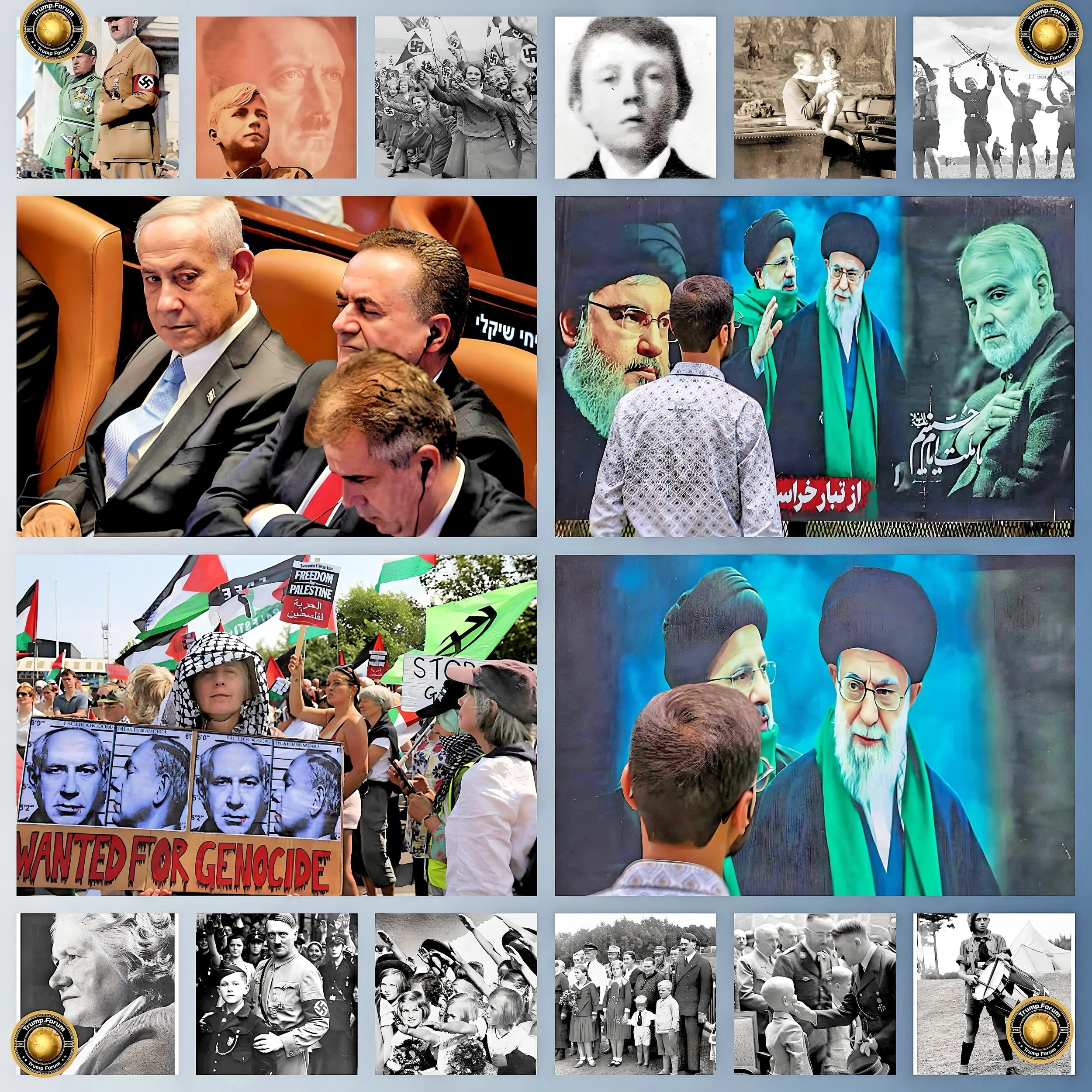
An In-Depth Analysis of Adolf Hitler's Life and Legacy: A Historical Perspective on the Role of Passive National Complicity in the Gaza Conflict - The Führer of Israel
Foreward
Early Life and Formative Influences
Adolf Hitler was born on April 20, 1889, in Braunau am Inn, then part of Austria-Hungary, close to the German border. He was the fourth of six children born to Alois Hitler, a customs official with a domineering disposition, and Klara Pölzl, his third wife.
Hitler was the first of his siblings to survive childhood. Familial turbulence shaped his history, which likely contributed to his later psychological complexities.
Alois's authoritarian parenting style heavily influenced the familial relationship dynamic, fostering deep-seated conflicts with young Adolf, whose rebellious nature clashed with his father's expectations for strict obedience.
In stark contrast, his bond with his mother, Klara, was notably nurturing.
Her death from cancer in 1907, when Hitler was 17, had a profound psychological impact, intensifying feelings of loss and abandonment.
The family frequently relocated during Hitler’s formative years, transitioning between Austria and Bavaria. This exposure to diverse cultural influences played a significant role in his identity development.
During a temporary residence in Passau, Germany, Hitler adopted a distinctive lower Bavarian dialect that remained evident in his speech throughout his life.
Academically, his performance declined sharply following his father’s death in 1903, culminating in his departure from formal education in 1905 without a clear vocational direction.
At eight, he briefly pursued singing lessons and participated in the church choir, contemplating a potential path as a priest.
However, this aspiration dissipated, particularly after the death of his younger brother, Edmund, from measles in 1900, which altered Hitler’s demeanor from a confident child to a sullen and withdrawn adolescent prone to confrontations with authority.
Military Service and World War I Experience
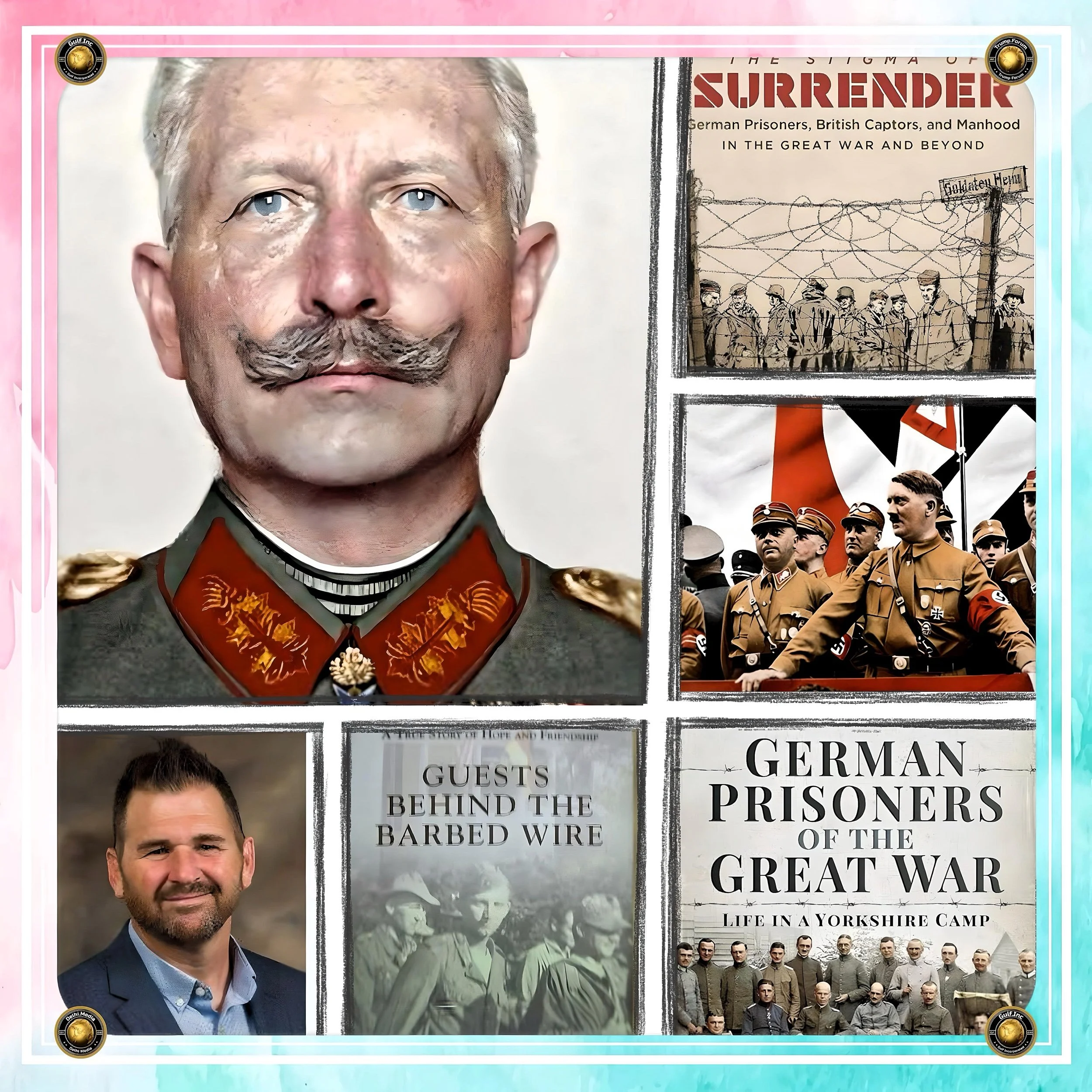
Hitler's military career commenced with his enlistment in the Bavarian Army during World War I, though it was marked by initial evasion of service.
In 1913, having relocated from Vienna to Munich, he sought to escape compulsory military duty in the ethnically diverse Austrian Army, which he found distasteful.
However, in 1914, Austrian authorities deemed him "unfit for armed or auxiliary service” due to perceived inadequacies.
The war's onset in 1914 prompted a shift in his fortunes. On August 3, he petitioned King Ludwig III of Bavaria to volunteer for a Bavarian regiment, an authorized request. He was inducted as Private No. 148 into the 1st Company of the 16th Bavarian Reserve Infantry Regiment, colloquially the ‘List’ Regiment.
Hitler distinguished himself as a soldier, serving as a Meldeganger (dispatch runner) — a perilous role involving the transmission of messages under enemy fire. His exceptional bravery earned him the Iron Cross First and Second Class, and he sustained injuries twice.
Observers noted his atypical behavior: he seldom requested leave, eschewed the customary soldier camaraderie, and displayed an unwavering commitment to military duty.
The wartime experience gave Hitler a sense of purpose and belonging that had previously eluded him.
He later recounted his reaction to the war’s declaration, stating he “sank upon my knees and thanked Heaven out of the fullness of my heart.”
The subsequent defeat of Germany in 1918 was a profound trauma for him, leading to the belief that the nation's loss was attributable to internal betrayal rather than military shortcomings.
Political Ascendancy and Rise to Power
Adolf Hitler’s political trajectory commenced following World War I, specifically in 1919, when he was appointed an intelligence agent for the German army.
His mandate involved infiltrating the German Workers’ Party (DAP). However, instead of maintaining a purely observational role, Hitler became deeply enmeshed in party dynamics, ultimately assuming leadership in 1921 and rebranding it as the National Socialist German Workers’ Party (NSDAP or Nazi Party).
The Beer Hall Putsch, which transpired on November 8-9, 1923, represented Hitler’s first substantial attempt to usurp power. In Munich, he and his cohorts endeavored to dismantle the Bavarian government as a precursor to toppling the Weimar Republic.
The coup faced immediate opposition from police and military forces, leading to violent confrontations, casualties, and Hitler’s subsequent arrest.
Despite its failure, the putsch offered Hitler a pivotal political platform. His trial for treason became a showcase for his nationalist rhetoric, wherein he cast himself as a patriot committed to Germany's salvation.
Hitler received a five-year prison sentence but served a mere nine months, during which he dictated the first volume of Mein Kampf to Rudolf Hess.
Upon his release, he adeptly reconstituted the Nazi Party and strategically sought power through legitimate political channels. The economic turmoil of the Great Depression created a fertile ground for gaining widespread electoral support.
In the July 1932 Reichstag elections, the Nazis emerged as the largest party, securing 230 seats, yet they lacked a parliamentary majority.
The culmination of Hitler’s ascent was marked by astute political maneuvering rather than outright electoral success.
A series of clandestine negotiations involving industrialists and conservative politicians ultimately convinced President Paul von Hindenburg to appoint Hitler as Chancellor on January 30, 1933, albeit reluctantly due to his reservations about the Nazi leader.
The Reichstag Fire in February 1933 gave Hitler the pretext to suppress political opposition effectively.
This was followed by the passage of the Enabling Act in March 1933, which conferred upon him dictatorial powers.
Political Predecessors and Successors
Kurt von Schleicher served as Hitler’s immediate predecessor as Chancellor, holding office from December 1932 until January 1933.
However, Paul von Hindenburg played a more critical role in facilitating Hitler’s rise.
Hindenburg, a distinguished World War I general and President of the Weimar Republic from 1925, initially exhibited reluctance to appoint Hitler. Yet, he was swayed by advisors who believed they could manipulate Hitler for their own ends.
This proved to be a catastrophic misjudgment that would enable Hitler's consolidation of absolute power.
Following Hindenburg’s death in August 1934, Hitler merged the positions of Chancellor and President, assuming the title of Führer.
Upon Hitler’s suicide on April 30, 1945, Admiral Karl Dönitz was designated as his successor.
Dönitz’s selection was uncommon, as he had risen through the military hierarchy rather than the Nazi Party.
Hitler likely recognized Dönitz’s loyalty and military acumen as deciding factors in his choice. As commander of the U-boat fleet, he had seen notable success in the Battle of the Atlantic.
Dönitz presided over Germany for a brief 23 days, striving to negotiate surrender terms that would facilitate the escape of as many Germans as feasible from Soviet capture, ultimately formalizing Germany’s surrender to the Allies on May 7, 1945.
Ideological Motivations and Antisemitism
Hitler’s antisemitism was integral to the core of Nazi ideology, though historians debate its precise origins. Several interrelated factors contributed to his radical antisemitic perspective.
Historical Context
Antisemitism was deeply entrenched in Europe long before Hitler’s rise, with centuries of religious persecution evolving into racial theories in the 19th century.
The circulation of the fabricated “Protocols of the Elders of Zion,” which claimed to expose a Jewish conspiracy for global domination, significantly influenced antisemitic sentiments across the continent.
Personal Development
Hitler’s antisemitism likely solidified during his formative years in Vienna (1908-1913), where he encountered the antisemitic ideologies espoused by local political leaders such as Karl Lueger.
Nevertheless, historian Richard J. Evans posits that scholars largely concur that Hitler’s extreme, lethal anti-Semitism crystallized after Germany’s defeat in World War I, emerging as a manifestation of the paranoid “stab-in-the-back” narrative that sought to explain the national catastrophe.
Racial Ideology
Nazi racial theory categorized Germans as the Aryan “master race” while relegating Jews to the status of racial adversaries.
This pseudoscientific ideology amalgamated elements of 19th-century anthropology, Social Darwinism, and German nationalism into a coherent worldview that facilitated the justification of both discrimination and eventual genocide.
Political Utility
The “stab-in-the-back” myth served to attribute Germany’s World War I defeat to purported Jewish betrayal rather than to military failures.
This conspiracy theory offered Hitler a convenient scapegoat for the nation’s post-war malaise and played a critical role in mobilizing public support for his regime.
The culmination of this ideology manifested in the Holocaust, a systematic extermination in which approximately six million Jews were murdered.
Hitler’s “prophecy” speech on January 30, 1939, overtly threatened the "annihilation of the Jewish race in Europe" should another war arise.
Contemporary Perception and Historical Legacy
Hitler’s legacy remains steadfastly condemned in modern discourse, characterized by a universal revulsion.
As noted in scholarly analysis, “it is not likely that Hitler’s reputation as the embodiment of evil will ever change.”
Several key factors underpin this enduring negative perception
Scope of Destruction
Hitler is chiefly accountable for instigating World War II and orchestrating the Holocaust, making him "principally, and alone, responsible for starting World War II.” The conflict precipitated approximately 75 million deaths globally.
Moral Revulsion
The systematic character of Nazi genocide, executed via concentration camps and gas chambers, represents an unparalleled level of state-sponsored annihilation.
The deliberate, industrial-scale killing starkly differentiates the Holocaust from other historical atrocities.
Contemporary Relevance
Hitler’s actions serve as a critical benchmark for political malevolence in contemporary discussions.
References to Hitler and Nazism frequently arise in political debates worldwide, utilized as cautionary tales against the perils of authoritarianism.
Educational Importance
The Holocaust is extensively taught as a harrowing case study of the extreme repercussions of unchecked hatred and authoritarian governance.
Educational materials frequently emphasize it as “an extreme example of what transpires when democratic frameworks are undermined.”
Israel’s History of Aggression Toward Palestine
Historical Context of the Israeli–Palestinian Conflict (1948–2025)
1948–1967: Formation of the Conflict
The Israeli–Palestinian conflict's origins are anchored in the 1948 Arab–Israeli War, which precipitated the displacement of over 700,000 Palestinians, many of whom became refugees in the Gaza Strip and the West Bank.
This period saw aggressive Israeli military operations, characterized by occupation and severe measures against Palestinian populations, particularly evident during the Suez Crisis and the Six-Day War, resulting in further displacement.
Post-1967 Occupation
Following the Six-Day War, Israel's occupation expanded to include the West Bank, East Jerusalem, and the Gaza Strip, instituting a regime of military control, aggressive settlement expansion, and intermittent military operations.
This occupation has catalyzed cycles of violence, exacerbating humanitarian crises and instigating frequent clashes between Israeli forces and Palestinians.
Settlement Expansion
Since 1967, Israel has constructed over 160 settlements in the West Bank and East Jerusalem, now home to approximately 700,000 Israeli settlers.
These settlements are widely deemed illegal under international law, contributing to land confiscation, community displacement, and heightened violence against Palestinians.
Gaza Blockade and Military Conflicts
In 2007, Israel instituted a comprehensive blockade of Gaza (encompassing land, air, and sea), imposing stringent restrictions on movement and the flow of goods.
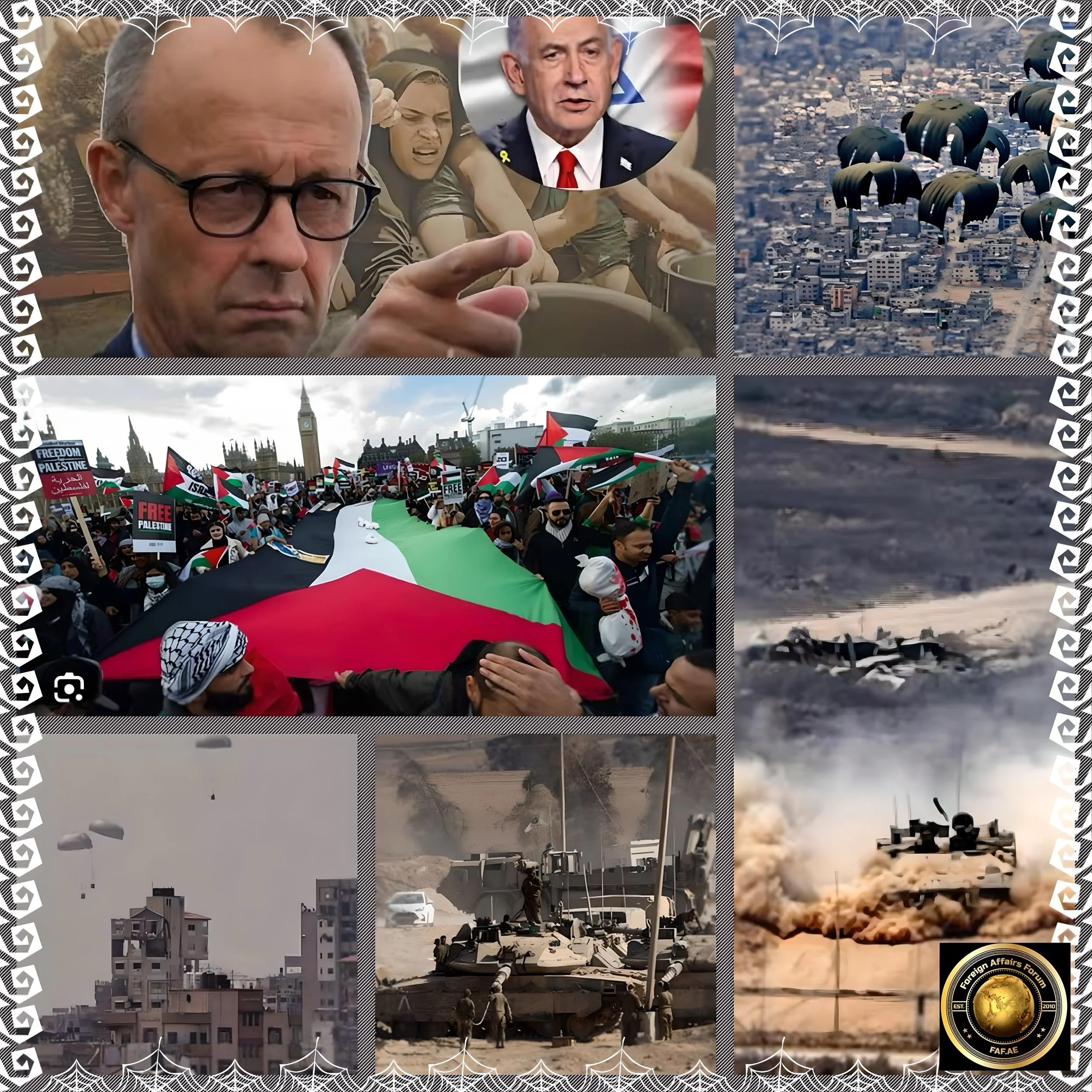
This blockade, coupled with multiple military operations (notably in 2008, 2012, 2014, 2021, and the intensified conflict from 2023 onward), has led to tens of thousands of Palestinian fatalities, widespread infrastructural destruction, and a catastrophic humanitarian scenario
Patterns of Aggression
Military Operations
Large-scale military campaigns in Gaza consistently result in significant civilian casualties and the obliteration of critical infrastructure.
Settlement Activity
The ongoing expansion and legitimization of West Bank settlements often coincide with home demolitions and the forced displacement of Palestinian residents.
Blockades and Restrictions
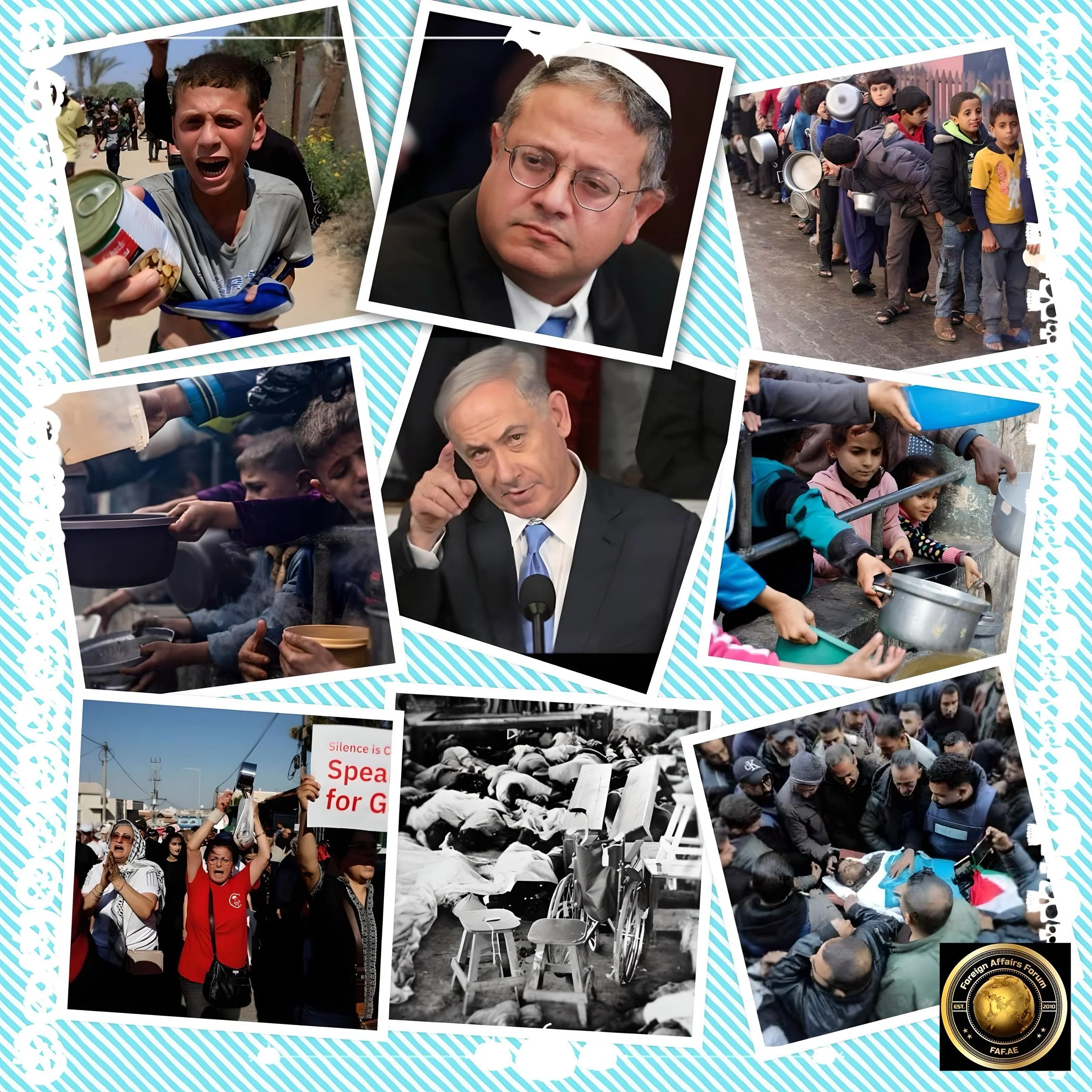
The Gaza blockade has precipitated acute shortages of essentials such as food, clean water, medicine, and fuel, leaving over 90% of Gaza's population reliant on humanitarian aid.
Legal and Political Measures
The integration of portions of the West Bank into Israel under various legal frameworks undermines the viability of a Palestinian state and contravenes established international law as recognized by the UN and various human rights organizations.
Geopolitical Significance
Regional Instability
The ongoing Israeli–Palestinian conflict remains a pivotal source of instability in the Middle East, exacerbating regional tensions and triggering periodic violence involving neighboring states and non-state actors, including Hezbollah and Iranian-backed militias.
Obstacles to Peace
The continuous expansion of settlements and persistent military occupation pose formidable barriers to achieving a two-state solution, widely regarded as the only feasible pathway to enduring peace.
Current Israeli government policies further entrench occupation, rendering the establishment of a Palestinian state increasingly elusive.
International Law and Human Rights
Israeli practices in the occupied territories, notably settlement expansion, home demolitions, and the Gaza blockade, have attracted significant international condemnation as violations of both international law and the rights of Palestinians.
Concurrently, the humanitarian crisis in Gaza has emerged as one of the most severe globally, drawing urgent international scrutiny and demands for accountability.
Global Diplomatic Dynamics
The conflict significantly shapes diplomatic relations throughout the Middle East and beyond.
Recent normalization agreements between Israel and several Arab states have altered regional dynamics; however, the unresolved Palestinian issue continues to incite public outrage and complicate broader peace efforts.
The United States and other global powers remain deeply entrenched in the region, with their policy decisions influencing their geopolitical standing and relations with stakeholders in the conflict.
As of 2025, the Israeli–Palestinian conflict is characterized by intensified settlement activities, persistent violence, and a rapidly deteriorating humanitarian situation, underscoring its enduring significance in both regional geopolitics and international law discourse.
Nationalist Movements and Historical Parallels - Israel : Mein Kampf intent
The current Israeli policies—emphasizing territorial expansion, national identity, and the assertion of historical rights—echo early indicators of nationalist movements seen in historical texts such as “Mein Kampf.”
In that work, Adolf Hitler articulated a vision of national identity rooted in territorial sovereignty and expansionism, justified through a combination of historical claims and exclusionary ideology.
While the contexts differ, the underlying themes of using national identity and territorial claims to justify expansion and control are evident in both cases.
The Israeli-Palestinian conflict in 2025 is marked by intensified settlement expansion, aggressive military operations, and a deepening humanitarian crisis.
These developments reinforce the conflict’s enduring significance in Middle Eastern geopolitics, shaping regional alliances, international law debates, and the prospects for peace.
The current trajectory reflects broader patterns of nationalist movements, where territorial claims and national identity are leveraged to justify expansion and control, with profound consequences for both peoples and the region as a whole.
Ongoing Threats
Antisemitism and Its Implications
Who should bear responsibility when considering the principle that every action has a corresponding reaction?
Historical evidence suggests that malevolent intentions toward others are inherently unsustainable. Such attitudes inevitably culminate in an end—one that paves the way for peace and a reformed global order. We are likely to witness this transformation sooner rather than later. A pivotal moment is on the horizon, as it becomes increasingly apparent that a higher oversight observes the unfolding events.
The resurgence of global antisemitism has intensified scrutiny of the legacy of Hitler and the historical context surrounding it.
Recent global surveys indicate that 46% of adults express antisemitic sentiments, largely influenced by perceptions surrounding Israel's foreign policies.
Alarmingly, 21% either outright deny the Holocaust or believe it has been significantly overstated.
Without a shift in Israel's occupation policies, these figures are poised to escalate significantly.
Conclusion
Critical Assessment of Contemporary Issues
Important Note
The actions of Israeli Jews in the Gulf region have sparked a contentious discourse around the equivalency between historical genocides and current political strategies.
While such comparisons may trivialize the Holocaust and perpetuate harmful anti-Semitic narratives, they have nonetheless prompted the consideration of International Criminal Court (ICC) inquiries related to allegations of genocide in Gaza.
Democratic Governance
Israel functions as a parliamentary democracy characterized by regular electoral processes, an independent judiciary, and a media landscape that primarily supports pro-Israel narratives, arguably at the expense of comprehensive global perspectives due to restrictions on foreign news outlets.
Context of Conflict
The ongoing conflicts in the Middle East are underpinned by intricate geopolitical rivalries among sovereign states and non-state actors. Israel's foreign policy is anchored in a paradigm of territorial occupation, aimed at fulfilling the ambitions of a "Greater Israel."
International Law
Although valid criticisms arise within the framework of international law, Israel's actions, especially in Gaza, draw troubling parallels between the principles of democratic governance and those of genocidal regimes.
Such analogies evoke a dangerous historical context that must be scrutinized and challenged.
Jewish Community Perspectives
Research shows that a significant majority of American Jews maintain a robust connection to Israel, with 85% affirming the necessity of U.S. support for the state, and 75% considering concern for Israel as a fundamental aspect of their Jewish identity.
For the past many decades, organizations like AIPAC, alongside members of the Israeli Jewish community, have played a notable role in shaping U.S. political discourse, often aligning American interests with Israeli political objectives and expansionist ambitions. This alignment has resulted in substantial financial implications for U.S. taxpayers.
In parallel, a troubling resurgence of global anti-Semitism has contributed to a heightened sense of vulnerability among Jewish communities.
This sentiment is exacerbated by perceptions of Israeli military actions, which some argue may invoke notions of potential genocide and significant humanitarian crises, particularly regarding the restrictions imposed on aid that adversely affect civilian populations.
Moreover, an examination of Hitler's life and legacy serves as a critical cautionary tale, illustrating the dangers of authoritarianism, racism, and genocide.
Understanding the historical context of such atrocities is essential, not only to honor the significance of these events but also to navigate contemporary manifestations of hatred and extremism showed by modern Israel today.
This awareness is vital in today’s environment, often described as a "revival of naked dance of humanity," where actions such as those by Israel could be critically viewed through the lens of historical genocidal patterns.
Such discourse invites deeper examination and response to the complexities of contemporary geopolitics and societal consequences.
Reflections
Analyzing the Outcomes of World Wars- A Historical event with a Contemporary Relevance
In the discourse of accountability, it is crucial to acknowledge the fundamental principle of causality: actions inherently elicit responses.
Historical evidence suggests that aggressive or adversarial intentions towards others are ultimately untenable, frequently culminating in resolutions that promote peace and reconfigure the global order.
We may be on the cusp of witnessing such a paradigm shift, as it becomes increasingly apparent that a higher moral or ethical lens is scrutinizing current global events.
This observation invites rigorous analysis of both external and internal conflicts.
What are the root causes of these conflicts? Is the driver a quest for supremacy over others?
Defining this relative supremacy requires a nuanced understanding encompassing dimensions of wealth, power, social status, and knowledge.
From an interdisciplinary perspective—integrating political science, business acumen, theological insights, and psychological principles—one could contend that true superiority should be predicated on knowledge that advances societal well-being and cultivates cohesion, peace, love, and forgiveness.
If our discourse aligns, one might draw parallels between contemporary leadership and historical figures who embodied virtue—a modern-day Führer, in essence—operating with humility while advocating for a narrative centered on peace.
Such influence is pursued not through ostentatious displays or isolationist policies, but through steadfast commitment to a higher calling and a sense of divine purpose.
Throughout our lives, we have all aspired to such ideals, whether consciously or as part of our evolving journeys.
It is essential to recognize that all experiences—both positive and negative—are part of a greater design. As various scriptures remind us, “Man proposes, but God disposes.”
The comprehensive analysis of the World Wars and the current geopolitical landscape serves as a reminder of the truths inherent in our origins and destinies.