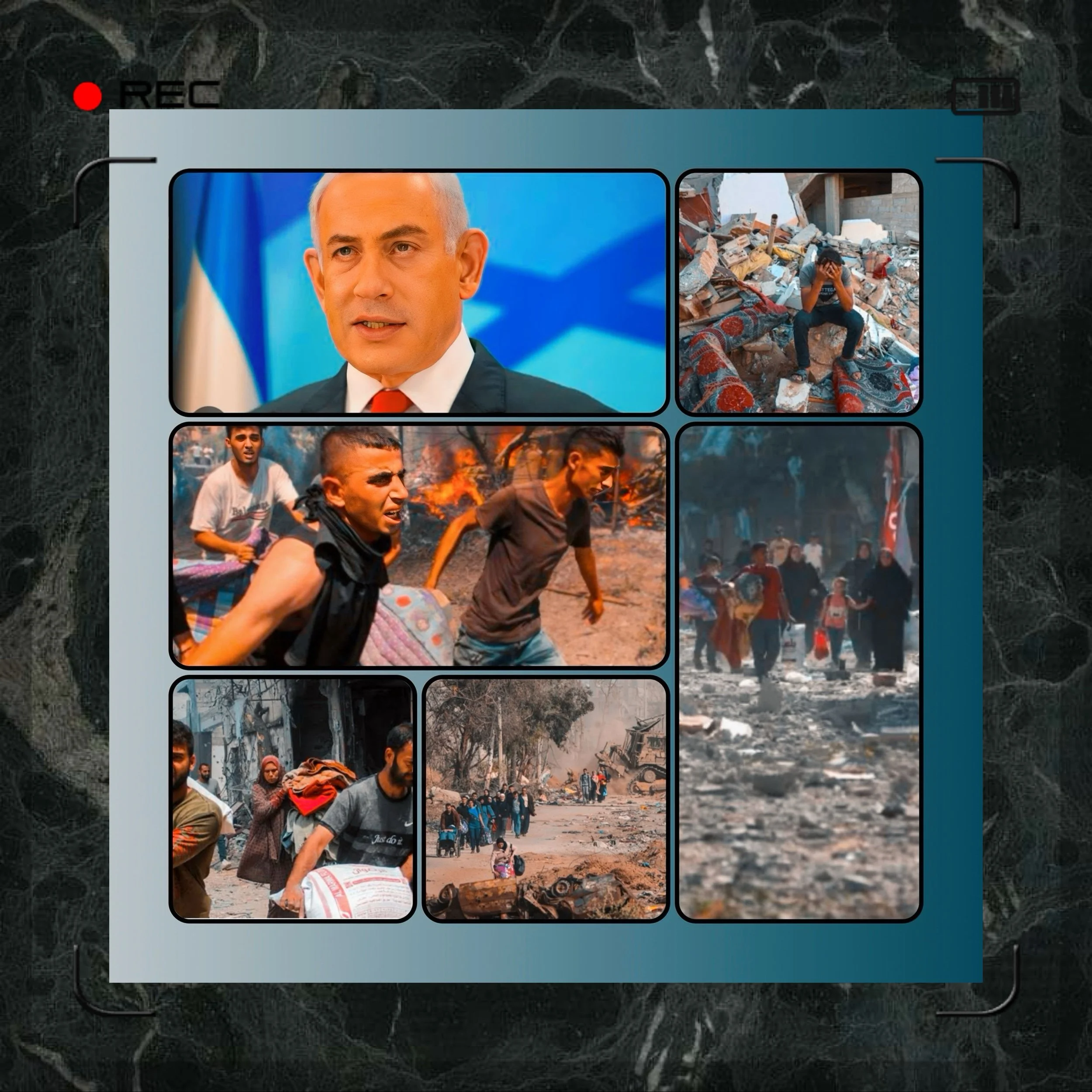
The Albanese Report: Corporate Complicity in an “Economy of Ocupation to economy of Genocide”
Foreword
Key Findings: Corporate Entities Complicit in Systematic Practices
The Albanese report, formally entitled “From Economy of Occupation to Economy of Genocide,” presents a detailed and rigorous examination by UN Special Rapporteur Francesca Albanese regarding the role of corporations in what she categorizes as Israel's systemic genocide against the Palestinian population.
Published on June 30, 2025, for the UN Human Rights Council, the report delineates 48 distinct corporate entities spanning various sectors that have facilitated and profited from Israel’s military operations and ongoing occupation.
These 48 corporations are merely representative of a broader network of corporate complicity, considered as just "the tip of the iceberg."
Albanese's office has accrued a comprehensive database of over 1,000 corporate entities gathered from submissions during the investigation, marking this as the most extensive compilation of corporate involvement in the Israeli-Palestinian conflict to date.
Unprecedented Corporate Profiteering Amidst Humanitarian Crisis
Exponential Growth of the Tel Aviv Stock Exchange: 213% Increase Valued at $225.7 Billion
The report details significant financial upturns throughout the period characterized by genocidal acts.
The Tel Aviv Stock Exchange has experienced a remarkable 213% increase since October 2023, amounting to $225.7 billion in market capitalization growth, with $67.8 billion gained solely in the past month.
This rise illustrates one of the most significant stock market escalations during an ongoing military engagement in contemporary history.
The report starkly contrasts this economic growth with the human cost: “One people enriched, one people erased.”
While Palestinian communities endure systematic erasure, corporations and investors have experienced unprecedented financial gains from the prevailing violence.
Surge in Military Expenditure: $46.5 Billion Allocation
Israel’s military expenditures more than doubled from $23.25 billion in 2023 to $46.5 billion in 2024, reflecting one of the highest per capita defense budgets globally.
This 65% increase in military spending has translated into substantial profits for both Israeli and international arms manufacturers.
Corporate Sectors and Specific Roles in the "Genocide Economy"
Arms Manufacturing: The F-35 "Beast Mode" Initiative
Lockheed Martin spearheads an unprecedented defense procurement initiative centered around the F-35 fighter jet, which involves collaboration with over 1,650 firms across eight nations.
Since October 2023, the utilization of F-35s and F-16s has been pivotal in the deployment of approximately 85,000 tons of ordnance on Gaza—equating to nearly six times the explosive yield of the atomic bomb dropped on Hiroshima.
Israel has pioneered the use of F-35s in "beast mode," where armaments are mounted externally rather than internally, significantly enhancing payload capacity.
Each F-35 in this configuration can carry over 18,000 pounds of munitions.
Elbit Systems, Israel's largest defense contractor, reported an 18.7% surge in profits during the period of conflict, driven by a 27% increase in aerospace revenues attributed to drone systems and precision-guided munitions.
The company is responsible for supplying 80% of Israel’s land forces' armaments and 85% of the combat drones deployed by the Israeli Air Force.
Technology Giants: Project Nimbus and AI-Enabled Targeting Systems
The report highlights Microsoft, Google (Alphabet), and Amazon's pivotal role in providing comprehensive access to their cloud and artificial intelligence infrastructures through Project Nimbus, a $1.2 billion contract.
In response to Israel's military cloud system becoming overloaded in October 2023, these tech giants swiftly intervened, supplying critical cloud resources and AI solutions.
Palantir Technologies has developed AI-driven targeting systems, exemplified by programs such as "Lavender," "Gospel," and "Where’s Daddy," which have streamlined Israel’s targeting protocols.
Notably, the Lavender system has flagged 37,000 Palestinians as suspected militants, marking their residences for potential airstrikes in the initial weeks of the conflict.
IBM manages databases containing biometric data of Palestinians and is involved in training Israeli military personnel.
The report draws explicit comparisons to IBM's historical role during the Nazi regime, suggesting that the company’s technologies enabled the generation and analysis of punched cards that facilitated the operations of concentration camps.
Construction and Demolition: Systematic Infrastructure Destruction
From 2023 onward, Israel has razed approximately 3,900 Palestinian structures using machinery from manufacturers such as Caterpillar, HD Hyundai, and Volvo Group.
Caterpillar’s D9 bulldozers have been described as "controlled weapons," employed to demolish homes, mosques, and even to entrap individuals during the destruction process.
Despite significant safety concerns and international backlash, Caterpillar secured a multi-million-dollar contract with the Israeli government in 2025, underscoring the company's ongoing involvement in infrastructure demolition efforts.
Financial Infrastructure: Bonds, Investments, and Market Confidence
Research indicates that BlackRock and Vanguard play significant roles as institutional investors in various companies that support Israeli military operations. Key findings include:
BlackRock is positioned as the second-largest institutional investor in notable firms such as Palantir (8.6%), Microsoft (7.8%), Amazon (6.6%), and Alphabet (6.6%).
Vanguard holds the largest institutional stake in Caterpillar (9.8%) and significant interests in Lockheed Martin (9.2%) and Elbit Systems (2%).
From October 2023, financial institutions have underwritten in excess of $13 billion in Israeli government bonds, facilitated by major players like BNP Paribas and Barclays, thereby sustaining Israel’s market confidence amid prevailing credit rating challenges.
Settlement Tourism: Normalizing Illegal Occupation
The report highlights a concerning trend in “settlement tourism,” with Booking.com increasing its listings in the West Bank from 26 to 70 between 2018 and 2023. Additionally, Airbnb features properties marketed by settlers within so-called “warm and loving community settlements.”
These platforms contribute to the normalization of illegal settlements while systematically excluding Palestinian access to their own land.
Legal Framework and International Accountability
ICJ Advisory Opinion: Occupation Declared Illegal
Building upon the International Court of Justice’s (ICJ) Advisory Opinion issued in July 2024, which classified Israel's occupation of Palestinian territories as unlawful and characterized it as a form of apartheid, the report underscores several legal mandates.
The ICJ has tasked Israel with ceasing its occupation, dismantling settlements, and providing reparations to Palestinian victims.
This opinion imposes legal obligations on corporations, asserting that all states ought not to facilitate Israel in maintaining its illegal presence and must actively collaborate in efforts to rectify the situation.
ICC Arrest Warrants: Criminal Liability Precedent
The issuance of arrest warrants by the International Criminal Court (ICC) for Benjamin Netanyahu and Yoav Gallant on November 21, 2024, citing war crimes and crimes against humanity, has notably influenced the evaluative landscape of corporate responsibility and liability.
These warrants serve as a significant warning to corporate entities regarding their potential complicity in severe violations of international law, establishing a heightened level of scrutiny in the context of their operational engagements in the region.
Corporate Criminal Liability Under International Law
This report posits that corporate executives may be liable for criminal charges in international courts for complicity in genocide.
It asserts that corporations hold direct responsibilities under international law and cannot invoke neutrality in situations where their operations facilitate systematic human rights violations.
The document cautions that involvement in active genocides and unlawful occupations could render these corporations subject to legal accountability under international law.
It draws on historical contexts, notably the post-Holocaust industrialists’ trials and the prosecutions stemming from apartheid South Africa, to support its claims.
Historical Parallels and Precedents
Comparative Analysis of Nazi Germany and Apartheid South Africa
Albanese explicitly correlates corporate complicity during apartheid in South Africa with that in Nazi Germany, positing that economic motivations for maintaining occupation are a significant factor perpetuating the alleged genocide.
The report highlights IBM’s involvement during the Nazi regime and its modern-day parallels with current Israeli surveillance systems as a troubling analogy.
Furthermore, it argues that the situation in Palestine serves as a critical juncture for evaluating whether global markets can operate without endorsing and profiting from injustice and impunity.
This scenario is framed as a vital test for international business ethics.
International Response and Resistance
Opposition from the United States
The US Mission to the UN has vehemently disavowed the report, labeling it “false and offensive,” and framing it as an “unacceptable campaign of political and economic warfare” against both the American and global economies.
In retaliation, the US has demanded Albanese’s dismissal and has threatened considerable actions in response to the report's findings.
Corporate Non-Responsiveness
Most corporations identified in the report have given limited responses to the allegations. Out of over 45 entities formally notified, only 15 issued replies.
For instance, Lockheed Martin defended its position by stating that foreign military sales are transactions conducted between governments.
Conversely, Volvo contested the report’s conclusions, arguing they were based on “incomplete and partly inaccurate information.”
Calls for Action and Legal Remedies
Immediate Corporate Disengagement
This report advocates for the immediate termination of corporate involvement in activities associated with:
The Israeli occupation of Palestinian territories
Military operations conducted in Gaza and the West Bank
The construction and expansion of settlements
Surveillance and control systems that disproportionately target the Palestinian populace
State Obligations
The report urges UN member states to
Enforce a comprehensive arms embargo against Israel and companies complicit in systemic violations
Suspend trade agreements and investment relations with entities that jeopardize the safety and rights of Palestinians
Implement sanctions, including asset freezes on individuals and organizations implicated in these actions
Ensure rigorous corporate accountability in accordance with both domestic and international legal standards
International Legal Action
The report calls for
Investigations by the International Criminal Court into the involvement of corporate executives in violations of international law
Prosecutions at the national level under principles of universal jurisdiction
Civil society-driven litigation utilizing anti-money laundering statutes alongside human rights legal frameworks
Divestment initiatives inspired by the historical context of South African apartheid, aimed at fostering economic pressure for change
Conclusion
Systemic Nature of the “Genocide Economy”
The Albanese report elucidates that Israel’s operations against Palestinians extend beyond a conventional military strategy; they represent a systemic economic framework aimed at capitalizing on the systematic devastation and forced displacement of populations.
The report posits that "Israel’s genocide persists because it is financially beneficial for many stakeholders," thereby establishing a direct correlation between corporate profits and the perpetuation of systemic violence.
This framework converts the adversities faced by Palestinians into revenue streams across various industries, including arms manufacturing, technology, tourism, and finance.
Moreover, the report asserts that the prolonged occupation has emerged as an optimal testing ground for arms manufacturers and technology firms—characterized by significant market demand, negligible regulatory oversight, and a complete absence of accountability.
The documentation of over 1,000 corporate entities engaged in this matrix constitutes a pivotal exposure of corporate complicity in crimes against humanity, offering new paradigms for comprehending how the involvement of the private sector facilitates and perpetuates genocide in contemporary contexts.