Israel’s Historical Ties to the Syrian Druze: Current Developments and Strategic Intent
Introduction
The “Covenant of Blood” - Historical Foundations
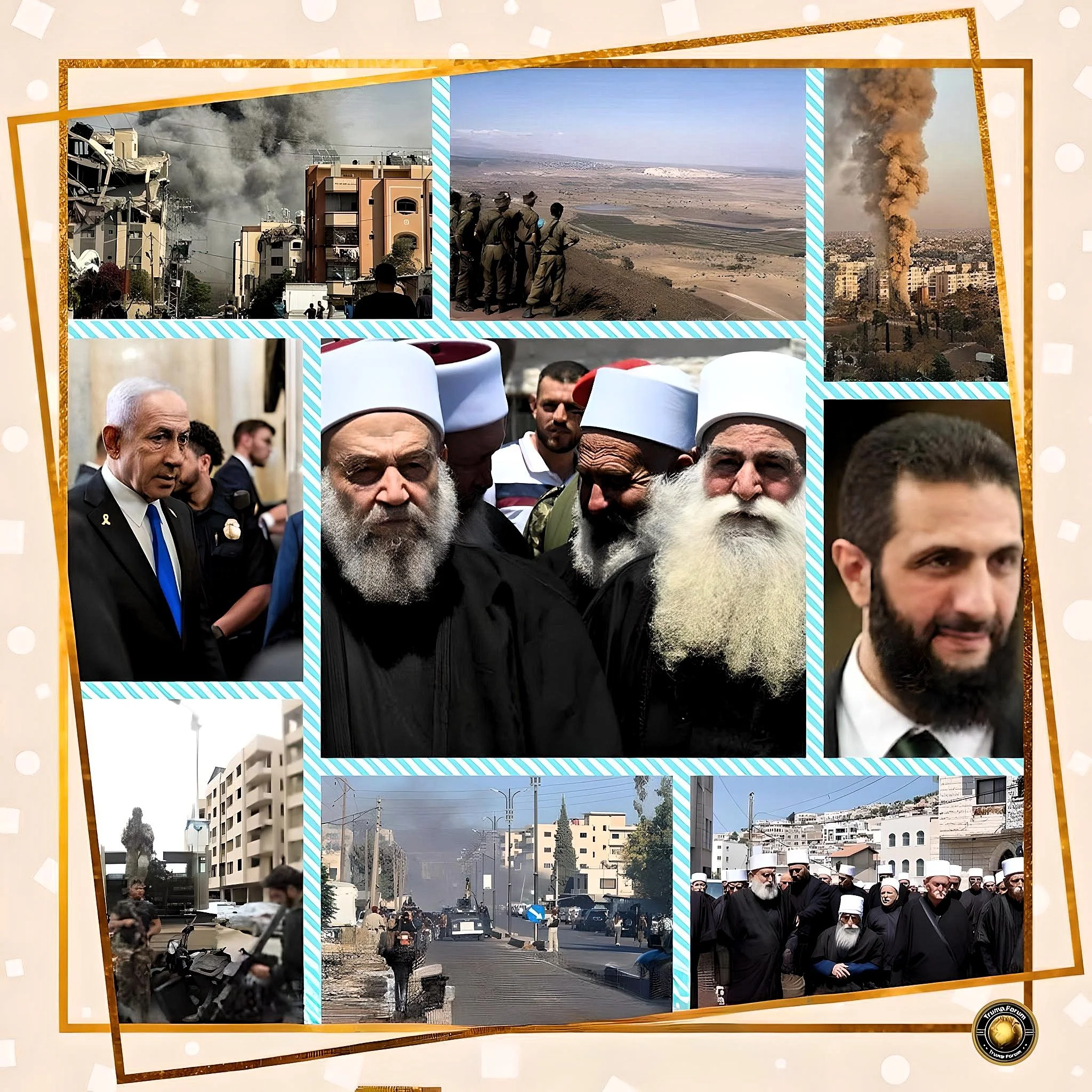
The relationship between Israel and the Druze community, particularly those in Syria, is deeply embedded in a historical context, often described by Israeli leadership as a “covenant of blood” (brit damim).
This bilateral connection has evolved since the establishment of the State of Israel in 1948, notably with the Druze community in Israel becoming integrated into the military and socio-political framework of the Jewish state.
Unlike other Arab-speaking minorities, Druze men have been subject to mandatory military conscription since 1956, rendering them the only non-Jewish minority required to serve in the Israel Defense Forces (IDF).
Military service has fostered strong ties, with many Druze individuals attaining senior officer positions and significant roles within police and security services.
Prime Minister Netanyahu underscored this commitment by stating, “Israel is committed to preventing harm to the Druze in Syria, owing to the deep covenant of blood with our Druze citizens in Israel.”
The Complex Reality of Syrian Druze
The attitudes of the Syrian Druze towards Israel are far more nuanced than the narrative presented by Israeli officials.
In the Israeli-occupied Golan Heights, the majority of Druze residents have historically resisted Israeli citizenship, opting instead to maintain a Syrian identity.
Following Israel's annexation of the Golan Heights in 1981, only about 10% of local Druze initially accepted Israeli citizenship; however, this figure has gradually risen to an estimated 20-25% by 2025.
The noticeable increase in citizenship applications—1,050 during the first half of 2025 alone, equating to a 100% rise from 2024—reflects shifting dynamics attributed to the ongoing regional instability and the Syrian civil war.
Nonetheless, the predominant sentiment among Golan Druze remains one of Syrian identification, coupled with ambivalence regarding Israel's occupation.
The July 2025 Crisis and Druze Appeals
The current crisis ignited on July 13, 2025, following the reported kidnapping of a Druze merchant by Bedouin groups, which catalyzed violent confrontations between Druze militias and Bedouin tribes in Syria’s Suwayda province.
As violence escalated and Syrian government forces intervened between July 14 and 16, controversial Druze leader Sheikh Hikmat al-Hijri made unprecedented appeals for international intervention.
In a statement that shocked many within Syria, al-Hijri directly appealed to Israeli Prime Minister Benjamin Netanyahu, President Trump, and other global leaders, urging them to “save Suwayda.”
His Facebook post articulated: “We call on the free world and all the active forces therein… Prime Minister Benjamin Netanyahu… save al-Suwayda. For our people are being exterminated and killed in cold blood.”
However, this appeal sparked significant controversy within the Syrian Druze community.
Many Druze leaders vehemently opposed any foreign intervention.
Sheikh Suleiman Abdul Baqi explicitly rejected external involvement, asserting, “We are Syrians, our identity is Syrian, and we want to build the country and live in peace.”
Critics labeled al-Hijri’s appeal as a “betrayal” and “treachery,” perceiving his outreach to Israel—an occupying power— as undermining the Syrian state's sovereignty.
Israeli Military Intervention and Strategic Objectives
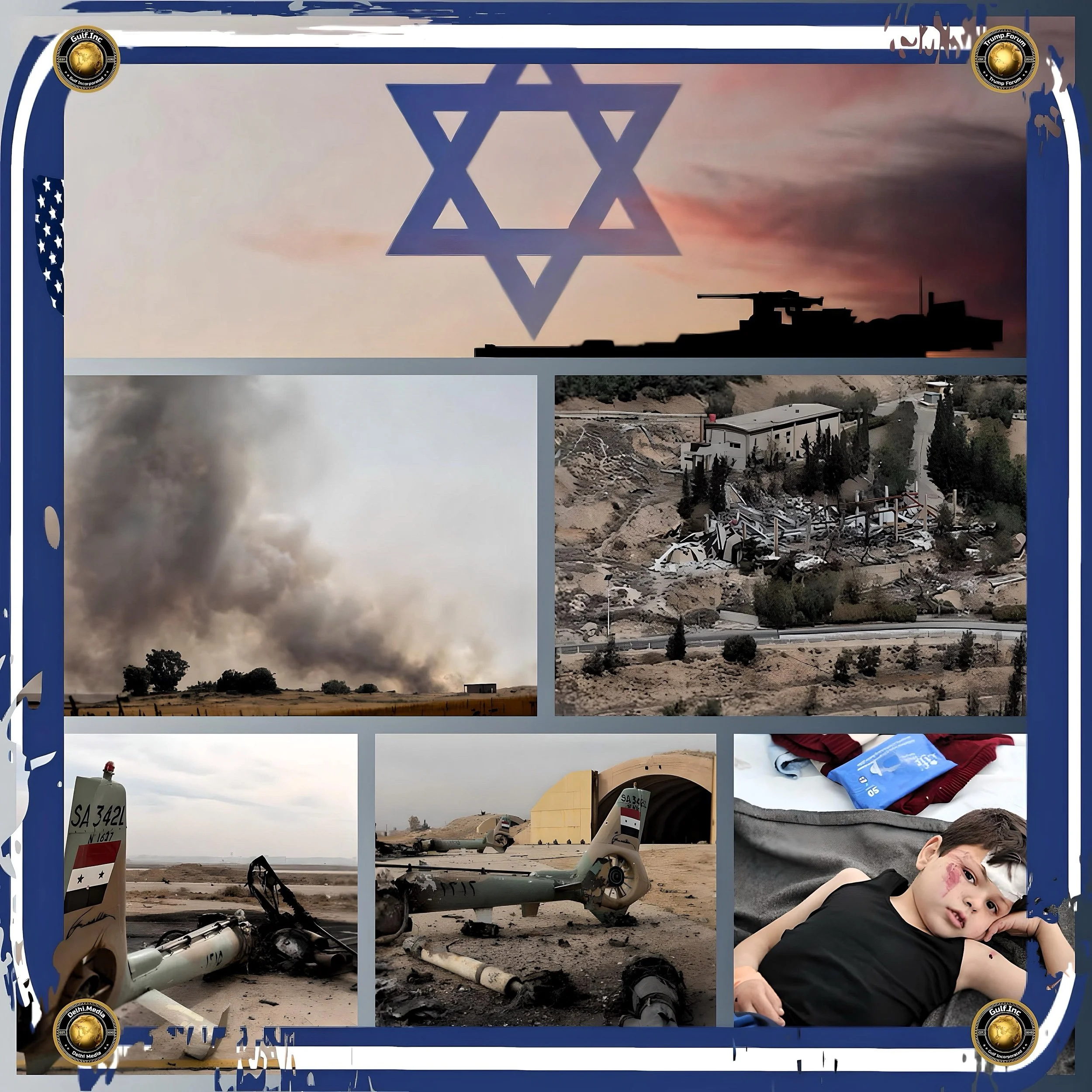
The Israeli military response was immediate and significant. From July 14 to July 16, 2025, Israel executed extensive airstrikes targeting several military installations and operational assets within Syria, including:
- Command centers of the Syrian military in Damascus
- Strategic locations near the presidential palace
- Armed Forces convoys operating in Suwayda
- Key installations throughout the Daraa and Suwayda governorates
These strikes resulted in an estimated 3-5 fatalities and 34 injuries, marking the most considerable escalation by Israel in Syrian territory since December 2024.
Israeli Defense Minister Israel Katz articulated a decisive shift in policy, stating that “the era of mere warnings in Damascus has ended.”
He underscored the intention to deliver “painful blows” to the Syrian regime, asserting Israel’s obligation to act decisively in Suwayda against forces perceived as threats to the Druze community.
Underlying Strategic Intent of Israel's Intervention
While Israel promotes its military actions under the guise of humanitarian assistance, several strategic objectives emerge:
Regional Power Projection
Israel has called for the comprehensive demilitarization of southern Syria, specifically in the Quneitra, Daraa, and Suwayda governorates.
As Prime Minister Netanyahu articulated, “We have set forth a clear policy: demilitarization of the region south of Damascus from the Golan Heights to the Druze Mountain area.”
Erosion of Syrian State Authority
Strategic analysis contends that Israel favors a fragmented Syrian state characterized by weak central governance and sectarian divisions, as opposed to a cohesive and potentially robust unified state.
This intervention aims to undermine the establishment of effective Syrian governmental control near its borders.
Opportunistic Territorial Expansion
Following the fall of Assad in December 2024, Israel has executed hundreds of aerial operations, extending its territorial control beyond the Golan Heights.
The ongoing Druze crisis provides a rationale for sustaining and intensifying this military presence.
US-Brokered Ceasefire and Regional Dynamics
The escalation drew substantial international scrutiny. US Special Envoy Tom Barrack condemned the Israeli actions, indicating they “create another very confusing chapter” and occurred “at a terrible time.”
Reports suggest President Trump was surprised and quickly contacted Prime Minister Netanyahu to manage the fallout.
On July 19, 2025, a US-mediated ceasefire was established, with backing from Turkey, Jordan, and other regional stakeholders. This agreement mandated:
- Dissolution of all local factions and the surrender of heavy weaponry
- Integration of former combatants into national security frameworks
- The re-entry of Syrian governmental security forces into Suwayda
Nonetheless, the humanitarian impact was severe, with casualty estimates ranging from 1,100 to 1,250 individuals over a week of violence, including around 800 Druze and over 400 government personnel.
Divided Druze Response
The Syrian Druze community exhibits significant internal discord regarding the Israeli involvement.
While figures like al-Hijri have openly solicited Israeli support, many Druze perceive this intervention as fraught with risks.
Analyst Aymenn Jawad Al-Tamimi cautioned that Israel’s narrative of “protecting” the Druze may lead to collective repercussions and could paint “the entire Druze community as pro-Israeli.”
Conversely, Israeli Druze activists have exerted pressure on their government for intervention.
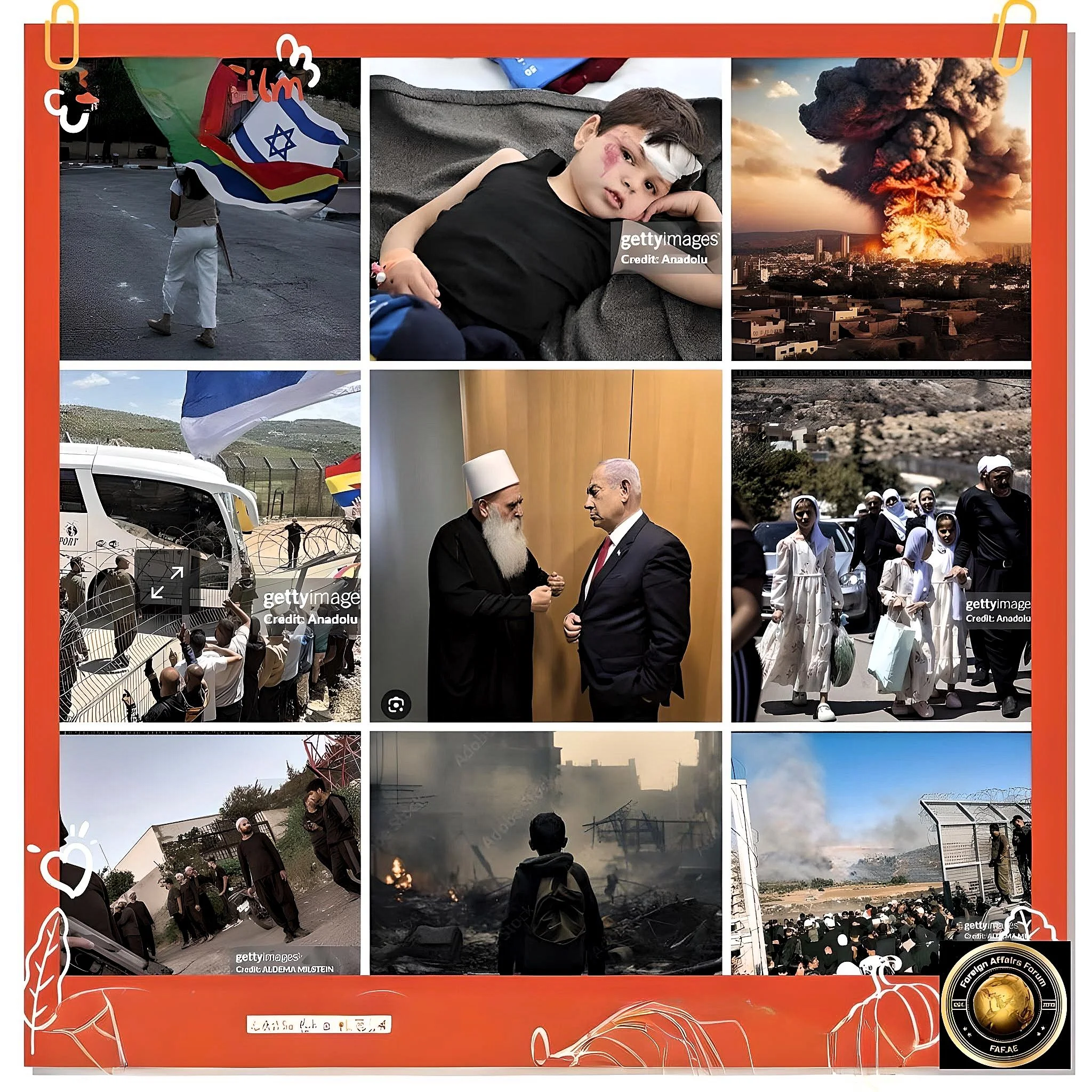
Notably, hundreds bypassed border fences to enter Syria in solidarity with their relatives, and large-scale demonstrations demanding government action were organized.
Conclusion
The overall scenario remains precarious despite the establishment of a ceasefire. Syrian President Ahmed al-Sharaa has accused Israel of fostering “conflict and division” and has warned of potential open hostilities should Israeli attacks persist.
Israel's intervention appears to align genuine concern for the Druze community's welfare with domestic political pressures from Israeli Druze, coupled with strategic goals aimed at maintaining regional dominance in a post-Assad Syria.
While officials emphasize moral duties and historical connections, the intervention essentially serves the broader objectives of impeding Syrian state consolidation and preserving Israeli influence.
This crisis lays bare the intricate and often contradictory landscape of ethnic and religious loyalties in the contemporary Middle East, where historical relationships can manifest as both sincere alliances and instruments of geopolitical strategies.
The divisions within the Syrian Druze community regarding Israeli engagement reflect these complexities, as they navigate survival imperatives alongside national identity and sovereignty apprehensions.