Israeli Strikes in Southern Syria: What “Protecting the Druze” Means and How the World Is Responding
Introduction
In a significant escalation of regional tensions, Israel conducted airstrikes targeting Syrian government forces in the vicinity of Suwayda this week.
Israeli officials justified these operations as necessary interventions to “protect the Druze minority” in Syria.
This claim has sparked widespread debate and condemnation, as many countries view such actions as blatant violations of Syrian sovereignty.
For the approximately 700,000 Druze residing in Syria—who continue to hold Syrian citizenship—Israel's military involvement provides a temporary shield against potential state violence.
However, this intervention raises alarm among the broader Syrian populace, exacerbating existing mistrust and potentially undermining the Druze community's position within Syria's complex societal fabric.
Furthermore, it carries the risk of inciting retaliatory actions against them.
International observers, including the United Nations, the United States, and various regional powers, have voiced their concerns, urging restraint from Israel and categorically condemning the strikes.
As a result, Israel finds itself increasingly isolated on the diplomatic front, despite its assertions that these military actions are purely defensive.
What Happened and Why Israel Says It Acted
Tensions in Suwayda province escalated dramatically following clashes that erupted on July 13 between local Druze militias and neighboring Bedouin tribes.
The situation deteriorated further when Syrian security forces, bolstered by Islamist groups loyal to the newly established government in Damascus, entered the city, leading to a violent crackdown.
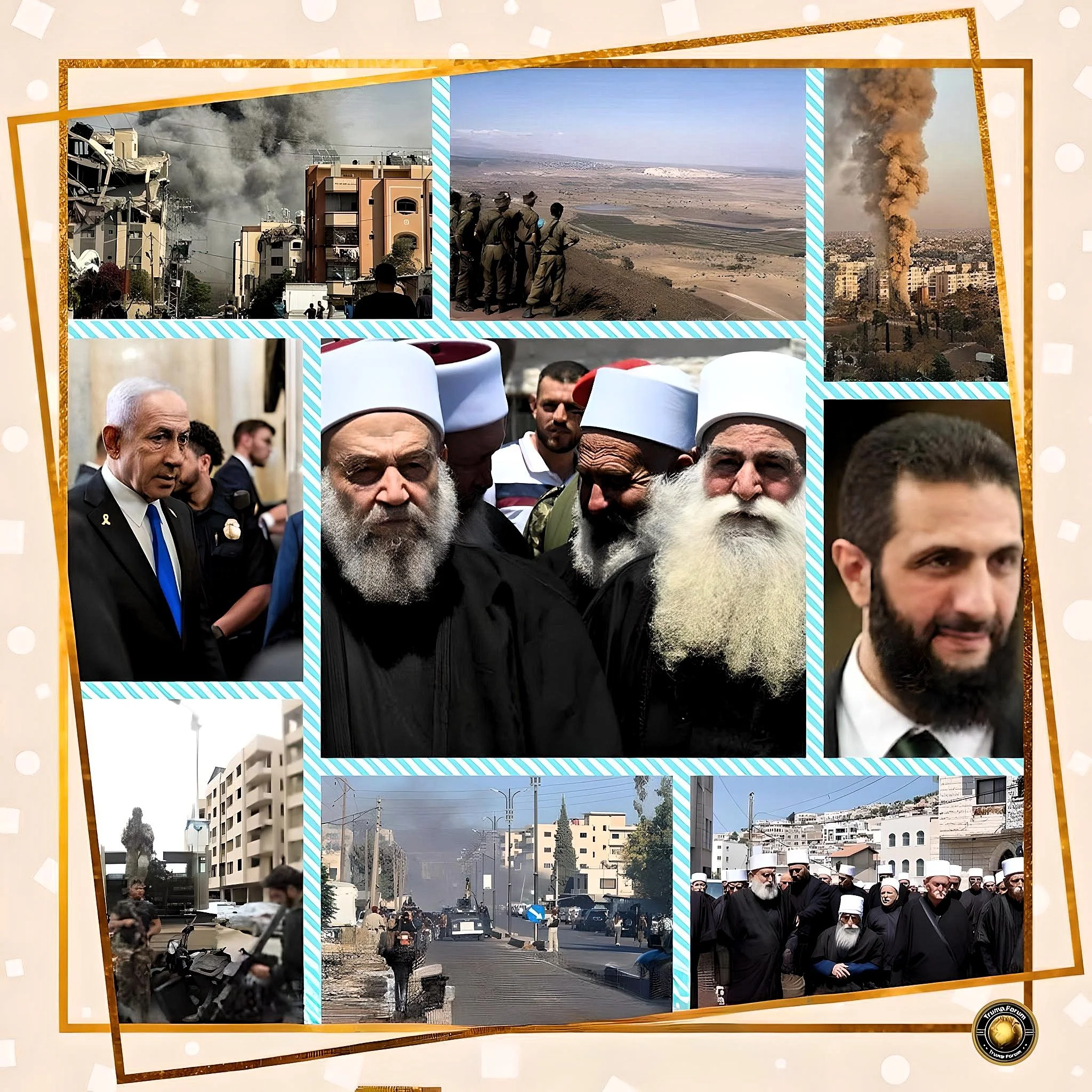
Disturbing video evidence surfaced, showcasing the “field executions” of Druze civilians, which prompted influential Druze spiritual leader Sheikh Hikmat al-Hajri to accuse the Al-Sharaa regime of committing “comprehensive genocide.”
In light of these events, he fervently appealed for external protection from these oppressive actions.
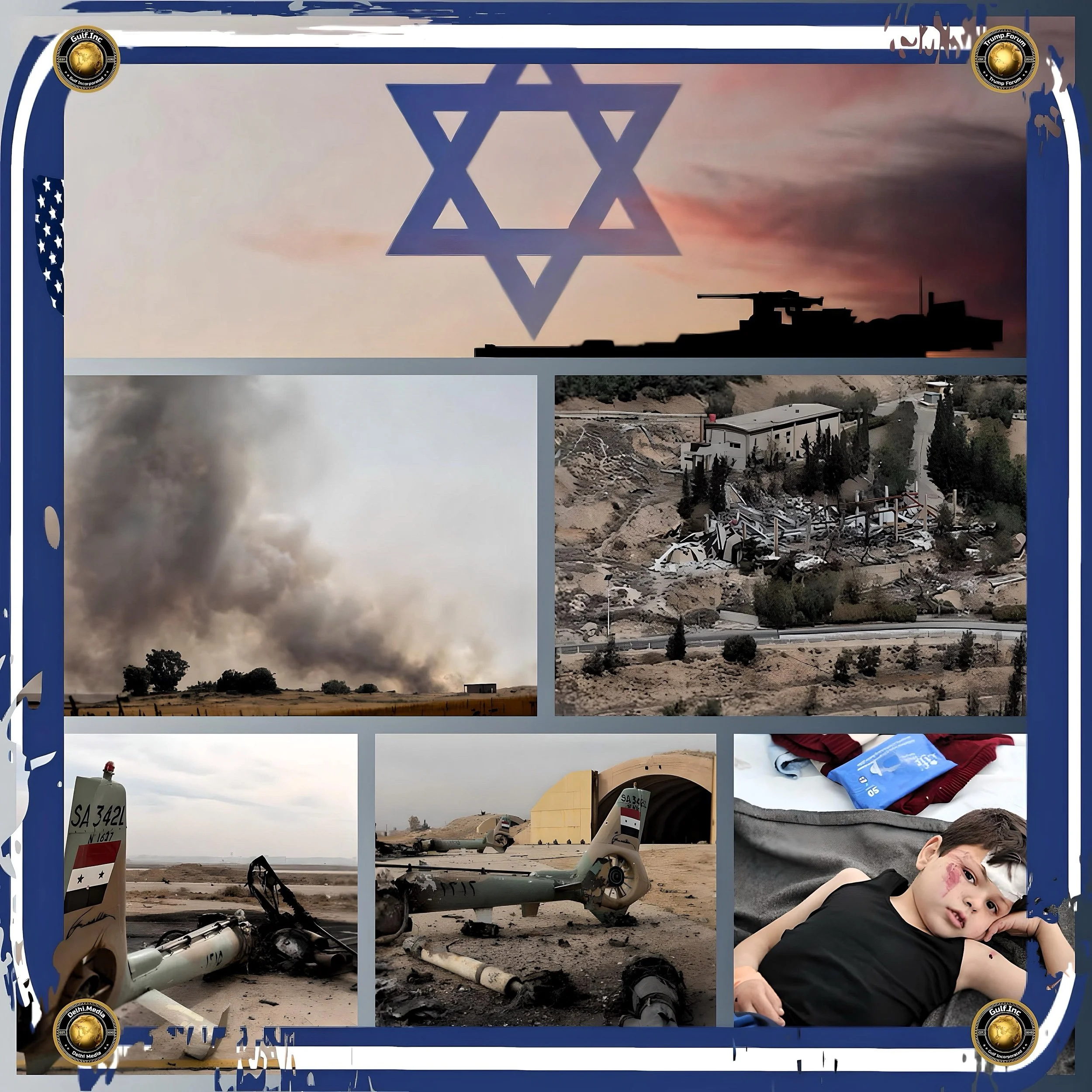
In a rapid response, Israeli drones and fighter jets carried out targeted strikes against Syrian military installations, including tanks and rocket launchers, as well as routes used by military convoys around Suwayda on July 14 and 15.
Prime Minister Benjamin Netanyahu and Defense Minister Israel Katz framed these military operations as both a moral obligation and a strategic necessity, underscoring a “deep brotherly alliance” with their Druze citizens in Israel and articulating a policy aimed at demilitarizing the Syrian presence near the Israeli frontier.
Why Many View the Campaign as Power Projection
The airstrikes serve multiple purposes for Israel, which include
Establishing a Security Buffer
Since expelling Syrian forces from a UN-patrolled area inside Syria last December, Israel has fortified its self-declared buffer zone to prevent any armed group—whether Syrian, Iranian, or jihadist—from encroaching on the Golan Heights.
Domestic Considerations
The Druze community stands out as the only Arab group that is conscripted into the Israeli Defense Forces.
The publicized suffering of their co-religionists in Syria resonates strongly within Israel, bolstering domestic support for the government.
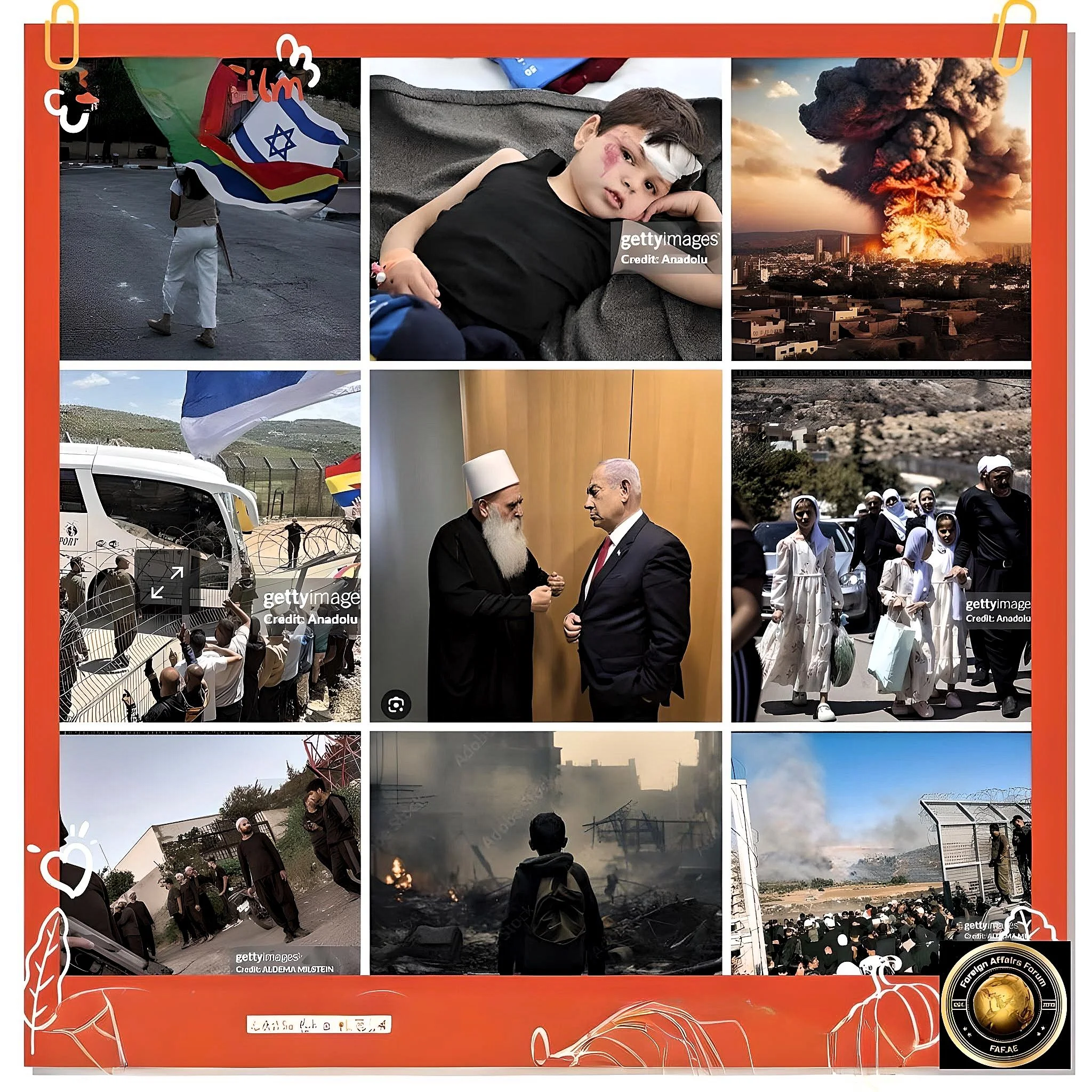
This sentiment was palpable as Israeli Druze activists protested by blocking highways and, in a bold move, crossing the border in a show of solidarity.
Politically Leveraging the Syrian Leadership
Israel considers interim President Ahmed al-Sharaa, who previously held a position with the al-Nusra Front, to be an unpredictable leader.
Continuous military strikes serve as a point of reminder to Damascus that military action can accompany diplomatic normalization efforts.
Despite Israel's claims of acting in self-defense, the UN Secretary-General has condemned these strikes as violations of Syria’s sovereignty and territorial integrity, noting that such cross-border military actions must abide by the principles of necessity, proportionality, and require Security Council authorization—all criteria that Israel has not fulfilled.
Implications for the Druze as Syrian Citizens
While Israeli airpower may deter immediate attacks against the Druze community, it simultaneously poses serious risks.
The overt association with an external military power may further entrench the narrative that the Druze are somehow “foreign-backed,” jeopardizing their prospects for future integration within Syria, especially as the dynamics of conflict shift.
Human rights observers have reported increases in reprisals against Druze villages that are suspected of colluding with Israel, posing a significant threat to their safety and security.
In terms of citizenship, many Druze leaders reaffirm their loyalty to Syria, resisting both the coercive assimilation efforts of the Assad regime and the annexationist gestures extended by Israel.
However, calls from Sheikh al-Hajri for “international protection” and pleas for military support from Israeli Druze reservists blur these boundaries, raising concerns in Damascus about potential separatist sentiments.
In the short term, Israeli military actions might offer the Druze community some leverage in negotiations with the Syrian government, as shown by the swift declaration of a cease-fire by Damascus's defense minister in response to the initial wave of Israeli strikes.
However, whether this restraint will be sustained once Israeli forces withdraw remains uncertain.
Is This “Blanket Imperialistic Aggression”?
From the perspective of international law, the consensus among most nations is that Israel's actions constitute aggression, contrasting sharply with Israel’s justification of self-defense due to an alleged imminent threat posed by heavy Syrian military equipment positioned just a few kilometers from the Golan Heights.
Israel argues that its humanitarian motivations in protecting a kin minority bolster its claims of legitimacy.
Yet, the absence of a Security Council resolution backing these military actions has led most international community to classify the strikes as acts of aggression rather than legitimate humanitarian intervention.
Israel's enduring occupation of parts of Syria, notably the Golan Heights, and the establishment of an extensive de facto buffer zone bolster accusations regarding its imperialistic ambitions.
Likely Trajectories
A Frozen yet Volatile Front
While Israel has pledged to refrain from further strikes in response to American diplomatic requests, any new advancements by Syrian forces or renewed appeals from the Druze could ignite further Israeli military responses.
Increased Sectarian Risks
Repeated intervention by Israeli forces risks deepening sectarian divisions, potentially inciting Bedouin or Islamist groups into hostility against minority communities like the Druze.
Legal and Diplomatic Repercussions
Israel's diplomatic isolation over this issue complicates its broader ambitions of normalizing relations with other Arab nations and the new leadership in Syria. Moreover, Damascus is reportedly considering legal action in international courts in response to the strikes.
Government and International Institutional Reactions to Israeli Strikes in Syria
United States
Diplomatic Engagement
The U.S. envoy remained actively engaged, maintaining dialogue with all involved parties and advocating for an immediate de-escalation of regional tensions.
This ongoing communication reflects a commitment to peace and stability and reveals the situation's complexities.
Direct Appeal to Israel
Recent reports have surfaced indicating that the White House directly requested that the Israeli government refrain from any further military operations near Suwayda.
This request underscores significant concerns regarding the broader implications for regional stability, particularly in light of the existing conflict and its potential to escalate further.
European Union
Expressions of Concern
Amid ongoing crises, particularly in Gaza, several member states of the European Union took the opportunity to voice their apprehensions regarding the strikes in Suwayda.
They viewed these actions as stark examples of what they see as Israel's unchecked military aggression, raising alarm about the humanitarian ramifications and the potential for further escalation in the region.
Lack of Unified Action
Despite various EU nations' expressions of concern, a coherent and unified response was notably absent.
This disjointed approach highlighted the ambiguous consensus among European states on addressing the situation, revealing divisions in strategy and policy regarding their stance toward Israeli actions.
Israeli Druze Community
Domestic Mobilization
Within Israel, the Druze community took to the streets, organizing roadblocks and cross-border marches in a show of solidarity.
They called upon their government to intervene on behalf of their brethren across the Syrian border.
This mobilization reflects the Druze community’s intricate position, navigating their loyalty to the Israeli state while grappling with a deep sense of responsibility for the welfare of their kin in Syria.
Overall Trend
The majority of international voices—ranging from the United Nations to most Western governments and influential regional powers—have labeled the Israeli strikes as violations of international law and an infringement on Syrian sovereignty.
Such a consensus illustrates the widespread apprehension surrounding Israel's military strategies.
Diplomatic Isolation
Israel is currently facing significant diplomatic pressure as it struggles to justify its military actions, framing them as either humanitarian or defensive. However, international support for this narrative is limited and often implicit, further isolating Israel on the global stage.
Regional Stability
The recent airstrikes have exacerbated diplomatic tensions and have complicated ongoing efforts aimed at fostering normalization between Israel and various Arab states.
This scrutiny is amplified regarding cross-border military interventions presented as humanitarian assistance, raising critical questions about their legitimacy.
What about moral obligation towards Israeli hostages in Gaza?
Prime Minister Benjamin Netanyahu and Defense Minister Israel Katz have framed Israeli military operations as both strategic necessities and moral duties, particularly concerning the Druze community.
They emphasize a “deep brotherly alliance” with the Druze to justify military actions and foster internal cohesion.
This focus on domestic alliances coincides with ongoing efforts to secure the release of Israeli hostages in Gaza.
Netanyahu views hostage release as a central national objective, though its prioritization has varied between being a top priority and secondary to the destruction of Hamas.
Recent statements suggest a shift, with hostage release now more prominently featured in Israel’s war objectives, likely influenced by public pressure and international diplomacy.
Israel’s rhetoric reflects a balance between domestic commitments and international responsibilities, highlighting the interplay of moral duty, hostage negotiations, and broader diplomatic strategies.
Conclusion
Israel's military operations in Syria, often framed as humanitarian interventions, are fundamentally motivated by strategic imperatives concerning the Golan Heights border.
Following the collapse of the Assad regime in December 2024, Israel initiated a series of extensive military campaigns in Syria, marked by Operation Arrow of Bashan, which saw the execution of over 600 airstrikes within the first eight days.
Israeli officials have articulated specific strategic goals: the establishment of comprehensive control over a buffer zone, the creation of an expanded security perimeter, and the disruption of Iranian arms transfer routes into the region.
The escalation observed in July 2025 illustrates this dual narrative. In the wake of violent sectarian conflicts between Druze militias and Sunni Bedouin tribes in the Sweida province, which led to over 160 fatalities, Israeli Prime Minister Benjamin Netanyahu and Defense Minister Israel Katz authorized immediate military action against advancing Syrian government forces.
The rationale for these strikes was framed within a commitment to the Druze community, encapsulated in the assertion: “Israel is committed to preventing harm to the Druze in Syria due to the deep brotherly alliance with our Druze citizens in Israel.”
However, the strategic motivations behind these operations are as critical as the humanitarian justification. Israel has unilaterally declared southern Syria—the governorates of Quneitra, Daraa, and Sweida—a "demilitarized zone," which it intends to enforce through military means.
This represents a substantial territorial expansion of Israeli operational control beyond established international borders, with Israeli forces establishing several military installations throughout southern Syria.
While Israel’s air campaign is couched in terms of humanitarian protection, it is primarily aligned with strategic objectives aimed at countering potential threats from adversarial factions near the Golan border.
For the Druze community, this situation creates a complex dichotomy; they may experience immediate security benefits from Israeli military actions, yet those same measures pose a threat to their identity and citizenship status within Syria, which they strive to maintain.
Internationally, responses to these military interventions have largely been critical, emphasizing that the "protection of minorities" is devoid of legitimacy unless anchored in multilateral agreements.
This lack of legitimacy could further entrench Syria’s existing sectarian divisions rather than facilitate a process of healing and reconciliation.
Recent developments indicate a potential shift in Israel’s military objectives, with hostage release gaining prominence, likely influenced by domestic public pressure and international diplomatic efforts.
Israel's narrative seeks to balance domestic imperatives with international obligations, underscoring the interplay between moral responsibilities, hostage negotiations, and broader diplomatic strategies.