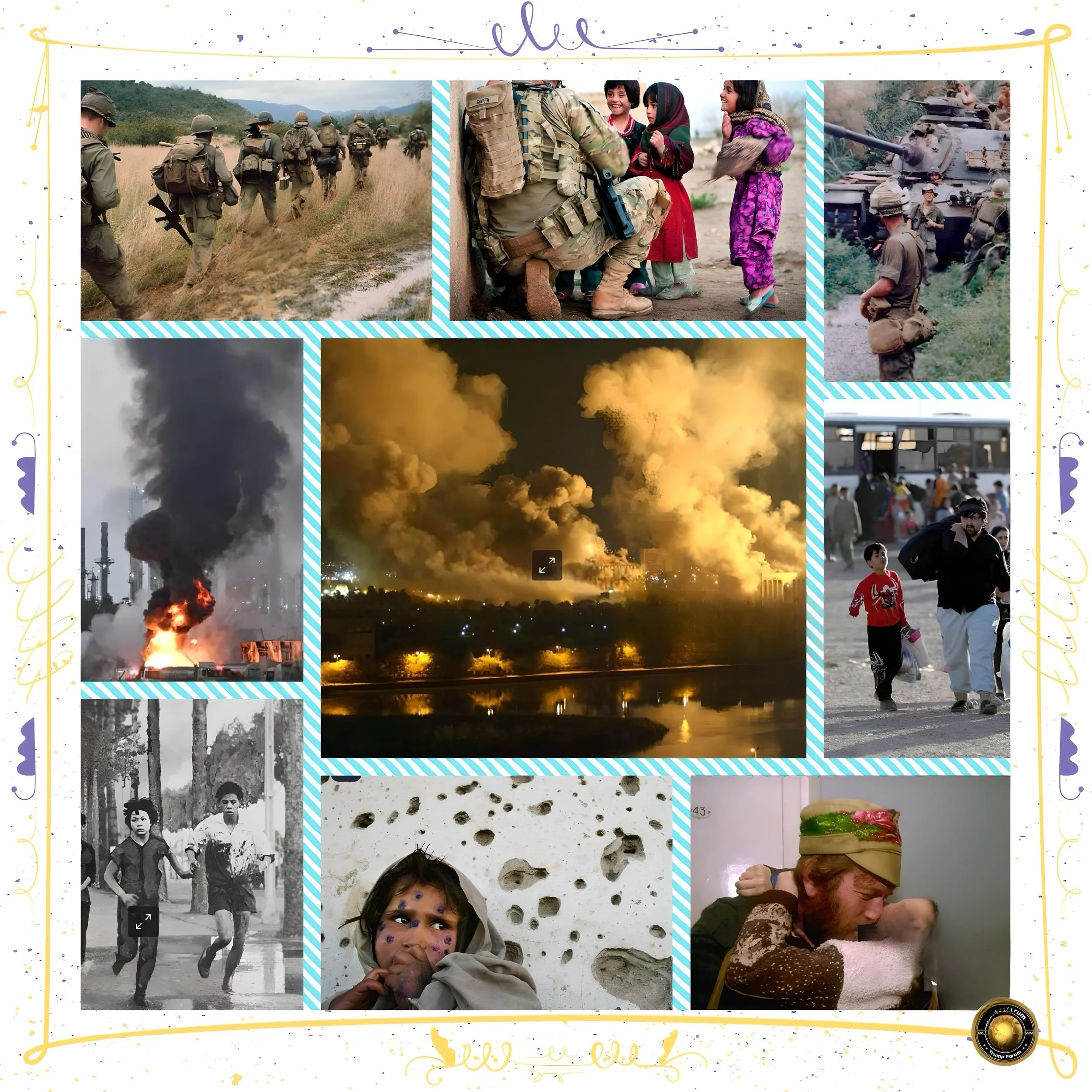
Ephemeral Power: An Examination of the Socio-Economic and Political Dynamics at Play - The Impermanence of Empires - Part I
Introduction
The assertion that “no empires last forever—your days are numbered” reflects a core tenet of historical analysis: the trajectory of great powers oscillates between ascendancy and decline, particularly when their aspirations outstrip their capabilities or when external conditions evolve more swiftly than they can accommodate.
Historically, empires have attempted to stave off decline through substantial reforms and strategic initiatives. Nevertheless, this pursuit rarely alters the overarching paradigm of rise, zenith, and eventual fall.
This cyclical phenomenon underscores the ephemeral nature of power and influence within the complex interplay of human history, revealing the inherent vulnerabilities of even the most dominant entities.
Historical Patterns of Ascent and Collapse
Three Recurring Lessons
Hubris Invites Collapse
History shows that leaders who rely too heavily on past triumphs often blind themselves to the growing threats beneath the surface.
The illusion of perpetual dominance makes it easy to ignore rising debt, deepening internal divisions, and emerging external challenges.
Roman elites, confident in their empire’s longevity, debased their currency in a failed attempt to sustain military expansion. In its twilight years, Britain stubbornly clung to an overextended colonial model it could no longer afford.
Similarly, Soviet hard-liners chose to silence warnings of economic decay until the system became unsalvageable. In each case, arrogance paved the road to decline.
Adaptability buys time—but only if deep.
Meiji Japan’s willingness to rewrite institutions, import technology, and rethink social hierarchy turned a feudal realm into a modern state in a single generation.
By contrast, the Soviet Union’s partial perestroika kept the old bureaucracy intact, creating hybrid paralysis that sped disintegration.
Power has limits in an interconnected world. Sea lanes, energy markets, and now climate systems tie fates together.
Overextension without cooperative buffers accelerates decline.
Britain’s far-flung garrisons drained its treasury, the U.S.S.R. hemorrhaged resources in Afghanistan, and today’s great powers face analogous risks in cyberspace, supply chains, and carbon budgets.
Implications for the 21st-Century Order
United States and China: Both sit at or near their zeniths.
Washington’s alliance advantage echoes Rome’s networked citizenship, yet domestic polarization and spiraling debt resemble late-stage imperial warning signs.
Beijing’s fast ascent recalls Britain’s industrial surge, but demographic contraction and property-sector stress test its resilience.
Either can forestall decline through institutional renewal and shared global stewardship rather than zero-sum rivalry.
Middle Powers and Alliances
The British Commonwealth’s soft landing versus the Soviet crack-up shows that transitioning from hard empire to networked partnerships moderates shocks.
The European Union, Quad, and African Union are contemporary experiments in pooling sovereignty to avoid solitary over-reach.
Global Systemic Threats
Climate change and pandemics punish unilateralism. Empires that ignored environmental strain—Maya droughts, Roman mini-ice-age harvest failures—unwittingly hastened collapse.
Coordinated adaptation is now a strategic imperative, not moral rhetoric.
Takeaways for Policymakers and Citizens
Audit hubris early
Codify independent fiscal watchdogs, rotate leadership, and foster media freedom to surface inconvenient truths before they metastasize.
Invest in adaptive capacity
As Meiji Japan demonstrated, education, R&D, and flexible civic institutions extend national relevance longer than raw force projection ever does.
Translate power into partnership
Sharing rule-writing, technology, and climate mitigation costs converts brittle dominance into durable influence, prolonging a power's “middle age” before senescence sets in.
“No empire lasts forever, no dynasty continues unbroken … All that matters is whether we did what we could with the life that was given to us.” — Krishna Udayasankar
Recognizing impermanence is not counsel for resignation but for vigilance. Empires—and modern nation-states—survive longest when they temper ambition with restraint, innovation with inclusion, and strength with foresight.
Conclusion
The phrase "no empires last forever - your days are numbered" serves as a poignant reminder of the transient nature of power and authority, a theme that has pervaded human history.
In this context, the analysis delves into the complex narrative of empires, offering a detailed examination of how even the most formidable nations, once perceived as indomitable, inevitably experience cycles of decline and fall.
A key insight from this exploration is the troubling correlation between hubris—characterized by an exaggerated sense of pride and an overestimation of one's capabilities—and the impending downfall of these great powers.
This dynamic underscores the imperative of adaptability; empires that resist change in the face of evolving circumstances frequently find themselves outpaced by more agile competitors.
Moreover, a crucial takeaway from this study is the urgent necessity for leaders to grasp the inherent limitations of their power. Overreach, historically, has been a precursor to catastrophic consequences, highlighting the perils of overestimating one’s influence and capabilities.
This intricate tapestry of historical lessons vividly illustrates that stagnation can precipitate decay. For empires to thrive and sustain their relevance, they must evolve, embracing innovation and transforming outdated practices and ideologies.
Additionally, the analysis emphasizes the critical importance of recognizing and responding to the signs of decline. It draws attention to history's cyclical nature—the recurrence of patterns of rise and fall—and effectively illustrates the fragility inherent in even the most dominant powers.
Such reflections compel contemporary observers to critically assess present-day dynamics, urging them to identify vulnerabilities that may afflict their nations in the future.
Applying these historical insights to the current geopolitical landscape reveals striking parallels in the interactions among nations, the negotiation of alliances, and the management of both internal discord and external pressures.
The rapid transformation of global power dynamics, marked by the rise of new economic actors wielding substantial influence, along with the formidable challenges posed by climate change, underscores the pressing need for states to remain vigilant and adaptable.
By understanding these recurring historical patterns, policymakers and leaders gain valuable insights that can guide the development of more sustainable and effective practices as they navigate an increasingly complex and unpredictable geopolitical environment.
This awareness not only enhances strategic foresight but also promotes a more resilient approach to governance and international relations in the face of contemporary challenges.