Determinants of Diminished Public Mobilization in Opposition to Unpopular Policy Decisions in the United States
Executive Summary
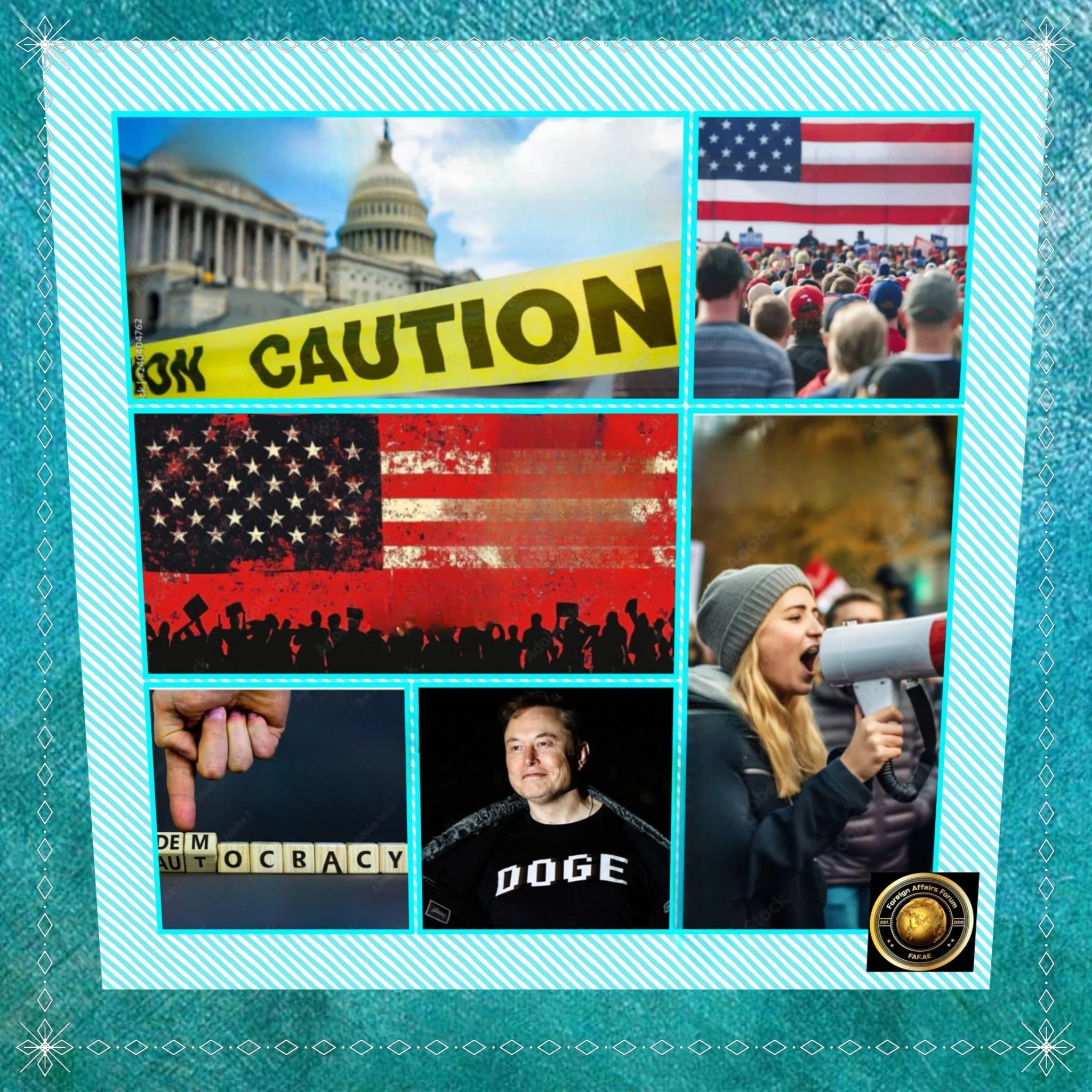
In recent years, there has been a noticeable decline in the willingness of Americans to actively protest or challenge controversial government policies.
This prompts an urgent inquiry into the myriad factors that may be contributing to a perceived decrease in civic engagement and collective action among the populace.
Historically, the United States has been a bastion of grassroots movements fueled by widespread dissatisfaction, spanning from the passionate civil rights marches to impassioned anti-war demonstrations.
Yet, in today’s political climate, many citizens appear increasingly reluctant to mobilize against policies they find objectionable.
Are we witnessing a profound shift in social dynamics, heavily influenced by the pervasive reach of digital media, or perhaps a growing sense of apathy and disillusionment toward the political system?
FAF seeks to dissect these elements, illuminating the current landscape of American political activism and the underlying factors that once empowered individuals to vocally oppose policies they deemed unjust.
Introduction
The waning of electoral accountability concerning unpopular legislation marks one of the most significant transformations in American democratic politics since the late 20th century.
A pivotal moment in this trajectory can be traced back to 1989, when the Democratic Party faced intense electoral repercussions for enacting the Medicare Catastrophic Coverage Act—a misstep that ultimately forced its repeal due to overwhelming public backlash.
In stark contrast, the present-day political arena affords far greater insulation for parties that push through highly unpopular policies, as evidenced by the recent passage of what critics label “one of the most draconian cuts to social safety net programs in modern American history.”
The 1989 Watershed Moment
When Political Consequences Were Real
The Medicare Catastrophic Coverage Act of 1988 stands as a poignant reminder of the last instance of genuine electoral accountability in American governance.
Despite its passage with substantial bipartisan support—receiving a lopsided tally of 328 votes in favor versus 72 against in the House, and a similarly overwhelming 86 to 11 in the Senate—the legislation quickly met with aggressive public resistance, compelling its repeal in just 17 months.
The backlash against this initiative was swift and merciless, particularly due to its progressive financing structure, which mandated higher-income seniors to pay a supplemental premium ranging from $800 per individual to $1,600 for couples.
This taxation scheme, although it affected merely 36% of Medicare beneficiaries, incited fierce opposition.
Advocacy groups, notably the National Committee to Preserve Social Security and Medicare, launched an extensive campaign that disseminated misleading information, falsely suggesting that all seniors would be subjected to the maximum financial burden.
The political ramifications were immediate. House Ways and Means Chairman Dan Rostenkowski found himself surrounded by enraged constituents who surrounded his vehicle, pounded on the windows, and eventually forced him to flee on foot during an increasingly hostile town hall meeting in Chicago.
This visceral reaction, broadcast across the nation, epitomized authentic grassroots political pressure.
By October 1989, the consequences became clear as the House passed a vote of 360 to 66 to repeal the act, and the Senate unanimously voted 99 to 0 to dismantle most of its provisions.
The Modern Political Insulation System
Contemporary American politics operates under fundamentally altered conditions, resulting in considerable protection for parties championing unpopular policies.
A confluence of interconnected factors has fostered an environment where electoral consequences have become increasingly muted or postponed.
Media Fragmentation and Shortened Attention Spans
The current media landscape presents a stark contrast to the more concentrated information environment of 1989.
Political scandals and controversies now slip through rapid news cycles, where stories typically hold the public's attention for only “a few weeks, maximum,” according to an NPR analysis.
This fragmentation fosters what scholars have labeled “issue-attention cycles,” enabling public interest to pivot away from any single controversy with remarkable speed.
Research underscores that collective attention spans have notably diminished in the digital era, with trending topics emerging and fading faster than ever before.
The proliferation of diverse media outlets, social media platforms, and entertainment options generates fierce competition for public attention, rendering it considerably challenging for specific policy issues to maintain prolonged visibility.
Hyperpolarization and Partisan Identity
The landscape of modern American politics is characterized by unprecedented levels of affective polarization, where partisan identity has become a primary aspect of social identity, rivalling even racial identity in its intensity.
This polarization creates numerous protective mechanisms for unpopular policies
Partisan voting behaviors have emerged as a dominant feature of electoral decisions, with voters demonstrating a strong tendency to support their party’s candidates irrespective of specific policy positions.
Research reveals that voters generally back co-partisan candidates about 80% of the time, and astonishingly, 45% of the time even when such candidates reveal demonstrably inferior capabilities.
This entrenched partisan loyalty offers considerable insulation against electoral repercussions triggered by policy dissatisfaction.
Furthermore, media consumption habits have become increasingly segregated along partisan lines, leading to Republicans and Democrats engaging with fundamentally disparate information ecosystems.
This fragmentation means that public discourse on policies can often be filtered through biased lenses, further diminishing the potential for collective opposition to unpopular legislation.
Strategic Policy Design and Timing
In today's political landscape, legislators have become adept at crafting policies that strategically mitigate the potential electoral fallout of their decisions.
A striking illustration of these strategies is the recently introduced “Big Beautiful Bill.”
This legislation embodies several tactics deliberately designed to shelter lawmakers from immediate backlash:
Delayed Implementation of Contentious Provisions
By postponing the enforcement of the most detrimental aspects of the bill until after the pivotal 2026 midterm elections, lawmakers can effectively shield themselves from immediate political scrutiny and voter discontent.
Calculated Timing of Medicaid Cuts
Legislative leaders have deliberately scheduled cuts to Medicaid to take effect in a manner that minimizes their visibility to the electorate.
This approach allows them to simultaneously tout tax benefits that provide immediate advantages to constituents, thus amplifying positive public perception while deferring accountability for more controversial cuts.
Complex Legislative Framework
Contemporary bills are often laden with intricate details and convoluted language, which serve to obscure the true impact of policy changes.
Unlike the clear and direct Medicare premium increases of 1989, today's legislation frequently involves complex interactions among various programs and funding mechanisms, complicating efforts by opposition groups to articulate coherent responses and mobilize against these changes effectively.
The Erosion of Institutional Mediators
The structural entities historically responsible for ensuring political accountability have deteriorated appreciably in recent years.
Political parties, once robust organizations that unified and organized voters around coherent policy platforms, now find themselves diminished as functional agents of accountability.
Instead, they persist primarily as markers of political identity.
This paradoxical situation results in political parties exerting less influence over candidate quality and policy stances while still retaining significant loyalty from voters, regardless of how those policies align with voters' preferences.
Moreover, traditional media establishments, which once played critical roles as gatekeepers and curators of political information, have splintered.
This fragmentation has severely curtailed their ability to focus sustained attention on single issues.
The proliferation of social media platforms and the emergence of 'echo chambers' have further exacerbated this issue, fostering environments where political narratives serve to reinforce pre-existing beliefs instead of challenging them.
Contemporary Challenges to Electoral Accountability
The current political arena poses numerous hurdles to grassroots mobilization efforts akin to those that successfully urged the repeal of the MCCA (Medicare Catastrophic Coverage Act).
Despite the sweeping and potentially harmful social safety net reductions recently imposed, several elements suggest that Republican leaders may escape significant electoral repercussions:
Fragmented Information Environment
The modern media landscape is characterized by its rapid fragmentation and transient nature, making it exceedingly difficult for sustained opposition campaigns to garner traction.
The swift, relentless pace at which news cycles operate means that even momentous policy shifts are competing with a multitude of other news stories for public attention.
Misinformation and Partisan Media Ecosystems
The rise of misinformation, coupled with partisan media outlets, has cultivated parallel realities in which distinct groups of Americans consume fundamentally different narratives regarding the implications of policy changes.
This disjunction renders it nearly impossible to establish a unified opposition that can effectively challenge policies, similar to the consensus that emerged during the MCCA debate.
Weakened Opposition Capacity
The structural challenges facing Democratic opposition to unpopular Republican policies are significant.
The party’s own unfavorable ratings undermine its credibility as a viable messenger, as recent polling has revealed historically low approval ratings for the Democratic Party among voters.
Compounding these challenges is an inherent institutional weakness within the Democratic Party, which hinders its ability to orchestrate sustained campaigns of resistance comparable to those that successfully mobilized against the MCCA.
The party lacks a cohesive organizational framework capable of translating public dissent into tangible electoral consequences.
The Limits of Contemporary Protest
While the current political landscape witnesses a surge in protests and social media activism, these movements have been largely ineffective at producing long-term electoral shifts.
Digital activism often manifests in brief, intense waves of attention that fail to translate into sustained organizing efforts necessary for significant electoral impact.
Geographic polarization plays a crucial role in this dynamic, as the regions most adversely affected by policy cuts often remain securely Republican.
In contrast, Democratic areas that could potentially penalize Republicans electorally are less directly impacted, creating a disconnect between the effects of policy decisions and the resulting electoral consequences.
The Broader Democratic Implications
The decline in electoral accountability for unpopular legislation encapsulates a broader deterioration of democratic processes in the United States.
A potent combination of strong partisan identities and weakened party structures has fostered an environment in which voters continue to support parties, even when they are dissatisfied with their policies.
Research indicates that while Americans overwhelmingly reject undemocratic norms and political violence, they consistently elect representatives whose actions undermine democratic governance.
This disconnect highlights that traditional mechanisms of democratic feedback are becoming increasingly dysfunctional.
The hastening pace of media cycles and the fragmentation of information streams further enable political elites to sidestep accountability for unpopular actions by simply waiting for public focus to shift elsewhere.
This marks a fundamental shift from the enduring attention spans that facilitated the successful repeal of the MCCA in 1989.
Conclusion
The New Normal of Political Insulation
The shift from the intense accountability of the late 20th century to the current insulated political environment signifies a profound transformation in American democratic politics.
Modern political parties reap the benefits of strong identity-based loyalty while contending with weakened institutional oversight, leading to a reality where electoral consequences for unpopular legislation are increasingly rare and muted.
In light of the current Republican policies, which exert dramatic implications on the lives of millions of Americans, the political landscape reveals significant challenges to voters seeking accountability from their representatives.
This evolution in politics may ultimately pose threats to the integrity of the democratic process itself.