Airworthiness Directive: A Complex Intersection of Policy, Economics, and Safety. Boeing's Operations in India: Dissecting the Fuel Switch Conundrum and Its Worldwide Implications - Part III
Introduction
The Fuel Switch Conundrum
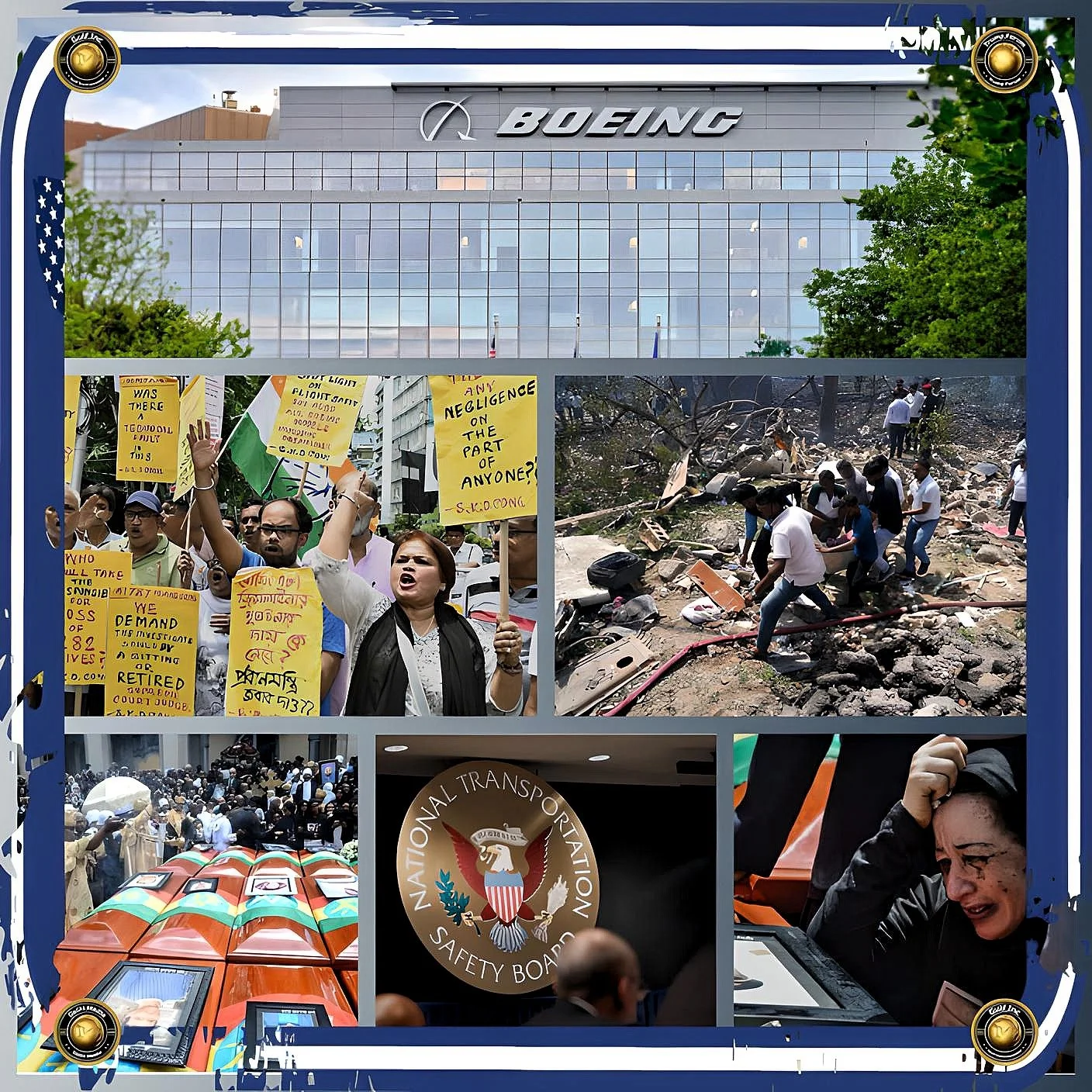
The transition of the fuel control switches to the “shutoff” position during the Air India Flight 171 incident represents a critical enigma within aviation safety.
The preliminary findings from India’s Aircraft Accident Investigation Bureau (AAIB) indicate that both engine fuel control switches transitioned from the ‘RUN’ to ‘CUTOFF’ position within one second of each other, just 32 seconds after takeoff.
This action resulted in immediate fuel starvation for both engines, leading to the tragic loss of 260 lives aboard the Boeing 787-8 Dreamliner.
Notably, the cockpit voice recorder captured an exchange where one pilot inquired, “Why did you cut off?” to which the other replied, “I didn’t.”
Further complicating the investigation, the switches were subsequently found in the ‘RUN’ position at the crash site, suggesting that the crew attempted to restore fuel flow, but altitude and time constraints hindered engine recovery.
Historical Context and the 2018 FAA Advisory
This incident draws attention to a 2018 Federal Aviation Administration (FAA) Special Airworthiness Information Bulletin (SAIB No. NM-18-33), issued on December 17, 2018, which warned of potential issues with the disengagement of the fuel control switch locking mechanisms on Boeing aircraft, including the 787 series.
The advisory arose from reports by Boeing 737 operators concerning the deactivation of locking features on fuel control switches.
The FAA's bulletin stated, “If the locking feature is disengaged, the switch can be moved between positions without lifting it during transition, leading to inadvertent operation and possible in-flight engine shutdown.”
Air India acknowledged to investigators that it had not conducted the suggested inspections, as the SAIB was advisory rather than mandatory, with the FAA not deeming it an “unsafe condition” that required a formal airworthiness directive.
Context of Historical Incidents
Although the Air India crash marks the first fatal incident associated with the 787's fuel control switches, historical parallels can be drawn from other Boeing aircraft incidents.
For example, in the 1980s, a Boeing 767 piloted by a Delta Air Lines captain accidentally cut off fuel to both engines; however, the altitude allowed for successful engine restart.
The critical distinction in the Air India scenario was the low altitude—preventing any possibility of recovery.
The FAA bulletin referenced incidents among Boeing 737 operators regarding failures in the fuel control switch locking mechanism.
However, no similar events have been recorded for the 787 series, making the Air India incident particularly significant for Boeing's newer designs.
Boeing’s Position and Industry Response
In light of the preliminary report, Boeing and the FAA have communicated privately with airlines and regulatory bodies regarding the continued safety of the fuel switch locking features on Boeing aircraft.
The FAA’s Continued Airworthiness Notification maintained that while the design is consistent across models, it does not classify the fuel control switch issue as unsafe enough to necessitate an Airworthiness Directive.
In response, several airlines initiated precautionary inspections of their Boeing 787 fleets.
Etihad Airways mandated that pilots exercising control over Boeing 787 Dreamliners “exercise caution” when manipulating fuel control switches and ordered comprehensive inspections across its fleet.
Singapore Airlines responded similarly, beginning inspections of their own 787 aircraft.
Technical Examination and Safety Considerations
The design of the fuel control switches includes multiple physical protections against unintentional operation.
Positioned beneath throttle handles and secured by physical brackets, these switches require pilots to lift them against spring-loaded resistance for operation.
Aviation experts highlight that the nearly simultaneous movement of both switches indicates a deliberate action rather than accidental engagement.
Interestingly, the throttle control module in the involved aircraft had undergone two replacements—in 2019 and 2023—but those replacements were unrelated to issues associated with fuel control switches, and no defects concerning the switches themselves have been reported since 2023.
Investigative Implications and Future Oversight
The Air India investigation underscores potential lapses in aviation safety oversight, particularly concerning non-mandatory FAA advisories.
The 2018 bulletin identified known issues, yet its advisory status meant compliance was discretionary, leaving aircraft potentially vulnerable to recognized defects.
Consequently, India’s Directorate General of Civil Aviation (DGCA) has mandated that all airlines conduct inspections of fuel switches on Boeing 787 and 737 models by July 21, 2025.
Additionally, South Korea’s transportation ministry is preparing similar directives, reflecting an escalating international focus on the reliability of fuel control switches.
Broader Aviation Safety Considerations
The recent Air India crash has reignited discussions surrounding the imperative for cockpit video recording systems and enhanced mental health assessments for pilots.
Aviation specialists have pointed out that cockpit video surveillance could provide clear evidence regarding the operability of control switches during critical situations.
However, the historical resistance rooted in pilot privacy rights has impeded the implementation of such technology.
This incident underscores the critical interplay of altitude and response time in emergency recovery procedures. The flight crew’s attempt to restore fuel flow occurred within 10-14 seconds post-cutoff, but the aircraft's low altitude of 625 feet significantly constrained the window for engine restart and safe recovery.
Conclusion
Recent investigations into Boeing's operations in India have unveiled a significant concern: the fuel switch anomaly. This inquiry focuses on the technical complexities associated with the changes in fuel types and their implications for operational performance and safety.
The implications of this issue extend well beyond local contexts, prompting critical discussions about global regulatory compliance, supply chain integrity, and adherence to engineering standards in the aviation sector.
As we analyze the technical challenges posed by fuel variability, it is crucial to evaluate the broader consequences on Boeing’s international reputation and operational protocols.
Findings from this investigation could not only reshape Boeing's operational practices in India but may also establish standards that influence global aviation fuel protocols and safety regulations.
The complications arising from the fuel switch malfunction aboard Air India Flight 171 expose systemic vulnerabilities in both aviation safety oversight and aircraft design practices.
While Boeing maintains that its fuel control switches are safe, the incident has spurred airlines worldwide to initiate precautionary inspections. Concurrently, regulators are imposing what were previously optional safety assessments.
As the investigation unfolds, with a comprehensive report expected within the next year, the aviation industry faces pivotal questions regarding the adequacy of existing safety protocols and the effectiveness of voluntary versus mandatory safety measures.
This incident highlights the critical reality that even minor oversights can have catastrophic consequences in aviation, underscoring the necessity for continuous vigilance and enhancement of safety practices.
Additionally, the discourse surrounding pilot mental health screening remains politically charged and is attracting international scrutiny.
The FAA's apparent indifference towards issuing an airworthiness directive raises alarms about the risks to millions of passengers flying on Boeing aircraft.
Are we willing to wait for another disaster to prompt the enactment of an airworthiness directive, which may prioritize global profits over the safety of countless lives?