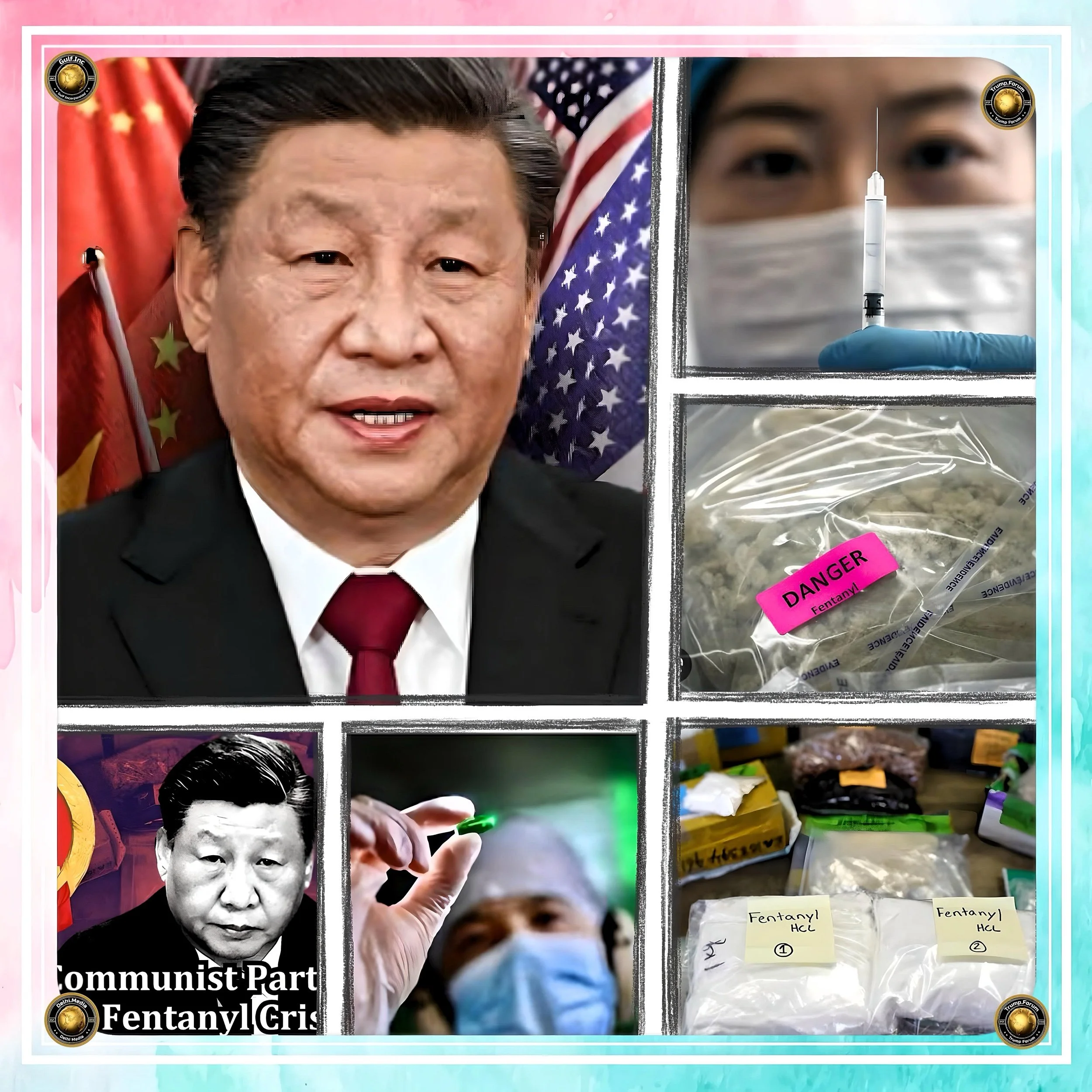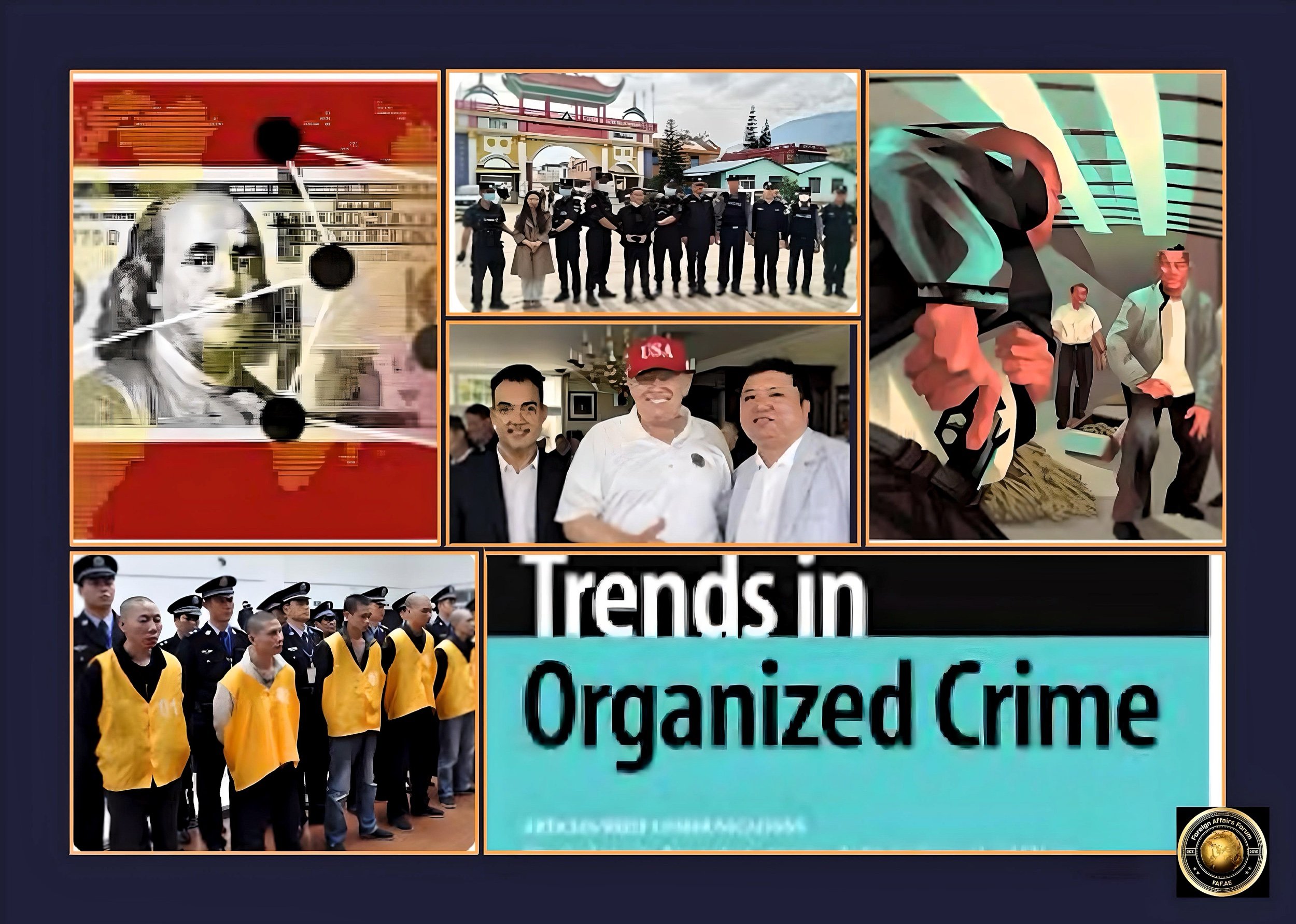
Analysis of Chinese Organized Crime and Trump Administration’s Drug Cartel Strategy- Chinese criminal colonization of rural America
Introduction
Based on the Tucker Carlson interview with Maine Wire Editor-in-Chief Steve Robinson and related documentation, FAF comprehensive analysis of the investigation reveals a complex web of Chinese organized crime networks operating extensively throughout rural America, particularly in Maine, with significant implications for Trump’s anti-cartel agenda.
The Scale and Nature of Chinese Criminal Operations
The investigation by Steve Robinson and the Maine Wire has uncovered what appears to be a systematic infiltration of rural American communities by Chinese criminal organizations.
According to the Department of Homeland Security’s leaked internal documents, over 270 properties in Maine alone have been identified as affiliated with Asian Transnational Criminal Organizations.
These operations extend far beyond simple marijuana cultivation, representing sophisticated criminal enterprises that exploit legal loopholes in cannabis regulation.
The criminal networks, often referred to as Chinese “triads” or mafia organizations, have established what amounts to an industrial-scale illegal drug production system.
Robinson’s investigation documented that these groups have purchased hundreds of rural properties across multiple states, converting homes, former schools, churches, and industrial buildings into illegal marijuana cultivation facilities.
The operations are characterized by several disturbing elements
Environmental and Public Health Hazards
The Chinese operations frequently use neurotoxic pesticides that are banned even in China, creating long-term environmental contamination that renders properties uninhabitable even after the criminals abandon them.
These chemicals cannot be detected by Maine’s cannabis testing facilities, meaning contaminated products may enter both illegal and legal markets.
Human Trafficking Component
Federal indictments reveal that these organizations engage in human trafficking, smuggling Chinese nationals into the United States and withholding their passports until debts are repaid.
This creates a modern form of indentured servitude within American borders.
Money Laundering Networks
The operations serve as nodes in vast money laundering schemes that process hundreds of millions of dollars in drug proceeds, often facilitating the movement of money for Mexican cartels while simultaneously enabling Chinese capital flight.
Connection to Chinese Government and Intelligence
Multiple sources suggest concerning links between these criminal organizations and Chinese state apparatus.
The House Select Committee on the Strategic Competition Between the United States and the Chinese Communist Party found that Chinese organized crime groups have become “the world’s premier money launderers” and are “CCP-tied”.
Intelligence assessments indicate that Chinese criminal groups provide services to the Chinese government and Communist Party, including monitoring Chinese diaspora communities and acting as extralegal enforcers.
The organizations use WeChat, a messaging platform heavily monitored by the Chinese government, for their communications.
The symbiotic relationship between Chinese criminal organizations and the state creates what some analysts describe as a “gray zone” threat – criminal activities that serve broader geopolitical objectives while maintaining plausible deniability for the Chinese government.
Trump Administration’s Response Framework
The Trump administration has implemented a comprehensive strategy to combat transnational criminal organizations through several key initiatives
Operation Take Back America
This Justice Department initiative specifically targets cartels and transnational criminal organizations with the goal of “total elimination” rather than mere containment.
The operation has already resulted in significant arrests and prosecutions of Chinese money laundering networks, with multiple cases involving tens of millions of dollars in illicit proceeds.
Cartel Designation as Foreign Terrorist Organizations
President Trump designated eight cartels, including six Mexican organizations, as Foreign Terrorist Organizations (FTOs), providing enhanced legal authorities for operations against these groups. This designation enables the use of terrorism-related charges and covert operations.
Streamlined Prosecution Authorities
The Justice Department has suspended numerous bureaucratic approval requirements for prosecuting cartel-related cases, including mandatory pre-indictment review for capital crimes and approval requirements for terrorism and racketeering charges.
Enhanced Charging Priorities
The administration has directed prosecutors to focus on the most serious charges available, including capital crimes, terrorism charges, racketeering charges, and violations of the Foreign Narcotics Kingpin Designation Act for cartel leaders and managers.
The Maine Connection and Governor Mills’ Brother
A particularly troubling aspect of the investigation involves Maine Governor Janet Mills’ brother, Paul Mills, who was listed as the preparer of forms transferring ownership of a Chinese-operated illegal grow site.
This property was transferred from a Chinese national in Massachusetts to another Chinese national living in China’s Guangdong Province, raising questions about potential conflicts of interest or compromise of state officials.
Despite the documented presence of hundreds of illegal operations in her state, Governor Mills has maintained complete public silence on the Chinese criminal activities.
This silence occurs against the backdrop of what Robinson describes as systematic corruption, stating: “I am increasingly of the belief that there’s a lot of bribes being paid in the state”.
Implications for Trump’s Anti-Cartel Strategy
The Chinese criminal networks present several challenges to Trump’s broader anti-cartel strategy
Multi-Vector Threat
Unlike traditional Mexican cartels focused primarily on drug trafficking, Chinese criminal organizations operate across multiple criminal domains simultaneously – drug production, money laundering, human trafficking, and potential intelligence activities.
This requires a more complex enforcement approach than traditional cartel interdiction.
Legal Exploitation
The Chinese groups have demonstrated sophisticated understanding of American legal systems, exploiting cannabis legalization frameworks and regulatory gaps.
Robinson noted that these groups can claim to be “in the process of getting a license” to operate legally, preventing law enforcement action.
Financial Integration
The Chinese money laundering networks have become integral to the financial infrastructure supporting Mexican cartels, particularly the Sinaloa Cartel.
DEA officials report that Chinese criminal money laundering networks can “move money faster, cheaper and at a fraction of what is usually charged” compared to traditional methods.
Geographic Dispersion
The operations target rural American communities that are often under-resourced and lack the capacity to combat sophisticated transnational criminal organizations.
This creates a “soft underbelly” vulnerability in America’s heartland.
National Security and Sovereignty Implications
The Chinese criminal infiltration of rural America represents what some analysts characterize as a form of “criminal colonization.”
The systematic purchase of American real estate by foreign criminal organizations, combined with the use of these properties for illegal activities that poison American communities, constitutes a direct challenge to national sovereignty.
The environmental contamination aspect is particularly concerning, as it creates long-term damage to American communities that persists even after criminal operations are dismantled.
The use of chemicals banned even in China suggests a deliberate strategy to inflict maximum harm on American soil.
The human trafficking component adds another layer of complexity, as it involves the exploitation of Chinese nationals who may be both victims and participants in criminal activities.
This creates challenges for law enforcement in determining who should be prosecuted versus who should be treated as trafficking victims.
Challenges for Trump’s Justice Department
Several factors complicate the Trump administration’s efforts to combat Chinese criminal organizations:
Jurisdictional Complexity
These organizations operate across multiple states and involve both federal and state law enforcement agencies.
The investigation reveals that Maine State Police have been involved in only a handful of enforcement actions despite the documented scale of criminal activity.
Resource Limitations
Rural law enforcement agencies often lack the resources and expertise to combat sophisticated transnational criminal organizations.
The Maine Wire investigation suggests that local officials may be compromised through bribery or other forms of corruption.
Legal Challenges
The Chinese groups have demonstrated ability to exploit legal frameworks, particularly cannabis regulations.
Further the complex web of shell companies and straw purchasers makes it difficult to establish clear criminal liability.
International Dimensions
Effective action against these networks requires cooperation with Chinese authorities, which may be reluctant to act against organizations that potentially serve state interests.
The Future of Anti-Chinese Criminal Operations
The Trump administration’s approach appears to mark a significant escalation in efforts to combat Chinese criminal organizations.
The integration of these efforts into the broader “Total Elimination” strategy for cartels and transnational criminal organizations suggests recognition that Chinese criminal networks pose a threat comparable to traditional drug cartels.
The suspension of bureaucratic approval requirements for terrorism and racketeering charges specifically targeting designated organizations indicates the administration’s intent to use the full spectrum of available legal authorities.
This includes potential use of capital punishment, terrorism charges, and asset forfeiture on an unprecedented scale.
Conclusion
Success of these efforts will depend on several factors
State and Local Cooperation
The effectiveness of federal action depends on cooperation from state and local authorities.
The situation in Maine, where state officials appear compromised or inactive, illustrates the challenges involved.
International Coordination
Dismantling these networks requires cooperation with international partners, including potentially adversarial nations like China.
The Trump administration’s confrontational approach with China may complicate such cooperation.
Legal Framework Adaptation
The criminal organizations have demonstrated ability to adapt to legal frameworks. Continued evolution of their methods will require corresponding adaptation of enforcement strategies.
The investigation by Steve Robinson and the Maine Wire has revealed a threat to American communities that extends far beyond traditional understanding of drug trafficking.
The Chinese criminal organizations operating in rural America represent a hybrid threat combining traditional organized crime with potential state-sponsored activities, environmental warfare, and systematic exploitation of American legal frameworks.
The Trump administration’s response, while comprehensive in scope, faces significant challenges in execution.
The success of Operation Take Back America and related initiatives in dismantling Chinese criminal networks will serve as a crucial test of American capacity to defend against sophisticated transnational criminal threats that blur the lines between criminal activity and state-sponsored hostile action.
The implications extend beyond law enforcement to fundamental questions of national sovereignty and the ability of American communities to protect themselves against foreign criminal exploitation.
The Chinese criminal infiltration of rural America represents a new form of warfare that targets the most vulnerable communities while enriching hostile foreign networks and potentially serving broader geopolitical objectives.