Europe’s Most Prominent Organized Crime Groups: Leadership, Countermeasures, and Future Risks
Introduction
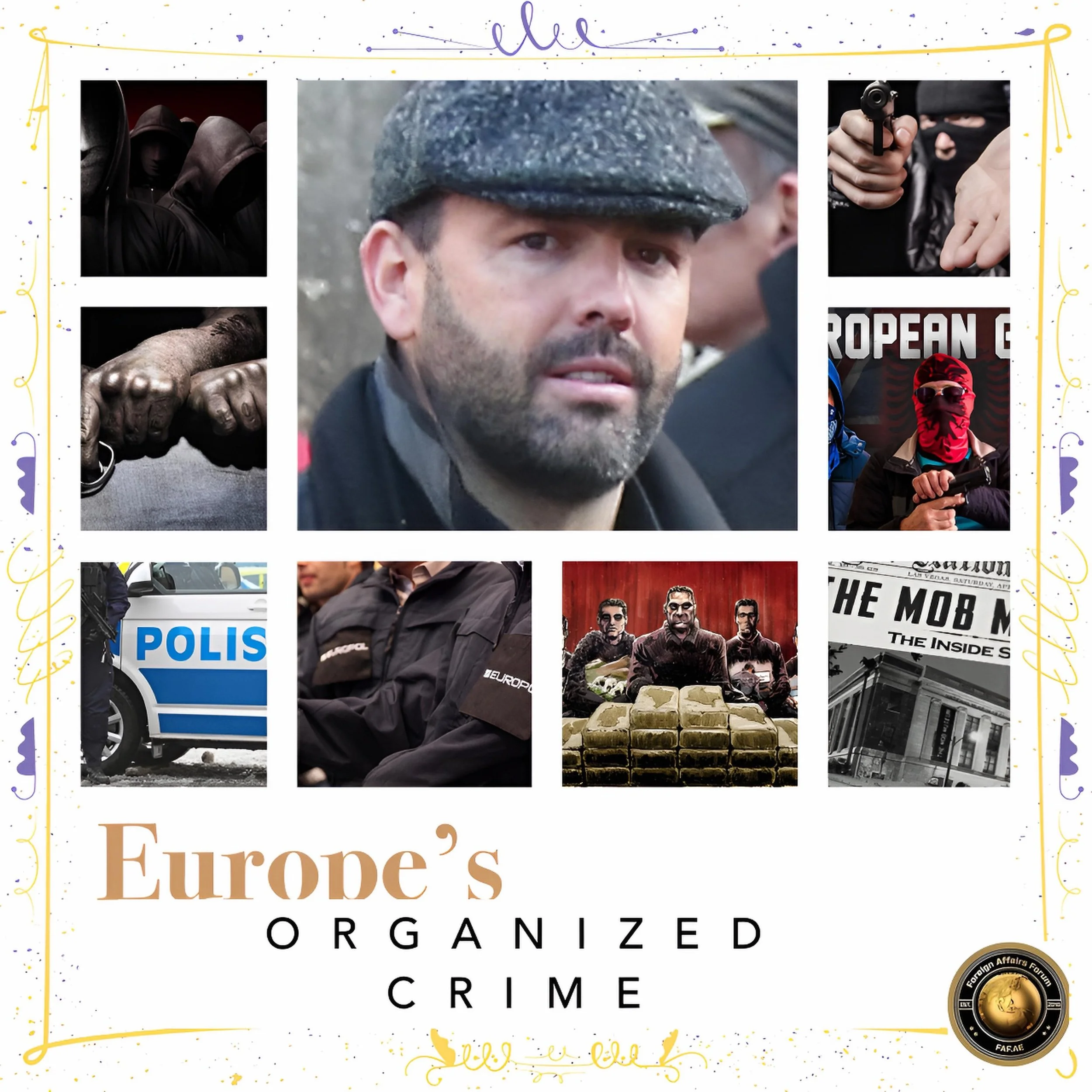
The European Union faces an unprecedented threat from organized crime groups that have evolved far beyond traditional criminal enterprises.
According to Europol’s 2025 Serious and Organised Crime Threat Assessment (EU-SOCTA), the “DNA of organized crime is changing,” with criminal networks becoming more destabilizing, digitally enabled, and dangerous than ever before.
These organizations generate an estimated €139 billion in illicit proceeds annually, representing approximately 1.3 percent of the EU’s GDP, while authorities seize only 2.1 percent of these criminal profits.
This comprehensive analysis examines the six most prominent organized crime groups operating in Europe today, their current leadership structures, the countermeasures being implemented to combat them, and the catastrophic risks that await if Europe fails to address these threats with appropriate urgency.
The Six Most Prominent Organized Crime Groups in Europe
‘Ndrangheta: Europe’s Most Powerful Criminal Organization
The ‘Ndrangheta, originating from Italy’s Calabria region, has emerged as the world’s most powerful and extensive criminal organization, operating in more than 84 countries worldwide.
Unlike the more famous Sicilian Cosa Nostra, the ‘Ndrangheta has maintained remarkable organizational resilience through its family-based structure, with more than 300 family clans and over 60,000 members globally.
The organization dominates approximately 80 percent of Europe’s cocaine trade, with Italian investigators estimating that 80 percent of Europe’s cocaine transits through the Calabrian port of Gioia Tauro.
The ‘Ndrangheta operates through a unique federal structure. At the organizational apex sits the Crimine (also known as Provincia), the organization’s highest governing body.
This federalist structure, more decentralized than many legitimate institutions, does not make operational decisions but resolves conflicts and authorizes the opening or closing of new locali (family units).
The Crimine is led by a capocrimine whose position is renewed annually during a ceremony held in conjunction with the pilgrimage to Madonna di Polsi near San Luca, the informal capital of the ’Ndrangheta.
The organization’s leadership structure is ethnically Italian, specifically Calabrian, with deep roots in the region’s familial networks. Each locale is divided into a società minore (minor society) for lower-ranking members and a società maggiore (major society) for senior members.
The organization has demonstrated a remarkable ability to replicate this structure perfectly in any city where it expands, operating much like a business franchise.
In 2023, Italian authorities conducted the largest operation against the ‘Ndrangheta, arresting 132 members across 10 countries (Belgium, Germany, Italy, France, Portugal, Slovenia, Spain, Romania, Brazil, and Panama), with 76 defendants receiving over 1,000 years’ combined imprisonment by October 2025.
The ‘Ndrangheta’s criminal portfolio extends far beyond drug trafficking to include arms smuggling, money laundering, extortion, infiltration of public contracts, toxic waste dumping, and infiltration of legitimate businesses.
The organization’s annual revenues were estimated at $60 billion in 2014, equivalent to the GDP of countries like Lebanon and Jordan, and exceeding the combined revenues of Deutsche Bank and McDonald’s.
Their money laundering operations are particularly sophisticated, utilizing complex ownership structures, shell companies, and investments in construction, trade, catering, transportation, food import-export, tourism, online gaming, and real estate across Europe.
Camorra: Naples’ Decentralized Criminal Network
The Camorra, originating in Naples and the surrounding Campania region, represents one of Europe’s oldest and most violent organized crime groups, with roots dating to the 17th century.
Unlike the hierarchical structures of Cosa Nostra and the ’Ndrangheta, the Camorra operates as a collection of approximately 180 independent clans with no dominant central authority.
This decentralized structure makes the organization simultaneously more difficult to dismantle completely and more prone to internal warfare.
According to Naples public prosecutor Giovanni Melillo’s 2023 testimony before the Antimafia Commission, the most powerful contemporary Camorra groups include the Mazzarella clan and the Secondigliano Alliance, a coalition of the Licciardi, Contini, and Mallardo clans.
The Di Lauro clan, once the most powerful Camorra organization, operated the largest open-air drug market in Europe during the early 2000s, earning approximately €200 million annually solely from drug trafficking.
The clan’s founder, Paolo Di Lauro (known as “Ciruzzo ’o milionario”), was captured in September 2005 and has since been held under the harsh 41-bis prison regime, serving three consecutive 30-year sentences.
Leadership of the Di Lauro clan has passed through several of Paolo’s ten sons, including Cosimo (sentenced to life imprisonment), Ciro, Marco (arrested in August 2025 after years as a fugitive), and Vincenzo, who received a 20-year sentence in March 2025 for his role in the clan’s business and financial operations.
The Camorra’s ethnic composition is predominantly Italian, specifically Neapolitan and Campanian, though the organization maintains extensive international connections.
The Camorra specializes in drug trafficking (particularly cocaine and heroin), cigarette smuggling, counterfeiting of major brands, large-scale fraud, illegal waste disposal, extortion, and money laundering through legitimate businesses.
The organization has a powerful presence in Spain, where it has established massive operations in drug trafficking and money laundering, reinvesting profits in hotels, nightclubs, restaurants, and companies throughout the country.
The extreme violence characteristic of the Camorra was demonstrated during the internal wars of the 1980s and 1990s, which resulted in thousands of deaths, and more recently during the 2004-2005 Scampia feud between the Di Lauro clan and the Scissionisti di Secondigliano.
Cosa Nostra: Sicily’s Historic Criminal Empire
The Sicilian Mafia, known as Cosa Nostra, represents the most historically famous Italian organized crime group, with profound influence on organized crime structures worldwide, particularly through its connections to La Cosa Nostra in the United States.
While Cosa Nostra has been significantly weakened by decades of law enforcement pressure and the arrests of its most prominent leaders, the organization remains a formidable criminal force with deep roots in Sicilian society.
The death of Matteo Messina Denaro in September 2023 marked the end of an era for Cosa Nostra.
Messina Denaro, known as “Diabolik,” had been Italy’s most wanted mafia boss since 1993 and was considered one of the last godfathers from the violent era of the 1990s.
He died in prison at age 61 from colon cancer, just eight months after his capture following 30 years as a fugitive.
Messina Denaro had been convicted in absentia of 20 life sentences for his involvement in the murders of 26 people, including anti-Mafia judges Giovanni Falcone and Paolo Borsellino, killed in car bomb attacks in 1992.
Italian anti-Mafia authorities have identified several potential successors to Messina Denaro’s influence. However, Cosa Nostra no longer has a singular “boss of bosses” as it did under Salvatore “Totò” Riina.
The leading candidate is Giovanni Motisi, a 64-year-old boss from Palermo known as “u pacchiuni” (the fat guy), who has been in hiding since 1998 after being wanted for multiple murders, including two police officers.
Other potential leaders include 70-year-old drug lord Stefano Fidanzati, who former-Mafia prosecutor Pietro Grasso believes has a strong chance of assuming greater influence, and 49-year-old Giovanni Auteri, known as “assoio” (the ace), who was a long-time associate of Messina Denaro.
The ethnic composition of Cosa Nostra is exclusively Sicilian Italian, with membership and leadership positions based on strict blood ties and geographic origin.
The organization now operates more discreetly than during its bloody period of the 1980s and 1990s, focusing on drug trafficking, infiltration of legitimate businesses, corruption of politicians and business people, and money laundering.
Despite leadership transitions and law enforcement pressure, Italian authorities confirm that Cosa Nostra’s operations in Sicily “remain unaffected and are not expected to abate,” with the organization continuing to traffic drugs and infiltrate the legitimate economy.
Albanian Organized Crime Networks: Europe’s Drug Distribution Powerhouse
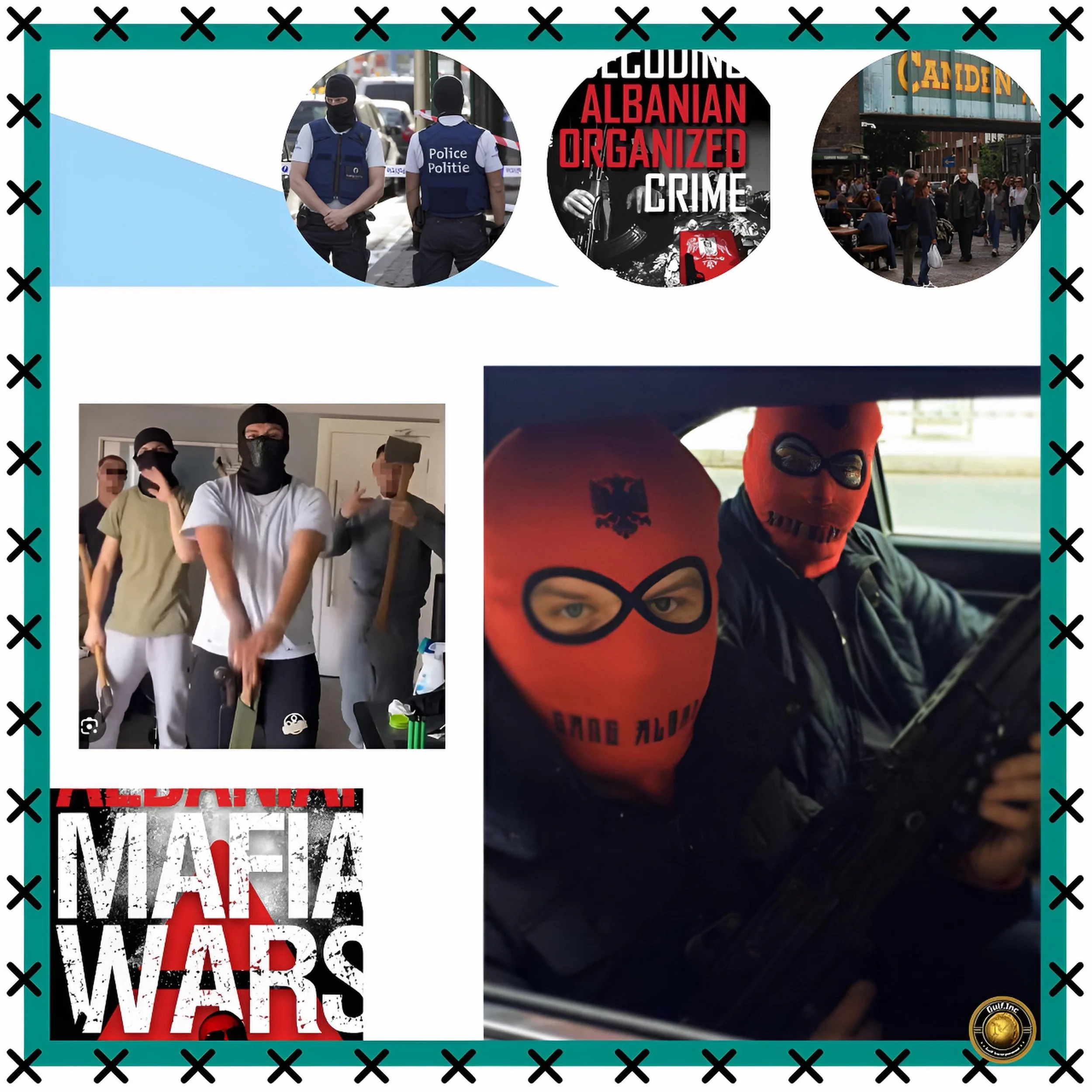
Albanian organized crime has established itself as one of the most potent and sophisticated criminal networks in Europe, controlling a substantial portion of the continent’s drug distribution infrastructure.
According to a 2025 BBC investigation, the Albanian mafia has positioned itself as one of the most powerful drug trafficking networks in Europe by controlling the wholesale cocaine market in various European drug hubs, including London, through close ties with the Calabrian ’Ndrangheta.
Albanian criminal organizations are characterized by their hybrid structure, combining elements from various sectors of society and often involving both criminal and political activities.
The organizations demonstrate what researchers call “traditional” organized crime characteristics—rigid internal discipline, clan structure, endogamic closure (marrying within the organization), and internal cohesion—combined with modern transnational capabilities.
The Albanian mafia operates in 15 prominent crime families in Albania, with hundreds of smaller gangs, and maintains extensive operations throughout Europe.
One of the most powerful Albanian criminal organizations recently dismantled was the Cela-Çopja clan, masterminded by Franc Çopja, 33, and Ervis Cela, 41.
This syndicate was so influential that its decisions dictated cocaine prices across the European continent.
The organization smuggled billions of pounds worth of cocaine from Latin America into EU ports and laundered assets through a sprawling commercial empire, including vast real estate holdings, a five-star tourist resort, and multiple villas and apartments.
The drug lords accumulated such vast quantities of cash that they debated whether to hide banknotes under olive tree roots or convert them to gold bullion.
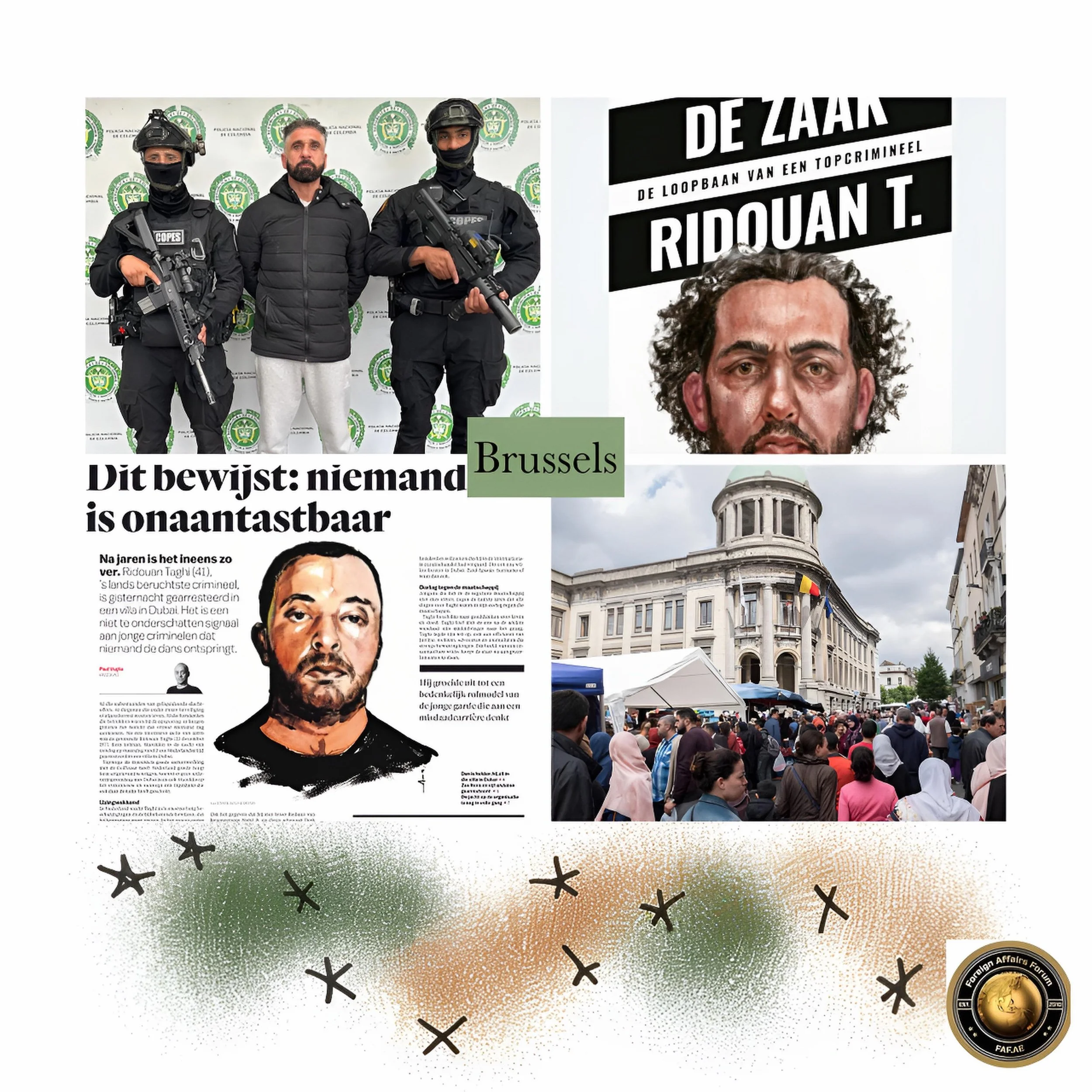
Çopja was arrested in Belgium in December 2023 and is on trial for murder after being extradited from Dubai, while Cela was arrested in June 2025 alongside two brothers and eight other conspirators.
Another major Albanian network, Kompania Bello, was considered one of the most active and sophisticated cocaine trafficking networks in Europe.
Led by Dritan Rexhepi, who operated from Ecuador, the group controlled the entire drug trafficking chain from negotiating with South American cartels to distributing cocaine across European countries, including Italy, the Netherlands, and the United Kingdom.
In a five-year international investigation spanning 10 countries, authorities arrested over 100 members, seizing nearly 4 tonnes of cocaine and over €5.5 million in cash.
Albanian crime groups have monopolized various international criminal activities from Israel to South America, with powerful presences in the United Kingdom, Netherlands, Belgium, France, Spain, Switzerland, and Scandinavia.
In the UK, Albanian gangs control the majority of human trafficking, run more than 75 percent of all brothels, and have sold more than 500,000 kilograms of drugs in London alone, dominating a five billion euro market.
The ethnic composition of these networks is primarily Albanian and Kosovar-Albanian, with extensive recruitment from the Balkans and strategic alliances with other European criminal organizations.
Russian Mafia Groups: Criminal-State Nexus and Hybrid Warfare
Russian organized crime networks represent a unique and perilous threat to European security due to their extensive involvement in cybercrime, money laundering, arms smuggling, political corruption, and—most alarmingly—their increasing role as proxies for hostile state actors in hybrid warfare operations.
Europol’s 2025 assessment explicitly warns that criminal organizations are “increasingly intertwined with hybrid threats originating externally,” with Russian and Belarusian state actors using criminal networks to destabilize European institutions.
Russian mafia groups are not a monolithic organization but rather a collection of various criminal syndicates operating across Eastern and Western Europe.
The most prominent groups include the Solntsevskaya organization, which dominated Moscow’s casinos and transportation hubs during the 1990s; the Izmaylovskaya gang, one of Russia’s oldest modern gangs with 200-500 members in Moscow alone; and various regional networks with deep connections to Russian political and intelligence structures.
In February 2025, Spanish and Portuguese authorities arrested 14 individuals, primarily Russian citizens, linked to a massive money laundering operation that processed €1 trillion through a “genuine multinational money laundering enterprise” that imposed a 2-3 percent commission on transactions for various criminal organizations, including Italian, Armenian, Chinese, and Colombian mafias.
The leadership of Russian organized crime networks is fluid and often interconnected with Russian state structures.
Semion Mogilevich, usually described as the “boss of bosses” of Russian organized crime, has forged ties with politicians, police, and intelligence agencies.
Research by investigative journalists and international agencies has documented connections between Russian organized crime leaders and high-level Russian officials, with some criminal organizations serving as proxies for Russian intelligence services in Europe.
According to Europol Executive Director Catherine De Bolle, “We see cybercriminals working during the day in a criminal infrastructure for a state actor.
And in the night, for instance, they carry out their actions (traditional criminal activities) on their own to make a profit. So they work for foreign actors and they work for their own profit”.
This dual-use model represents a fundamental transformation, like organized crime, blurring the lines between criminal activity and state-sponsored hybrid warfare.
Russian criminal networks engage in drug trafficking, arms smuggling, human trafficking, contract killings, cybercrime, ransomware operations, money laundering (increasingly through cryptocurrencies), and infiltration of legitimate businesses, including real estate, banking, and energy sectors.
The ethnic composition is predominantly Russian and Eastern European, though networks include individuals from throughout the former Soviet Union and collaborate extensively with organized crime groups from other regions.
Kinahan Organized Crime Group: Ireland’s Transnational Cartel
The Kinahan Organised Crime Group (KOCG), also known as the Kinahan Cartel, represents Ireland’s most powerful criminal organization and is considered one of the largest organized crime groups in the world, with an estimated wealth of up to €1 billion.
Founded by Christy Kinahan in the 1990s during Ireland’s “Celtic Tiger” economic boom, the organization evolved from a street gang of inner-city Dublin drug dealers into a sophisticated transnational criminal enterprise operating in Ireland, the United Kingdom, Spain, and the United Arab Emirates.
The leadership structure of the Kinahan organization is centered on the Kinahan family.
Christopher Vincent Kinahan Senior, currently based in Dubai, founded the organization and served as its direct leader before passing day-to-day operations to his son Daniel Kinahan.
Irish courts have concluded that the KOCG is “a murderous organization involved in the international trafficking of drugs and firearms”.
On April 12, 2022, the United States Department of State announced rewards of up to $5 million under the Narcotics Rewards Program for information leading to the arrest and conviction of seven key members of the organization.
Daniel Joseph Kinahan, currently based in Dubai, manages the day-to-day operations of the organization, with each KOCG member reporting to him.
He sources large quantities of cocaine from South America, organizes drug supply in Ireland, and facilitates cocaine importation into the United Kingdom. Christopher Vincent Kinahan Junior, also based in Dubai, regularly contributes to a fund used to pay KOCG members and collaborates with other members to transport and sell narcotics in the United Kingdom.
All three Kinahan family members have been known to use false identity documents.
Key lieutenants include Sean Gerard McGovern, Daniel Kinahan’s advisor and closest confidant who manages all communications on his behalf and sells multi-kilogram quantities of cocaine; Ian Thomas Dixon, who arranges multiple payments and moves bulk currency on behalf of Daniel Kinahan in Ireland and the United Kingdom; and Bernard Patrick Clancy, a key KOCG lieutenant tasked with providing wages to KOCG elements and payments to others.
The organization's ethnic composition is predominantly Irish, with extensive international connections.
Since February 2016, the KOCG has been involved in a violent gang war with the Hutch gang that has resulted in 18 deaths by August 2021, including two innocent bystanders.
The conflict began with a military-style attack at Dublin’s Regency Hotel on February 5, 2016, where two men disguised as Emergency Response Unit members stormed a boxing weigh-in with AK-47 assault rifles, killing Kinahan lieutenant David Byrne.
This attack introduced Ireland to a level of narcoterrorism previously unknown in the country.
The cartel operates through a sophisticated cell structure, with Daniel Kinahan directing operations from Dubai, where the absence of an extradition treaty with Ireland complicates law enforcement efforts.
European Countermeasures: A Comprehensive Multi-Layered Response
Strategic Framework and Institutional Architecture
European countries have implemented an increasingly sophisticated and coordinated approach to combat organized crime, built upon multiple layers of strategic frameworks, specialized agencies, and operational platforms.
The EU Strategy to Tackle Organised Crime 2021-2025 establishes four fundamental pillars: boosting law enforcement and judicial cooperation; disrupting criminal business models; protecting the economy and society; and strengthening international cooperation.
This strategy draws heavily on Europol’s Serious and Organised Crime Threat Assessment (SOCTA), published every four years to guide EU-level crime priority setting.
The European Multidisciplinary Platform Against Criminal Threats (EMPACT) serves as the EU’s flagship instrument for fighting organized and serious international crime.
EMPACT brings together all relevant European and national authorities to identify priority crime threats and address them collectively through annual operational action plans.
For the 2026-2029 cycle, the Council of the European Union has established new priorities with particular focus on economic and financial crime, including VAT carousels, excise fraud, money laundering, and the infiltration of legitimate businesses by criminal networks.
At the European level, Europol has undergone a significant transformation since the last SOCTA report in 2021, evolving toward “a more targeted, effective operational focus, consolidating a more integrated EU police cooperation model”.
The agency is now involved in the most complex and ambitious criminal investigations at the European level, prioritizing actions against High Value Targets through Operational Task Forces.
The European Commission has announced plans for an ambitious overhaul of Europol’s mandate to address new threats such as sabotage, hybrid threats, and information manipulation, with staff numbers expected to double.
Eurojust, the EU’s judicial cooperation agency, plays a complementary role by facilitating cross-border judicial coordination and supporting the establishment of joint investigation teams (JITs).
In September 2024, Eurojust launched the European Judicial Organised Crime Network (EJOCN) to strengthen coordination among specialist prosecutors and judges across the EU, going beyond investigation-based collaboration to strategically combat organized crime.
The network focuses initially on illegal drug trafficking through seaports but maintains a flexible mandate to address all aspects of organized crime.
Operational Tools and Law Enforcement Cooperation
European law enforcement has developed an array of sophisticated operational tools for cross-border cooperation.
Joint Investigation Teams are among the most effective instruments, enabling judicial and law enforcement authorities from different countries to work together on criminal investigations.
Eurojust supported over 200 JITs in 2018 alone, which have proven indispensable in dismantling transnational criminal networks.
Recent successful operations include the May 2023 coordinated action across Belgium, Germany, Italy, France, Portugal, Slovenia, Spain, Romania, Brazil, and Panama that deployed over 2,700 officers and arrested 132 ’Ndrangheta members, ultimately resulting in over 1,000 years of combined prison sentences.
The cracking of encrypted communication networks has provided law enforcement with unprecedented access to criminal operations.
The dismantling of EncroChat in 2020 led to more than 1,800 arrests and over 1,500 new investigations, exposing the extent to which organized crime groups operate transnationally and online across all criminal markets.
In March 2021, the cracking of Sky ECC, to which many EncroChat users had migrated, led to the prevention of more than 70 violent incidents, seizure of more than 28 tons of drugs, and arrest of more than 80 suspects in Belgium and the Netherlands, initiating over 400 new investigations against high-risk organized crime groups.
Financial intelligence and anti-money laundering efforts have been significantly enhanced through technological innovation.
The ‘Next-Generation’ FIU.net, which went live in February 2025, provides Financial Intelligence Units (FIUs) and Europol with a state-of-the-art IT solution enabling quicker, more efficient exchange and cross-matching of information.
The system, used by FIUs across all EU Member States, Norway, Liechtenstein, and Iceland, and by Europol, facilitates the exchange of crucial information on suspicious financial flows, helping investigators trace and seize criminal assets.
The new European Authority for Anti-Money Laundering and Countering the Financing of Terrorism (AMLA), created in 2024, will assume ownership of FIU.net by July 2027 and will directly supervise selected financial sector entities operating across borders that present high money laundering risks.
Italian Model: Asset Confiscation and Social Reuse
Italy has developed what is widely considered the world’s most effective legal framework for combating organized crime through non-conviction-based asset confiscation and the social reuse of confiscated property.
The foundation of this system was established by the “Rognoni-La Torre” Law of September 13, 1982, which introduced Article 416-bis into the Italian criminal code, providing the first practical legal definition of “Mafia-type unlawful association”.
This groundbreaking legislation enabled prosecutors to target criminal organizations judicially while simultaneously attacking their economic foundation.
Italian preventive confiscation allows authorities to seize assets from individuals suspected of belonging to mafia-related groups or of living off illegal activities when their wealth exceeds their official income, even without a criminal conviction.
By the end of 2011, Italian justice had confiscated more than 10,000 estate units—including houses, flats, factories, warehouses, and land units—and more than 1,500 companies, with total values estimated at over €115 million in individual operations.
These confiscations target the very economic foundation of organized crime using “lean, fast and effective non-criminal prevention instruments”.
The uniqueness of the Italian approach lies not merely in confiscation but in the social reuse of seized assets. Law 109 of March 7, 1996, approved through a popular initiative that collected more than one million signatures, established that confiscated assets would be returned to the community for socially beneficial projects.
The national network “Libera. Associations, names and numbers against the mafias” coordinates the transformation of confiscated properties into social enterprises, cooperatives, community centers, and agricultural operations.
In Mesagne, the Puglia town where the Sacra Corona Unita was founded, a Libera store sells wine made from grapes grown in vineyards confiscated from the mafia, with bottles bearing the names of mafia victims.
This model has influenced European policy, with the European Parliament repeatedly approving documents that suggest all Member States institute the crime of mafia association as enshrined in Article 416-bis and adopt the possibility of confiscating unjustified assets even without a definitive criminal conviction.
However, many Western European countries still lack the legal tools in their national frameworks to prosecute ‘mafia-type’ criminal associations.
Specialized Initiatives and International Cooperation
Europe has developed several specialized initiatives targeting specific criminal organizations and crime types.
INTERPOL’s I-CAN project (INTERPOL Cooperation Against ‘Ndrangheta), launched in 2020 with a 2025-2027 timeframe and €3.4 million budget, coordinates a global law enforcement approach by leveraging INTERPOL’s capabilities to share expertise, intelligence, and best practices among 20 participating countries.
The initiative has developed an INTERPOL Criminal Analytical File populated by more than 75,000 entities linking ’Ndrangheta-related individuals and organizations.
Operation-specific task forces have achieved remarkable results through coordinated international action.
A massive operation involving Finnish and Albanian authorities in June 2025 targeted the top leaders and middle management of an Albanian-led criminal network, with 55 persons convicted in Finnish courts and almost 300 kilos of drugs seized.
The operation was conducted through a Joint Investigation Team established in late 2023 between Finland’s National Bureau of Investigation and Albania’s Special Structure against Corruption and Organized Crime (SPAK).
The EU has also strengthened cooperation with Latin American countries through the CLASI-EU (Latin American Committee on Internal Security) framework.
The Joint Ministerial Declaration 2025 and the Roadmap of priorities for operational cooperation 2025-2026 commit EU and Latin American security ministers to combat drug trafficking, dismantle high-risk criminal networks, fight human trafficking and migrant smuggling, and address firearms trafficking, with a special focus on tracing illicit financial flows.
Catastrophic Risks: The Consequences of Inaction
Economic Destabilization and Market Infiltration
The failure to adequately address organized crime poses catastrophic risks to Europe’s economic stability and the integrity of its markets. With illicit markets generating €139 billion annually across the EU—equivalent to 1.3 percent of the EU’s GDP—and authorities seizing only 2.1 percent of criminal proceeds, organized crime has accumulated unprecedented financial power.
This vast capital allows criminal networks to infiltrate legitimate businesses, distort market competition, and corrupt the foundation of the European economy.
Europol’s 2024 report finds that 86 percent of the 821 most threatening criminal networks can infiltrate the legal economy to hide their activities and launder criminal profits.
Criminal organizations invest in restaurants, hotels, real estate, construction companies, supermarkets, commercial centers, bars, sports facilities, import-export businesses, and even government contracts to build or refurbish prisons.
The ’Ndrangheta alone was estimated to earn $60 billion annually as of 2014—higher than the GDP of many European nations and exceeding the combined revenues of major multinational corporations.
This infiltration creates what economists call “unfair competition,” where legitimate businesses cannot compete with enterprises funded by unlimited criminal capital that operates outside usual market constraints.
Criminal enterprises can underbid honest competitors for contracts, accept lower profit margins, and use intimidation to eliminate competition. In regions with heavy mafia presence, such as Naples and Calabria, this has led to the systematic destruction of legitimate business sectors and the creation of criminal monopolies.
The long-term economic consequences extend beyond individual businesses to entire regional economies. Criminal control of construction, waste disposal, and public procurement systematically drains public resources while delivering substandard or dangerous results.
The ‘Ndrangheta’s infiltration of the waste disposal operations of the Ilva steel company in Taranto and toxic waste dumping in Calabria have created environmental disasters with multi-generational health consequences.
If this trend continues unchecked, entire sectors of the European economy risk falling under criminal control, with devastating implications for economic growth, innovation, and competitiveness.
Democratic Erosion and Institutional Corruption
Perhaps the most insidious threat posed by organized crime is its corrosive effect on democratic institutions and the rule of law.
Europol’s 2025 assessment explicitly warns that organized crime “undermines the very foundations of political, economic and social cohesion and stability through illicit proceeds, the perpetuation of violence and the extension of corruption”.
More than 70 percent of the most threatening criminal networks engage in corruption to facilitate their operations, systematically weakening state institutions from within.
The corruption extends from local officials to national politicians, from police officers to judges, from port workers to bank officials.
The ’Ndrangheta has demonstrated particular sophistication in what prosecutors describe as the “infiltration of politics and business,” with criminal networks forming relationships with political figures to influence policy, secure contracts, and avoid prosecution.
In 2018, arrests in Italy included Alessandro Figliomeni, the former mayor of Siderno, Calabria, who received a 12-year prison sentence for mafia association as a member of the Commisso ’ndrina clan.
The systematic use of violence and intimidation to suppress opposition creates what researchers call a “culture of silence” that extends far beyond individual victims.
Women challenging the Sacra Corona Unita in Puglia—including Judge Francesca Mariano, who received death threats written in blood and found a bloody goat head with a butcher’s knife through it on her doorstep, and journalist Marilù Mastrogiovanni, who required police protection after reporting on mafia infiltration—exemplify both the courage necessary to resist organized crime and the extreme risks faced by those who do.
Suppose European democracies fail to effectively counter organized crime. In that case, the long-term consequence will be the progressive hollowing out of democratic institutions and the normalization of criminal power as a parallel governance structure.
In regions where this process is already advanced, citizens increasingly view cooperation with criminal organizations as necessary for basic security and economic survival, creating a vicious cycle that further empowers criminals while weakening the state.
Hybrid Warfare and National Security Threats
The evolution of organized crime from purely profit-motivated criminal activity to a tool of hybrid warfare represents an unprecedented threat to European security.
Europol’s 2025 assessment warns that criminal networks are “increasingly operating as proxies in the service of hybrid threat actors,” with cooperation that is “mutually reinforcing”.
This collaboration between state actors—particularly Russia and Belarus—and criminal organizations blurs the lines between crime and warfare in ways that challenge traditional security frameworks.
Criminal networks serve state actors through ransomware attacks on critical infrastructure, cyberattacks on businesses and government agencies, sabotage of essential services, disinformation campaigns, and the undermining of social cohesion.
According to Europol Executive Director Catherine De Bolle, this cooperation extends beyond profit to “strategic goals: weakening democratic institutions, disrupting social cohesion, and eroding trust in governance”.
The criminals provide deniability for state actors while gaining access to sophisticated cyber infrastructure, intelligence, and protection.
The consequences of failing to address this hybrid threat are catastrophic.
As organized crime becomes increasingly intertwined with hostile state activities, Europe faces the prospect of systematic destabilization orchestrated through criminal proxies that cannot be addressed through traditional diplomatic or military means.
Critical infrastructure—including energy systems, transportation networks, communication systems, and financial institutions—becomes vulnerable to coordinated attacks that combine criminal expertise with state resources.
The recruitment of minors and vulnerable populations into organized crime exacerbates this threat by creating a pipeline of individuals who can be exploited for both criminal and strategic purposes.
Criminal networks increasingly use young people to execute tasks in drug trafficking and other criminal activities as a countermeasure to avoid the prosecution of core network members.
This creates a lost generation, disconnected from legitimate society and vulnerable to recruitment into increasingly dangerous activities.
Social Fragmentation and Violence Spillover
The increasing use of violence by organized crime groups represents a direct threat to public safety and social cohesion across Europe. Europol’s 2025 assessment notes that criminal violence is “increasing in terms of frequency, severity, visibility and impact”.
Most violence concentrates in and around major transit points and transportation hubs used for smuggling goods, particularly drugs, but increasingly spills into surrounding cities, endangering innocent bystanders.
The competition between rival criminal groups has led to what authorities describe as “the spillover of violence onto the streets”.
In Dublin, the Kinahan-Hutch feud resulted in 18 deaths between 2016 and 2021, including two innocent bystanders.
In Naples, the Scampia feud between the Di Lauro clan and the Scissionisti resulted in hundreds of murders, with violence so intense that the Italian government deployed military forces.
In Sweden and Denmark, the Nordic Biker War between the Hells Angels and Bandidos saw the use of anti-tank rockets, machine guns, hand grenades, land mines, and 17 kilograms of explosives, with weapons stolen from military installations.
The normalization of extreme violence has profound social consequences. Communities living in areas controlled by organized crime experience constant fear, with residents unable to report crimes due to intimidation and the absence of adequate state protection.
Children growing up in these environments internalize violence as usual and see criminal organizations as more powerful and reliable than state institutions.
This creates intergenerational cycles of criminality that become increasingly difficult to break.
Suppose Europe fails to address the violence associated with organized crime. In that case, the result will be the progressive fragmentation of society into areas under effective state control and areas where criminal organizations exercise de facto governance.
This fragmentation undermines the fundamental social contract between citizens and the state, creating failed-state dynamics within otherwise prosperous European nations.
Technological Empowerment and the AI-Crime Nexus
The rapid adoption of artificial intelligence and emerging technologies by criminal organizations represents a threat multiplier that could render traditional law enforcement approaches obsolete.
Europol’s 2025 assessment identifies AI as “fundamentally reshaping the organised crime landscape,” with criminals rapidly exploiting new technologies.
The same qualities that make AI revolutionary—accessibility, adaptability, and sophistication—also make it a powerful tool for criminal networks, automating and expanding criminal operations while making them more scalable and more challenging to detect.
Criminal networks use AI for increasingly sophisticated cyber fraud schemes, deepfake technology for identity theft and social engineering, automated money laundering systems, encrypted communications that evade surveillance, and the identification and exploitation of security vulnerabilities.
Sugar Nearly all forms of serious and organized crime now have a digital footprint, with the internet becoming “the primary theatre for organised crime”.
From cyber fraud and ransomware to drug trafficking and money laundering, digital infrastructure enables criminals to conceal activities from law enforcement while operating at an unprecedented scale.
The consequences of failing to counter this technological empowerment are particularly severe because the gap between criminal capabilities and law enforcement capacities could widen exponentially.
Criminal organizations, freed from bureaucratic constraints and operating in highly competitive environments, can adopt new technologies faster than government agencies.
If this technology gap continues to grow, law enforcement may find itself permanently unable to detect, investigate, or prosecute increasingly sophisticated criminal operations.
The use of cryptocurrencies and blockchain technologies for money laundering exemplifies this challenge.
Criminal networks increasingly rely on cryptocurrencies to launder funds, exploiting the difficulty of tracing blockchain transactions across multiple jurisdictions.
The development of privacy-focused cryptocurrencies and decentralized finance platforms creates new opportunities for criminals to hide illicit proceeds beyond the reach of traditional financial intelligence systems.
Conclusion
The Imperative for Decisive Action
Europe stands at a critical juncture in its confrontation with organized crime.
The six most prominent criminal organizations—the ’Ndrangheta, Camorra, Cosa Nostra, Albanian networks, Russian mafia groups, and the Kinahan cartel—collectively represent an existential threat to European prosperity, security, and democratic governance.
These organizations have evolved far beyond traditional criminal enterprises to become sophisticated transnational networks with annual revenues exceeding €139 billion, deep infiltration of legitimate economies, and increasingly troubling connections to hostile state actors engaged in hybrid warfare.
The countermeasures implemented by European countries demonstrate a sophisticated understanding of the threat and a genuine commitment to combating it.
The EU Strategy to Tackle Organised Crime 2021-2025, the enhanced capabilities of Europol and Eurojust, the development of specialized tools like the ‘Next-Generation’ FIU.net, the establishment of the European Judicial Organised Crime Network, and—most innovatively—the Italian model of asset confiscation and social reuse all represent meaningful progress.
Recent operational successes, including the arrest of 132 ’Ndrangheta members across 10 countries and the dismantling of major Albanian cocaine trafficking networks, prove that coordinated international action can achieve results.
However, the gap between the scale of the threat and the effectiveness of the response remains dangerously wide.
Authoritative criminal networks continue to expand their global reach and technological sophistication, and the integration of organized crime with hybrid warfare creates threats that transcend traditional law enforcement capabilities.
The consequences of failing to close this gap are catastrophic: progressive economic destabilization as criminal capital dominates legitimate markets, erosion of democratic institutions through systematic corruption, escalating violence that fragments communities, and the empowerment of criminal networks as tools of state-sponsored destabilization.
The path forward requires sustained political will, increased resources for law enforcement and judicial cooperation, harmonization of legal frameworks across European nations to eliminate safe havens, technological investment to match criminal capabilities in the digital domain, and—critically—a whole-of-society approach that mobilizes civil society, the private sector, and ordinary citizens in resistance to organized crime.
As Europol Executive Director Catherine De Bolle warned, “This is not business as usual. The game has changed on our internal security in several ways. We need the whole of society to be aware”.
The stakes could not be higher. Organized crime threatens not merely public safety but the foundations of European civilization: the rule of law, democratic governance, economic opportunity, and social trust.
The window for effective action is narrowing as criminal networks become more sophisticated, more technologically advanced, and more deeply embedded in the structures of European society.
Europe must act decisively now, with the urgency and comprehensiveness this civilizational threat demands, or face a future in which criminal power rivals, and perhaps exceeds, legitimate state authority across significant portions of the continent.