Albanian Organized Crime: A Comprehensive Analysis of Drug Trafficking, Weapons Smuggling, and Transnational Criminal Networks in Europe
Introduction
Albanian organized crime has emerged as one of the most significant and rapidly expanding criminal threats facing Europe, with criminal networks based in Albania and composed of ethnic Albanians now dominating multiple illicit markets across the continent.
The scale and sophistication of Albanian criminal operations—encompassing large-scale cocaine trafficking, heroin distribution, weapons smuggling, human trafficking for prostitution, and money laundering—represent a fundamental transformation in the structure of European organized crime.
These networks have transcended their traditional roles as intermediaries and regional players to become primary orchestrators of international trafficking routes, establishing direct contacts with Latin American cocaine producers, controlling major European ports, and exerting significant influence over narcotics markets from the United Kingdom to Scandinavia.
The Rise of Albanian Criminal Networks in European Drug Markets
Cocaine Dominance and Market Control
Over the past decade, Albanian criminal networks have fundamentally restructured the European cocaine market through a business model that represents a departure from historical patterns of organized crime organization and distribution.
Traditionally, the cocaine trade involved distinct layers of importers, wholesalers, and street-level distributors, with each segment operating independently and numerous intermediaries capturing value at each transaction point.
Albanian organizations dismantled this fragmented system by integrating vertically across the entire supply chain—from direct negotiations with Colombian, Ecuadorian, and Peruvian cocaine producers to final-stage distribution in European markets.
This vertical integration model allowed them to reduce transaction costs, increase profit margins, lower wholesale prices, and simultaneously increase the purity of cocaine reaching European consumers, thereby capturing market share from established Italian, Spanish, and other traditional organized crime groups.
The sophistication of these operations became starkly evident through the Çela-Çopja network investigation, which exposed how Albanian criminal groups could orchestrate multi-tonne cocaine shipments across continents.
Between November 2020 and February 2021, this single network successfully imported approximately 36.4 tonnes of cocaine to Europe through major European ports, with coordinated shipments including a record 12-tonne consignment through Antwerp in November 2020 and a 16-tonne shipment through Hamburg in February 2021 (the largest cocaine seizure recorded in the European Union, valued between €1.5 billion and €3.5 billion).
The network’s operational sophistication extended beyond logistics to include advanced financial mechanisms, utilizing hawala money transfer systems (referred to in encrypted communications as “tokens”) to move tens of millions of euros across borders without triggering banking system detection, while simultaneously investing profits in real estate, aircraft, and agricultural land in Paraguay and Albania.
Structural Organization and Operational Flexibility
Unlike the hierarchical, territorially based structures characteristic of Italian mafia organizations or traditional Balkan criminal groups, Albanian networks operate through pragmatic, fluid organizational models, characterized by temporary relationships and specialized divisions of labor.
These organizations consist of core leadership figures who maintain control over major supply chain decisions, complemented by loosely affiliated networks of specialists responsible for specific functions—procurement, transportation, storage, distribution, money laundering, and violence enforcement.
This organizational flexibility enables rapid adaptation to law enforcement disruptions, market fluctuations, and emerging opportunities.
When members are arrested or killed, operations continue through parallel supply chains; when particular routes become compromised through increased border controls or port security measures, networks quickly activate alternative pathways or methods.
The disciplined yet adaptable nature of Albanian criminal organizations has earned them recognition as highly professional and reliable partners by other international criminal organizations.
According to Belgian police assessments, the distinguishing characteristics of Albanian networks include exceptional “discipline, reliability and professionalism,” alongside a demonstrated capacity to “connect particularly quickly with other criminal organisations.”
These qualities have made them attractive partners for Italian mafia groups, particularly ’Ndrangheta and Sacra Corona Unita, which supply financing for cocaine shipments that Albanian networks import and distribute across European markets.
The cooperation between Albanian and Italian organized crime extends beyond drug trafficking to encompass weapons smuggling, human trafficking, and money laundering operations, with each organization maintaining specialized roles within transnational criminal ecosystems.
Geographic Concentration and National Impacts
Major European Hubs and Port Vulnerabilities
The primary geographic concentration of Albanian criminal activity spans northern and western Europe, with Belgium, the Netherlands, Germany, the United Kingdom, Spain, Italy, Switzerland, and France bearing the most significant impact.
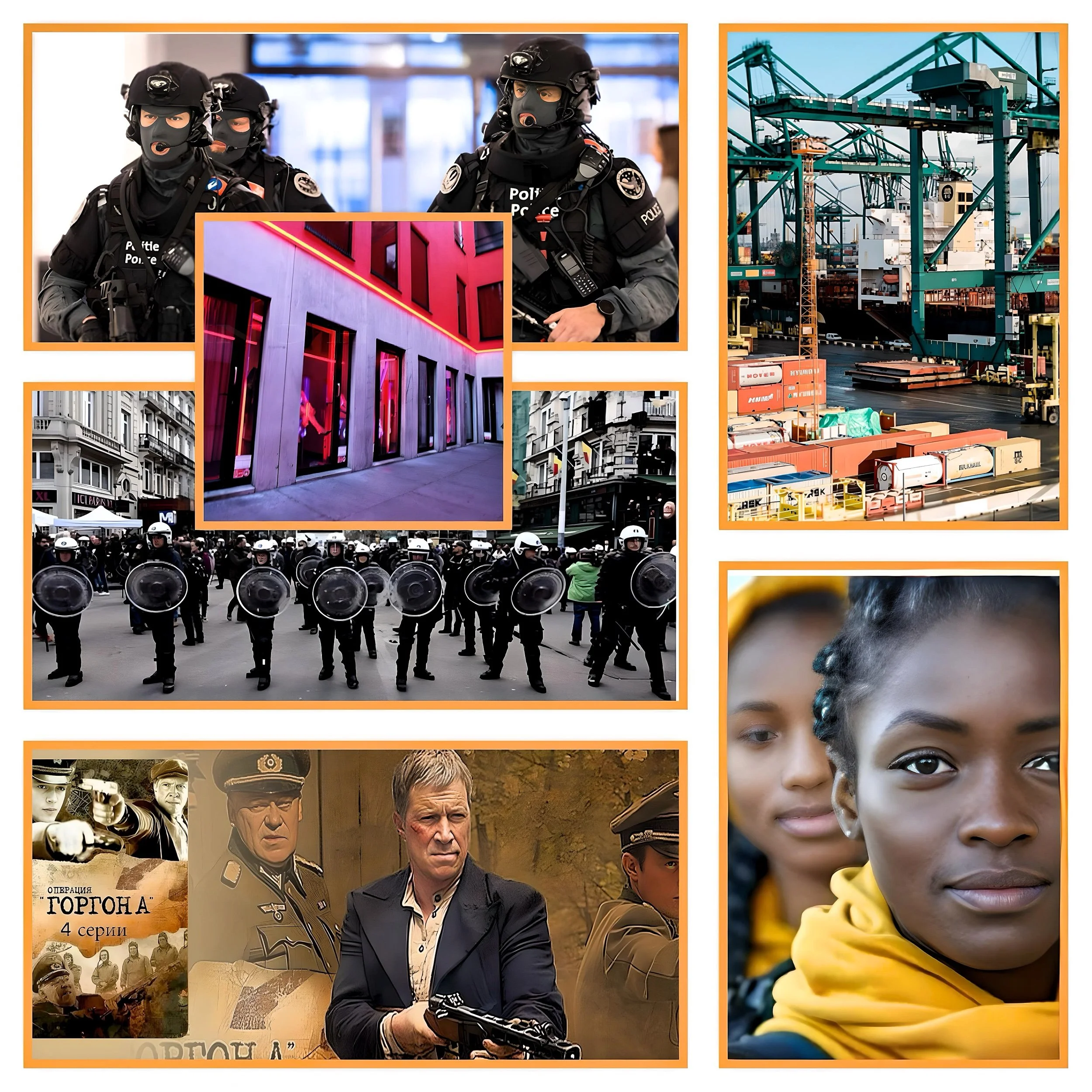
Port cities have become critical nexus points for these operations, with Antwerp, Rotterdam, and Hamburg functioning as primary entry points for Latin American cocaine destined for European markets.
The Port of Antwerp has emerged as Europe’s primary cocaine entry point, with Belgian authorities seizing 116 tonnes in 2023 and 110 tonnes in 2024—representing a 5% increase from 2022 and far exceeding the approximately 20 tonnes seized in earlier years.
Despite these record seizures, law enforcement estimates that intercepted quantities represent only a small fraction—possibly 10% or less—of total shipments arriving, suggesting that between 1,000 and 1,100 tonnes of cocaine may transit through European ports annually.
The vulnerability of major European ports to Albanian organized crime reflects multiple structural factors.
Antwerp’s appeal to traffickers stems from its massive container traffic (handling hundreds of thousands of containers annually), extensive refrigerated storage capacity designed for legitimate perishable goods, rapid transport connections to the Netherlands and other EU markets, and the capacity to process approximately four-fifths of seized cocaine that remains for cutting, repackaging, and redistribution across Europe.
Similar vulnerabilities affect Rotterdam and Hamburg, which collectively handle more container traffic than any other EU ports and offer comparable opportunities to conceal illicit shipments within legitimate trade flows.
The Schengen free movement zone compounds these vulnerabilities by eliminating internal border controls, allowing cocaine retrieved from Antwerp to move freely to the Netherlands, Germany, and beyond without checkpoint inspections.
Italy: Traditional Stronghold and Evolving Patterns
Italy maintains its historical significance as both a destination market and transit corridor for Albanian-controlled narcotics flows, with particular concentration in Puglia region cities including Bari, Brindisi, and Lecce, where Albanian criminal groups have established strategic alliances with local ’Ndrangheta and Sacra Corona Unita factions.
Recent primary operations highlight the scale of Italian-Albanian cooperation in cocaine trafficking; a 2025 operation coordinated by Eurojust resulted in 52 arrests and seizures of at least €5 million in cash alongside 1,800 kilograms of cocaine and heroin flowing between the Balkans, Northern Europe, and Puglia.
An earlier September 2024 operation dismantled a 66-person cocaine-smuggling network led by an Albanian organized crime group that had operated for at least four years, selling cocaine primarily in the north of Italy through five storage warehouses in and around Brescia, with €4 million in cash, 360 kilograms of cocaine, luxury vehicles, and weapons seized during the action.
United Kingdom: Expansion from Sex Trafficking to Drug Distribution
The United Kingdom represents a critical case study in Albanian criminal network expansion, with organizations transitioning from dominance of the sex trafficking industry—where estimates suggest 50-75% of London’s Soho brothels were staffed by Albanian trafficking victims in the early 2000s—to commanding control over the country’s cocaine market.
By the late 2010s and early 2020s, Albanian gangs had established high-profile influence within UK organized crime, with the National Crime Agency confirming their unusual ability to develop relationships and forge links with other organized crime groups.
The case of Driton Cozminca exemplifies this criminal evolution: operating from properties in Wembley and Islington in north London, Cozminca purchased and supplied 100 kilograms of cocaine with a wholesale value of £3.5 million and street value around £8 million, while simultaneously laundering £2.5 million in criminal proceeds through property acquisitions and cash deposits.
His operation was merely one component of a broader Albanian presence that now dominates British cocaine distribution, with supply chains reaching from South American producers through Antwerp and other European ports to UK street-level markets.
Drug Trafficking Operations and Diversified Criminal Activities
Heroin and the Balkan Route
While Albanian criminal networks have achieved greatest prominence through cocaine trafficking, they maintain significant involvement in heroin distribution through the established “Balkan Route” extending from Afghanistan and Turkey through the Western Balkans to Western European markets.
Historically, Albanian groups distributed 40-50% of heroin consumed in Western Europe, receiving shipments from Turkish and Iranian suppliers and managing transit and distribution through Albania, Kosovo, North Macedonia, and Serbia.
This trafficking has been facilitated by Albania’s geographic positioning between source countries in Southwest Asia and consumer markets in Western Europe, combined with historically weak border controls and corruption within customs and police forces.
However, the profitability differential has shifted Albanian criminal group priorities toward cocaine; drug investigators in Kosovo have reported that traffickers now demonstrate less interest in heroin due to lower profit margins and lighter criminal sentences compared to cocaine trafficking.
Cannabis Production and the Narco-State Phenomenon
Albania earned a designation from the United Nations Office on Drugs and Crime as the seventh-leading cannabis cultivator globally in 2022 rankings and the first regionally in Southeast Europe, a consequence of systematic, large-scale outdoor cultivation across multiple provinces, particularly historically in the Lazarat and Dukagjini regions.
This cultivation occurs despite significant law enforcement efforts; Albanian police seized tons of cannabis plants in primary operations, including a 2014 crackdown on Lazarat that temporarily suppressed cultivation through mass plant destruction.
However, the illicit cannabis trade has proven resilient, with organized crime groups diversifying cultivation across the country and adapting to law enforcement operations through rapid geographical dispersal.
Albania’s characterization as Europe’s “only narco-state” reflects the pervasive integration of drug trafficking into the economic and political fabric of specific regions and the state’s limited capacity to enforce anti-narcotics laws.
Estimates indicate that approximately 95% of drugs produced or transiting through Albania ultimately reach European markets, with cannabis serving as a significant export commodity alongside heroin and cocaine.
The 2023 legalization of medical and industrial cannabis cultivation for export-only purposes introduces additional regulatory complexity; while theoretically allowing legitimate industrial production, the framework risks providing cover for illegal cultivation or conversion of criminal production facilities into nominally licensed operations.
Human Trafficking and Sexual Exploitation Networks
Albanian organized crime networks maintain extensive involvement in human trafficking for sexual exploitation, constituting a significant source of revenue alongside drug trafficking.
Investigations have documented how vulnerable women and girls from Albania, Eastern Europe, and increasingly from Latin America are recruited through false promises of employment or marriage, transported through trafficking networks, and forced into sexual servitude in European brothels, escort services, and private residences.
A 2025 operation coordinated by Eurojust and Europol dismantled a human trafficking ring that had recruited vulnerable Colombian women for sexual exploitation in Albania, forcing over 50 victims into prostitution through online escort platforms while threatening violence against their families.
The trafficking of Albanians represents a particularly tragic dimension of this phenomenon, with young women from impoverished rural areas experiencing systematic recruitment by individuals presenting themselves as romantic partners, followed by sale to trafficking networks and forced prostitution in Italy, Greece, Western Europe, and the United Kingdom.
Victims documented experiencing months of repeated rape, being forced to sleep with multiple men daily, underground detention, blindfolded transportation, and violent punishment for resistance.
The British National Crime Agency reported in 2017 that the majority of human trafficking victims in the UK were Albanian nationals exploited as cheap labor or in the sex industry, with the pattern continuing through the present.
Weapons Trafficking and Regional Security Threats
Supply and Distribution Networks
The Western Balkans contain an estimated 3-6 million illicit weapons remaining from the Yugoslav Wars of the 1990s and subsequent conflicts in Kosovo and North Macedonia, creating an abundant supply for criminal trafficking organizations.
Albanian criminal networks have established themselves as primary redistributors of these weapons throughout Europe, exporting firearms, automatic weapons, hand grenades, and plastic explosives to Belgium, France, Germany, Italy, the Netherlands, Spain, Sweden, and the United Kingdom.
These weapons flow through networks involving organized crime groups, motorcycle gangs, and smaller trafficking cells, often coordinated with broader drug smuggling operations, since many trafficking organizations leverage existing logistical infrastructure and relationships for multi-commodity trafficking.
In December 2024, a joint Albanian-Kosovar operation disrupted an arms trafficking gang that had been organizing weapons and explosives shipments toward the European Union, seizing 52 firearms, three hand grenades, and over 3,000 rounds of ammunition across coordinated raids in both countries.
Regional investigations have revealed systematic recruitment of corrupt border officials, customs agents, and police personnel to facilitate weapons movement; intercepted communications from previous investigations documented how traffickers maintain networks of individuals paid to provide warning of law enforcement patrols and border security checkpoints.
European Security Implications
Weapons from the Western Balkans ( Albania, Bosnia and Herzegovina, Kosovo, Montenegro, North Macedonia, and Serbia) have been implicated in terrorist attacks and major criminal violence across Europe.
The January and November 2015 Paris terrorist attacks, including the Bataclan concert hall massacre that killed 90 people, involved perpetrators who obtained automatic weapons through illegal channels from the Balkan region.
In Sweden, weapons from the Western Balkans have become central to escalating gang violence, with law enforcement recording marked increases in the use of automatic weapons and hand grenades smuggled from the region, including cases of M-75 hand grenades (produced in former Yugoslavia) being purchased on the black market for as little as €9.60.
The ongoing war between Montenegrin criminal clans (Kavač and Škaljari) has been characterized by systematic violence utilizing automatic weapons and plastic explosives from Balkan stockpiles, leading to dozens of assassinations and contributing to elevated homicide rates across the region.
International Cooperation and Law Enforcement Response
Institutional Frameworks and Joint Investigation Teams
European authorities have implemented multifaceted institutional responses to combat Albanian organized crime, centering on enhanced international cooperation through Europol, Eurojust, and bilateral law enforcement partnerships.
Albania established its Special Structure against Corruption and Organized Crime (SPAK) in December 2019, creating an independent prosecutorial body with specialized investigation units dedicated to combating high-level corruption and organized crime.
SPAK has emerged as a critical institutional framework for international cooperation, participating in 24 joint investigation teams (JITs) in 2024 alone and serving as Eurojust’s third-most active partner country after the United Kingdom and Switzerland.
Joint Investigation Teams represent advanced legal mechanisms enabling prosecutors and law enforcement from multiple EU member states and third countries to conduct coordinated investigations with unified command structures, evidence-sharing protocols, and cross-border operational authority.
Between 2019 and 2023, Albania participated in 99 drug trafficking cases involving JITs, 38 coordination meetings, and two coordination centers, with high-profile operations including “Shpirti” and “Highway” targeting major cocaine and cannabis trafficking networks.
These mechanisms have proven essential for dismantling transnational criminal enterprises that necessarily operate across multiple jurisdictions; the 2025 Eurojust-coordinated operation against an Italian-Albanian drug trafficking network resulted in 52 arrests across Albania and Italy, with shared real-time information exchange enabling simultaneous enforcement actions that prevented suspect flight and asset concealment.
Enhanced Border Security and Port Control Initiatives
European states have progressively strengthened border security measures and port control capacity to disrupt trafficking flows.
The UNODC-WCO partnership has established Port Control Units (PCUs) and Air Cargo Control Units (ACCUs) at strategic locations, including Antwerp, Rotterdam, and other major European ports. The Border Security Phase II initiative, launched in December 2024, targets enhanced training for customs and border officers.
These specialized units conduct high-risk cargo inspections, advanced manifest analysis, and intelligence-driven targeting of containers associated with trafficking networks.
In 2024 alone, specialized port units in Antwerp arrested 128 individuals on drug-related charges, with 98 arrests of individuals recruited by criminal organizations to retrieve drugs from containers, and court proceedings yielded 243 convictions for cocaine smuggling via the port.
Frontex, the European Border and Coast Guard Agency, has expanded operational presence throughout the Western Balkans through cooperation agreements with Albania (2024), Montenegro (2023), North Macedonia (2023), and Bosnia and Herzegovina (2025), with over 100 Frontex officers deployed to each country to support joint border control operations.
These deployments focus on disrupting migrant smuggling networks, preventing weapons trafficking, and intercepting narcotics in transit, with reported results including a 71% reduction in irregular crossing detections across the Western Balkans between 2023 and mid-2024.
Transnational Intelligence Sharing and Encrypted Communication Analysis
The decryption and analysis of Sky ECC-encrypted communications platforms have provided unprecedented visibility into Albanian criminal network operations, enabling law enforcement to reconstruct trafficking routes, identify high-value targets, trace financial flows, and coordinate prosecution strategies.
Sky ECC, historically favored by international criminal organizations for its encryption and message-deletion features, was disrupted in 2020, but accumulated communications data continues to yield operational results.
The August 2025 operation against an Albanian cocaine trafficking network led by SPAK, supported by Europol analysts, utilized Sky ECC communications analysis to reconstruct multi-tonne cocaine shipments, map organizational hierarchies, and identify the primary target as having received over USD 40 million for his role in coordinating a single major shipment.
The United States has provided substantial support to Albanian law enforcement through FBI and DEA cooperation, with over $27.5 million invested in justice reform and law enforcement capacity development programs over six years.
SPAK leaders have conducted high-level meetings in Washington, D.C. with the Department of Justice, FBI, and DEA, establishing direct operational channels for information sharing and coordinated investigations targeting Albanian criminal groups operating transnationally.
These partnerships have produced extraditions of prominent trafficking figures; in 2012, Arif Kurti, the alleged leader of an ethnic-Albanian organized crime syndicate operating in the United States, was extradited from Albania to face charges of importing tens of thousands of kilograms of hydroponic marijuana, MDMA, and cocaine, while laundering tens of millions of dollars in narcotics proceeds.
Corruption and State Capture Dynamics
Infiltration of Government and Law Enforcement Institutions
The persistence and expansion of Albanian organized crime despite intensified enforcement efforts reflects systematic infiltration of state institutions by criminal networks through corruption, intimidation, and co-optation of government officials.
Research analyzing 3,793 legal decisions from Albania’s Serious Crimes Court between 2006 and 2014 identified drug trafficking in 42% of cases, weapons trafficking in 18%, human trafficking in 17%, migrant smuggling in 9%, and extortion in 8%, with criminal networks employing violence and threats to secure cooperation from officials across police, customs, judiciary, and other government agencies.
Albanian prosecutors have documented extensive money laundering through construction-sector investments, real estate acquisitions, business registrations, and, increasingly, cryptocurrency markets.
SPAK has identified approximately 16 high-risk criminal groups operating in Belgium, Italy, Spain, the Netherlands, and Germany that launder crime proceeds both within Albania and internationally, with confiscated and seized assets totaling €182 million over five years.
The construction industry represents a primary target for asset laundering; SPAK data reveal that commercial entities confiscated for money laundering increased from 10 in 2010 to over 40 in 2024, reflecting the growing sophistication of money laundering schemes and the movement of illicit proceeds through apparently legitimate business structures.
Regional Cooperation and North Kosovo Smuggling Networks
The absence of functional law enforcement cooperation between Serbia and Kosovo has created a significant geographical grey zone in northern Kosovo that has become a systematic smuggling hub facilitating coordinated operations by Serb and Albanian criminal networks transcending ethnic divisions.
With approximately 40% of North Kosovo’s population being Kosovo Serbs administered separately from Pristina’s central government, the region has developed into what researchers characterize as a “lawless” territory where smuggling constitutes a “regular economic activity” generating approximately €750,000 in weekly losses to Kosovo’s budget through uncollected customs duties, excise taxes, and commercial revenue.
Criminal networks maintain networks of informants who alert them to law enforcement patrols, with scouts paid approximately €10 per alert to warn of border security operations.
Synthetic and Emerging Drug Markets
Fentanyl and New Psychoactive Substances
While cocaine and heroin have dominated Albanian criminal group trafficking portfolios, evidence of increasing involvement in synthetic opioids and new psychoactive substances indicates market evolution and adaptability.
Montenegro’s law enforcement has reported increasing seizures of fentanyl and other synthetic drugs entering primarily from Western Europe through Serbia, with consumption concentrating in tourist areas during the summer months.
These products generate lower profit margins than cocaine but offer advantages, including reduced regulatory penalties and less intense law enforcement focus, making them attractive for market diversification and risk mitigation.
Conclusion
The transformation of Albanian organized crime from regional criminal networks engaged primarily in heroin distribution and prostitution trafficking into primary orchestrators of the European cocaine market represents one of the most significant structural shifts in contemporary organized crime.
Through vertical integration of supply chains, pragmatic organizational flexibility, strategic partnerships with established mafia organizations, systematic corruption of border and port officials, and adaptation to evolving enforcement tactics, Albanian networks have captured disproportionate shares of multiple illicit markets worth tens of billions of euros annually.
Despite substantial international cooperation investments, enhanced border controls, record-breaking narcotics seizures, and the prosecution of prominent trafficking figures, fundamental challenges persist.
The abundance of illicit weapons in the Western Balkans, combined with relatively light criminal penalties for arms trafficking, ensures continued supply to European markets and criminal organizations.
The porosity of major European ports, the scale of container traffic, which enables concealment of illicit shipments within legitimate cargo flows, and the mobility of the Schengen free movement zone create structural vulnerabilities that individual enforcement operations cannot overcome.
Most critically, the pervasive corruption within Albanian state institutions, combined with political-criminal elite alliances and the contested status of Kosovo, creates safe havens from cross-border law enforcement cooperation, enabling the continuous regeneration of criminal leadership and operational capabilities despite periodic high-profile arrests and asset seizures.
Future effectiveness in combating Albanian organized crime requires sustained commitment to judicial reform and SPAK institutional strengthening, enhanced port security investments coordinated across Antwerp, Rotterdam, Hamburg and other major hubs, comprehensive anti-corruption initiatives addressing state capture by criminal networks, resolution of the Kosovo-Serbia jurisdictional disputes impeding coordinated regional law enforcement, and continuation of international partnerships with Europol, Eurojust, and non-EU law enforcement agencies.
The challenge remains one of fundamental asymmetry: criminal organizations possess financial resources, logistical sophistication, and operational flexibility to adapt rapidly to enforcement disruptions, while government agencies operate under bureaucratic constraints, resource limitations, and jurisdictional fragmentation.
Unless these structural impediments are addressed through sustained institutional reform and international coordination, Albanian organized crime networks will likely continue expanding their dominance of European illicit markets for the foreseeable future.