Beijing.Forum - US-China Trade Agreements: From Announcements to Signed Deals
Introduction
What Happened
Framework Agreement, Not Comprehensive Deal
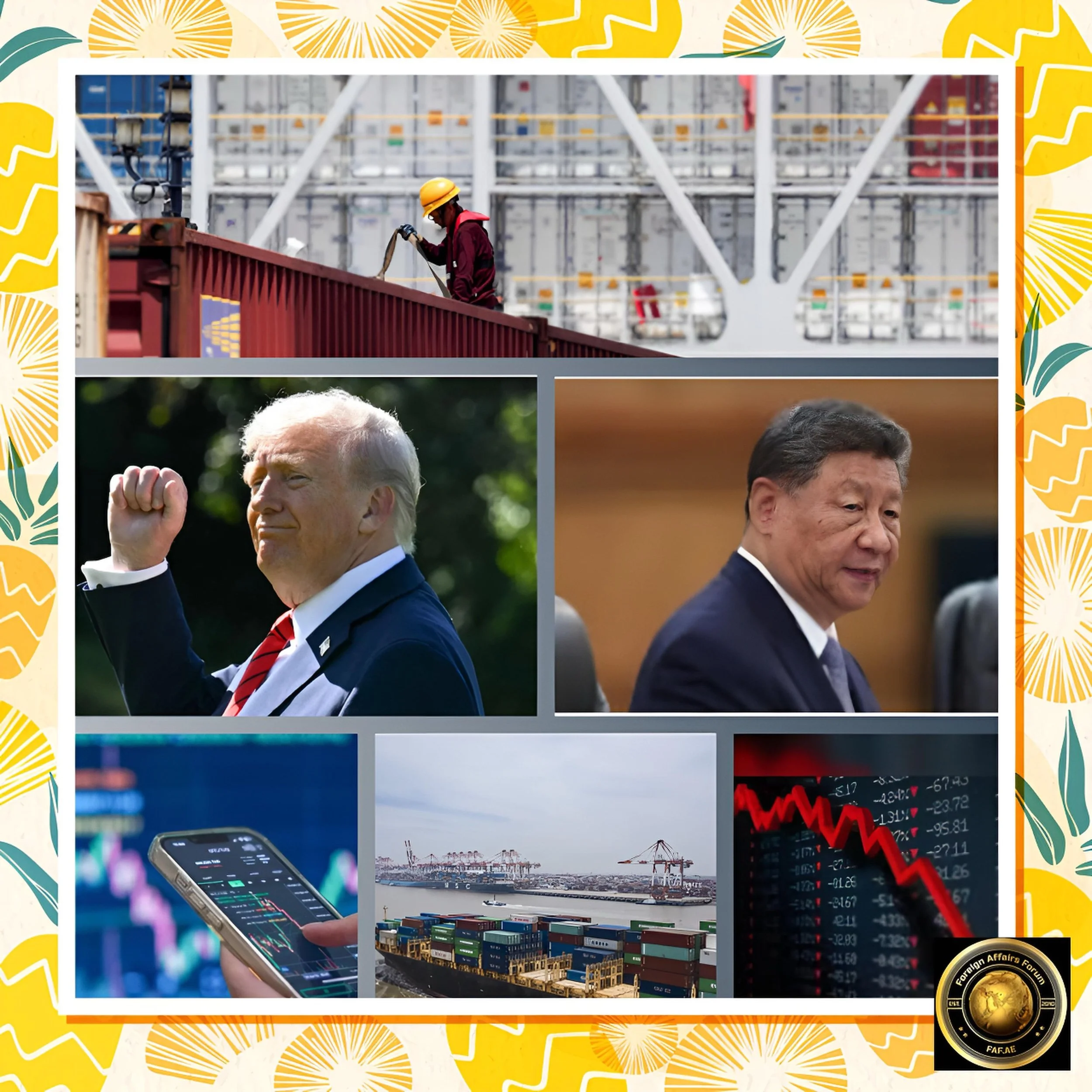
On June 26, 2025, President Trump announced that the US had reached an agreement with China, stating, “We just signed with China the other day.”
However, both governments later clarified this was an agreement on a framework for implementation rather than a comprehensive new trade deal.
China’s Commerce Ministry confirmed on Friday, June 27, 2025, that both nations had “further confirmed the framework details”.
This represents an implementation framework for earlier agreements reached in Geneva and London, not an entirely new trade accord.
Actual Terms and Scope
What Was Genuinely Agreed Upon
The 2025 framework agreement focuses primarily on
US Commitments
Lifting certain export restrictions on items like ethane, jet engines, and chip software
Removing “a series of restrictive measures” previously imposed on China
Chinese Commitments
Expediting approval of rare earth mineral exports to the US
Reviewing and approving “applications for export control items that meet the conditions”
Accurate Tariff Information
Treasury Secretary Scott Bessent confirmed that under this framework agreement, US tariffs on Chinese imports decreased from 145% to 30%, while China’s tariffs on US goods dropped from 125% to 10%. The 20% fentanyl levy on China remains in place.
Background
Geneva and London Negotiations
This framework builds upon legitimate negotiations that occurred earlier in 2025:
Geneva Agreement (May 2025)
In May 2025, the US and China agreed in Geneva to temporarily reduce tariffs for 90 days.
This agreement lowered US tariffs from 145% to 30% and Chinese tariffs from 125% to 10%.
London Framework (June 2025)
Following talks in London on June 9-10, 2025, both sides agreed on a framework to implement the Geneva consensus.
Commerce Secretary Howard Lutnick confirmed that the sides had “pounded through” all the issues and reached a framework pending presidential approval.
Rare Earth Minerals: The Central Issue
The core of recent negotiations has centered on rare earth minerals, where China dominates global production, controlling approximately 90% of rare earth processing.
In April 2025, China began requiring export licenses for seven rare earth elements, disrupting supply chains for the US automotive, defense, and technology industries.
The June 2025 framework agreement addresses this issue by securing Chinese commitment to expedite rare earth exports to the US in exchange for lifting certain US export restrictions.
Key Corrections to Your Summary
Legal Status
The 2025 agreement is accurately described as a framework for implementation, not a comprehensive signed deal
Timeline
The framework was confirmed on June 27, 2025, not June 26
Scope
The agreement is more limited than described, focusing primarily on rare earth minerals and specific export controls
Tariff Levels
The tariff reductions (145% to 30% for the US, 125% to 10% for China) are accurate
Background Context
The Geneva and London negotiations did occur as foundational steps
Current Outlook
As of late June 2025, what exists is indeed a signed framework agreement that formalizes earlier understandings reached in Geneva and London.
This represents a de-escalation of trade tensions focused specifically on supply chain issues, scarce earth minerals, rather than comprehensive structural reforms.
The framework provides a foundation for continued negotiations while addressing immediate supply chain disruptions threatening both economies.
However, broader trade issues between the world’s two largest economies remain unresolved.