Budapest LGBTQ Rally Defies Government Ban: Record Crowds Expected Despite International Warnings
Introduction
Record Attendance Anticipated at Banned Pride March
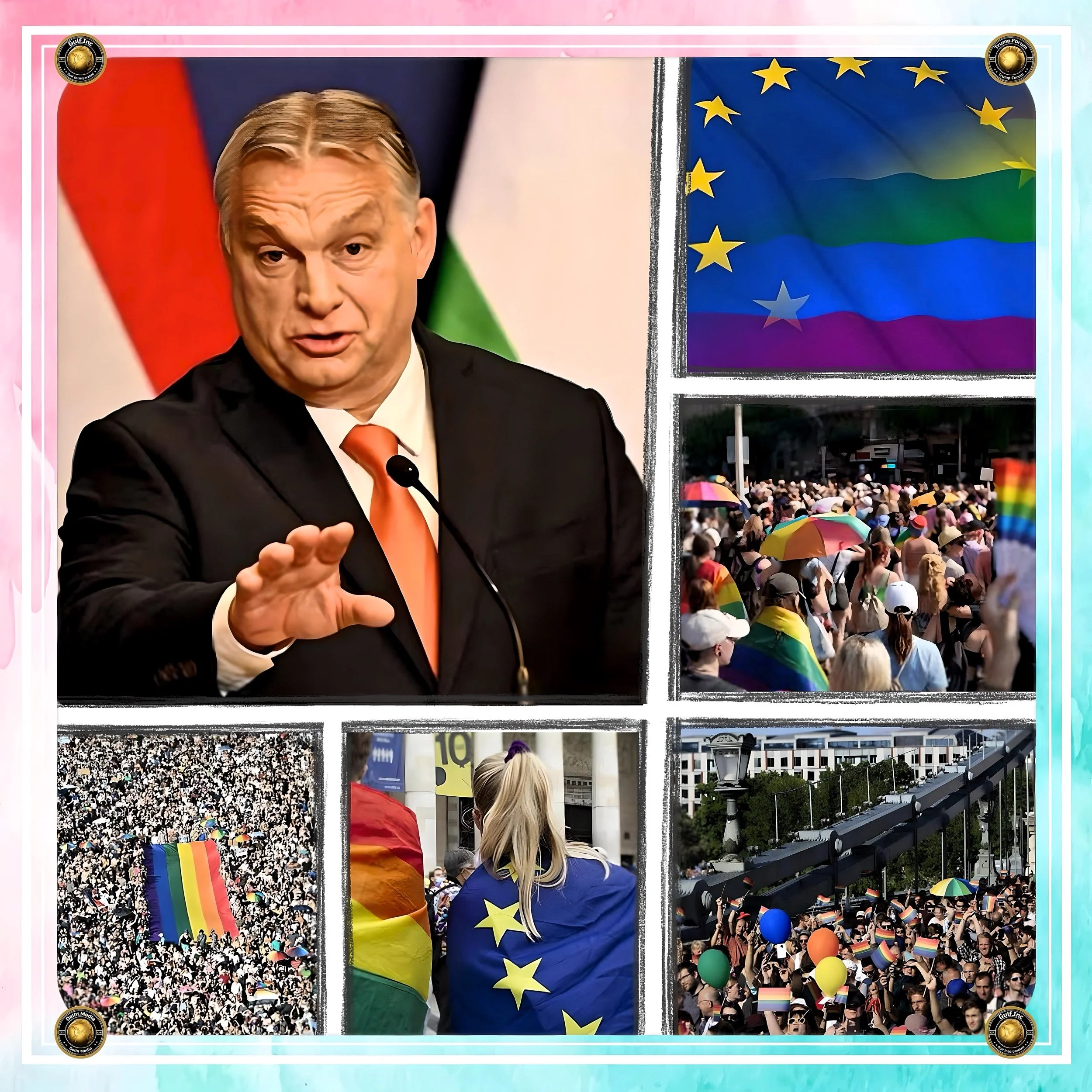
Over 35,000 people are expected to gather in Budapest today for the 30th anniversary of Budapest Pride, marking what organizers predict will be the largest Pride event in Hungary’s history.
The march is proceeding despite a government ban imposed under new legislation that criminalizes gatherings deemed to “promote” homosexuality to minors.
The event, scheduled to begin at 3 PM local time near Budapest’s city hall, has been reframed by liberal Mayor Gergely Karácsony as a municipal “Freedom Day” celebration, commemorating the withdrawal of Soviet troops from Hungary.
Karácsony argues that as a municipal event, it doesn’t require police permits, though authorities have banned it anyway.
Legal Framework and Government Response
The Ban’s Foundation
The prohibition stems from legislation passed by Prime Minister Viktor Orbán’s government in March 2025, which builds upon Hungary’s controversial 2021 “child protection” law.
This earlier law banned the “promotion” of homosexuality to anyone under 18, and the new amendments allow authorities to prohibit assemblies that violate these restrictions.
Participants face fines up to €500 ($579), while organizers could receive up to one year in prison.
Authorities are also authorized to use facial recognition technology to identify participants.
Constitutional Changes
In April 2025, Hungary’s parliament further reinforced the restrictions with constitutional amendments that officially ban the “public display of homosexuality and gender diversity” and enshrine recognition of only two genders.
The amendments passed along party lines with Orbán’s Fidesz party’s supermajority.
International Reaction and Support
European Union Response
The EU has mounted an unprecedented coordinated response to Hungary’s Pride ban:
Over 70 Members of the European Parliament from various political groups plan to attend the march
European Commissioner for Equality Hadja Lahbib is participating in the event
European Commission President Ursula von der Leyen called on Hungarian authorities to allow the parade without sanctions
33 countries’ embassies have expressed support for the march
EU officials have condemned the ban as a violation of fundamental rights. Commissioner Lahbib stated that “diversity is one of the foundations of the European Union” and emphasized that the event represents “a demonstration and celebration of the fact that we are diverse”.
Legal Action
The European Commission has initiated infringement proceedings against Hungary before the Court of Justice of the European Union over the 2021 anti-LGBTQ law.
Sixteen EU member states and the European Parliament have joined this lawsuit, making it the most significant human rights case in EU history.
A ruling is expected in autumn 2025.
In June 2025, the EU’s top court adviser concluded that Hungary’s anti-LGBTQ rules breach EU law, finding that Hungary “has significantly deviated from the model of a constitutional democracy”.
Travel Warnings
At least five European countries - including the UK, Netherlands, Belgium, and France - have issued travel warnings for their citizens planning to attend, highlighting the €500 acceptable risk and security concerns from planned counter-demonstrations.
NATO and Broader Alliance Concerns
NATO members have expressed concern about Hungary’s violations of alliance values.
Critics argue that Hungary’s actions violate NATO’s requirements for members to “uphold democracy” and “tolerate diversity,” as well as the alliance’s equal opportunity policies that forbid discrimination based on sexual orientation.
Far-Right Counter-Demonstrations
Multiple far-right groups have received police permits to hold counter-demonstrations on the same day and route as Pride:
The Our Homeland Movement has announced rallies at several locations across Budapest
A neo-Nazi group plans to gather at Budapest City Hall, stating only “white, Christian, heterosexual men and women” are welcome
The 64 Counties Youth Movement has also received permits for counter-protests
This has raised significant safety concerns, with authorities warning of potential violence and advising Pride participants to maintain distance from counter-demonstrations.
Opposition and Civil Society Response
71 Hungarian NGOs have issued a joint statement supporting Budapest Pride and condemning the ban as an attempt to “intimidate the entire society”.
The Hungarian Civil Liberties Union, Transparency International Hungary, and the Hungarian Helsinki Commission are among the organizations backing the march.
Opposition party Tisza, led by Péter Magyar (who has been leading in polls ahead of next year’s elections), has called on authorities to protect Pride participants. However, Magyar himself hasn’t indicated plans to attend.
Historical Context and Broader Crackdown
This ban represents the culmination of a decade-long campaign against LGBTQ rights in Hungary:
2020: Hungary eliminated legal recognition for transgender individuals
2021: Banned “promotion” of homosexuality to minors
2025: Constitutional amendments banning public display of homosexuality
Critics view these measures as part of Orbán’s broader “illiberal democracy” project and compare them to similar restrictions in Russia.
The timing also coincides with increased domestic political pressure, as Orbán faces his most substantial electoral challenge in years from the opposition Tisza party.
Current Status and Implications
As of this morning, newly installed surveillance cameras have been observed along the Pride march route, and the legal status of the event remains contested between city and national authorities.
Mayor Karácsony has expressed confidence that the march will proceed and that police will fulfill their constitutional duty to protect participants.
EU officials' international attention and participation have transformed what was originally a domestic Pride celebration into a major test case for fundamental rights within the European Union.
The outcome may influence how the EU handles future conflicts over democratic values with member states and could set precedents for LGBTQ rights enforcement across the bloc.