Imperialism.Forum- El Salvador’s Striking Reforms Under Bukele: Rise of a new non-economic imperialistic movement A Comprehensive Analysis
Introduction
El Salvador has undergone a dramatic transformation under President Nayib Bukele’s administration.
Do we call it rise of non-economic imperialistic movement?
It has implemented sweeping reforms across multiple sectors while fundamentally altering the country’s constitutional framework and international relationships.
The reforms encompass socioeconomic initiatives, political restructuring, and security measures that have positioned El Salvador as a regional success story and a source of international concern.
Constitutional and Political Reforms
The most striking structural change in El Salvador has been the comprehensive overhaul of constitutional procedures.
In January 2025, Congress ratified a constitutional reform streamlining the amendment process.
The reform allows changes to be approved by a three-quarters majority within a single legislature rather than requiring ratification by subsequent legislative sessions.
This modification gives Bukele’s New Ideas party, which holds 54 out of 60 legislative seats, unprecedented power to reshape the constitutional framework.
Democratic Consolidation of Power
The Legislative Assembly has systematically dismantled traditional checks and balances.
In May 2021, the legislature dismissed five magistrates from the Supreme Court’s Constitutional Chamber and replaced the Attorney General.
Subsequently, new laws forced the retirement of over 200 judges aged 60 and above, effectively allowing the government to install loyalist replacements throughout the judicial system.
The elimination of public campaign financing in February 2025 represents another significant political reform.
This change removes government funding for political parties based on electoral performance, which critics argue will further consolidate the ruling party’s advantage and limit opposition participation.
Socio-economic Transformation
Security Revolution
The most internationally recognized reform has been Bukele’s approach to gang violence.
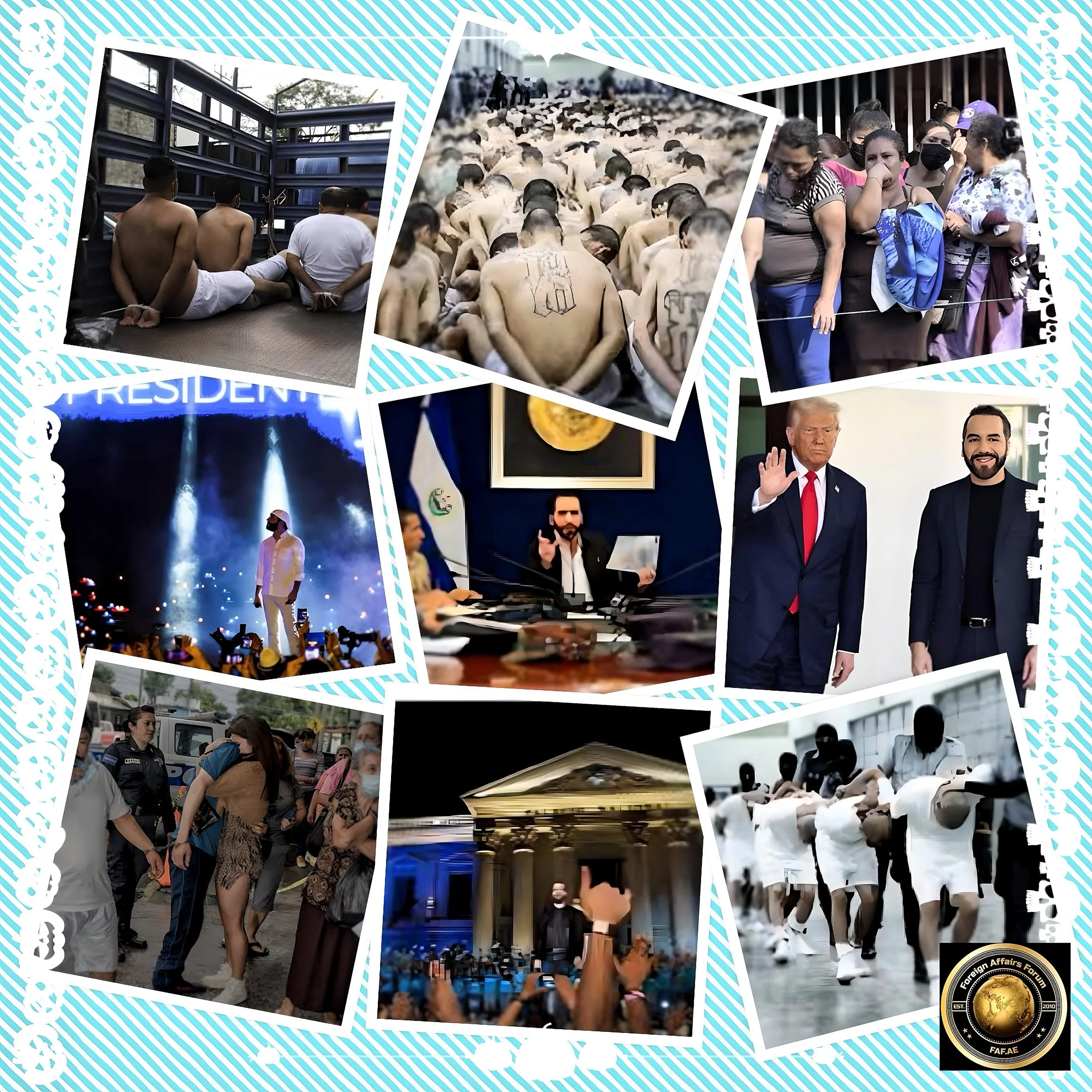
Since declaring a state of emergency in March 2022, authorities have arrested over 87,000 suspected gang members.
The homicide rate has plummeted from 51 per 100,000 people in 2019 to just 1.9 in 2024.
El Salvador has recorded 851 days with zero homicides, 738 of which occurred under the emergency regime.
Economic Modernization
El Salvador’s economic reforms include making Bitcoin legal tender in 2021, though recent adjustments have made Bitcoin acceptance optional for businesses as part of the IMF loan conditions.
The country has attracted significant foreign direct investment, receiving $759.7 million in FDI in 2023, the highest in five years.
The IMF projects 3% economic growth for 2024.
Educational Infrastructure
The “My New School” program, launched in September 2022, aims to renovate 5,150 schools nationwide over five years.
The initiative includes providing technology access, updating curricula, and offering teacher training while modernizing educational infrastructure across the country.
Human Rights and Democratic Concerns
The reforms have come at a significant cost to civil liberties.
Constitutional protections for freedom of association, assembly, privacy, and due process have been suspended under the state of emergency.
Human Rights Watch reports that at least 174 prisoners have died in custody, and over 40 journalists have been forced to flee the country due to intimidation and harassment.
International organizations describe El Salvador as experiencing “one of its darkest moments for press freedom since the end of the armed conflict,” with widespread self-censorship and forced exile of media professionals.
The UN Special Rapporteur on judicial independence has condemned the systematic dismantling of judicial autonomy.
Economic Challenges and IMF Intervention
Despite security improvements, El Salvador faces mounting economic pressures. The poverty rate increased from 26.8% in 2019 to 30.3% in 2023.
The country’s debt crisis necessitated a $1.4 billion IMF bailout in February 2025, with total disbursements of $231 million approved through the first review.
The IMF program requires significant fiscal consolidation, with the primary balance improving by 3.5% of GDP over three years.
Key reforms include enacting a Fiscal Sustainability Law, limiting exceptions to procurement regulations, and publishing financial information on state-owned enterprises.
U.S.-El Salvador Relations
El Salvador’s relationship with the United States has become increasingly complex under the Trump administration’s return to power.
The two countries have developed an unprecedented cooperation agreement whereby El Salvador accepts deportees from the United States, particularly alleged gang members, in exchange for approximately $6 million in compensation.
Trade and Economic Ties
The relationship remains anchored by the Central America-Dominican Republic Free Trade Agreement (CAFTA-DR), which entered into force for El Salvador in 2006.
U.S. goods trade with El Salvador totaled $6.9 billion in 2024, with the United States maintaining a $2.2 billion trade surplus.
El Salvador continues to benefit from Temporary Protected Status for its nationals in the United States, extended through September 2026.
Strategic Alignment
Secretary of State Marco Rubio has praised the Trump-Bukele alliance as an example of effective hemispheric cooperation, particularly regarding immigration enforcement.
However, allegations have emerged suggesting potential corruption in the relationship, with investigations indicating possible misuse of U.S. aid funds and secret agreements between Bukele’s government and gang leaders.
Contemporary Developments
The most recent developments include El Salvador’s acceptance of Venezuelan migrants accused of gang membership, who are detained in the country’s maximum-security CECOT prison.
This arrangement has faced legal challenges in U.S. courts regarding due process violations, though deportations continue under various legal authorities.
The relationship reflects broader regional dynamics where security cooperation increasingly takes precedence over traditional democratic governance concerns, positioning El Salvador as a key partner in U.S. immigration enforcement while raising questions about the long-term implications for democratic institutions and human rights in the region.