Ecuador’s November 16, 2025 Military Bases Referendum: Comprehensive Analysis
Introduction
The Referendum Overview
On November 16, 2025, Ecuador held a significant referendum that asked voters four constitutional questions, with the most prominent being whether to allow foreign military bases to return to the country for the first time since 2009.
Nearly 14 million Ecuadorans were eligible to vote, with voting being mandatory for citizens aged 18 to 65 years old.
The referendum represented a critical moment for President Daniel Noboa’s agenda, as it sought to fundamentally reshape Ecuador’s security architecture, governance structure, and constitutional framework.
The Four Questions Submitted
The referendum presented voters with four distinct constitutional proposals
Question A (Foreign Military Bases)
The most internationally significant question asked whether to eliminate the constitutional prohibition—established in 2008—against foreign military bases or military installations in Ecuador.
Under the current constitutional language, Article 5 states: “Ecuador is a territory of peace. The establishment of foreign military bases or foreign installations for military purposes shall not be permitted.”
The proposed amendment would have retained only the phrase “Ecuador is a territory of peace,” effectively removing all restrictions on foreign military presence.
Question B (Constituent Assembly)
This question sought voter authorization to convene a Constituent Assembly to draft an entirely new constitution, replacing the 2008 Montecristi constitution.
Noboa argued the current constitution was outdated and incapable of addressing contemporary security challenges.
Question C (Campaign Finance)
This proposal aimed to eliminate state funding for political parties through the Permanent Party Fund.
Question D (Legislative Reduction)
The fourth question proposed reducing the National Assembly from 151 to 73 members.
The Security Crisis Context
Ecuador’s violent transformation provides critical context for understanding the referendum’s significance.
Ecuador has experienced a dramatic security deterioration, transforming from one of Latin America’s safest countries into its most violent.
The homicide rate surged from 6.7 per 100,000 people in 2020 to 44.5 in 2025, making it the highest in South America.
By 2025, over 7,000 homicides had already been recorded, with a projected homicide rate of 50 per 100,000 inhabitants—a catastrophic figure by any standard.
This violence stems from territorial wars between major drug trafficking organizations, particularly Los Choneros and Los Lobos, who have overwhelmed state security forces and now control large sections of the country, especially along the Pacific coast.
Ecuador has become a central hub for cocaine transshipment, with most narcotics from South America destined for U.S. markets flowing through the Pacific and through Ecuadorian territory.
The Government’s Rationale
President Daniel Noboa, who took office in November 2023, argued that allowing foreign military bases was essential to fighting organized crime.
Noboa has emphasized that international cooperation—including foreign military presence—was central to his security strategy.
The government indicated that any arrangement would extend beyond purely military bases to include maritime security operations, anti-drug enforcement centers, and facilities shared with multiple countries, creating what officials described as “an international cooperation hub for maritime security and anti-drug operations.”
U.S. Secretary of State Marco Rubio endorsed the proposal, stating: “If we’re invited to return, we’ll consider it. It’s a very strategic point,” citing Ecuador’s alignment with the U.S. on fighting narcoterrorism, illegal fishing, and mining.
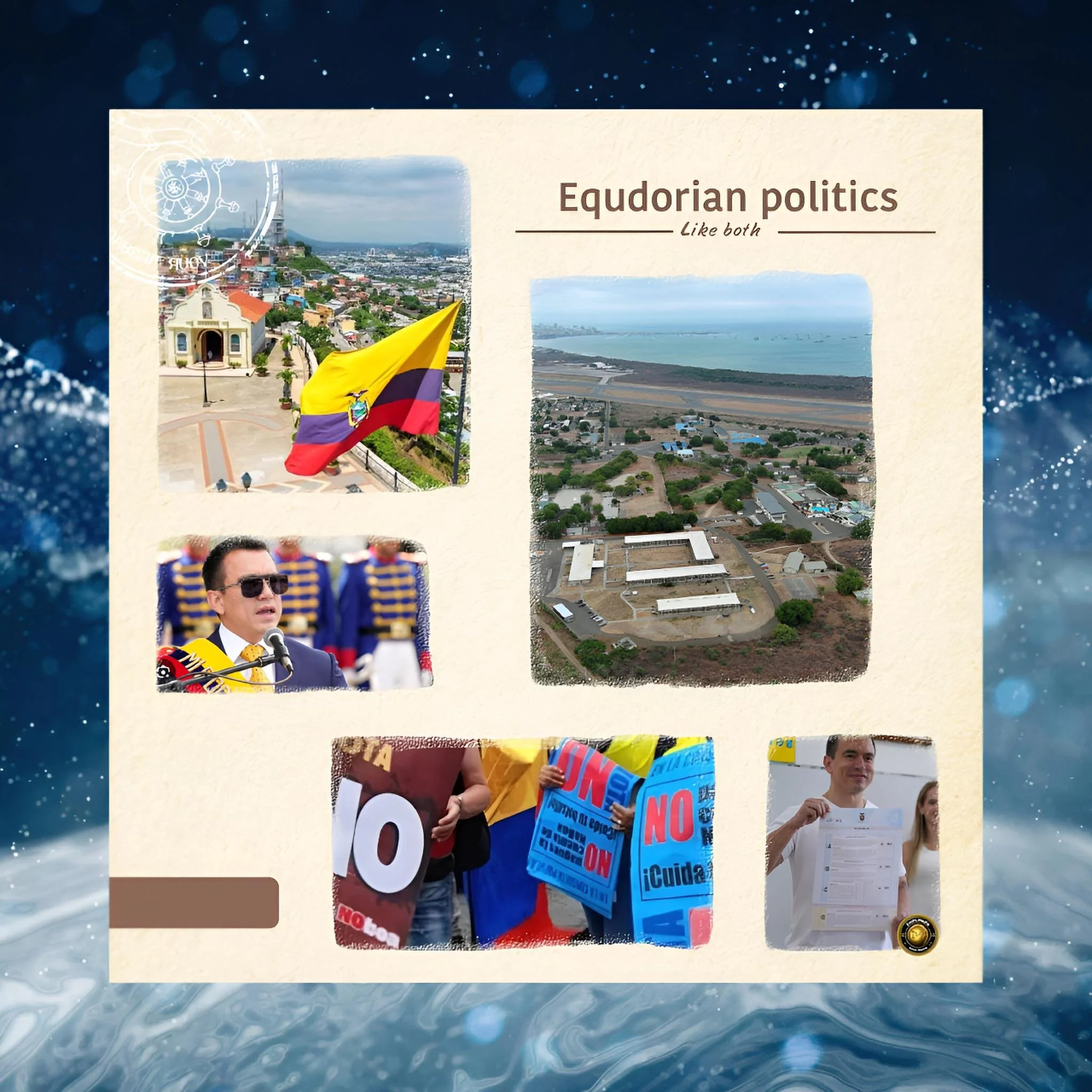
U.S. Homeland Security Secretary Kristi Noem visited Ecuador on November 5-6 to assess potential base locations, specifically touring the former Manta airbase where the U.S. maintained a military presence from 1999 to 2009.
The Trump administration viewed a potential Noboa presidency and foreign base agreement as serving U.S. national security interests in the region.
Historical Context: The 2008 Constitutional Ban
The current ban on foreign military bases dates to the administration of former President Rafael Correa (2007-2017), whose progressive 2008 constitution explicitly prohibited foreign military installations.
Correa terminated the U.S. military presence at Manta in 2009 as part of a broader sovereignty assertion.
Constitutional scholar and observers argue that the absence of U.S. counter-narcotics support after 2009, combined with Correa’s limited political will to combat drug trafficking, contributed to the “balloon effect”—where criminal enterprises shifted operations into Ecuador when pressure was applied elsewhere, ultimately transforming the country into a major narcotics hub.
Pre-Referendum Polling and Political Dynamics
Pre-referendum polling showed mixed support for Noboa’s proposals.
While some earlier polling indicated approximately 61 percent support for allowing foreign bases—potentially reflecting widespread frustration with violence and belief that international cooperation was necessary—a more recent survey from October 2025 presented a strikingly different picture.
According to polling by Clima Social, only 38 percent supported the foreign military bases proposal, while 43 percent opposed it, with 17 percent undecided.
This shift reflected growing opposition among several constituencies
Support for the referendum: Middle-class urban voters, business elites attracted by efficiency arguments, coastal populations directly experiencing violence, and security-focused constituencies supported Noboa’s agenda.
Opposition
Correísta supporters (followers of former President Correa), indigenous communities represented by CONAIE, environmental activists, and left-wing political organizations opposed the proposals on sovereignty grounds and concerns about dismantling constitutional protections established in 2008.
Opposition leader Luisa González argued: “Noboa wants to hand over our country, our sovereignty, and our resources to foreign economic and military powers.”
Referendum Results: A Decisive Defeat for Noboa
The referendum results delivered a decisive rejection of all four of Noboa’s proposals.
With roughly one-third of ballots counted as results emerged, the pattern was unmistakable: 60 percent rejected the proposal to host foreign military bases.
Early partial counts showed 61 percent rejection of the constituent assembly proposal with 36 percent of votes counted.
The final outcome represented a severe setback for President Noboa, with voters rejecting each of his central institutional ambitions.
The high 80 percent voter turnout—reflecting mandatory voting laws—underscored the importance Ecuadorans placed on this decision, despite the contentious political atmosphere.
Key Opposition Arguments
Several substantive concerns drove voter rejection
Sovereignty concerns
Opponents emphasized fears that allowing foreign military presence would compromise national sovereignty and independence. Some noted concerns that alignment with U.S. interests could alienate China and Russia, with potential economic and diplomatic costs.
Ineffectiveness concerns
Critics argued that foreign military bases alone would not resolve Ecuador’s security crisis. Michelle Maffei, an analyst, noted: “The country is not doing the work that it should be doing, and cooperation is just the cherry on top. Does help, but it’s not the whole scope.”
Experts emphasized that sustainable solutions required institutional strengthening, corruption reduction, and investment in education and employment opportunities in high-crime areas—not militarization.
Distrust of government
Many Ecuadorans expressed loss of confidence in Noboa’s administration.
Fishermen in coastal communities who suffer from gang violence—the supposed beneficiaries of foreign military intervention—voiced skepticism that U.S. forces would prioritize their protection, particularly given concerns about U.S. military airstrikes on fishing boats allegedly carrying narcotics.
Democratic and human rights concerns
Civil society and observers raised concerns about the broader referendum agenda, particularly regarding the proposed constituent assembly, which could expand executive power at the expense of institutional checks and balances.
There were concerns that Noboa might use constitutional revision to remove impeachment protections for Constitutional Court justices or otherwise concentrate presidential authority.
Environmental and rights protections
Progressive organizations warned that a new constitution drafted under Noboa’s preferred timeline could dismantle protections established in 2008, including environmental rights, social protections, and the recognition of the Rights of Nature.
The Broader Constitutional Conflict
The referendum occurred amid institutional tensions between Noboa and Ecuador’s Constitutional Court.
In August 2025, Noboa publicly demonstrated against a court ruling limiting his security laws, with administration officials calling high court justices “enemies of the people.”
Initially, Noboa attempted to convene a constituent assembly by executive decree, which the Court declared unconstitutional, forcing him to pursue the referendum process.
These tensions reflected deeper concerns that the constitutional overhaul would be used to concentrate presidential power and weaken democratic institutions at a moment when extraordinary executive authority—justified by the violence crisis—already posed governance risks.
International Implications
Ecuador’s rejection of foreign military bases represents a significant geopolitical statement at a moment of intensified U.S. strategic competition in Latin America.
For the United States, reestablishing a military presence in Ecuador would have significantly strengthened its capacity to combat Pacific-based drug trafficking and provided strategic positioning in South America amid broader competition with China.
The Center on International Policy analysis noted that while a U.S. security presence would be strategically valuable, Washington should make such cooperation “contingent on the degree to which Ecuador’s leadership demonstrates a commitment to preserving the integrity of its own democratic institutions, protections for human rights, and respect for the rule of law.”
The referendum result reflects Ecuadorans’ reluctance to trade democratic safeguards for security promises, particularly given institutional weaknesses already apparent in Noboa’s administration.
Conclusion
Ecuador’s November 16, 2025 referendum represents a decisive democratic rejection of President Noboa’s constitutional agenda, despite the severity of the country’s security crisis.
While Ecuadorans remain desperately concerned about drug violence, they rejected the proposed solutions—foreign military bases, constitutional overhaul, and institutional restructuring—as insufficient and potentially counterproductive to long-term stability.
The referendum outcome reflects several critical realities:
First, security crises do not automatically confer a blank check for institutional reform, even when violence is severe.
Second, sovereignty concerns retain significant political resonance in Ecuador despite decades of globalization.
Third, Ecuadorans expressed skepticism that externally-focused solutions (foreign military presence) could address fundamentally domestic governance, corruption, and institutional challenges.
Fourth, the Democratic institutions themselves proved resilient, with voters able to frustrate a sitting president’s constitutional agenda despite an 80 percent turnout.
Going forward, President Noboa faces significant constraints.
With a divided National Assembly and now a clear popular mandate against his constitutional program, his ability to implement transformative reforms has been severely compromised.
The referendum suggests that Ecuadorans expect security solutions to be pursued through strengthened domestic institutions, rule of law improvements, and corruption reduction—rather than through constitutional overhaul or foreign military deployment.
The substantial rejection across all four questions indicates this was not a narrow or contingent popular verdict, but a decisive statement about the direction Ecuadorans wish their country to pursue.