Introduction
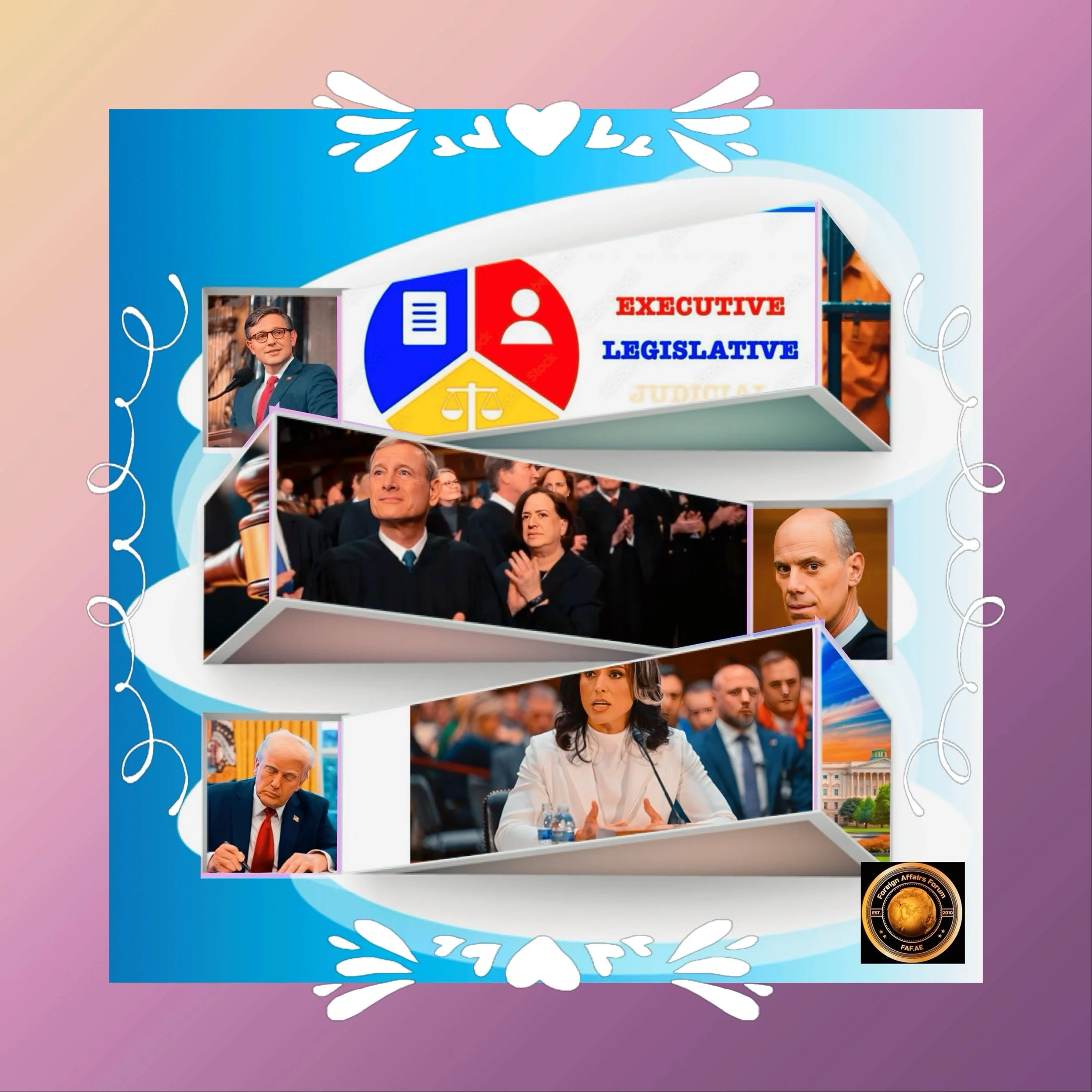
The US Supreme Court’s recent 6-3 decision limiting federal judges’ ability to issue nationwide injunctions against President Trump’s executive orders has intensified debates about judicial independence, partisan influence, and the health of American democracy.
This ruling, delivered on June 27, 2025, represents a pivotal moment that raises serious questions about whether the Court has become a partisan institution serving Republican interests rather than an impartial arbiter of constitutional law.
The Birthright Citizenship Ruling: A Power Shift
The Supreme Court’s decision centered on Trump’s executive order attempting to end birthright citizenship for children born to undocumented immigrants or those with temporary status.
While the Court did not rule on the constitutionality of the order itself, it significantly restricted the power of federal district courts to issue nationwide injunctions that would block such policies nationwide.
Justice Amy Coney Barrett, writing for the 6-3 conservative majority, stated that nationwide injunctions “likely exceed the equitable authority that Congress has granted to federal courts”.
The Court’s liberal justices - Sonia Sotomayor, Elena Kagan, and Ketanji Brown Jackson - dissented from this decision.
This ruling effectively removes a crucial tool that lower courts have used to check executive power, allowing the Trump administration to proceed with controversial policies while litigation continues.
The decision grants the Government’s request for partial stays of injunctions, “but only to the extent that the injunctions are broader than necessary to provide complete relief to each plaintiff with standing to sue”.
Evidence of Partisan Alignment
In this case, the 6-3 split along ideological lines exemplifies a troubling pattern that has emerged under the current conservative supermajority.
Legal scholars have documented how the Court’s Republican-appointed justices consistently vote together on politically charged issues.
This ideological cohesion has become particularly pronounced since Justice Amy Coney Barrett replaced Justice Ruth Bader Ginsburg in 2020.
Analysis of voting patterns shows that conservative justices vote for politically conservative positions approximately 60-76% of the time, while liberal justices maintain similarly consistent voting patterns in the opposite direction.
Chief Justice John Roberts, often considered the most moderate conservative, still votes nearly four times more conservatively than the most moderate liberal justices.
The Trump Administration’s Pattern of Defiance
The Supreme Court’s ruling comes amid mounting evidence that the Trump administration has repeatedly defied or circumvented court orders.
A fired Justice Department lawyer has accused agency leaders of planning to “knowingly defy court orders and withhold information from judges” to advance Trump’s deportation agenda.
The administration has been accused of violating court orders in multiple immigration cases, including the deportation of individuals to countries other than their origin without proper due process.
Legal experts warn that this pattern of defiance, combined with the Supreme Court’s decision to limit judicial oversight, creates a dangerous precedent for executive overreach.
Constitutional law professor Richard Pildes told ABC News that the country is “dangerously close to a constitutional crisis,” noting that “we are dancing kind of on the edge of a constitutional crisis”.
Erosion of Public Trust and Institutional Legitimacy
Public confidence in the Supreme Court has plummeted dramatically in recent years, falling from 68% in 2019 to just 41% in March 2025 - a decline of 27 percentage points.
This represents one of the steepest drops in institutional trust in modern American history.
Current polling shows that only 44% of Americans express a favorable view of the Court, with stark partisan divisions: 67% of Republicans view it favorably compared to just 26% of Democrats.
Critically, only 20% of Americans see the Supreme Court as politically neutral, while 58% believe it is partisan.
This crisis of legitimacy extends beyond partisan disagreement. A 2021 Grinnell College poll found that 62% of Americans believe the Supreme Court’s decisions are “driven by politics rather than the U.S. Constitution and the law”.
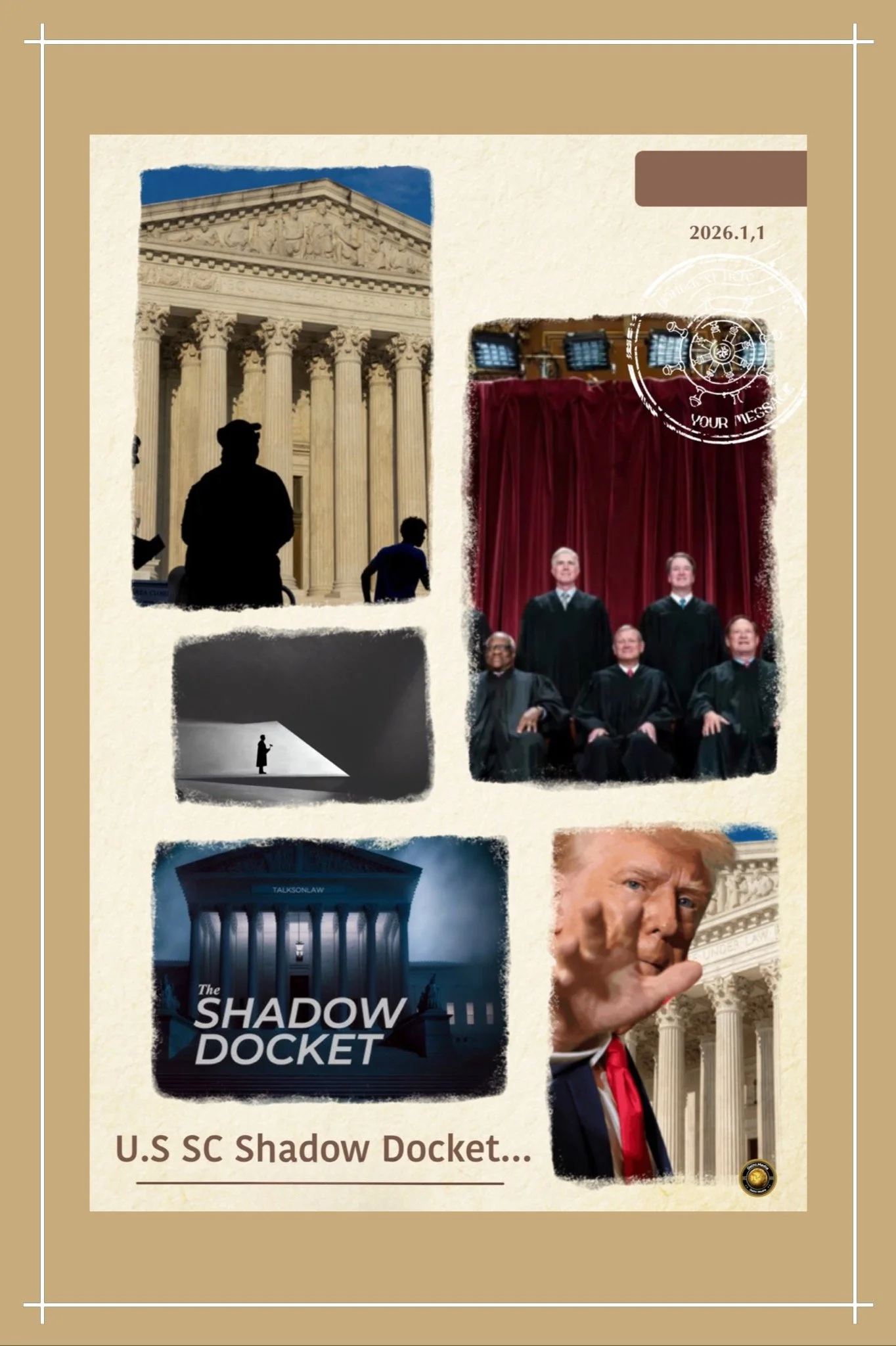
The Court’s use of the “shadow docket” to make consequential decisions without full briefing or oral argument has further eroded public confidence.
Weakening of the Judicial System’s Democratic Function
The Supreme Court’s decision to curtail nationwide injunctions fundamentally alters the balance of power between the executive and judicial branches.
This change weakens the judiciary’s ability to check executive power, one of the foundational principles of American constitutional democracy.
Legal experts across the ideological spectrum have expressed concerns about this development.
The World Justice Project’s Rule of Law Index shows that the United States ranks 26th out of 142 countries on rule of law measures, with particular declines in judicial independence and constraints on government power.
The ruling also undermines the principle of judicial review, which the Supreme Court itself has called “one of the cornerstones of democracy”.
By limiting the ability of federal courts to provide nationwide relief, the Court has created a system where executive actions can proceed even when they may be unconstitutional, simply because the scope of judicial intervention has been artificially constrained.
Broader Implications for American Democracy
The Supreme Court’s decision occurs within a broader context of democratic backsliding in the United States.
The Brookings Institution has identified threats to the pillars of American democracy, including “free elections, the rule of law, and anti-corruption efforts” under the current administration.
The Court’s ruling appears to weaken one of these crucial pillars by reducing judicial oversight of executive power.
International observers have noted concerning trends in American democratic institutions.
The World Justice Project reports that “we are in a global rule of law recession,” with the United States experiencing particular declines in judicial independence and constraints on government power.
The Supreme Court’s decision to limit its oversight capabilities fits this broader pattern of institutional weakening.
The Path Forward
Institutional Consequences
The long-term consequences of this ruling extend beyond any single policy dispute.
By fundamentally altering the relationship between the executive and judicial branches, the Court has potentially opened the door to increased executive unilateralism.
Regardless of party, future presidents may now face fewer judicial constraints on their exercise of power.
The decision also raises questions about the Court’s institutional legitimacy.
Chief Justice John Roberts has repeatedly expressed concern about public perceptions of the Court as a partisan institution.
However, decisions like this one, which break clearly along ideological lines and enhance executive power when Republicans control the presidency, reinforce public skepticism about the Court’s impartiality.
Legal scholars have noted that the Court’s conservative majority has developed “subtle doctrinal tools” that “further the pro-partisanship turn and allow Republican entrenchment”.
Another such tool is the restriction of nationwide injunctions, which creates procedural barriers that make it harder to challenge conservative policies and potentially easier to challenge liberal ones in the future.
The Supreme Court’s ruling on nationwide injunctions represents more than a procedural adjustment - it constitutes a fundamental shift in the balance of power between the branches of government.
This decision contributes to a broader crisis of democratic governance in the United States by limiting the judiciary’s ability to check executive power.
At the same time, public confidence in the Court reaches historic lows.
Whether this crisis can be resolved through existing institutional mechanisms or will require more fundamental reforms remains an open and urgent question for American democracy.