Africa.Media - The Ghost Elephant: Ousmane’s Remarkable Return and Its Historical Significance - Senegal
Introduction
Recent Sighting of the “Ghost Elephant”
In June 2025, a remarkable wildlife event captured global attention when an elusive African forest elephant nicknamed the “Ghost Elephant” was photographed for the first time in five years.
The elephant, named Ousmane after a veteran park ranger, was captured on camera by a trail cam in Senegal’s Niokolo-Koba National Park.
This rare footage shows the solitary elephant walking through the darkness, pausing momentarily to inspect the camera before continuing its nocturnal journey.
Ousmane represents what conservationists fear may be the last African forest elephant remaining in Senegal.
When last spotted in January 2020, he was considered one of only five to ten elephants remaining in the park—a stark contrast to the hundreds that once roamed the area.
The term “ghost elephant” has been adopted to describe these critically endangered, isolated populations, which have become so rare that they seem almost mythical in their infrequent appearances.
Understanding Ghost Elephants
The concept of “ghost elephants” refers to small, critically endangered populations of elephants that are so rare and isolated they commonly go unseen by humans.
According to the Elephant Crisis Fund, these populations often consist of fewer than five individuals—too few to have a chance of long-term survival. In West Africa, these elephants have become “refugees in their homelands, moving secretly between small habitat patches”.
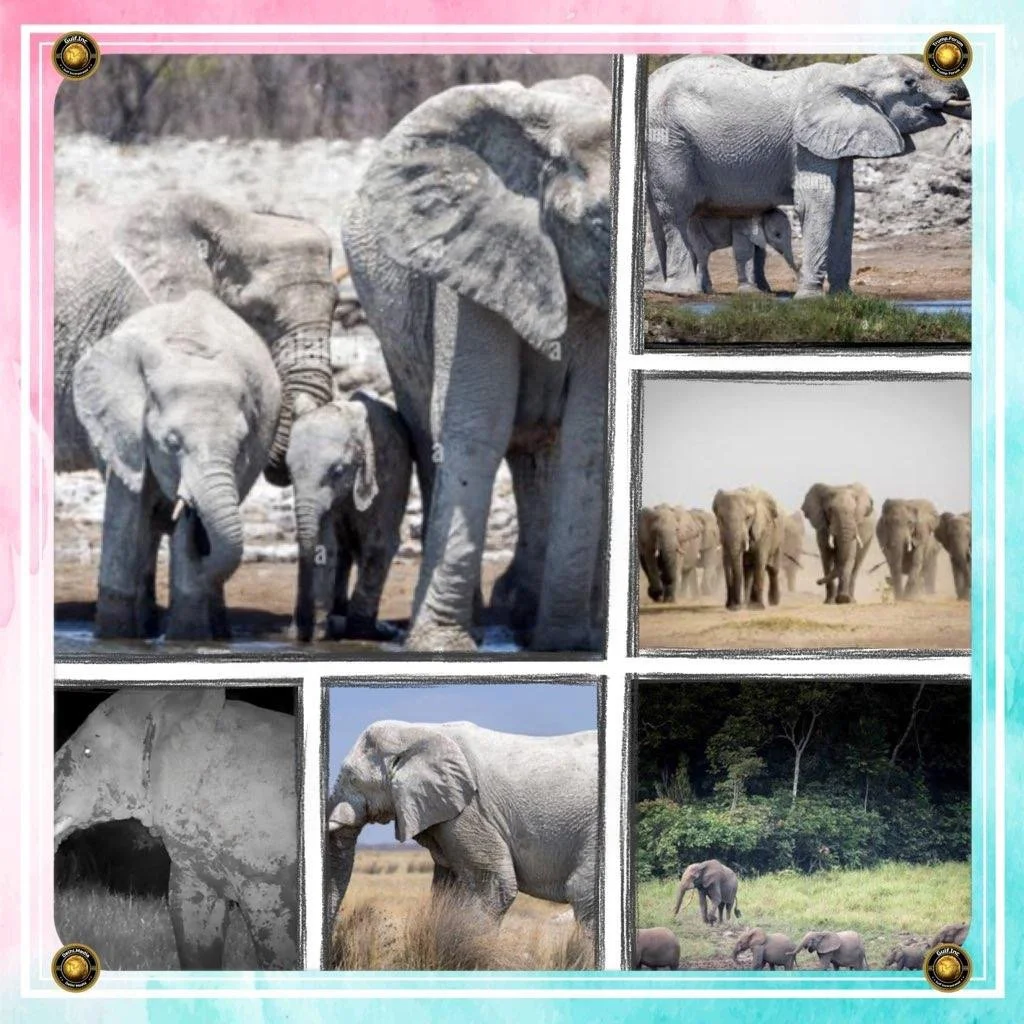
The African forest elephant is smaller than its savanna counterpart. It reaches a shoulder height of approximately 7 feet, 9 inches, and is native to the humid tropical forests of West Africa and the Congo Basin.
These elephants play a crucial role as “mega-gardeners of the forest,” dispersing seeds of large trees with high carbon content as they move through their habitat.
Historical Context and Population Decline
The Catastrophic Decline in Senegal
The story of Senegal’s elephant population represents one of Africa’s most devastating wildlife collapses. In the late 1970s, Niokolo-Koba National Park was home to approximately 450 elephants.
By 2019, this number had plummeted to just five to ten individuals, with Ousmane potentially being the sole survivor today.
This dramatic decline mirrors broader patterns across West Africa, where elephant populations have faced “devastating impacts of poaching and habitat loss”.
Senegal has one of Africa's most threatened elephant populations, with the species being pushed to the brink of local extinction.
The pressures facing these populations include drought, poaching, ivory trafficking, habitat loss, and increasing human-elephant conflict.
Niokolo-Koba National Park’s Significance
Niokolo-Koba National Park, established as a reserve in 1925 and declared a national park in 1954, represents a critical piece of West African conservation history.
The park covers 9,130 square kilometers and was inscribed as a UNESCO World Heritage Site in 1981. However, due to wildlife depletion, poaching, and mining activities, it was placed on UNESCO’s List of Endangered World Heritage Sites from 2007 to 2024.
The park’s recent removal from the endangered list in 2024 reflects significant conservation improvements, including more than $6 million in investment and strengthened anti-poaching patrols.
This success demonstrates that even seemingly lost ecosystems can be restored with dedicated conservation efforts.
Cultural and Historical Significance of Elephants in Africa
Deep Cultural Reverence
Elephants hold profound cultural significance across African societies, where they are revered as symbols of strength, wisdom, and spiritual power.
In many African cultures, elephants are seen as “the wise chief who impartially settles disputes among the forest creatures.”
At the same time, Ashanti tradition holds that they are human chiefs from the past.
The Zulu, Tswana, and Tsonga names for elephants all translate to meanings like “the forceful one” or “the unstoppable one”.
In Zulu culture specifically, the word “indlovu” derives from the verb “dlovu,” meaning to “crash through” or “pierce savagely.” King Shaka himself was called the “Great Elephant,” demonstrating the animal’s association with leadership and power.
Spiritual and Mythological Importance
African folklore is rich with elephant mythology, where these animals are often depicted as possessing ancient wisdom and spiritual connections.
Indigenous peoples speak of elephants carrying “wisdom sticks” on either side of their temples, believing these enable the elephants to know the time and place of their death.
This belief explains why old elephants are often seen alone, seeking solitude to maintain their dignity in death.
In various African cultures, elephants mediate between the physical and spiritual realms, possessing deep connections with ancestors.
They represent physical strength, emotional intelligence, community bonds, and environmental stewardship.
Ecological and Conservation Significance
Beyond their cultural importance, elephants are keystone species crucial for maintaining ecosystem health.
During dry seasons, elephants dig for water with their tusks, creating water sources for other animals.
As they move through forests, they create gaps in vegetation that allow new plants to grow and provide pathways for smaller animals.
Their role as seed dispersers is particularly vital—some tree species rely entirely on elephants for seed distribution.
The dung they leave behind is full of seeds from various plants, which grow into new grasses, bushes, and trees, boosting ecosystem health.
Conservation Implications and Future Prospects
The Broader West African Context
West Africa’s elephant populations face unique challenges compared to other regions.
According to the 2016 West Africa Elephant Status Report, the region’s elephant populations are mostly small, fragmented, and isolated, with an estimated total of 11,489 ± 2,583 elephants across surveyed areas. Since 2007, West Africa has lost twelve elephant populations entirely.
However, there have been some success stories.
The WAP complex (W-Arli-Pendjari) showed a remarkable increase from 4,592 elephants in 2003 to 8,953 ± 2,486 in 2015, demonstrating that proper protection makes recovery possible.
Hope for Ousmane and Senegal’s Elephants
Despite the bleak situation, conservationists remain cautiously optimistic about Ousmane’s future.
Detailed surveys are underway to confirm whether he is the sole survivor in Senegal.
If confirmed, conservation organizations are assessing the feasibility of translocating a group of female elephants to the park to establish a new breeding population.
This potential translocation represents more than a conservation effort—it symbolizes hope for restoring Senegal’s natural heritage.
Such efforts have proven successful elsewhere in Africa, where elephant translocation programs have helped restore populations in parks like Malawi’s Liwonde National Park.
Conclusion
The sighting of Ousmane, the “ghost elephant” of Senegal, is a sobering reminder of Africa’s wildlife crisis and a beacon of hope for conservation efforts.
His solitary existence in Niokolo-Koba National Park embodies the precarious state of West African elephant populations while simultaneously demonstrating their resilience.
The historical significance of this sighting extends beyond mere wildlife documentation—it represents the potential last chapter of a millennia-old relationship between elephants and the people of Senegal.
Whether Ousmane’s story ends in extinction or renewal will depend on the success of ongoing conservation efforts and the commitment of local communities and international partners to restore what has been nearly lost.
The ghost elephant’s emergence from the shadows serves as a powerful reminder that even in our modern world, nature can still surprise us. It offers both warnings about our impact on the environment and hope for redemption through dedicated conservation action.