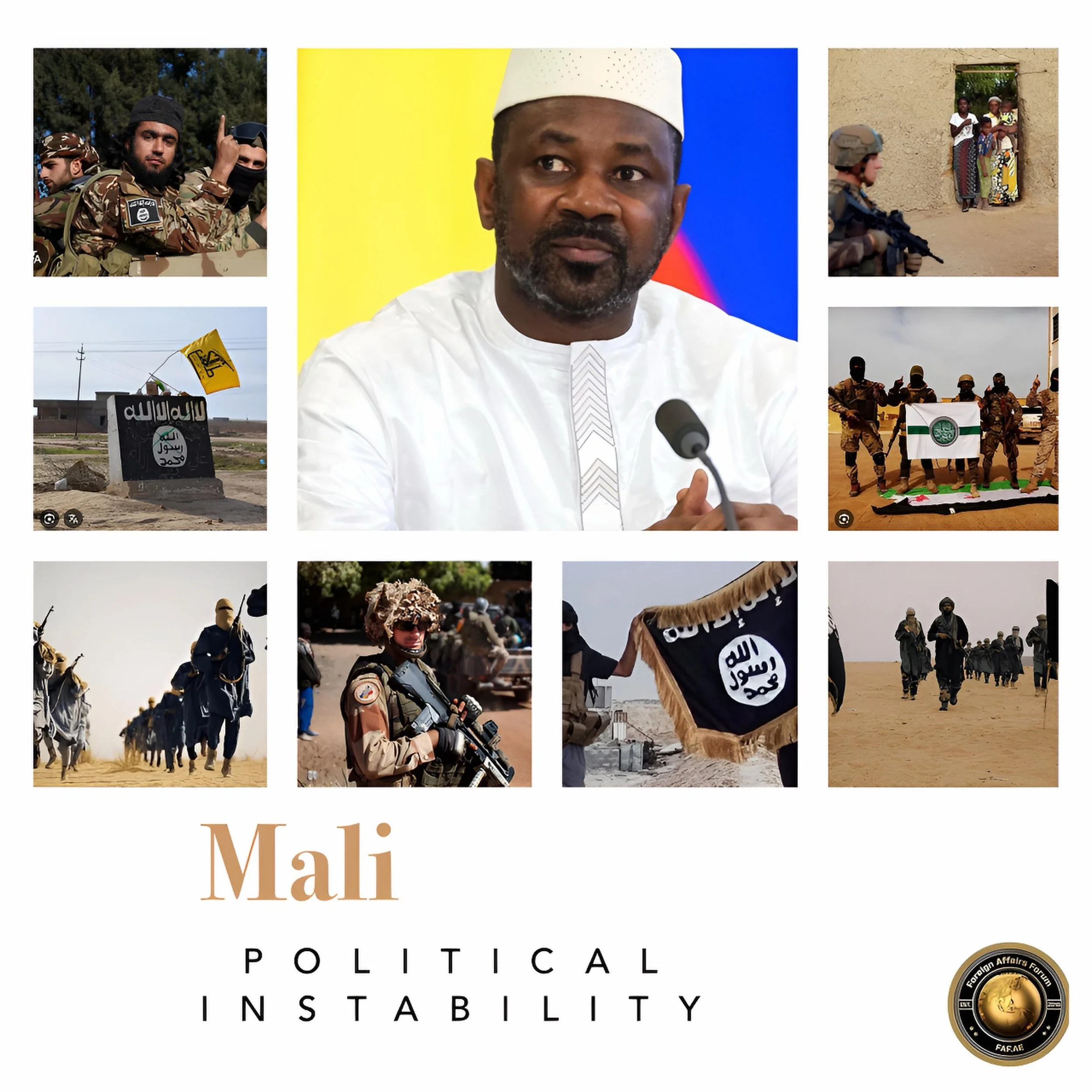
International Involvement in Mali: Roles, Historical Context, and Counter-Insurgency Dynamics
Executive Summary
The oil and fuel being blocked from entering Mali by JNIM (Jama’at Nusrat al-Islam wal-Muslimin) primarily comes from neighboring countries, especially Senegal and Ivory Coast.
These two countries are the main suppliers of fuel imports to landlocked Mali, using major transit corridors such as the Northern Bamako-Dakar Corridor (RN1 and RN3) for overland transport.
JNIM has explicitly instructed traders against bringing fuel from Senegal, Ivory Coast, Guinea, and Mauritania into Mali, intensifying the blockade since early September 2025.
This blockade has led to acute fuel shortages and severe economic disruption in Mali.
The JNIM blockade has severely disrupted fuel imports from Senegal and Ivory Coast, which together supply the vast majority of Mali’s petroleum needs—about 60% from Ivory Coast and 35% from Senegal.
JNIM militants have sealed off major highways, such as the Dakar-Bamako and northern routes, which are the primary paths for fuel transport trucks from both countries into Mali.
This has led to the destruction of over 100 tanker trucks, some drivers being killed or held hostage, and the paralysis of commercial fuel operations.
As a result of the blockade
Fuel queues have become extremely long in cities like Bamako, with many residents spending nights waiting for fuel.
Fuel shortages have forced schools and businesses to close, and essential services have been disrupted.
Alternative routes and smuggling methods have become necessary, but these are risky and result in minimal profit for importers.
The Malian military has attempted to escort convoys, but this has proven dangerous and insufficient to meet demand.
Overall, the blockade has had a devastating effect on Mali’s economy and daily life, hitting the country especially hard given its landlocked status and complete dependence on southern and western neighbors for fuel imports.
Introduction
Gain to JNIM from fuel blockade
JNIM gains several strategic and economic advantages from the fuel blockade into Mali.
Primarily, the group aims to destabilize Mali’s military government by causing severe economic disruption, fuel shortages, and hardship for civilians, which undermines the state’s legitimacy and authority.
By targeting fuel imports—a critical resource for daily life and commerce—JNIM pressures transport companies and the general population to distance themselves from the military authorities, further eroding the junta’s control and public support.
The blockade also directly impacts Mali’s economy, which is largely dependent on imports from Senegal and Ivory Coast, and risks inflating prices and fostering discontent among the population.
Additionally, the blockade serves as a tool for economic warfare, allowing JNIM to extort payments from trucking companies and traders seeking safe passage, and to extract ransom in exchange for hostages or the release of fuel tankers.
The increased leverage helps JNIM amass funds, resources, and weapons, further strengthening its position in the region.
JNIM benefits from the blockade by
Undermining the Malian government’s stability and legitimacy.
Disrupting the economy and fueling public discontent.
Extorting money and resources from traders and companies.
Strengthening its negotiating power and material capabilities.
Mali stands at a critical geopolitical crossroads, with multiple international actors competing for influence while the country grapples with persistent jihadist insurgency and a military junta that has consolidated authoritarian control.
The transformation of Mali’s international relationships since 2020 represents one of Africa’s most dramatic geopolitical realignments, marked by the withdrawal of Western forces, the rise of Russian mercenary operations, and Mali’s increasing strategic partnerships with non-Western powers.
Understanding the roles of Europe, Russia, Wagner, China, Turkey, the United States, and others requires examining both their current activities and their historical involvement in Mali’s complex affairs, as well as evaluating which entities are most effectively supporting Mali’s security apparatus against Al-Qaeda-affiliated groups like JNIM and ISGS.
Historical Context: Colonial Legacy and Post-Independence Challenges
Mali’s contemporary conflicts cannot be understood without acknowledging the deep historical patterns established during French colonial rule.
France colonized Mali (then French Sudan) in 1892 and maintained control until 1946, when the territory became French Sudan and later Sudan-Senegal Federation before achieving independence as Mali in 1960.
The colonial system deliberately created administrative hierarchies that favored the southern regions while marginalizing the north, establishing patterns of resource extraction and ethnic discrimination that persist today.
This colonial inheritance fundamentally shaped Mali’s post-independence trajectory, creating persistent tensions between southern-based political elites and northern populations who felt economically and politically excluded from the new state structure.
The 2012 conflict emerged directly from these historical fault lines.
On January 17, 2012, the National Movement for the Liberation of Azawad (MNLA), a Tuareg separatist group, launched an armed rebellion demanding independence for what they called Azawad, a northern territory historically inhabited by Tuareg peoples.
This initial rebellion coincided with regional instability from Libya’s collapse following NATO’s 2011 intervention, which destabilized the Sahara-Sahel region and enabled weapons proliferation.
The rebellion escalated when jihadist groups—including Al-Qaeda in the Islamic Maghreb (AQIM), Ansar al-Din, and others—exploited the security vacuum in the north, eventually morphing into the jihadist coalition JNIM (Jama’at Nusrat al-Islam wal Muslimin), established in 2017.
This historical progression demonstrates that Mali’s contemporary conflicts represent the convergence of long-standing separatist grievances, colonial legacies, and transnational jihadist movements.
France’s Historical Role and Withdrawal: From Intervention to Disengagement
France has maintained a dominant external presence in Mali since Mali’s independence, but this relationship has fundamentally transformed over the past two decades.
In 2013, as jihadist groups threatened the Malian capital Bamako and northern regions fell under militant control, France launched Operation Serval, deploying over 4,000 troops to support the Malian military in counter-terrorism operations.
Operation Serval succeeded in preventing jihadist groups from capturing the capital and temporarily cleared militants from northern towns, but by 2014, France transitioned its operations to the broader counter-terrorism Operation Barkhane, expanding its footprint across the Sahel region to Mali, Burkina Faso, Chad, and Niger.
At its peak, Operation Barkhane consisted of approximately 5,000 French military personnel deployed across these countries.
However, France’s presence became increasingly contested within Mali.
The military junta that seized power in 2020 and consolidated control through a second coup in 2021 grew frustrated with what they perceived as French inability to defeat jihadist groups despite years of military cooperation.
Anti-French sentiment intensified in Malian society, fueled by Russian disinformation campaigns and genuine dissatisfaction with France’s continued political pressure for Mali to hold democratic elections.
The breaking point came in February 2022 when the military junta demanded French troops withdraw without delay.
France, which had approximately 2,400 troops stationed in Mali at the time, subsequently withdrew all forces by August 15, 2022, ending nine years of continuous military operations in the country.
This withdrawal also encompassed the European Task Force Takuba, a coalition of special forces units from France and other European countries supporting counter-terrorism efforts.
France’s withdrawal was not simply a military retreat but represented the end of a specific type of external engagement.
French forces were replaced not by alternative Western actors but by Russian mercenaries, marking a fundamental geopolitical realignment.
France now maintains no significant military presence in Mali, though it continues sporadic diplomatic engagement and operates military training missions in neighboring Niger and Chad.
This represents a dramatic reversal of a century-long pattern of French military involvement in Mali and exemplifies the broader erosion of Western influence in the Sahel.
Russia, Wagner Group, and Africa Corps: Mercenary Presence and Operational Realities
Russia’s military involvement in Mali began immediately after France’s withdrawal. In September 2021, Mali and Russia agreed on military cooperation arrangements, and by January 2022, Russian military personnel began arriving in Bamako.
The deployment took the form of the Wagner Group, a Russian private military company with a reputation for aggressive operations across Africa and globally.
By early 2022, approximately 400 Russian military advisors were officially acknowledged to be in Mali, though Western and Malian sources consistently reported that these were actually combat operatives—mercenaries—rather than purely advisory personnel.
Initial estimates suggested between 1,000 and several thousand Wagner personnel deployed to Mali over subsequent months.
Wagner’s mandate expanded beyond training to include direct combat operations alongside Malian military forces.
The group deployed at strategic locations including former French military bases such as Timbuktu’s barracks, commanding operations across Mali’s central and northern regions where jihadist insurgency remains most intense.
Wagner reportedly participated in approximately one-third of Malian Armed Forces (FAMa) operations during their deployment.
Russia positioned Wagner’s involvement as necessary security support to counter terrorism, while Western observers and later Malian insiders increasingly viewed the deployment as driven by Russian strategic interests including resource extraction and geopolitical influence-building in the Sahel.
The operational record of Wagner in Mali, however, has proven deeply problematic.
A comprehensive 2025 report by investigative organization The Sentry documented that despite Wagner’s global reputation, its Mali deployment was characterized by systemic failures and escalating violence.
Wagner forces proved unable to maintain control over territory captured from jihadist groups, and instead of reducing attacks, the period following Wagner’s arrival (2022-2025) witnessed significant increases in both the frequency and scale of jihadist attacks.
Wagner suffered a devastating military defeat in July 2024 at Tinzaouatène in northeastern Mali, where terrorist groups attacking a Russian-led convoy killed an estimated 84 Wagner mercenaries and 47 Malian soldiers in a single engagement, demonstrating Wagner’s vulnerability to well-coordinated insurgent operations.
Beyond military failures, Wagner became deeply unpopular within Mali for human rights violations and operational misconduct.
UN experts reported receiving “persistent and alarming accounts of horrific executions, mass graves, acts of torture, rape and sexual violence” perpetrated by Wagner operatives and Malian forces they advised.
The 2022 Moura massacre, in which more than 500 civilians were killed including at least 300 men executed summarily, has been attributed partly to Wagner’s influence over Malian military operations.
Malian soldiers expressed deep resentment toward Wagner personnel who operated outside the military command structure, commandeered vehicles and resources, treated Malian forces with contempt, and received preferential treatment such as medical evacuations while Malian troops lacked basic supplies.
In June 2024, Wagner announced its withdrawal from Mali, claiming “mission accomplished,” but this announcement masked significant continuity in Russian personnel deployment.
Russia established a new organizational entity called Africa Corps, which is formally controlled by the Russian Ministry of Defense rather than being a private military company.
Approximately 80 percent of Africa Corps personnel in Mali consist of former Wagner fighters who transferred into the state military structure rather than returning to Russia.
Africa Corps inherited Wagner’s operational infrastructure, bases, and most critically, inherited the same reputation for human rights violations and operational incompetence.
The transition from Wagner to Africa Corps primarily represented a bureaucratic reorganization and public relations effort to distance the Russian state from Wagner’s documented failures rather than a substantive change in Russian military operations in Mali.
By late 2025, Russia’s military investment in Mali was generating minimal returns. Wagner/Africa Corps had failed to expand territorial control, had not accessed the mineral concessions it originally sought, and had created serious friction within Mali’s military hierarchy due to operational incompetence and abusive conduct toward Malian soldiers.
Some indications suggested that Wagner went unpaid for extended periods, further undermining unit cohesion and motivation. Nevertheless, Russia maintained approximately 1,500 personnel in Mali, significantly fewer than France’s peak deployment of 5,000 but sufficient to maintain political influence over the military junta.
Algeria and Egypt historical role in Mali
Algeria has historically played a significant diplomatic and mediation role in Mali, especially in efforts to resolve the northern conflict through the 2015 Algiers Accord, which it brokered between the Malian government and northern rebel groups.
Algeria frequently mediated peace talks, hosted negotiations, and supported regional stability, leveraging its geopolitical proximity and cross-border ties.
However, relations have deteriorated sharply in 2025, as Mali’s military junta has accused Algeria of interfering in its internal affairs and supporting its opponents, leading to diplomatic tensions, airspace closures, and the downing of a Malian drone near the border.
Algeria now appears more isolated in the region, as Mali’s junta seeks alignment with other powers and has distanced itself from Algiers.
Egypt’s role in Mali has grown in recent years, focusing on bilateral cooperation, security coordination, and human capacity building. Egypt has expressed strong support for Mali’s efforts against terrorism and has maintained close diplomatic ties, including regular government meetings and public statements of solidarity.
Egypt has also been involved in education and scholarship programs for Malian students, while working to protect the safety of Egyptian citizens living in Mali.
However, Egypt’s direct involvement in the conflict or security operations remains limited compared to Algeria’s historic mediation.
Algeria has shifted from a key peace broker to a more isolated and contentious partner, while Egypt has become a more active diplomatic and educational ally, with a focus on security cooperation and people-to-people ties.
European Union and Individual European States: Sanctions and Disengagement
The European Union’s approach to Mali after the 2020 military coup evolved from initial engagement to critical disengagement and ultimately formal sanctions.
Following the first coup in August 2020, the EU suspended some training and support missions but initially maintained diplomatic engagement, hoping the military would honor promises to conduct elections within 18 months.
However, when the junta conducted a second coup in May 2021, consolidating Assimi Goïta’s personal power and extending the transition period to five years (with elections targeted for 2026), the EU’s patience deteriorated.
By 2022, the EU had implemented its first sanctions targeting Malian officials accused of obstructing democratic transition, imposed asset freezes and travel bans, and suspended military training missions (EUTM) previously supporting Mali’s armed forces.
These sanctions reflected not only concerns about democratic backsliding but also European alarm at Wagner’s deployment and the junta’s orientation toward Russia.
The EU Special Representative for the Sahel and EU delegations in the region increasingly took adversarial positions toward Mali’s military government, accusing it of authoritarian consolidation and incompetence in counter-terrorism operations.
By February 2025, the EU escalated sanctions against five leading members of Mali’s interim government, including Prime Minister Choguel Maïga, citing obstruction of political transition and threats to Mali’s peace and stability.
These sanctions proved counterproductive in generating popular support for Mali’s junta, as Malian nationalist sentiment rallied around the government against perceived European interference.
Individual EU member states took varying approaches—some like Germany continued to withdraw military cooperation, while others maintained minimal engagement through diplomatic channels.
The cumulative effect of EU disengagement has been to cede influence to Russian and Chinese actors while allowing Mali’s military government to frame itself as defending Malian sovereignty against Western neo-colonial pressure.
EU diplomatic efforts have become largely ineffectual, overshadowed by Russia’s direct military support and China’s non-interventionist economic engagement.
United States: Limited Counter-Terrorism Engagement and Resource Diplomacy
The United States, primarily through AFRICOM (United States Africa Command), has maintained a more limited and pragmatic engagement with Mali compared to its Cold War-era presence in the Sahel.
The U.S. military presence in Mali historically focused on counter-terrorism training and intelligence gathering, particularly targeting Al-Qaeda-affiliated groups and ISIS elements operating in the region.
This engagement peaked around 2017 when U.S. soldiers deployed to Mali and Niger in support of regional counter-terrorism operations; a 2017 incident at Tongo Tongo, Niger, in which ISIS-affiliated militants ambushed U.S. special operations forces, resulted in multiple American casualties and prompted policy reconsiderations regarding direct U.S. combat operations in the Sahel.
The U.S. military maintained approximately 600-700 personnel in Mali as of early 2022, supporting Malian forces through training, intelligence analysis, and coordination of counter-terrorism operations.
However, the 2020 military coup and subsequent junta consolidation created diplomatic complications.
The Biden administration imposed sanctions on Malian officials accused of undermining democratic transition, reducing U.S. military cooperation and aid flows.
By 2024-2025, U.S. presence had been further reduced as Mali’s military government expelled remaining American forces and French personnel, with Mali withdrawing its cooperation permits for U.S. military bases and operations.
Significantly, in July 2025, the incoming Trump administration attempted to recalibrate U.S.-Mali relations.
Deputy National Security Council officials visited Bamako exploring potential cooperation in counter-terrorism operations, suggesting the U.S. might offer increased counterterrorism support in exchange for access to Mali’s strategic mineral resources—particularly gold and lithium.
This represents a transactional approach distinct from the Bush/Obama-era emphasis on democracy promotion and governance standards.
If this engagement produces agreements, it could represent the first major shift in U.S.-Mali relations since 2020, though significant structural obstacles remain given Mali’s military government’s alignment with Russia.
AFRICOM commander General Michael Langley has emphasized that Africa remains strategically vital to U.S. interests and that jihadist groups in the Sahel pose genuine terrorism threats to Western security.
The U.S. maintains that military training and counter-terrorism support offer superior alternatives to Russian mercenary involvement, given that Africa Corps has demonstrably failed to reduce jihadist violence while committing human rights abuses.
However, the U.S. has struggled to counter Russian disinformation, regain influence after French withdrawal, and provide meaningful security improvements compared to Russian promises.
China: Economic Engagement Without Military Intervention
China has pursued a fundamentally different engagement strategy in Mali than Russia or historical Western powers.
Rather than deploying military forces or mercenaries, China has focused on substantial economic investments in Mali’s mining sector and infrastructure development.
Since 2012, Chinese companies have invested in Mali’s gold mining industry—the backbone of Mali’s export economy—with particular focus on the Loulo-Gounkoto and Morila mines that have generated billions in revenue for Mali and significant returns for Chinese investors.
Chinese military assistance has been limited to equipment donations and training; between 2012 and 2013, China provided €5 million in military logistics supplies, and in 2014, Chinese forces supplied Malian military provisions valued at 1.1 billion CFA francs (approximately US$2.8 million).
China’s broader infrastructure investments in Mali dwarf its military engagement. Most notably, China has undertaken a US$2.7 billion railway modernization project linking Bamako to Dakar (in Senegal), designed to facilitate the export of iron ore, bauxite, and other mineral resources.
These investments are part of China’s “Belt and Road Initiative” framework for infrastructure and economic development across Africa and globally.
Chinese companies including Zifeng and National Nuclear have made substantial investments in Mali’s mining industry, including a US$130 million lithium venture in Mali’s K and Fa regions, demonstrating China’s focus on critical minerals essential to EV production and renewable energy infrastructure.
China’s relationship with Mali is asymmetrical, with China maintaining economic leverage while avoiding the military entanglement that has complicated Russia’s position.
Analysts note that Mali’s growing dependence on Chinese financial support—including major loans that may exceed US$13 billion when accounting for railway and other infrastructure projects—creates vulnerability to “debt trap diplomacy” in which Mali’s policy autonomy becomes constrained by loan obligations.
However, China has explicitly stated its commitment to non-interference in Mali’s internal governance, a position that appeals to Mali’s military junta seeking to avoid external pressure to democratize or implement human rights standards.
China’s approach represents a strategic counterweight to both Russian military adventurism and Western democracy promotion.
For Mali’s military government, China offers resource development and investment without political conditions—a model increasingly attractive across Africa as Western influence declines.
China has deepened ties through hosting Malian government delegations in December 2024 and pledging support for digital infrastructure, agriculture, education, and medical care.
This non-military engagement has proven far more stable than Russia’s mercenary operations, and analysts predict China will maintain its current trajectory of economic focus while carefully avoiding direct military involvement in Mali’s complex conflicts.
Turkey and SADAT: Private Military Training and Defense Equipment
Turkey represents a third geopolitical actor investing in Mali’s security through a distinct hybrid model combining defense equipment transfers and private military training.
In September 2021, Mali and Turkey formalized military cooperation agreements.
Mali subsequently received Turkish military equipment including 20 Bayraktar TB2 unmanned aerial vehicles (drones), four L-39 Albatros fighter jets, and various other military systems transferred between 2023 and 2024.
These weapons transfers represented significant capability enhancements for the Malian military compared to the primarily Soviet-era equipment it had historically relied upon.
Beyond equipment provision, Turkey has deployed SADAT, a Turkish private military company, to Mali to provide military training and security services.
SADAT’s primary mission in Mali has been training President Assimi Goïta’s personal security detachment and providing general military training to selected Malian units.
SADAT’s operations in Mali are smaller in scale compared to Wagner’s deployment—involving dozens rather than thousands of personnel—but serve Turkey’s strategic objective of expanding influence in West Africa and the Sahel as France’s presence has declined.
SADAT’s activities are, however, controversial. The company has been repeatedly accused of training jihadist elements in Syria, Libya, and Somalia, raising concerns about the quality and backgrounds of trainers deployed to Mali.
U.S. Department of Defense reports have documented SADAT’s involvement in training Syrian mercenaries who subsequently fought in Libya, suggesting the company’s distinction between legitimate military training and jihadist recruitment is murky.
Turkish opposition figures have repeatedly criticized SADAT as an organization complicit in supporting terrorist groups through its training operations.
These criticisms have not prevented SADAT’s expansion in Mali or deterred the Turkish government from backing its operations.
Turkey’s engagement reflects a broader Turkish geopolitical strategy of expanding military and economic influence in Africa, particularly in former Ottoman-era territories and strategic locations.
SADAT provides plausible deniability for direct Turkish military involvement while maintaining Turkish influence over Mali’s security forces.
Unlike France’s explicit counter-terrorism mandate or Russia’s comprehensive mercenary operations, Turkey’s SADAT presence is more limited but potentially more sustainable, as it has avoided the large-scale human rights violations and military defeats that have discredited Wagner.
The Alliance of Sahel States: Regional Consolidation and Redirection of Resources
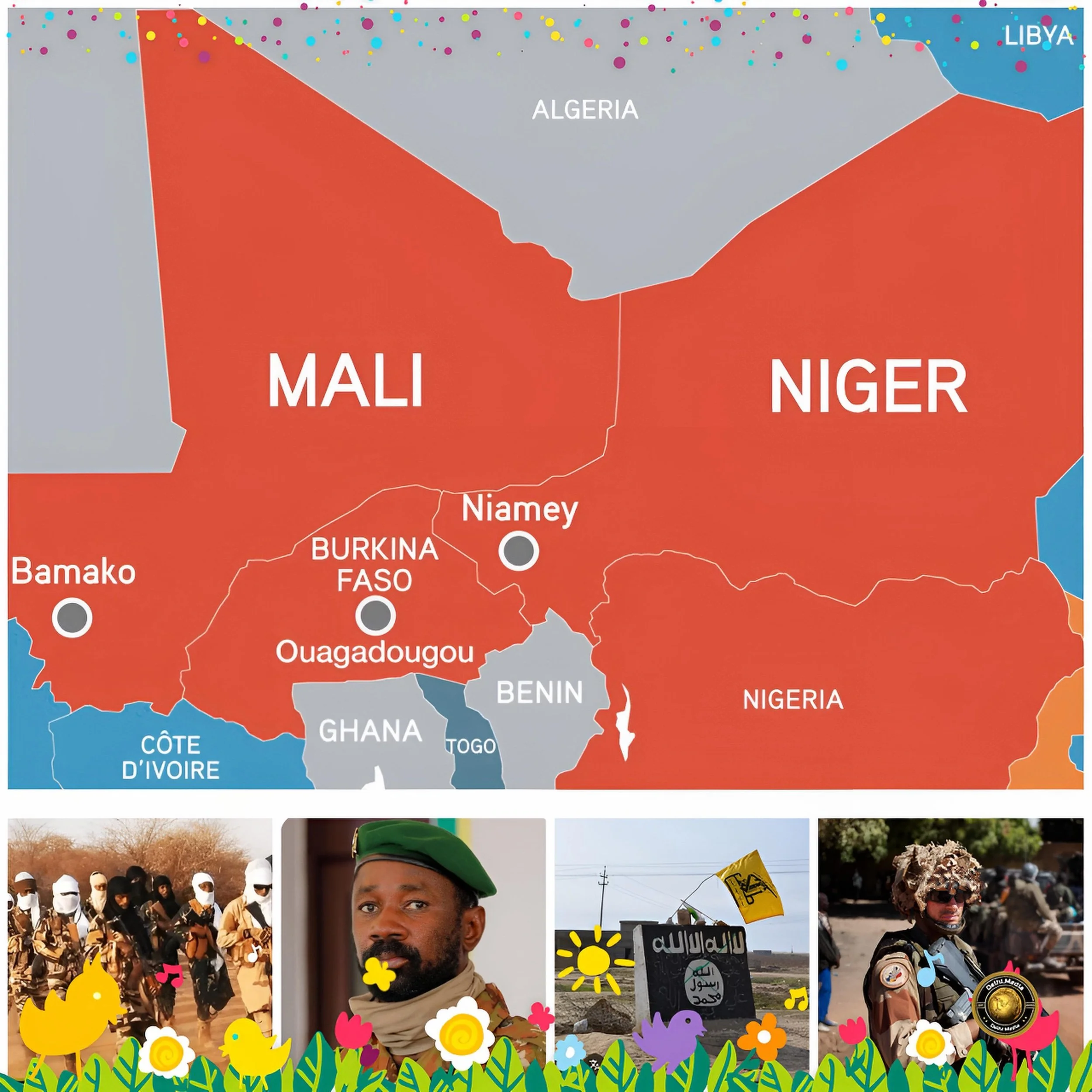
Mali’s formation of the Alliance of Sahel States (AES) with Burkina Faso and Niger in September 2023, and its formalization into a confederation in July 2024, represents a significant reorientation of Mali’s international alignment at the regional level.
The AES originated as a mutual defense pact in response to ECOWAS’s threat of military intervention following Niger’s July 2023 military coup.
However, the alliance has evolved into a comprehensive regional bloc focused on political consolidation, resource pooling, and assertion of sovereignty independent from ECOWAS (the Economic Community of West African States).
Mali, Burkina Faso, and Niger—all governed by military juntas that came to power through unconstitutional coups—have forged common security interests and strategic partnerships.
The three countries jointly withdrew from ECOWAS on January 29, 2025, after providing the required one-year notice, representing a historic fragmentation of West Africa’s primary regional organization.
The AES established a joint military command structure with a planned 5,000-strong unified military force tasked with conducting counter-terrorism operations across member territory.
Mali’s President Assimi Goïta held the rotating presidency of the AES for the first year following its formalization as a confederation.
The AES represents Mali’s effort to maximize its bargaining power within a bloc of countries sharing similar governance challenges and international isolation.
By coordinating security policies, resource exploitation, and diplomatic positions collectively, the three countries aim to present a unified front against both regional pressures from ECOWAS and international pressure from Western powers regarding democratic governance.
The AES has explicitly rejected Western security assistance in favor of Russian support, with Russia signing military cooperation agreements with all three member states and China pledging energy cooperation including nuclear power development for Burkina Faso and Mali.
This regional realignment has serious implications for broader West African stability. The split between the AES and the remaining 12 ECOWAS member states threatens to fracture West Africa’s traditional security architecture, potentially enabling deeper conflicts between jihadist groups and state forces without effective regional mediation or coordination.
However, the AES has also provided Mali with crucial diplomatic cover against individual Western sanctions and diplomatic isolation, as the bloc can invoke regional solidarity arguments and emphasize its focus on sovereignty restoration and security enhancement.
Counter-Insurgency Against JNIM and ISGS: Effectiveness and Strategic Challenges
The most direct measure of international actor effectiveness in Mali is their performance supporting counter-terrorism operations against JNIM (Jama’at Nusrat al-Islam wal Muslimin) and ISGS (Islamic State in the Greater Sahara), the two primary jihadist organizations operating in Mali.
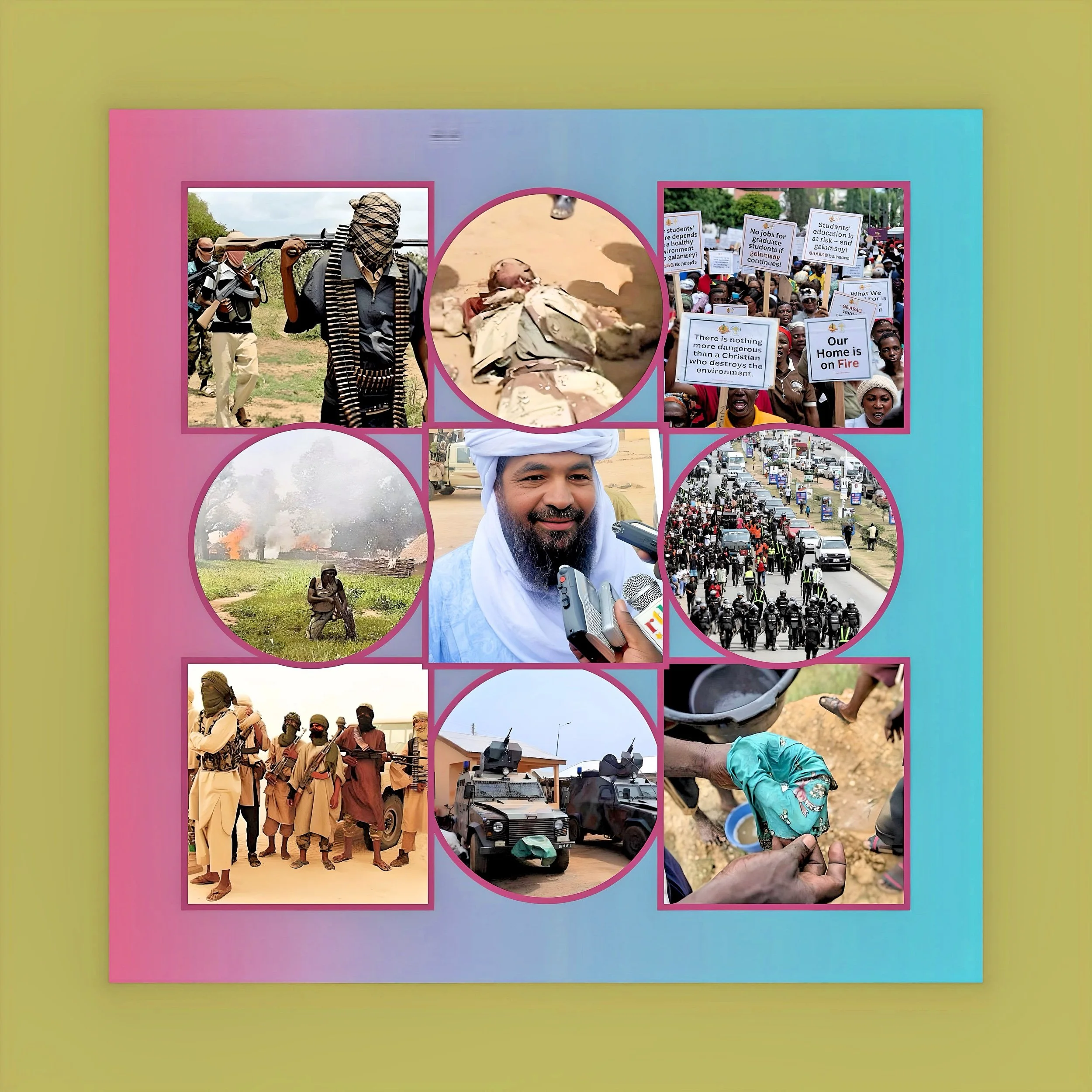
JNIM, formed in 2017 as a coalition of Al-Qaeda-affiliated groups led by Tuareg militant Iyad Ag Ghali, has emerged as West Africa’s deadliest jihadist organization, conducting hundreds of attacks annually across Mali, Burkina Faso, and Niger.
ISGS, affiliated with Islamic State rather than Al-Qaeda, operates primarily in northern Burkina Faso and western Niger but has conducted operations across Mali’s territory and increasingly pushes into coastal West African states.
France’s Operation Barkhane, despite deploying sophisticated military equipment and well-trained personnel, failed to permanently degrade jihadist capabilities or prevent their geographic expansion.
While French forces achieved tactical victories, including killing senior JNIM and ISGS commanders, these military successes translated into neither lasting territorial control nor prevention of jihadist organization and recruitment.
French withdrawal in 2022 coincided with intensified jihadist offensive operations, particularly JNIM’s expansion into central Mali and increased targeting of Bamako itself, suggesting that French counter-terrorism strategy, while militarily sophisticated, did not address root causes of jihadist recruitment and territorial expansion.
Russia’s Wagner Group similarly failed to achieve meaningful counter-terrorism results.
Despite participating in roughly one-third of FAMa operations, Wagner could not capture and hold territory against jihadist groups, experienced significant battlefield defeats, and witnessed escalating civilian casualties under Wagner-advised operations.
A comprehensive analysis by The Sentry concluded that Wagner’s heavy-handed counterinsurgency tactics—including indiscriminate violence, mass killings, and targeted abuses of civilian communities—actually strengthened jihadist recruitment by creating grievances that militant groups exploited for recruitment purposes.
Rather than degrading jihadist capabilities, Wagner’s operations allegedly contributed to their expansion.
Counter-terrorism effectiveness, in Mali’s case, appears constrained by fundamental strategic factors that no external actor has successfully addressed
(1) jihadist groups’ deep integration into local communities and exploitation of legitimate grievances regarding resource access, land tenure, and ethnic marginalization
(2) the military junta’s preference for brutal counterinsurgency tactics over community engagement and governance improvements
(3) the security forces’ limited capacity to hold captured territory and provide effective state administration
(4) the absence of viable negotiation frameworks, as jihadist groups have preconditioned talks on the withdrawal of foreign forces.
An analyst from the Global Initiative Against Transnational Organised Crime noted that counterterrorism experts increasingly recognize that military operations alone cannot defeat jihadist movements, and that negotiation represents the only viable path forward, yet political obstacles to such negotiations remain severe.
Current levels of jihadist activity suggest that neither French, Russian, nor any other external military actor has successfully degraded jihadist capabilities to the point of reducing attacks or expanding state territorial control on a sustained basis.
JNIM conducted over 280 attacks in Burkina Faso alone during the first half of 2025, double the rate for the same period in 2024, indicating acceleration rather than decline in jihadist operational tempo.
JNIM and ISGS have together killed approximately 1,000 people since April 2025 according to JNIM’s own claims, with the majority being security force members but significant numbers of civilian casualties also documented.
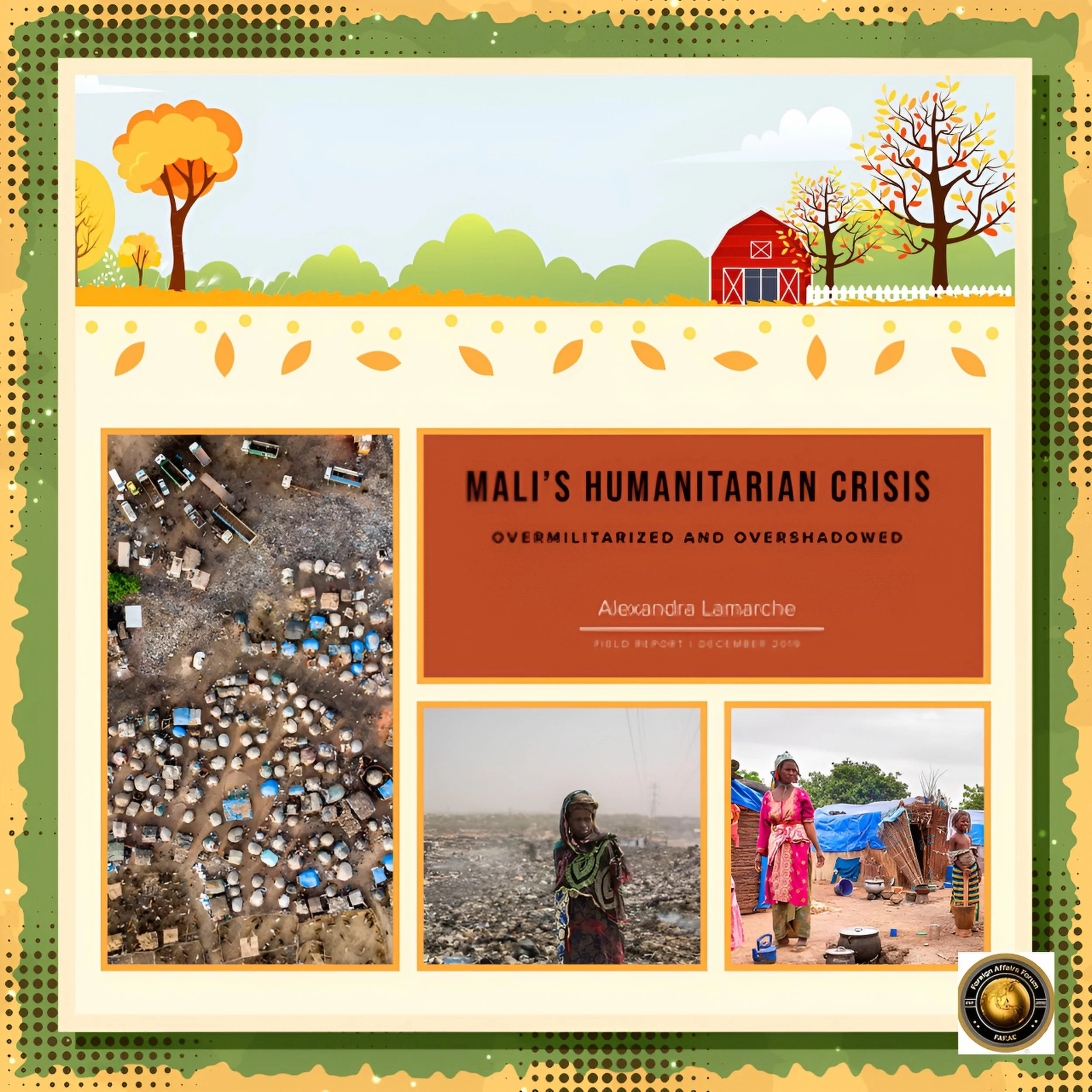
The humanitarian impact has been severe, with over 2 million internally displaced persons as of late 2024, reflecting the conflict’s expansion and intensification despite years of external military intervention.
Mali’s Future Prospects: Political Stagnation, Jihadist Persistence, and International Competition
Mali’s future trajectory is deeply uncertain, constrained by multiple reinforcing challenges and the military junta’s demonstrated inability to address fundamental state legitimacy and security problems.
The original transition charter proposed by Assimi Goïta in 2020 promised elections within 18 months; that deadline was extended multiple times, with elections currently targeted for 2026—though this date appears increasingly uncertain as the junta has demonstrated no credible commitment to democratic transition.
In June 2025, the junta proposed extending Goïta’s presidential mandate until 2030, dissolved political parties, and suspended political activities, demonstrating authoritarian consolidation rather than democratic opening.
The military junta faces serious political opposition, including mass protests in May 2025 when hundreds of Bamakians gathered in defiance of the government’s plans to remain in power indefinitely.
However, the junta has maintained sufficient military and international support—particularly from Russia—to suppress domestic opposition and resist external pressure for democratization.
The combination of expanded security force capacity (through Russian military assistance), foreign mercenary support, control over state resources, and nationalist rhetoric channeled against Western critics has enabled Goïta to consolidate authoritarian personal rule despite widespread dissatisfaction.
The persistent jihadist insurgency presents an intractable security challenge that current military-centric strategies show no prospect of resolving.
JNIM and ISGS have demonstrated remarkable adaptive capacity, dispersing into central and southern Mali when military pressure increases in the north, expanding into Burkina Faso and Niger when pressure mounts in Mali, and recruiting from grievance-ridden communities that distrust the government military more than they fear jihadist groups.
The jihadist groups generate revenue through cattle theft, taxation of trade, and resource extraction, making them relatively self-sufficient and difficult to starve through conventional counter-terrorism operations.
Critically, jihadist groups have become embedded in local governance structures, adjudicating disputes, providing social services, and exercising local authority in areas where the state is absent—functions that simple military pressure cannot supplant without state capacity building that Mali’s military government shows no commitment to pursuing.
International competition for influence in Mali is likely to intensify rather than diminish. Russia will maintain its presence through Africa Corps, seeking to demonstrate operational effectiveness to justify continued investment and to compete with Chinese economic influence.
The United States may increase engagement if Trump administration negotiations produce resource-sharing agreements, potentially creating a competitive dynamic with Russian operations.
China will likely continue economic investments focused on mining and infrastructure regardless of the military or political situation.
The European Union will maintain critical distance and sanctions unless significant political changes occur.
Turkey’s SADAT presence will probably expand modestly as it seeks to increase regional influence independent of larger powers.
The humanitarian situation will likely worsen before stabilizing.
With over 330,000 internally displaced persons as of May 2024 and conflict-related deaths in the hundreds monthly, Mali faces a deepening displacement and humanitarian crisis that will strain neighboring countries’ absorption capacity and potentially generate transnational instability.
Climate change and environmental degradation will compound these challenges, as resource scarcity intensifies intercommunal tensions that jihadist groups continue to exploit for recruitment.
Mali’s potential future trajectories include
(1) continued military stagnation, with jihadist groups holding diffuse territorial control while the junta maintains Bamako and key urban centers but fails to expand state authority
(2) eventual political opening under international pressure, potentially following generational changes in junta leadership
(3) fragmentation along ethnic and regional lines if the state continues to lose legitimacy
(4) some negotiated settlement involving jihadist groups, though currently no framework for such negotiations exists and major external actors (Russia, U.S., France) have fundamentally opposed such approaches.
The most likely near-term outcome is continued authoritarian military governance, persistent jihadist insurgency, and incremental humanitarian deterioration—a trajectory that none of Mali’s external partners have demonstrated capacity to meaningfully alter.
Conclusion
External Influence Without Solutions
Mali’s complex web of international involvement reflects broader patterns of great power competition and the challenges confronting failing states in strategic regions.
Russia has deployed mercenaries and military advisors primarily to expand geopolitical influence and compete with Western presence rather than to solve Mali’s fundamental security challenges; Wagner/Africa Corps’s operational failures and human rights violations have undermined rather than advanced Russian strategic objectives.
France’s long engagement ending in 2022 demonstrates the limits of Western military intervention in addressing jihadist insurgency rooted in local grievances and state illegitimacy.
The United States maintains limited involvement focused on counter-terrorism but has insufficient presence to meaningfully compete with Russian influence.
China has pursued a pragmatic economic engagement strategy that provides Mali resources without imposing political conditions, but China’s non-interventionist posture means it cannot address security challenges directly. Turkey’s military training activities are modest and of unclear effectiveness.
The European Union’s sanctions and critical stance have proven counterproductive in generating leverage while accelerating Mali’s alienation from Western institutions.
Mali’s formation of the AES with Burkina Faso and Niger represents the country’s clearest articulation of its preferred international posture: association with non-Western partners (Russia, China, Turkey) combined with explicit rejection of Western pressure for democratic governance and security cooperation.
Yet this realignment has not produced improved security outcomes, accelerated economic development, or restored state legitimacy.
The military junta has consolidated power through authoritarian means while security continues to deteriorate, jihadist groups expand operational capacity, and humanitarian conditions worsen.
The ultimate question regarding Mali’s future is not which external actor will achieve strategic dominance, but rather whether any external actor can effectively support Mali’s efforts to build legitimate state institutions, reduce jihadist organizational capacity, and generate inclusive governance that reduces the grievances fueling insurgent recruitment.
Current evidence suggests that none of the external actors involved in Mali possesses both the capability and commitment to address these fundamental challenges, making Mali’s geopolitical realignment primarily an expression of frustration with failing international partners rather than the beginning of a path toward stability and state reconstruction.