Washington.Forum: Don't Sacrifice "America First" in a War with Iran - Why Trump Should Stand with Israel, but Not Get Entangled in Their Conflict
Introduction
President Donald Trump stands at a critical crossroads that will define his legacy and America’s strategic future.
As Israel wages its most ambitious military campaign against Iran since the 1979 Islamic Revolution, Trump faces mounting pressure to transform America from supporter to co-combatant.
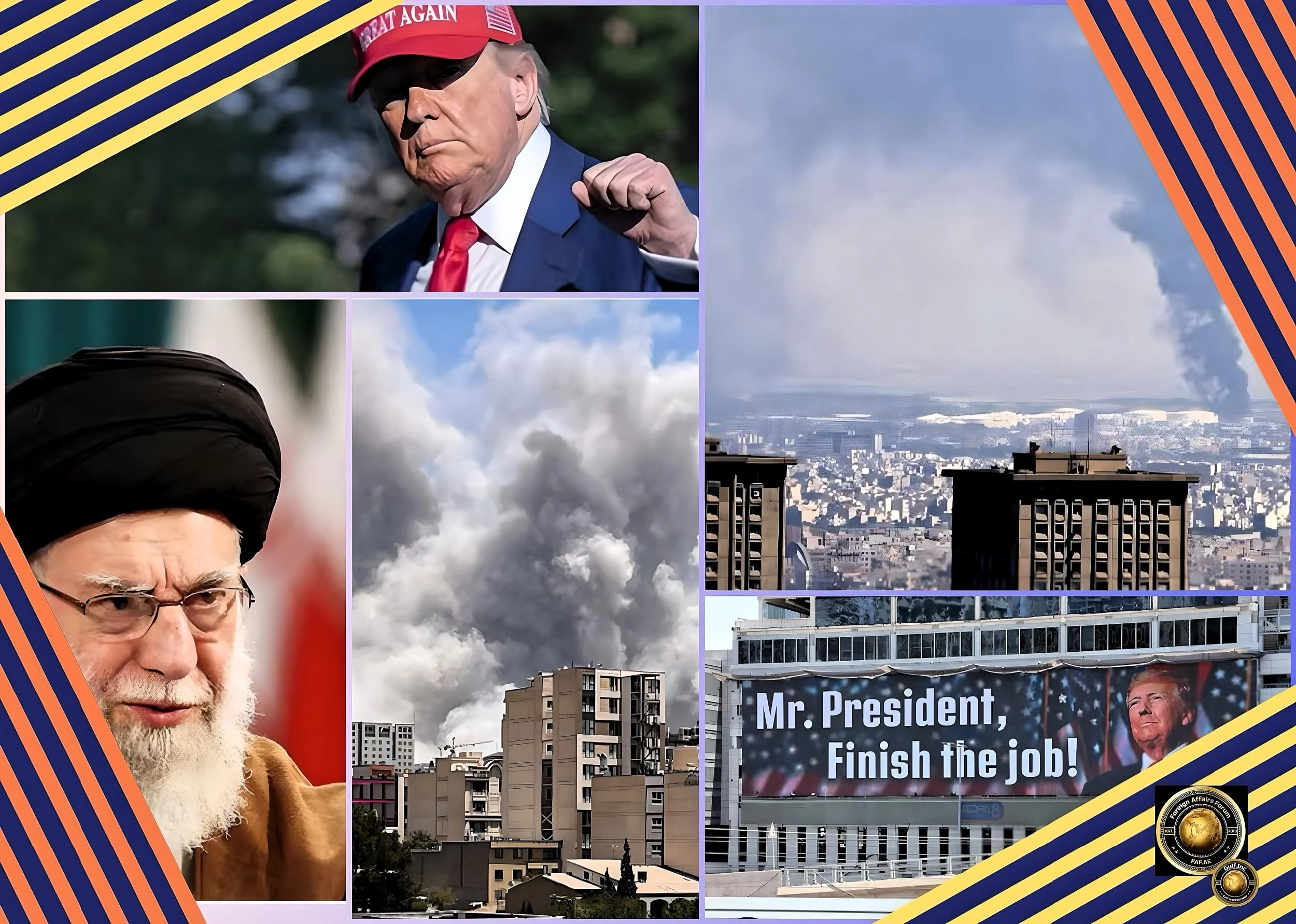
His recent oscillation between hawkish rhetoric—claiming “complete and total control of the skies over Iran” and demanding Iran’s “UNCONDITIONAL SURRENDER!”—and strategic ambiguity reveals the profound tensions within his administration and the Republican Party.
This moment represents not just a foreign policy decision, but a fundamental test of whether Trump will honor the “America First” principles that brought him to power or betray them for the allure of military intervention.
The Strategic Case for Israeli Self-Reliance
Israel’s Pursuit of Strategic Clarity
Israel’s current campaign against Iran represents a dramatic departure from decades of “mowing the lawn” operations that sought merely to manage rather than eliminate threats. Following the trauma of October 7, 2023, Israeli leadership embraced what analysts describe as “strategic clarity”—the systematic dismantling of Iran’s regional network rather than temporary degradation of capabilities.
This approach has yielded remarkable results: Hamas’s military infrastructure lies in ruins, Hezbollah’s command structure has been decimated, and Syria’s Assad regime has collapsed, opening Syrian airspace to Israeli operations.
The transformation extends beyond tactical victories to fundamental strategic reorientation.
One Middle East analyst noted that Israel has moved from “reactive defense” to “actively reshaping the regional security order through a sophisticated model based on intelligence, technology, and military innovation”.
This represents precisely the kind of decisive action that Washington has failed to achieve in its own Middle Eastern interventions over the past two decades.
The Limits of Israeli Capabilities
Despite these successes, Israel faces a critical constraint: the underground Fordow enrichment facility remains beyond its reach.
Built deep within a mountain and protected by an estimated 260 to 360 feet of concrete and rock, Fordow requires the kind of massive ordnance that only the United States possesses—the GBU-57 Massive Ordnance Penetrator, deployable only by American B-2 stealth bombers.
This technological limitation has created the pressure point driving calls for American military intervention.
However, this constraint should be viewed as an opportunity rather than a crisis. Israel’s inability to independently destroy Fordow preserves the strategic principle that has guided Israeli defense planning for decades: the imperative of self-reliance.
As Israeli leaders have consistently argued, they must be capable of defending themselves without depending on external powers or the “whims of their patrons in Washington”.
The Erosion of America First Principles
Trump’s Conflicted Messaging
Trump’s recent statements reveal a president torn between competing impulses and constituencies.
His Truth Social posts claiming American “complete and total control of the skies over Iran” and threats against Supreme Leader Ali Khamenei represent a significant escalation from his previous diplomatic overtures.
When pressed by reporters, however, Trump retreated to strategic ambiguity: “I may do it. I may not do it. I mean, nobody knows what I’m going to do”.
This inconsistency reflects deeper tensions within the Trump coalition.
As one analysis noted, “The question of whether the United States should collaborate with Israel in an assault on Iran has revealed rifts among supporters of President Donald Trump”.
Conservative Congressman Thomas Massie has aligned with Democrats to introduce a War Powers Resolution blocking unauthorized military action against Iran, declaring that “the ongoing war between Israel and Iran is not our war”.
The Polling Reality
American public opinion provides unambiguous guidance: military intervention in Iran lacks popular support across party lines.
The Economist/YouGov poll conducted June 13-16, 2025, found that only 16 percent of Americans support U.S. military involvement in the Israel-Iran conflict, while 60 percent oppose it. Even more striking, opposition spans the political spectrum, with 65 percent of Democrats, 61 percent of Independents, and 53 percent of Republicans opposing intervention.
A separate Washington Post poll revealed an even starker 20-point margin against military action, with 45 percent opposing strikes compared to just 25 percent supporting them.
These numbers reflect the enduring impact of previous Middle Eastern interventions, with Americans demonstrating clear reluctance to repeat the strategic disasters of Iraq and Afghanistan.
Conservative Opposition Emerges
Prominent Republican voices have begun questioning the wisdom of military escalation. Senator Josh Hawley, despite his strong support for Israel, told CNN: “I don’t want us fighting a war.
I don’t want another Mideast war. I’m a little concerned about our sudden military buildup in the region”. This sentiment reflects growing concern among Trump’s isolationist base that military intervention would violate core America First principles.
Even Trump loyalist Marjorie Taylor Greene has publicly disagreed with the president’s hawkish turn, asserting that anyone advocating military intervention “was not truly ‘America First’” and warning that “if we intervene in this war, we will witness terror attacks right here on our soil”.
The Escalation Trap: Why Limited Strikes Are Illusory
The Retaliation Spiral
The notion that America could conduct “surgical strikes” against Iran without triggering massive retaliation reflects dangerous strategic naïveté.
Iran has positioned missiles and military assets throughout the Middle East specifically to target the more than 40,000 American military personnel stationed across the region.
Iranian capabilities for asymmetric response extend far beyond direct military strikes to include cyber warfare, activation of proxy militias, and potential disruption of global energy supplies through the Strait of Hormuz.
Iran’s Supreme Leader Ali Khamenei has explicitly warned that “any U.S. military intervention will undoubtedly be accompanied by irreparable damage,” while Iranian officials have declared that Tehran already regards the United States as “complicit in Israel’s actions”.
This suggests that Iran views the current crisis as potentially existential, increasing the likelihood of desperate and unpredictable responses to American military action.
The China Exploitation Factor
American military deployment to the Middle East creates strategic opportunities for China that Beijing has systematically exploited.
Following the Pentagon’s order for the USS Nimitz aircraft carrier to relocate from the Indo-Pacific to the Middle East, Chinese military forces conducted “provocative sea and air patrols” shadowing U.S. allies in contested waters.
This pattern reflects China’s broader strategy of capitalizing on American strategic overextension in the Middle East.
As one strategic analysis concluded, “Beijing has systematically exploited America’s Middle East quagmires, turning each crisis into a strategic windfall” while advancing its narrative that “U.S. leadership is hypocritical, destabilizing, and declining”.
Extended American military engagement in Iran would provide China with unprecedented opportunities to increase pressure on Taiwan and challenge U.S. allies throughout the Indo-Pacific.
The Constitutional and Political Constraints
Congressional Authority and War Powers
No Authorization for Use of Military Force currently applies to Iran, meaning any military action would require explicit congressional approval under the Constitution.
The bipartisan War Powers Resolution introduced by Representatives Thomas Massie and Ro Khanna specifically prohibits “United States Armed Forces from unauthorized hostilities in the Islamic Republic of Iran” and has gained support from progressive Democrats and constitutional conservatives.
Senator Tim Kaine has introduced companion legislation in the Senate, reflecting growing congressional concern about executive overreach in matters of war and peace.
Even with Republican control of both houses, Trump faces potential opposition from lawmakers who prioritize constitutional governance over executive convenience.
The Mercurial President Problem
Trump’s inconsistency poses risks not just for American strategy but for Israel itself. Having reportedly “demoted his national security adviser, Mike Waltz” for coordinating with Netanyahu while Trump pursued diplomatic solutions, the president has demonstrated his willingness to reverse course abruptly.
This unpredictability means that even if Trump authorizes military action, he might subsequently pressure Israel to halt operations before achieving satisfactory results—exactly the kind of external interference that Israeli strategic planning seeks to avoid.
Israeli leaders understand this dynamic, having observed Trump’s pattern of escalating rhetoric followed by strategic reversals.
His 2019 decision to abort retaliatory strikes against Iran “10 minutes before” launch, citing concerns about proportionality, demonstrates how quickly he can change course when confronted with the realities of military action.
The America First Alternative: Support Without Co-Belligerence
Defensive Support Framework
The United States can and should continue providing Israel with defensive capabilities without crossing the threshold into offensive operations.
This includes missile defense interceptors, intelligence sharing, and logistical support designed to protect Israeli civilians from Iranian retaliation. Such assistance honors America’s commitment to Israeli security while avoiding the escalation risks inherent in direct military participation.
Trump has positioned himself as the president who “originated the America First concept” and therefore has the authority to define its parameters.
This provides him with political cover to support Israel defensively while maintaining that preventing Iranian nuclear weapons serves American interests without requiring American military action.
The Strategic Patience Option
Rather than rushing into military intervention, Trump can leverage the current dynamic to achieve diplomatic objectives through sustained pressure.
Iran’s weakened position—with its proxy network dismantled and its regional influence diminished—creates opportunities for negotiated solutions that were previously unavailable.
European allies continue pursuing diplomatic engagement, with foreign ministers from Germany, France, and Britain meeting their Iranian counterpart in Geneva for nuclear talks.
This approach allows Trump to maintain pressure on Iran while preserving American strategic flexibility.
As he noted in his own strategic framework, “I like to make the final decision one second before it’s due, because things change, especially with war”.
Strategic patience honors this preference while avoiding irreversible commitments that could trap America in another Middle Eastern conflict.
Lessons from Strategic Overreach
The Iraq War Parallel
Trump’s own political rise was built partly on his willingness to acknowledge what other Republicans wouldn’t: that the Iraq War was “a big, fat mistake” that cost American lives and resources while failing to achieve strategic objectives.
The parallels to current Iran policy are unmistakable—claims about imminent nuclear threats, disputed intelligence assessments, and promises of limited military action that would quickly resolve complex geopolitical challenges.
The same pathologies that produced the Iraq disaster are evident in current Iran policy discussions: overconfidence in airpower’s strategic effectiveness, underestimation of adversary response capabilities, and insufficient planning for post-conflict scenarios.
Trump’s political instincts should recognize these warning signs and reject the siren call of military intervention.
The Historical Pattern of Middle Eastern Failures
American military interventions in the Middle East have consistently failed to achieve their stated objectives while imposing enormous costs.
From Lebanon in the 1980s to Iraq and Afghanistan in the 2000s, the pattern remains consistent: initial tactical success followed by strategic failure, escalating costs, and ultimate withdrawal without achieving political objectives.
Even the most recent interventions demonstrate this pattern. The Red Sea campaign against Houthi forces has proven costly and ineffective, while the broader “Axis of Resistance” has adapted to American pressure rather than succumbing to it.
Iran’s sophisticated asymmetric warfare capabilities, developed over decades of sanctions and regional conflicts, suggest that any military intervention would follow this same trajectory of initial success followed by prolonged, costly engagement.
The Path Forward: Supporting Israeli Victory Without American Entanglement
The Limited Support Model
The optimal approach involves what one analyst described as “helping Israel finish this war on its own, and on its own terms”.
This means continuing defensive support while allowing Israel to determine its own operational tempo and strategic objectives. Such an approach respects Israeli agency while preserving American strategic flexibility.
This framework also honors the principle that “countries’ wars of necessity should not become Washington’s wars of choice”.
Israel faces an existential threat from Iranian nuclear development and regional aggression, making this conflict a war of necessity for Israeli survival. For the United States, however, military intervention would represent a war of choice with unpredictable consequences and uncertain benefits.
Preserving Strategic Options
By avoiding direct military involvement, Trump preserves America’s ability to influence outcomes through diplomatic and economic pressure while maintaining relationships with regional partners.
This approach also keeps open the possibility of future diplomatic engagement with Iran should circumstances change—an option that would be foreclosed by military intervention.
The current moment offers unprecedented leverage for diplomatic solutions precisely because Iran’s position has been so dramatically weakened by Israeli operations. Rather than squandering this advantage through premature military action, Trump can use it to achieve negotiated outcomes that would be impossible under different circumstances.
Conclusion
Judgment Over Strength
The ultimate test of American power lies not in the ability to project military force globally, but in the wisdom to know when such projection serves American interests and when it undermines them.
Trump’s decision on Iran intervention will determine whether he remains true to the America First principles that brought him to power or abandons them for the false promise of military solutions to complex political problems.
The polling data, congressional opposition, and strategic risks all point toward the same conclusion: military intervention in Iran would betray the very principles that define Trump’s political leadership while failing to achieve lasting strategic objectives.
The path of supporting Israel without joining its fight honors American commitments while preserving American interests—exactly the kind of strategic judgment that America First foreign policy demands.
Trump’s political instincts have consistently proven superior to conventional Washington wisdom.
Those same instincts should lead him to reject the bipartisan foreign policy establishment’s push for military intervention and instead chart a course that supports Israeli victory while keeping America out of another Middle Eastern war.
The choice between catastrophic judgment and strategic wisdom has rarely been so clear—or so consequential for both American interests and Trump’s political legacy.