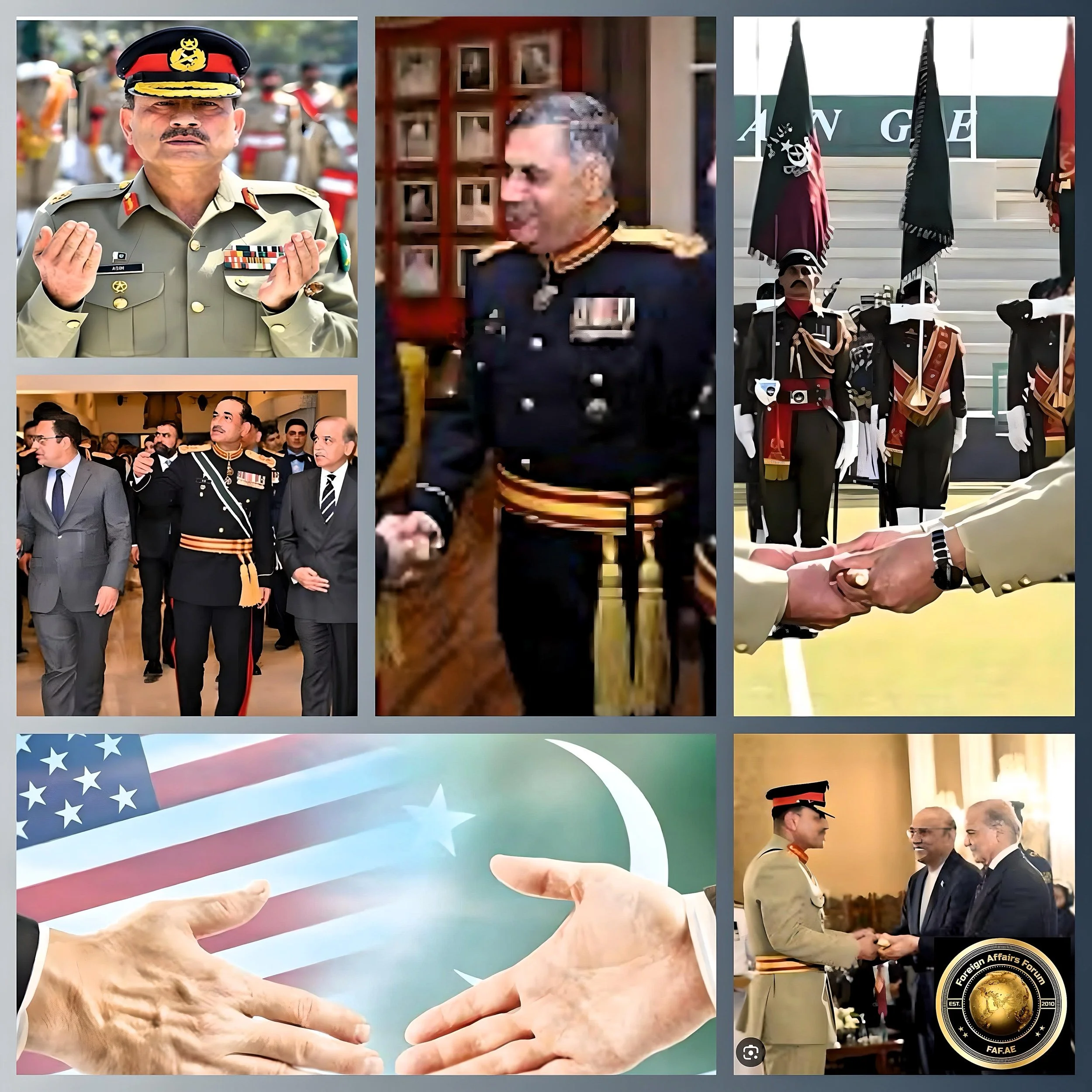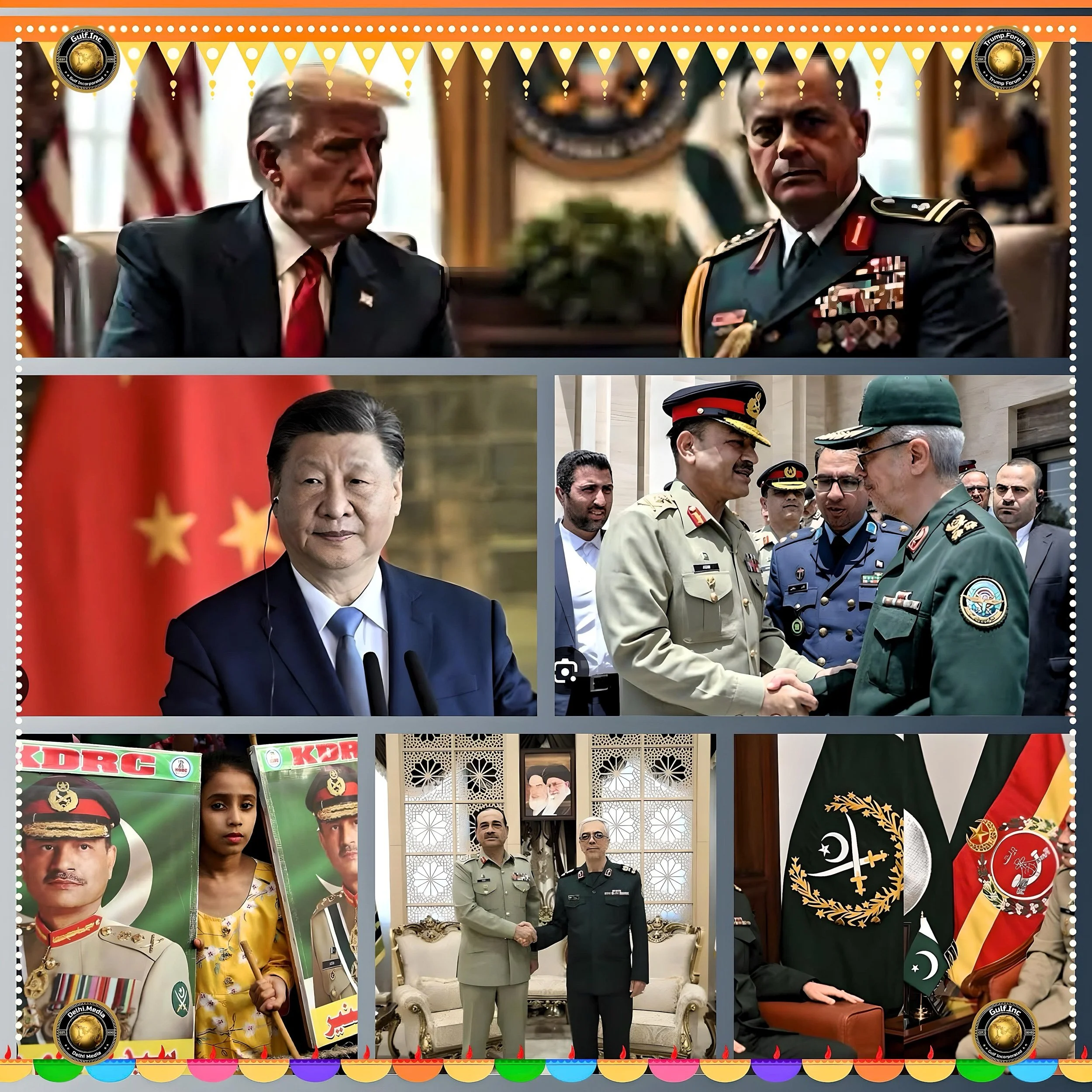
Asia.Forum- Amid US-Pakistan Thaw, Two Key Challenges: Iran and China - Trump and Munir meet at the white house
Executive Summary
The Unprecedented Meeting
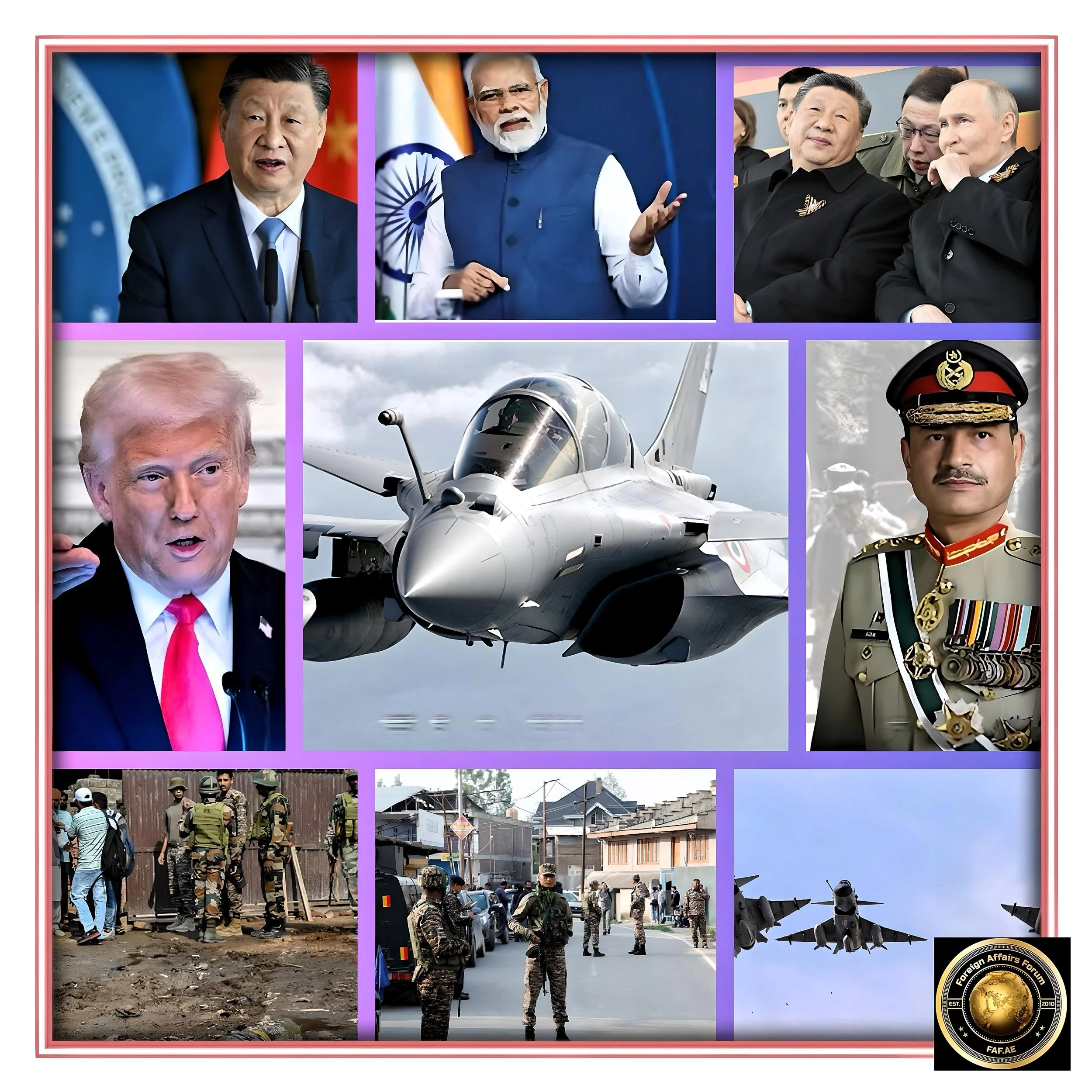
In a significant diplomatic development, Pakistan’s Army Chief, Field Marshal Asim Munir, met with US President Donald Trump at the White House for what was described as an “unprecedented” one-on-one meeting.
Initially scheduled for one hour, the meeting extended to more than two hours as the discussions moved from the Cabinet Room over lunch to the Oval Office.
FAF, Asia.Forum analyzes the rare engagement marks a potential shift in US-Pakistan relations, which Pakistan’s military leadership characterized as being “among the worst” historically during the previous Biden administration.
The meeting was notably closed-door with no media presence or photo opportunities, suggesting the sensitive nature of the discussions.
On the Pakistani side, Munir was accompanied by Lieutenant General Asim Malik, Pakistan’s National Security Adviser and head of the Inter-Services Intelligence (ISI).
President Trump was joined by Secretary of State Marco Rubio and his top Middle East negotiator, Steve Witkoff.
Key Topics of Discussion
India-Pakistan Ceasefire
As acknowledged by Trump, a primary reason for the meeting was to express gratitude for Munir’s role in de-escalating the May 2025 conflict between India and Pakistan. “I had him here to thank him for not going into war with India.”
Trump stated, adding that “two brilliant people decided not to continue with a war that could have escalated into a nuclear conflict”.
The conflict, which lasted four days in May 2025, began after India launched “Operation Sindoor” on May 7, conducting missile strikes on what it claimed were terrorist infrastructure facilities in Pakistan and Pakistan-administered Kashmir.
This was in response to the Pahalgam terrorist attack in Indian-administered Kashmir on April 22, which resulted in 26 civilian deaths.
The situation escalated with both countries exchanging drone strikes and missile attacks on military bases before a ceasefire was reached on May 10, 2025.
Iran-Israel Conflict
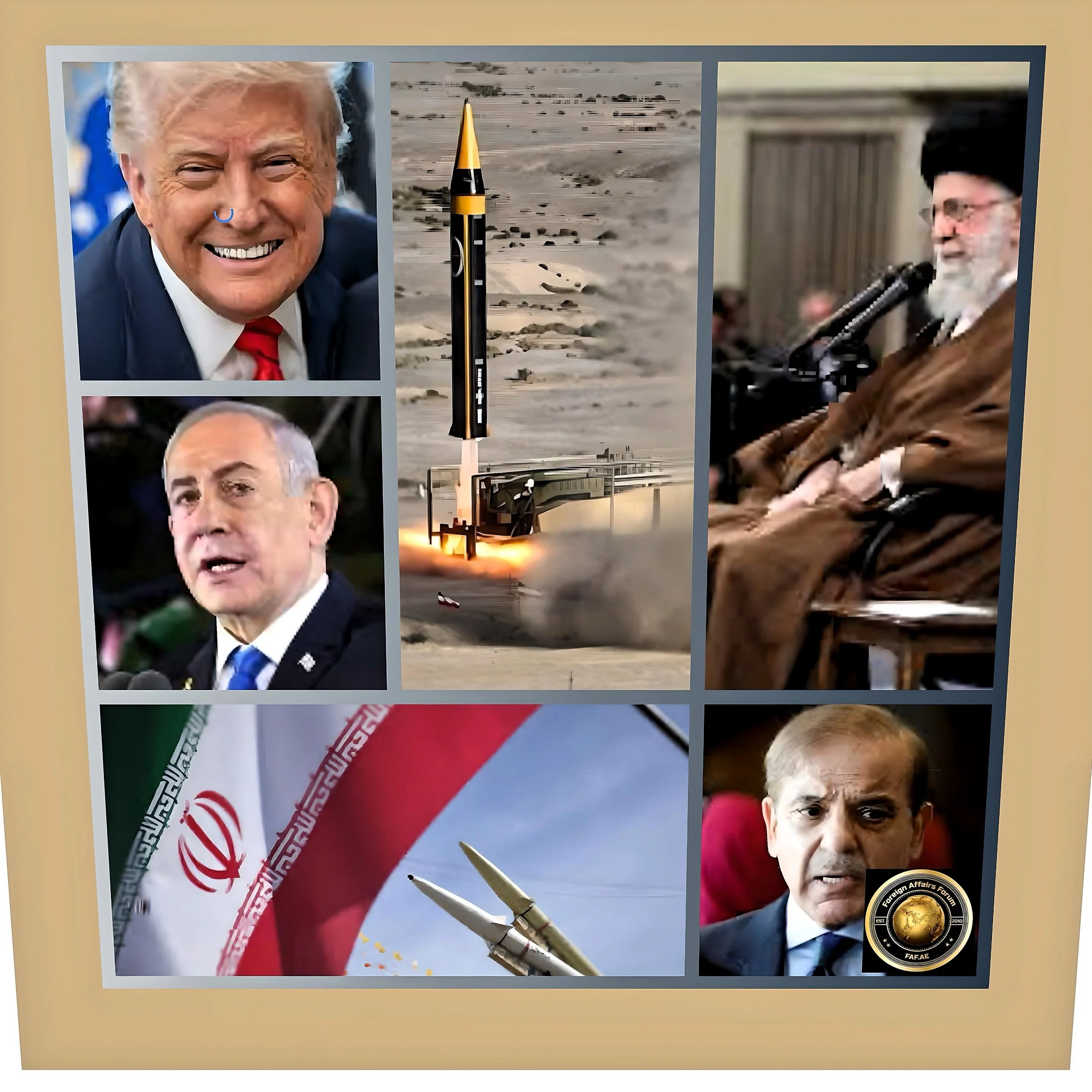
Perhaps the most significant aspect of the meeting was the “detailed exchange of views” on the escalating tensions between Iran and Israel.
According to the Pakistani military’s statement, both leaders emphasized the importance of resolving this conflict peacefully.
When asked about discussions regarding Iran, Trump confirmed: “Well, they know Iran very well, better than most, and they are not happy about anything”.
The timing of the meeting is particularly noteworthy as it occurred amid an intensifying conflict between Israel and Iran that began on June 12, 2025, when Israel launched “Operation Rising Lion,” a series of airstrikes on Iranian nuclear and military sites.
Iran retaliated with “Operation True Promise 3,” launching ballistic missiles and drones at Israeli cities.
By June 20, 2025, Israel had conducted additional strikes on dozens of targets in Iran, including military missile manufacturing facilities and a nuclear research center in Tehran.
Experts suggest that the US may be seeking Pakistan’s support for potential military actions against Iran, possibly including access to Pakistani airspace, air bases, and other infrastructure.
Pakistan, which shares a 560-mile border with Iran, has expressed concerns that any destabilization of Iran could lead to increased militant activity along this border.
During a dinner at the Pakistani embassy following his meeting with Trump, Munir reportedly stated that the US “knows what it needs to do regarding Iran” while reiterating Pakistan’s view that “every conflict is resolvable through dialogue and diplomacy”.
Economic Cooperation
According to the Inter-Services Public Relations (ISPR), Munir and Trump discussed potential areas for strengthening bilateral cooperation, including “economic development, mines and minerals, artificial intelligence, energy, cryptocurrency, and emerging technologies”.
The ISPR statement also indicated that Trump expressed “keen interest” in developing a “mutually beneficial trade partnership with Pakistan based on long-term strategic convergence and shared interests”.
This economic dimension comes when Pakistan faces potential 29% tariffs on its exports to the United States due to a $3 billion trade surplus.
In May 2025, Pakistan offered the United States a zero-tariff bilateral trade agreement on selected tariff lines.
Finance Minister Muhammad Aurangzeb and US Trade Representative Jamieson Greer formally began trade talks in late May 2025.
Strategic Implications
US-Pakistan Relations Reset
The meeting signals what appears to be a significant reset in US-Pakistan relations under the Trump administration.
Pakistani Defence Minister Khawaja Asif called the meeting “a historic milestone” and “the first time that a US President has invited and met a Pakistani Army Chief”.
This warming of relations comes after a period of declining US interest in Pakistan following the American withdrawal from Afghanistan.
Former Pakistani ambassador to the US, Husain Haqqani, had earlier suggested that Pakistan could regain US attention if al-Qaida and the Islamic State Khorasan Province (ISKP) posed a “serious threat” to the US, or if the US decided to initiate military operations targeting Iran.
The current developments, particularly the Iran-Israel conflict, appear to have created such conditions.
The Iran Factor
Pakistan’s position on the Iran-Israel conflict is complex. While Pakistan has condemned Israel’s attack on Iran as a violation of international law, it also faces security challenges related to militant groups operating along the Iran-Pakistan border.
In January 2024, the two countries exchanged airstrikes targeting militant groups operating in each other’s territories.
Pakistan fears that separatist and jihadist militants on the Pakistan-Iran border could exploit any collapse of authority in Iran.
Munir reportedly pressed this concern during his meeting with Trump.
Additionally, Pakistan worries about the precedent set by Israel’s attacks on Iran’s nuclear facilities, given that Pakistan itself is a nuclear power that recently engaged in conflict with nuclear-armed India.
The China Challenge
While the Iran situation dominated discussions, China remains a significant challenge in US-Pakistan relations.
Pakistan has maintained a “special and unique” relationship with China, which it describes as an “all-weather strategic cooperative partnership.”
In January 2025, Pakistan and China reaffirmed their commitment to the high-quality development of the China-Pakistan Economic Corridor (CPEC) 2.0, which China’s ambassador to Pakistan described as “a landmark progress in China-Pakistan relations in the new era”.
The Trump administration’s Indo-Pacific strategy focuses on checking China’s economic and military rise, with India being a key partner in this effort.
This creates a delicate balancing act for Pakistan, which must navigate its relationships with both global powers.
Pakistan has been engaging in what observers call a “diplomatic whirlwind,” maintaining high-level dialogues with China and the US.
The Military’s Role
It’s worth noting that the meeting between Trump and Munir underscores the Pakistani military’s dominant role in the country’s foreign policy and security matters.
Despite elections in February 2024, Pakistan’s military continues to make “all important decisions on foreign policy and security” and has “a more expanded role in running the nation’s economy”.
The fact that Pakistan’s civilian leadership, including the Prime Minister and Foreign Minister, was not part of the White House meeting highlights this reality.
Conclusion
The extended meeting between Field Marshal Asim Munir and President Donald Trump represents a potential turning point in US-Pakistan relations.
While both sides have emphasized counterterrorism and economic development cooperation, the Iran-Israel conflict immediately catalyzes this diplomatic engagement.
As Pakistan attempts to balance its relationships with the US and China while managing regional security challenges, the outcomes of this meeting could have far-reaching implications for South Asia and the Middle East.
Pakistan's challenge will be to leverage this renewed US interest without compromising its relationships with China and Iran.
The US sees Pakistan’s strategic location and regional influence as a potentially valuable partner in addressing the Iranian situation.
However, the sustainability of this “thaw” in relations will depend on how both countries navigate the complex geopolitical landscape, particularly regarding Iran and China.