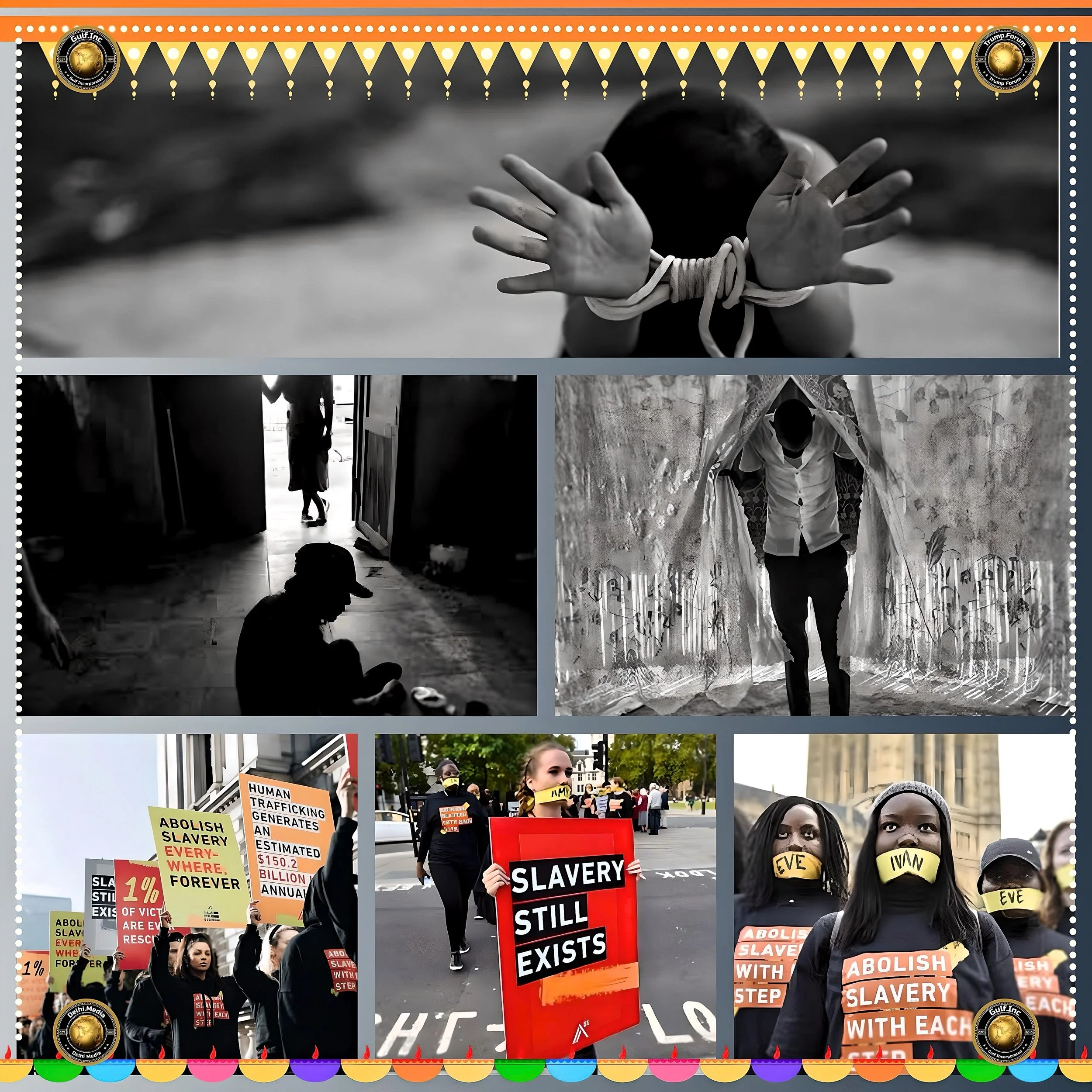
Current Developments in the Champagne Trial in France: Insights into Human Trafficking and the Exploitation of African Nationals
Introduction
The prestigious Champagne region of France, known worldwide for its luxury sparkling wine, has become the center of a landmark human trafficking trial that began on June 19, 2025.
This high-profile case has exposed the dark underbelly of agricultural labor practices in one of France’s most celebrated industries, highlighting systemic exploitation of vulnerable migrant workers, particularly those from African nations.
The trial represents a significant moment in France’s legal approach to labor trafficking and raises critical questions about the intersection of agriculture, labor rights, and international migration policies.
As the proceedings unfold in the Châlons-en-Champagne criminal court, they reveal individual wrongdoing and broader structural issues that enable exploitation within European agricultural systems.
The Champagne Trial: Key Defendants and Charges
Defendants and Legal Proceedings
The trial centers on three primary defendants who face serious charges related to exploiting seasonal workers during the 2023 grape harvest in eastern France.
At the center of the case is the director of Anavim, a viticultural service company that provided both labor and accommodation to the workers.
She faces multiple charges
Human trafficking
Employing undocumented foreign nationals without authorization
Subjecting vulnerable or dependent persons to undignified housing conditions
Two additional male defendants are being tried on suspicion of employing these seasonal workers illegally.
Beyond the individual defendants, both Anavim (the company that provided housing) and a viticultural cooperative in the Marne region are being tried as moral parties by the court.
The Champagne Committee, representing over 16,000 winemakers, 140 cooperatives, and 370 champagne houses, has joined the trial as a civil party—marking the first time the organization has taken such action in a case involving the living conditions of seasonal workers.
Nature of the Alleged Offenses
The charges stem from the discovery of approximately 50 migrant workers living in deplorable conditions in the village of Nesle-le-Repons during the 2023 grape harvest season.
These workers, primarily from Mali, Mauritania, Ivory Coast, and Senegal, were subjected to what investigators described as conditions that harmed their “security, health and dignity”.
French legislation defines human trafficking as the act of “recruiting, transporting, transferring, accommodating, or receiving a person for exploitation” through coercive employment practices, abuse of authority, or taking advantage of vulnerable circumstances, often in exchange for payment or benefits.
The prosecution alleges that the defendants systematically exploited the workers’ vulnerability, particularly their undocumented status, to subject them to inhumane working and living conditions.
Evidence and Victim Testimonies
Living and Working Conditions
Following a neighbor’s alert to French authorities, investigators documented shocking conditions at the workers’ accommodations. Prosecutor Annick Browne detailed findings that included
Worn and dirty sanitation facilities
Outdoor kitchen and living areas unprotected from weather elements
Bedding strewn directly on the floor
Electrical safety violations
In September 2023, the Marne regional authorities ordered the closure of the accommodation provided by Anavim, officially citing “unsanitary” and “undignified” living conditions.
A labor inspectorate report described the housing as being in a state of “dilapidation,” with toilets and shared living spaces characterized as “disgusting” due to lack of cleaning.
Victim testimonies paint an even more disturbing picture.
One 44-year-old worker from Mali recounted: “They yelled at us and packed us into this dilapidated house, where mattresses were laid on the floor.
There was no access to clean water, and the sole food provided was a bowl of rice and spoiled sandwiches. I never imagined that those who produce champagne would accommodate us in conditions unfit for animals”.
Another worker, a 45-year-old, shared with local publication L’Union: “What we endured there was genuinely horrific.
We were left traumatized by the ordeal, and we have received no psychological assistance, as lacking documentation means lacking rights”.
Recruitment Methods and Exploitation Patterns
The investigation revealed that workers were recruited through a WhatsApp group message targeted at the West African Soninke community residing in Paris.
These messages promised “well-compensated employment” in the Champagne region, luring vulnerable individuals with false promises of decent wages and living conditions.
The group comprised 48 men and nine women, aged from 16 to 65, hailing from Mali, Mauritania, Ivory Coast, and Senegal. Many were undocumented migrants, which significantly increased their vulnerability to exploitation.
According to victims’ lawyer Maxime Cessieux, the workers were promised daily wages of 80 euros but were later never paid for their labor.
The exploitation pattern follows what experts identify as common elements in agricultural labor trafficking:
Targeting vulnerable populations, particularly undocumented migrants
Making false promises regarding wages and conditions
Isolating workers in remote locations
Using their precarious legal status to prevent them from seeking help
Withholding payment or significantly underpaying for work performed
Networks Facilitating Exploitation
Subcontracting Chains and Accountability Gaps
A critical factor enabling exploitation in the Champagne industry is the complex chain of subcontracting that obscures responsibility and accountability.
Wine-Searcher’s investigation linked the violations to “long chains of subcontracting between Champagne houses and recruitment agencies”.
This system of “Russian dolls” makes it difficult to hold specific champagne houses responsible for worker exploitation, as one company delegates to another in a chain that distances the end producer from the labor practices.
The French union CGT has accused Champagne houses of non-compliance with French law, including obligations concerning accommodation provision even in cases of subcontracting.
Sabine Duménil, general secretary of the Marne branch of the CGT union, stated: “A lack of control over the whole chain of sub-contraction allows modern slavery and human trafficking to exist”.
This case is not isolated. Historical cases of human trafficking in the Champagne industry include a June 2022 case where the recruitment agency Rajviti was sentenced to imprisonment and fined over USD 106,000 for trafficking Afghan grape pickers.
In another instance, Veuve Clicquot had sub-contracted recruitment to agency Vitichenille, which in turn sub-contracted Serviti, which then led to the sub-contraction of Rajviti to hire grape pickers—illustrating the complexity of these networks.
Scale of the Problem
The Champagne region requires approximately 120,000 seasonal workers over a two-to-three-week period annually to harvest grapes from 34,000 hectares for the production of its renowned sparkling wine.
This massive, temporary labor demand creates conditions ripe for exploitation.
The 2023 harvest season was particularly problematic, with multiple investigations launched into labor abuses across the region, including:
Violations against Bulgarian pickers in Côte des Blancs
Abuse of 73 grape pickers from Eastern Europe housed in plant nurseries owned by agricultural company L’Orge Fleur
Mistreatment of 160 Ukrainian grape pickers in Mourmelon-Le-Petit
Abuses against workers in Moussey, including lack of access to water or electricity
The situation was exacerbated by extreme heat conditions, resulting in the deaths of five grape pickers in September 2023.
These tragedies further highlighted the inadequate protections for seasonal workers in challenging working conditions.
Socio-Economic Factors Driving Vulnerability
Migration Patterns and Economic Pressures
The vulnerability of African migrants to labor exploitation in France is rooted in complex socio-economic factors.
Research shows that Sub-Saharan African immigrants in France experience particularly difficult living conditions, with 42% living below the national poverty line and facing high unemployment rates (16% for men, 20% for women).
These economic pressures make migrants more susceptible to accepting exploitative work arrangements.
For many migrants, the need to earn money is a major driver of vulnerability. Studies reveal that for three-quarters of Sub-Saharan African migrants, poverty was at least one of the reasons for leaving their country of origin.
This economic necessity creates dependency on employers and willingness to accept poor conditions.
As one male interviewee from Mali working in construction explained: “All the tasks they give us we have to do, because we are here to help the families and ourselves.
So if we don’t work, it’s not good at all. The families suffer in the home country… Even if he says, ‘Pick up the poo’, we do it. We don’t choose the work”.
Legal Status and Power Imbalances
Undocumented status significantly increases vulnerability to exploitation. Without legal authorization to work, migrants have limited employment options and little bargaining power.
They often fear deportation if they report abuses, creating a situation where employers can exploit with impunity.
As one migrant explained: “It is too risky to go outside, especially because I do not have my resident permit or any papers. Without my papers, I am excluded… I am afraid of going outside. I could get stopped and deported”.
This fear creates a powerful tool for control by exploitative employers.
Research indicates that it takes approximately 6-7 years for Sub-Saharan immigrants to obtain a minimal set of resources essential for integration in France, including legal status, housing, and employment.
During this extended period of insecurity, they remain highly vulnerable to exploitation.
Legal Framework and Enforcement Challenges
French Legal Mechanisms Against Trafficking
France has established a comprehensive legal framework to combat human trafficking. The offense is defined in Article 225-4-1 of the Criminal Code, which has been amended to align with international definitions, particularly the EU Directive 2011/36/EU on preventing and combating trafficking in human beings.
The French definition encompasses three key elements
An act
recruitment, transport, transfer, reception, or accommodation of victims
A means
coercion, violence, deception, or threat
A purpose
exploitation, whether for sexual purposes, work, or services
Recent legislative developments have strengthened this framework.
The law of June 3, 2016, reinforced the fight against organized crime by facilitating special investigation techniques for trafficking-related offenses.
Additionally, the law of March 27, 2017, on the duty of vigilance of parent companies and contractors created obligations for large companies to prevent human rights abuses in their supply chains, including those involving subcontractors.
Enforcement Gaps and Challenges
Despite this robust legal framework, significant enforcement challenges remain. The complex subcontracting chains in agricultural sectors like Champagne production make it difficult to establish legal responsibility.
As one investigation noted, the system of “Russian dolls” where one company delegates to another creates accountability gaps that enable exploitation.
Labor inspections, while critical, are often insufficient given the scale of the problem.
The Champagne trial demonstrates that even when abuses are discovered, the legal process can be lengthy and complex.
The trial was initially scheduled for earlier in 2025 but was postponed to June 19 at the request of the defense, illustrating the procedural challenges in prosecuting these cases.
Furthermore, the temporary nature of harvest work creates additional enforcement difficulties, as workers may have moved on or been deported by the time cases reach trial.
This transience complicates evidence gathering and victim testimony collection.
Industry Response and Reform Efforts
Champagne Industry Initiatives
In response to the scandal, the Champagne industry has taken steps to address labor abuses. In 2024, the Comité Champagne launched a multi-stakeholder program to monitor harvest practices and support the welfare of seasonal workers.
This initiative, backed by the Prefect of the Marne department, involved more than 100 meetings with relevant authorities and stakeholders, including vineyard service providers, grower representatives, labor inspection agencies, police, and social services.
The outcome was a long-term framework known as “Together for the Champagne Harvest,” which aims to set clear expectations for both employers and service providers regarding recruitment, working conditions, health and safety, and accommodation.
The Comité Champagne has publicly condemned “any tragedies that take place, particularly during harvest,” with its co-presidents stating that “it is out of the question that any unacceptable behaviour puts any individual at risk, and tarnishes the reputation of the entire industry”.
Broader Agricultural Labor Reforms
The Champagne trial has highlighted the need for broader reforms in agricultural labor practices across Europe.
A 2024 report by Oxfam found that approximately 1 in 4 workers in Europe’s agriculture sector are migrants, with many facing exploitation, violence, long working hours, and routine underpayment.
The report underscored systemic violations of migrant workers’ rights under European Union labor and human rights law spanning nine EU countries.
The European Union has taken steps to address these issues through the Corporate Sustainability Due Diligence Directive, a new supply chains law designed as a tool to combat exploitation.
This directive aims to hold companies accountable for human rights abuses in their supply chains, including those involving subcontractors and service providers.
In France specifically, labor laws provide robust protections on paper, including minimum wage requirements (€11.88 per hour or €1,801.80 per month as of November 2024), mandatory health and life insurance contributions, retirement savings, and paid time off.
However, the Champagne trial demonstrates the gap between these legal protections and the reality faced by vulnerable migrant workers.
Implications and Future Outlook
Legal Precedent and Accountability
The Champagne trial represents a significant legal precedent in France’s approach to labor trafficking.
By prosecuting not only individuals but also companies as moral parties, the case could establish stronger accountability mechanisms throughout agricultural supply chains.
The unprecedented participation of the Champagne Committee as a civil party signals the industry’s recognition of its responsibility to address these issues.
The trial’s outcome could influence future prosecutions and potentially lead to more rigorous enforcement of existing laws.
As David Desgranges, vice-president of the Committee Against Modern Slavery (CCEM), emphasized, there is a need for greater public awareness regarding the severity of human trafficking within the agricultural sector, warning producers that they could face legal repercussions.
Structural Reforms and Prevention
Beyond individual prosecutions, the Champagne trial highlights the need for structural reforms to prevent exploitation. These include:
Greater transparency and accountability in subcontracting chains
More robust labor inspections and enforcement mechanisms
Improved protections for whistleblowers who report abuses
Better support systems for vulnerable migrants, including pathways to legal status
Industry-wide standards for worker accommodation and treatment
The case also underscores the importance of addressing the root causes of vulnerability, including the precarious legal status of many migrants and the socio-economic pressures that drive them to accept exploitative conditions.
As research indicates, few factors protect against the long period of insecurity faced by migrants in France, suggesting the need for more comprehensive integration policies.
Conclusion
The Champagne trial represents a critical moment in France’s confrontation with labor trafficking and exploitation in one of its most prestigious industries.
By exposing the gap between the luxury image of Champagne and the reality faced by those who harvest its grapes, the case has forced a reckoning within the industry and broader society.
The trial illuminates the complex interplay between agricultural labor demands, migration patterns, legal frameworks, and economic pressures that create conditions for exploitation.
It demonstrates that addressing human trafficking requires not only prosecuting individual perpetrators but also reforming the structural conditions that enable abuse.
As the legal proceedings continue, they offer an opportunity for meaningful reform in how seasonal agricultural work is organized and regulated in France and across Europe.
The outcome will have implications not only for the defendants and victims in this specific case but also for the broader fight against labor exploitation in global agricultural supply chains.
The Champagne trial thus serves as both a sobering reminder of the human cost behind luxury products and a potential catalyst for systemic change in how vulnerable workers are treated and protected.
It challenges consumers, producers, and policymakers alike to consider the actual price of the products they enjoy and the responsibility all stakeholders have in ensuring that this price does not include human suffering and exploitation.