The Gaza Humanitarian Foundation, GHF, Aid Facade, Controversy, and International Arms Embargo Debates: A Crisis of Humanitarian Principles
Introduction
FAF comments, “The Gaza Humanitarian Foundation (GHF) is at the forefront of a critical discussion surrounding aid, operational transparency, and the ongoing debates about international arms embargos. This situation highlights significant humanitarian principles that must be addressed with urgency and clarity.”
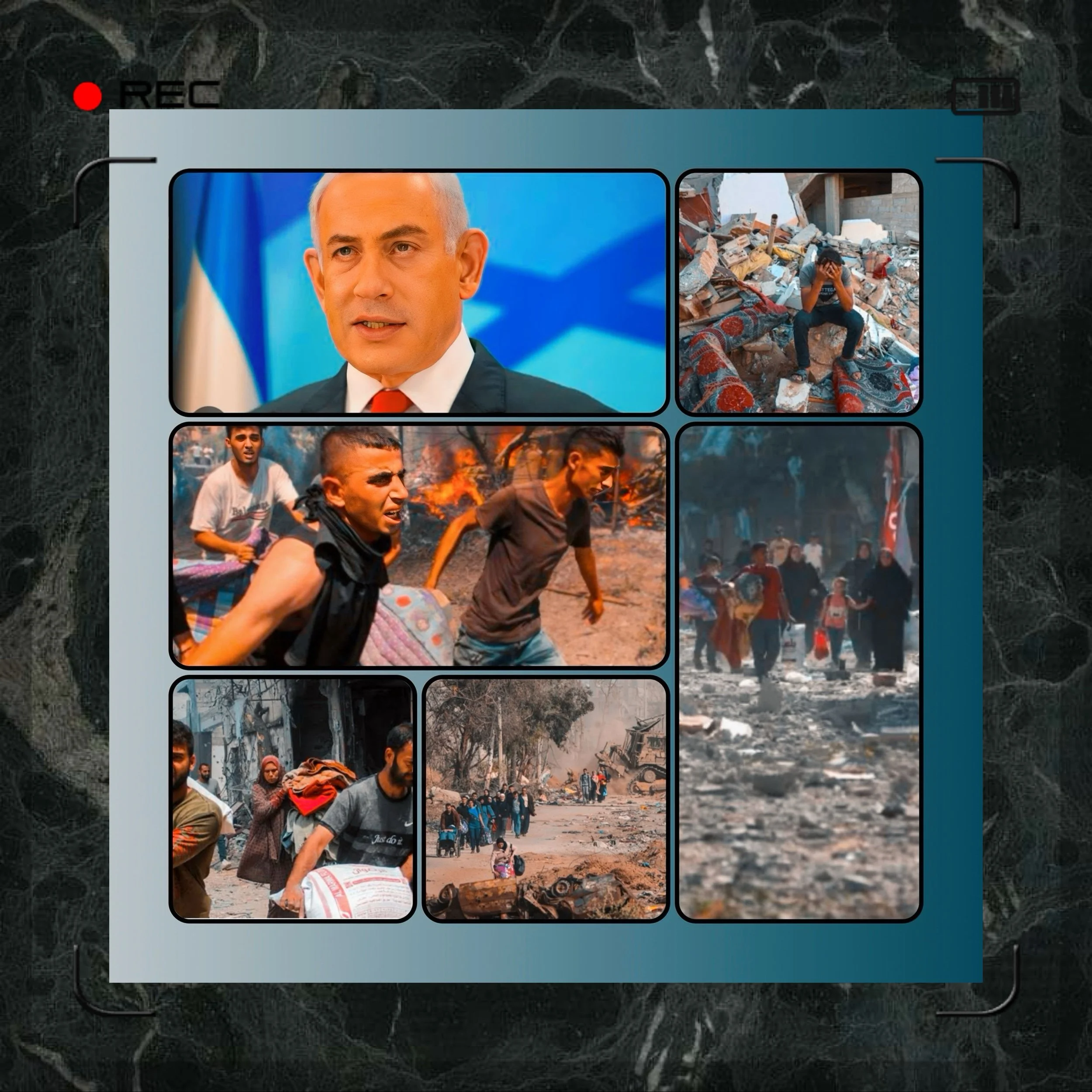
The Gaza Humanitarian Foundation (GHF) has emerged as one of the most controversial humanitarian initiatives in recent memory, sparking intense debate over the militarization of aid distribution and the fundamental principles governing humanitarian assistance.
Launched in May 2025 with backing from the United States and Israel, the GHF represents an unprecedented attempt to bypass traditional UN-led aid distribution mechanisms in Gaza through a model that employs armed private contractors and centralized distribution hubs.
The initiative has faced immediate operational failures, widespread international condemnation, and legal challenges while simultaneously occurring against the backdrop of intensifying global calls for arms embargoes against Israel.
FAF analyzes that the controversy surrounding the GHF reflects broader tensions over the weaponization of humanitarian aid and the international community’s response to ongoing violations of international humanitarian law in Gaza.
Background and Establishment of the Gaza Humanitarian Foundation
Origins and Political Framework
The Gaza Humanitarian Foundation was established in February 2025 as an American organization based in Delaware, with the explicit backing of both the Trump administration and the Israeli government.
The foundation emerged from discussions in December 2023, when Israeli officials collaborated with private American security contractors, particularly CIA veteran Philip Reilly, to develop an alternative aid distribution mechanism.
This initiative was designed to address Israeli claims that Hamas systematically diverts humanitarian aid despite the absence of substantive evidence to support these assertions, according to multiple reports.
The GHF represents a fundamental departure from established humanitarian practices by introducing armed private security personnel to oversee aid distribution.
The organization initially employed approximately 300 heavily armed American contractors who were reportedly given “as much ammunition as they can carry.”
This militarized approach to humanitarian assistance has been unprecedented in modern conflict zones and has raised significant concerns about the politicization of aid delivery.
Organizational Structure and Leadership
The foundation’s leadership structure combined humanitarian, security, and business expertise, initially led by Jake Wood, founder of Team Rubicon, as executive director.
The board included Nate Mook, former CEO of World Central Kitchen, and other directors with extensive finance and governance experience.
The advisory board was designed to include former World Food Programme chief David Beasley and other high-profile figures from humanitarian and security backgrounds.
However, the organization faced immediate leadership instability when Jake Wood resigned on May 25, 2025, just days before operations began.
Wood cited concerns that the foundation’s approach could not operate while “strictly adhering to humanitarian principles such as humanity, neutrality, impartiality, and independence.”
This resignation represented a significant blow to the organization’s credibility and raised fundamental questions about the viability of its operational model.
Implementation Challenges and Operational Failures
Distribution Model and Infrastructure
The GHF’s operational framework centered on four “Secure Distribution Sites” (SDS), each designed to serve 300,000 people, with an initial capacity to assist 1.2 million Palestinians.
These distribution centers were strategically located near Israeli military installations, with three sites positioned in the southern region of Gaza, where relatively few Palestinians reside.
The foundation’s model required Palestinians to travel potentially long distances through active conflict zones to reach these centralized locations, fundamentally altering the traditional approach of bringing aid to vulnerable populations.
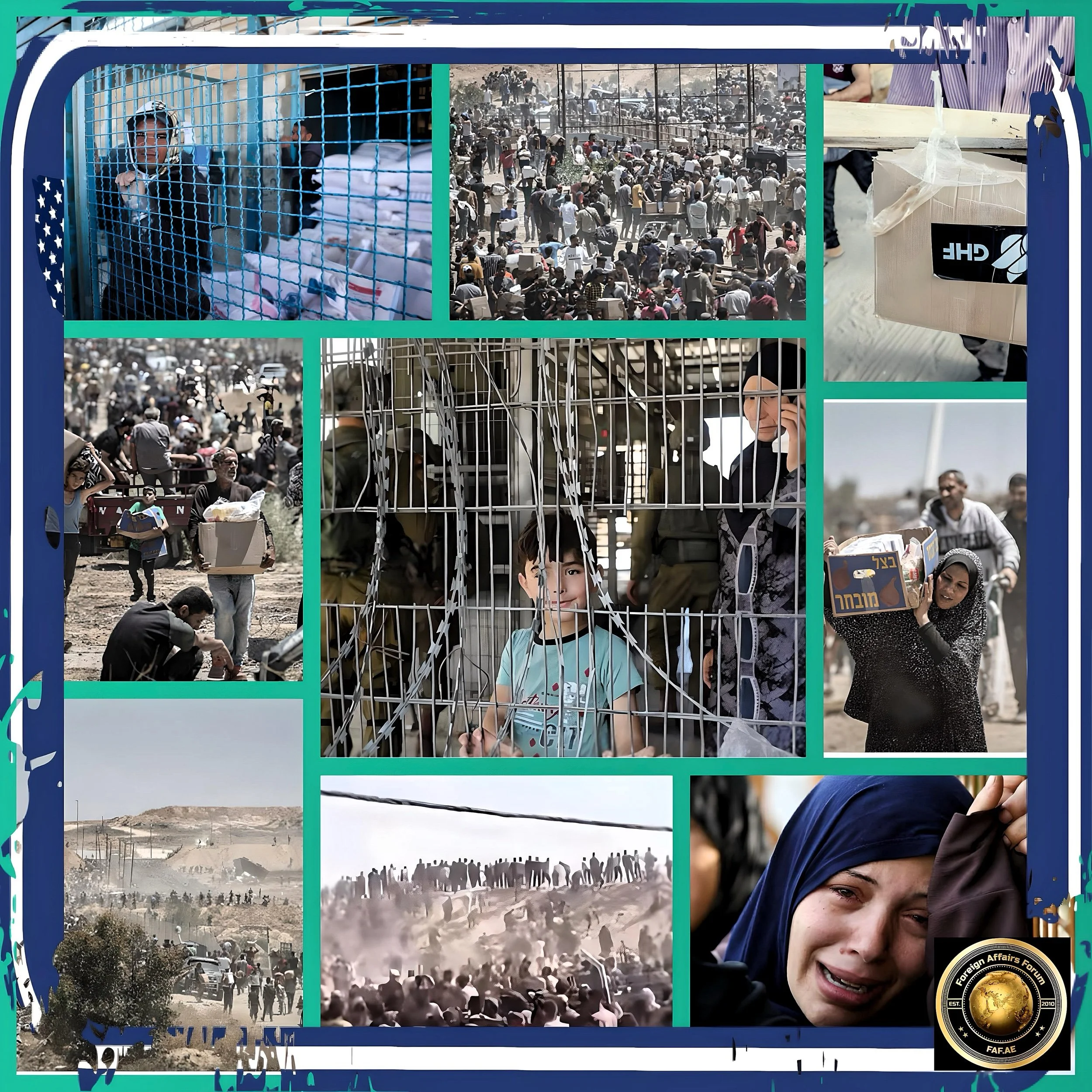
The distribution sites were secured by armed contractors and surrounded by Israeli military patrols, creating what critics described as fortress-like conditions.
Palestinians seeking aid were required to navigate through controlled access points, with plans initially including biometric screening to prevent Hamas from allegedly appropriating supplies.
This approach starkly contrasted the UN’s existing network of approximately 400 distribution points throughout Gaza.
Operational Chaos and Safety Concerns
The GHF’s inaugural distribution efforts on May 27, 2025, immediately descended into chaos, illustrating the fundamental flaws in the organization’s approach.
Thousands of Palestinians, driven by desperation after weeks of blockade, stormed the distribution centers in Rafah, overwhelming the security measures and forcing GHF personnel to withdraw temporarily.
Video footage verified by news organizations showed massive crowds trampling over dismantled barriers and earthmounds at the facility.
The situation deteriorated further when Israeli forces fired warning shots in response to the overwhelming crowds, creating panic and confusion among aid seekers.
At least three people were killed and dozens injured during these incidents, according to Hamas-controlled health authorities, though Israeli forces maintained they only fired warning shots to restore order.
During its first week of operations, the GHF distributed only approximately 8,000 food boxes, equivalent to 462,000 meals—a fraction of the aid needed for Gaza’s population of approximately 2.3 million.
Inadequate Aid Distribution and Access Barriers
The fundamental limitations of the GHF’s model became apparent through its restricted distribution capacity and geographic constraints.
Unlike the UN’s established network that operated throughout Gaza, the GHF’s four sites were concentrated in southern areas, leaving northern Gaza effectively without access to aid.
This geographic limitation was particularly problematic given that three of the four sites were located in Rafah, within areas where the Israeli military had issued evacuation warnings.
The centralized distribution model created additional barriers for vulnerable populations, including the elderly, disabled, and those unable to travel long distances through dangerous terrain.
Humanitarian organizations noted that this approach violated the principle of impartial needs-based assistance by effectively excluding those most in need of support.
The requirement for Palestinians to travel to fortified distribution points also exposed them to additional security risks, including potential Israeli airstrikes and military operations in transit areas.
International Opposition and Legal Challenges
United Nations and Humanitarian Community Response
The United Nations and virtually all major humanitarian organizations categorically rejected cooperation with the GHF, citing fundamental violations of established humanitarian principles.
UN spokesperson Stéphane Dujarric described the scenes at GHF distribution sites as “heartbreaking” and emphasized that the UN possessed a comprehensive, principled strategy endorsed by member states to deliver aid effectively if restrictions were lifted.
Jorge Moreira da Silva, UN Under-Secretary-General and UNOPS Executive Director, issued a particularly strong statement condemning the initiative, arguing that “we cannot make aid conditional on political and military aims” and warning against turning “starvation into a bargaining chip”.
The UN maintained that its existing UN 2720 Mechanism, mandated by the Security Council, had proven effective during the first phase of the ceasefire and was capable of scaling up operations if permitted by Israeli authorities.
The Humanitarian Country Team for the Occupied Palestinian Territory issued a comprehensive statement on May 30, 2025, describing the humanitarian situation in Gaza as “at its darkest point yet”.
The statement emphasized that the primary barrier to humanitarian access was not logistics or corruption, but rather “the deliberate restriction of aid by the Israeli government”.
The team argued that the military siege constituted collective punishment and that aid restriction was being used as a weapon of war.
Legal Complications in Switzerland
The GHF faced significant legal challenges in Switzerland, where it had initially established a branch foundation.
Swiss authorities determined that the organization was “not fulfilling various legal obligations” required for foundations registered in the country.
The Federal Supervisory Authority for Foundations (ESA) identified multiple compliance failures, including the absence of required Swiss-resident board members, inadequate board composition, lack of a Swiss bank account, and missing auditor arrangements.
These legal complications prompted the GHF to announce the closure of its Swiss operations after only three months, with the organization stating that future operations would be based solely in the United States.
The legal challenges were compounded by submissions from TRIAL International, a Swiss NGO that filed formal complaints with Swiss authorities requesting investigations into whether the GHF’s activities complied with Swiss law and international humanitarian law.
TRIAL International’s submissions specifically focused on the foundation’s use of private military services and the militarized security of distribution points, arguing that Switzerland had particular obligations as a depositary state of the Geneva Conventions to ensure respect for international humanitarian law by entities based on its territory.
The organization emphasized that the “dire humanitarian situation in Gaza requires an immediate response” but argued that “the planned use of private security companies leads to a risky militarization of aid”.
Humanitarian Organizations’ Coordinated Opposition
A coalition of leading aid and human rights organizations issued a joint statement unequivocally rejecting the GHF as “a dangerous, politicised sham”.
The statement, endorsed by numerous humanitarian groups, characterized the initiative as “not a genuine humanitarian effort” but rather “a smokescreen” and “a cynical sideshow” for Israeli policies.
The organizations argued that the GHF was “wholly dependent on Israeli coordination” and operated through Israeli-controlled entry points, thereby entrenching the very structures responsible for Gaza’s humanitarian crisis.
The humanitarian community’s opposition was grounded in concerns that the GHF’s model would facilitate ethnic cleansing by limiting aid to restricted collection points and effectively excluding vulnerable populations.
Organizations noted that the plan outlined delivery to only 1.2 million people during its first phase, potentially leaving hundreds of thousands without access to essential supplies.
The statement emphasized that aid distribution needed to occur “in multiple forms, and at multiple sites across all Gaza governorates” to prevent mass starvation and restore order.
International Arms Embargo Debates and Geopolitical Responses
Growing International Calls for Arms Embargoes
The controversy surrounding the GHF has unfolded against the backdrop of intensifying international calls for arms embargoes against Israel.
In November 2024, Turkey led an initiative that resulted in 52 countries and two international organizations signing a joint letter to the UN Security Council calling for a halt to arms transfers to Israel.
The signatories included major regional powers such as China, Russia, Brazil, and Saudi Arabia, as well as the Arab League and the Organization of Islamic Cooperation.
The joint letter expressed “grave concern about the unprecedented and escalating levels of violence and violations of international law” in Gaza and called for “immediate steps to be taken to halt the provision or transfer of arms, munitions and related equipment to Israel”.
The initiative represented the most comprehensive international effort to date to restrict military assistance to Israel, though it lacked binding enforcement mechanisms due to the structure of the UN Security Council.
Turkish Foreign Minister Hakan Fidan emphasized that “selling weapons to Israel amounts to complicity in genocide” and labeled the Netanyahu government as a “global threat”.
The Turkish initiative built upon earlier calls by President Recep Tayyip Erdogan for the UN to impose a comprehensive arms embargo on Israel.
European Responses and Internal Divisions
European responses to arms embargo calls have revealed significant divisions within the European Union and among traditional Israeli allies.
Spain has emerged as one of the most vocal advocates for restricting arms sales, with Foreign Minister Jose Manuel Albares calling for the immediate suspension of the EU-Israel cooperation deal and an arms embargo during a meeting of the “Madrid Group” in May 2025.
However, Germany has maintained its position as Israel’s second-largest arms supplier, with officials arguing that supporting Israel’s security represents a fundamental German obligation rooted in historical responsibility for the Holocaust.
German Foreign Ministry spokesperson Johann Wadephul stated that “Germany is always obliged to assist Israel in guaranteeing its security” and confirmed continued willingness to supply weapons.
The divide within Europe reflects broader tensions between humanitarian concerns and strategic alliances.
While countries such as France, Spain, and the UK have either paused some weapons shipments or suspended export licenses, the scale of these restrictions remains limited compared to overall arms flows.
Several nations, including Italy, Japan, Canada, Colombia, the Netherlands, and Belgium, have implemented various forms of weapons sales restrictions since October 2023.
United States Position and Strategic Considerations
The United States has maintained its position as Israel’s primary arms supplier throughout the Gaza conflict, providing approximately 68% of Israel’s weapons imports.
Despite growing international pressure and domestic criticism, the U.S. has continued to approve significant military aid packages, including an additional $14 billion approved by Congress in 2024.
Israeli Foreign Minister Gideon Saar has characterized arms embargo calls as existential threats, stating that successful embargo efforts would result in “the destruction of Israel and a second Holocaust”.
Speaking at an antisemitism conference in Jerusalem, Saar argued that arms embargoes would “deprive the Jewish people of the means to defend themselves”.
These statements reflect Israeli officials’ perception that international arms restrictions represent an existential challenge rather than legitimate humanitarian concerns.
The U.S. State Department has defended the GHF initiative against UN criticism, with officials characterizing UN objections as “the height of hypocrisy” and arguing that focus should remain on aid delivery rather than methodology.
This position illustrates the broader American approach of supporting Israeli-designed solutions to humanitarian challenges in Gaza while resisting international oversight mechanisms.
Conclusion
The Gaza Humanitarian Foundation controversy represents a critical inflection point in international humanitarian law and practice, revealing fundamental tensions between humanitarian principles and geopolitical interests.
The organization’s operational failures, leadership exodus, and widespread international condemnation illustrate the dangers of militarizing humanitarian assistance and subordinating aid delivery to political and military objectives.
The GHF’s model of centralized, heavily secured distribution points has proven both inadequate to meet Gaza’s massive humanitarian needs and incompatible with established principles of humanitarian action.
The simultaneous intensification of international calls for arms embargoes against Israel demonstrates growing global concern about the conduct of military operations in Gaza, yet the persistence of arms flows from major suppliers reveals the limitations of international law enforcement mechanisms.
The divide between countries advocating for restrictions and those maintaining military cooperation with Israel reflects deeper questions about the balance between strategic alliances and human rights obligations.
The GHF’s brief and troubled existence serves as a cautionary tale about the consequences of abandoning established humanitarian frameworks in favor of politically motivated alternatives.
The organization’s inability to operate effectively while maintaining humanitarian principles, as acknowledged by its own executive director, underscores the fundamental incompatibility between militarized aid distribution and genuine humanitarian assistance.
As the international community continues to grapple with the Gaza crisis, the GHF controversy highlights the urgent need for a renewed commitment to humanitarian principles and accountability mechanisms that prioritize civilian protection over political considerations.
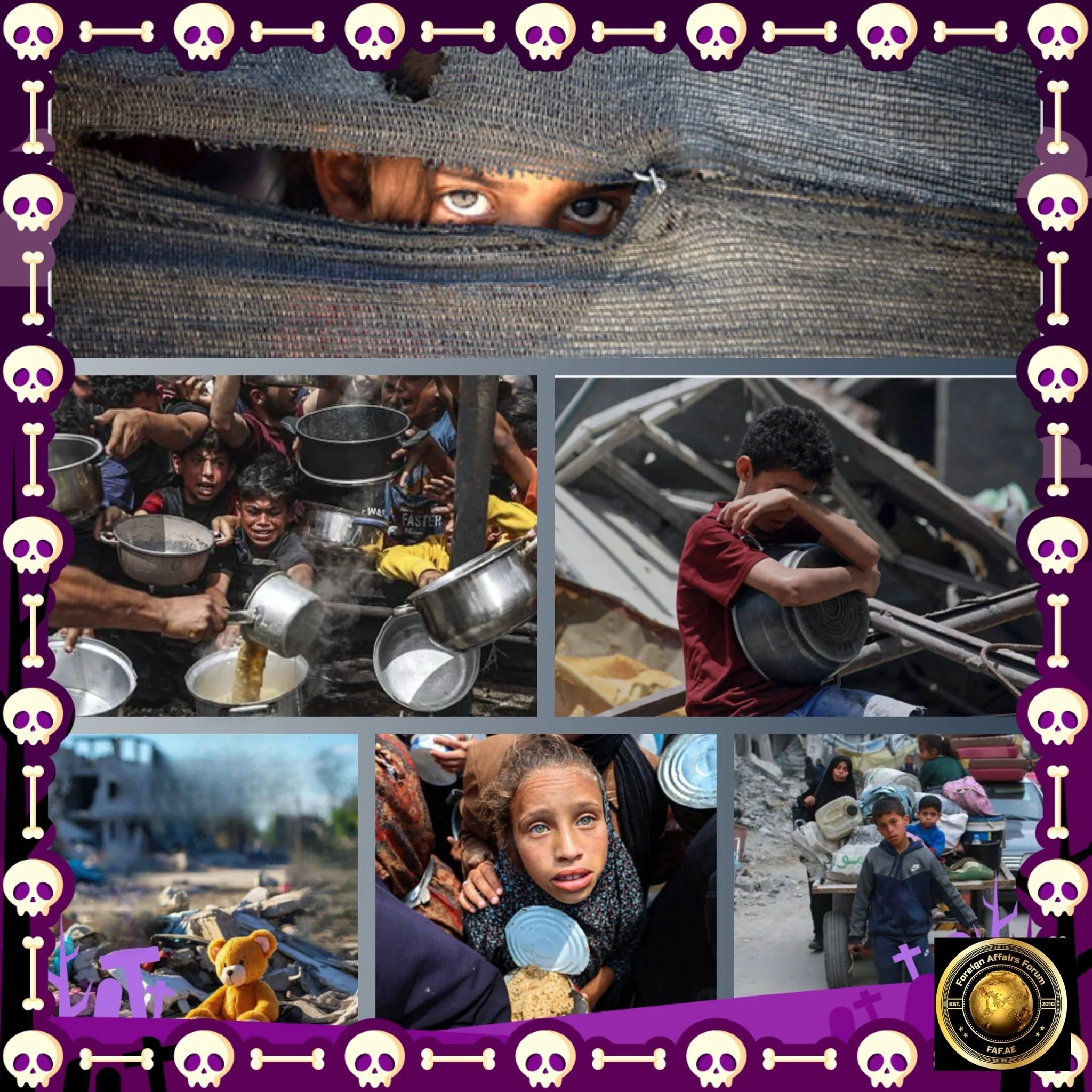
FAF, Gulf.Inc observes lets not make it look like a ‘holocaust’ per live pictures shared.