Israel’s Operation Gideon’s Chariots: Escalating Military Campaign Amid Humanitarian Crisis and Political Divisions
Introduction
The Israeli Defense Forces launched Operation Gideon’s Chariots in Gaza on May 16, 2025, marking a significant escalation in military operations aimed at dismantling Hamas and securing the release of remaining hostages.
This renewed offensive has intensified an already catastrophic humanitarian situation, with the entire population of 2.1 million Palestinians facing critical food insecurity and potential famine.
The operation has exposed deep divisions within Israeli society and government, while international pressure mounts as aid remains severely restricted despite recent limited concessions.
The campaign represents what UN officials describe as potentially “the cruelest phase” of the ongoing conflict, raising urgent questions about the balance between military objectives and humanitarian obligations.
Operation Gideon’s Chariots: Military Strategy and Objectives
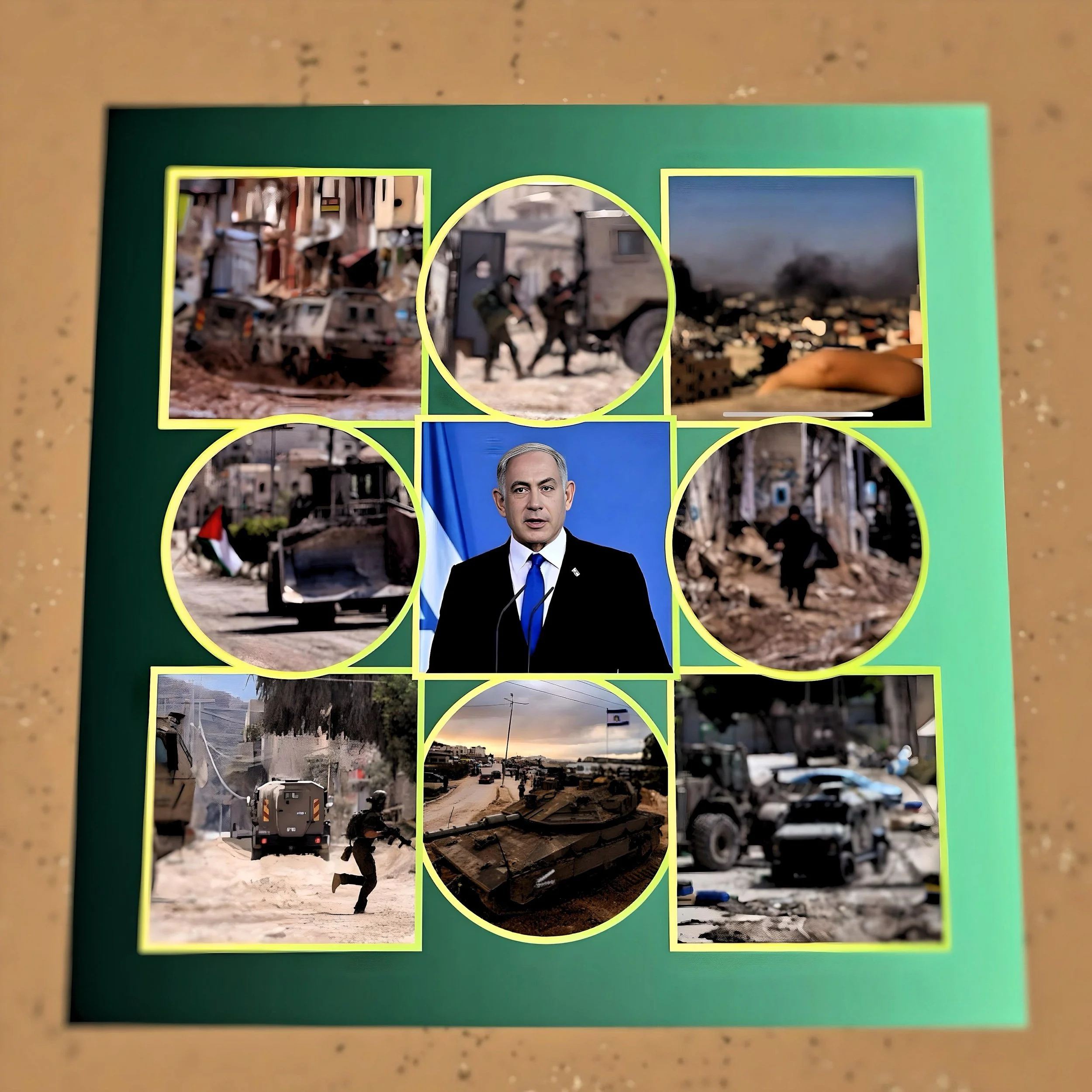
The Israel Defense Forces officially launched Operation Gideon’s Chariots on May 16, 2025, following approval by Israel’s security cabinet on May 4.
The operation represents a comprehensive military campaign designed to achieve what Israeli officials describe as “total victory” over Hamas through combined land, air, and sea operations.
The IDF struck over 150 terror targets in cooperation with the Shin Bet, conducting approximately 60 airstrikes since Friday morning, with reports of explosions occurring every four minutes.
The operation’s primary objectives are multifaceted and ambitious in scope.
According to Israeli officials, the campaign aims to destroy Hamas’s military and administrative infrastructure, rescue the remaining 57 Israeli hostages held in Gaza (of whom up to 23 are believed to be alive), and establish Israeli security control over the entire Gaza Strip.
The operation involves significant territorial seizure, with Israeli forces advancing toward areas including the Al-Salateen neighborhood in western Beit Lahia and surrounding the Jabalia refugee camp.
The military strategy incorporates forced civilian displacement as a central component.
The IDF has been evacuating thousands of Gazan civilians from northern areas through warning leaflets stating: “Urgent warning!
To everyone in this area, whether in a shelter, a tent, or a building, you are in a dangerous combat zone, and the location is unsafe! Evacuate immediately southward”.
This displacement strategy aligns with broader Israeli objectives of moving the Palestinian civilian population toward southern Gaza while maintaining control over northern territories.
The scale of the operation has expanded significantly, with Israel reportedly deploying five divisions in Gaza—Divisions 98, 252, 143, 36, and 162—alongside elite Nahal and Golani brigades.
The military has called up tens of thousands of reservists, with sources indicating that the expansion will occur in stages, potentially extending the conflict throughout the year.
Defense Minister Yoav Gallant described the campaign as being conducted with “great force,” emphasizing the intensive nature of the renewed offensive.
Humanitarian Crisis and Aid Restrictions
The humanitarian situation in Gaza has reached unprecedented levels of severity, with the entire population of 2.1 million Palestinians facing what
UN officials describe the critical risk of famine as. The Integrated Food Security Phase Classification (IPC) assessment released in May 2025 found that 244,000 people are experiencing the most severe “catastrophic” levels of food insecurity, with nearly half a million people facing starvation.
The assessment represents “a major deterioration in one of the world’s most severe food and nutrition crises,” with 93 percent of Gaza’s inhabitants experiencing acute food insecurity.
Israel imposed a complete blockade on humanitarian aid beginning March 2, 2025, halting all aid and commercial shipments to Gaza for over 70 days.
This blockade was implemented as part of Israel’s strategy to pressure Hamas into releasing hostages, but it has had devastating consequences for the civilian population.
During the blockade period, 57 children reportedly died from malnutrition effects, with this number likely representing an underestimate.
The IPC analysis projects that nearly 71,000 children under five are expected to be acutely malnourished over the next eleven months.
The limited aid resumption in late May 2025 has proven grossly inadequate to address the crisis.
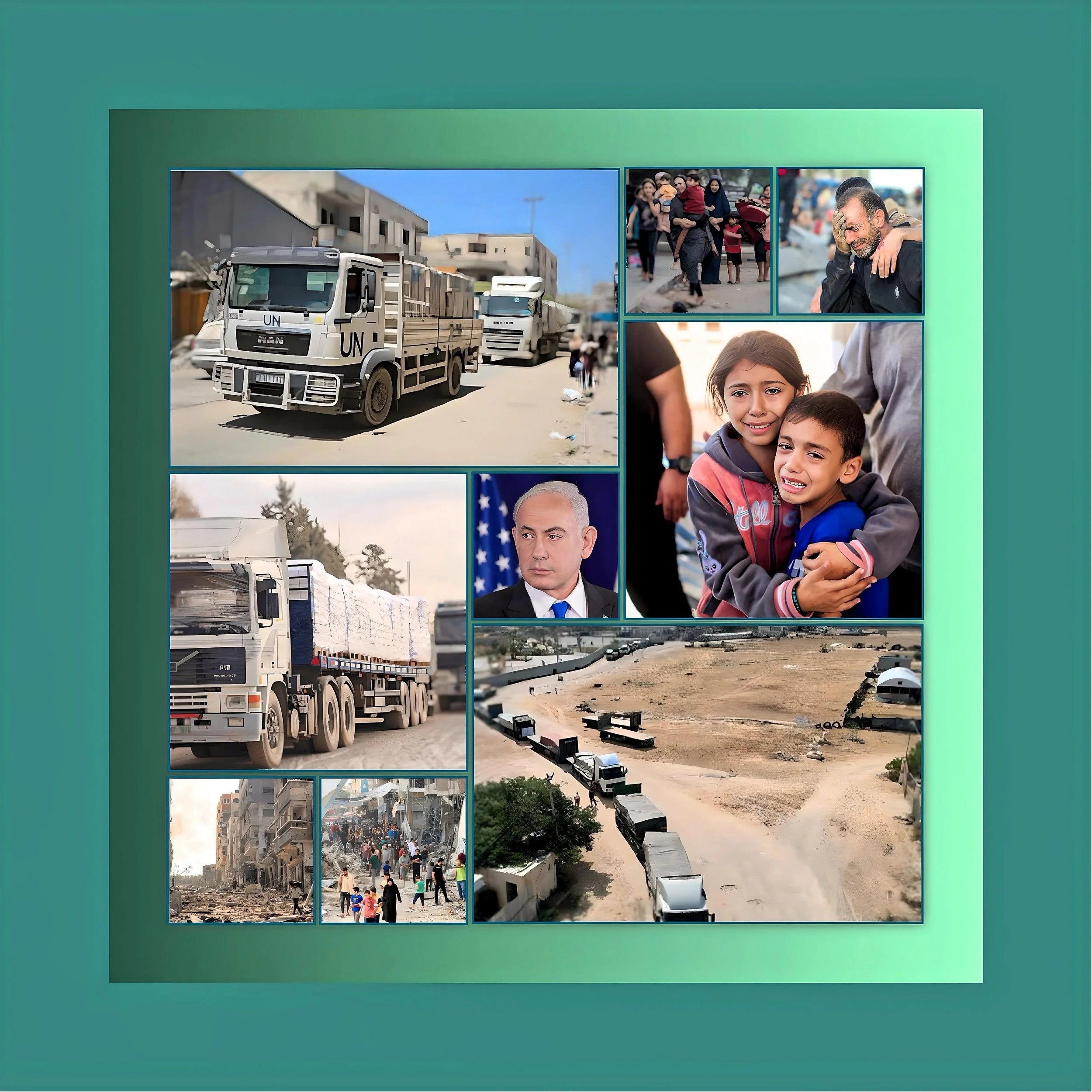
While Israel permitted approximately 100 trucks to enter Gaza through the Kerem Shalom crossing, UN Secretary-General António Guterres characterized this as “a teaspoon compared to the flood of support that is urgently needed.”
The UN estimates that around 600 trucks daily are required to address Gaza’s humanitarian needs, making the current aid levels insufficient.
Distribution challenges have further complicated relief efforts.
The UN reported that despite trucks reaching the Palestinian side of Kerem Shalom, no aid had been distributed to those in need due to security restrictions and logistical obstacles.
Establishing the Gaza Humanitarian Foundation (GHF), supported by Israel and the United States, has generated controversy within humanitarian circles.
The organization’s executive director, Jake Wood, resigned, citing concerns about the foundation’s independence and ability to maintain “principles of neutrality, impartiality and independence.”
Major humanitarian organizations, including the UN, have declined to collaborate with GHF, expressing concerns that its operational requirements could endanger civilians and disrupt existing relief efforts.
Israeli Political Divisions and Far-Right Influence
The ongoing conflict has exposed significant political divisions within Israeli society, particularly between far-right ministers and military leadership regarding the Gaza strategy.
Far-right cabinet members, including Finance Minister Bezalel Smotrich and National Security Minister Itamar Ben-Gvir, have advocated for permanent Israeli control over Gaza and the complete re-occupation of the territory.
These positions reflect broader far-right ideological commitments to territorial expansion and demographic engineering in Palestinian territories.
The far-right faction has made increasingly controversial statements during the conflict. Agriculture Minister Avi Dichter described the war as “Gaza’s Nakba,” referencing the 1948 Palestinian displacement.
Heritage Minister Amihai Eliyahu suggested that dropping a nuclear bomb on Gaza was “one of the possibilities.”
At the same time, Minister for the Advancement of Women May Golan stated she was “personally proud of the ruins of Gaza.”
These statements illustrate the extremist ideological framework influencing government policy.
In contrast, growing opposition has emerged from both military and political figures.
Former IDF deputy chief Yair Golan, now president of the Israeli Democrats party, sparked controversy by stating that “Israel is on the path to becoming a pariah state” and criticizing the military for “fighting against civilians” and “killing babies as a hobby.”
Former Defense Minister Moshe Ya’alon escalated this criticism, describing the government’s strategy as aimed at “maintaining power” and leading Israel “toward ruin.”
The internal divisions extend to public opinion and military personnel. A Channel 12 survey revealed that 61% of Israelis desire an end to the conflict and hostage return, with only 25% supporting military expansion and Gaza occupation.
Thousands of Israeli reservists have signed letters urging Netanyahu’s government to halt hostilities and focus on negotiating hostage releases.
The growing dissent reflects what analysts describe as “despair, trauma, and a feeling of helplessness” among many Israelis.
Netanyahu’s Strategic Planning and Conditions
Prime Minister Benjamin Netanyahu has articulated a comprehensive set of conditions for ending the conflict that extends beyond traditional military objectives, including implementing controversial relocation plans.
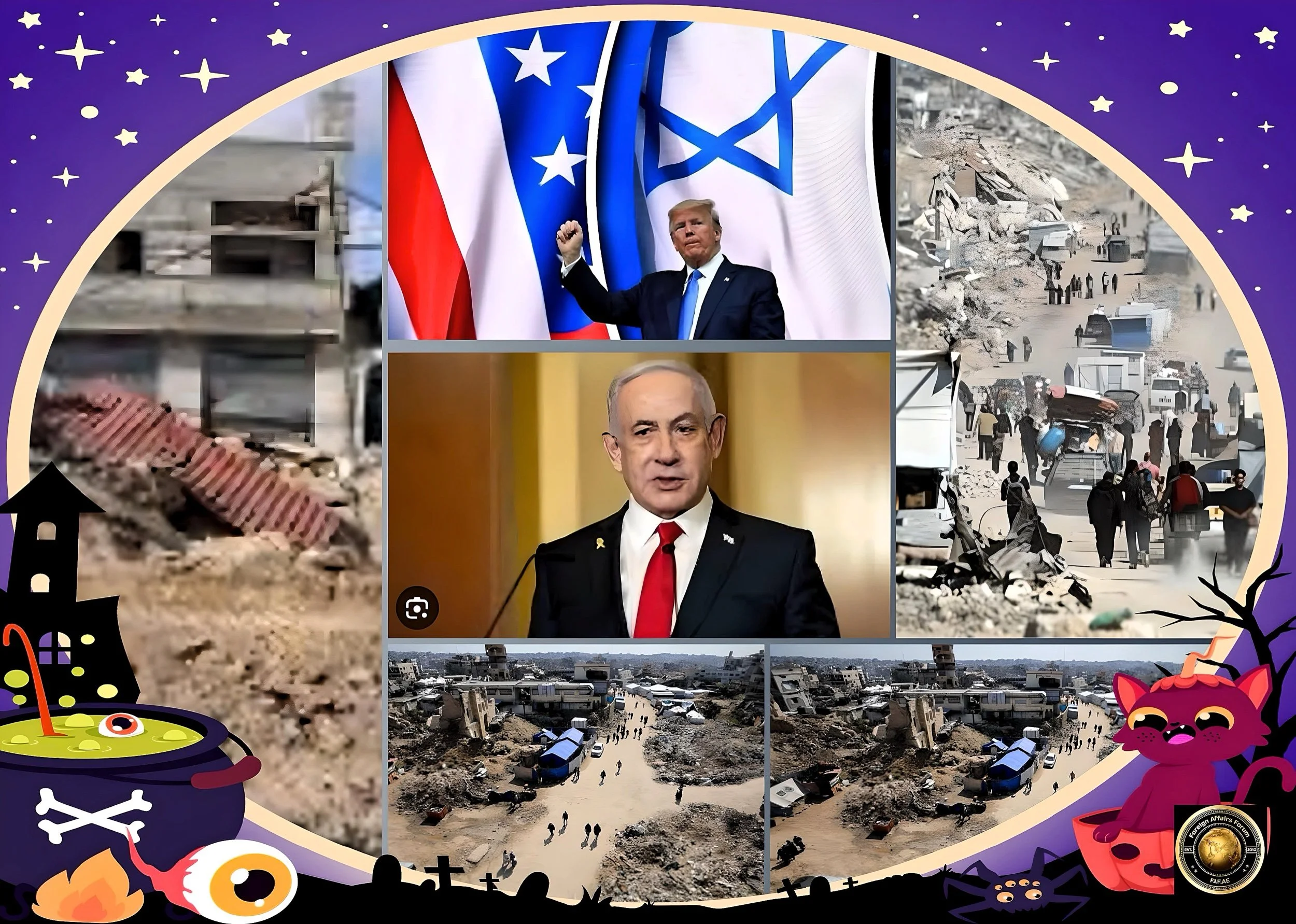
In his first press conference in five months, Netanyahu named the implementation of US President Trump’s “revolutionary” Gaza relocation plan as a new condition for ending the war.
He described Trump’s plan as “brilliant” and “revolutionary,” suggesting it could “change the face of the Middle East”.
Netanyahu’s strategic framework encompasses multiple interconnected objectives that significantly expand the scope of potential conflict resolution.
His stated conditions include the complete defeat of Hamas, return of all hostages, total disarmament of Gaza, Hamas leadership exile from the Strip, and implementation of Trump’s relocation plan.
The inclusion of the relocation plan represents a significant escalation in political demands, linking military victory to broader demographic and territorial reorganization.
The Prime Minister has emphasized that Operation Gideon’s Chariots is designed to “complete the war, the work” in Gaza, with forces “landing powerful blows that will get stronger against Hamas strongholds.”
He promises that by the operation’s conclusion, “all the territory of Gaza will be under Israeli security control, and Hamas will be defeated.”
This vision of total territorial control aligns with far-right coalition partner demands while potentially conflicting with international law and diplomatic expectations.
Netanyahu faces the complex challenge of balancing competing pressures from various constituencies.
His decision-making reflects what former US Ambassador to Israel Dan Shapiro describes as Netanyahu’s tendency to “buy time and not to decide,” attempting to satisfy far-right ministers advocating permanent Gaza control while addressing military leadership concerns about occupation sustainability.
The Prime Minister’s strategy appears designed to maintain his coalition while pursuing maximalist military and political objectives.
International Response and Mounting Pressure
The international community has responded with increasing concern and concrete diplomatic actions as the humanitarian crisis in Gaza deepens.
The United Kingdom announced significant policy changes, including pausing trade discussions with Israel and summoning the Israeli ambassador, with Foreign Secretary David Lammy denouncing the military escalation as “morally unjustifiable.”
Prime Minister Keir Starmer characterized the situation as “intolerable,” reflecting growing British frustration with Israeli actions.
European Union foreign policy chief Kaja Kallas indicated that the EU is reassessing its association agreement with Israel, which governs political and economic relations.
This review, supported by “a strong majority” of member states, represents a significant diplomatic escalation targeting the 25-year-old foundational agreement.
A potential modification or suspension of this agreement could have substantial economic and political implications for Israeli-European relations.
A coordinated international response emerged through joint statements from multiple Western allies.
The UK, France, and Canada issued a strongly worded joint declaration condemning Israel’s military actions and warning of “further concrete actions” if the humanitarian crisis does not improve.
This multilateral approach demonstrates the growing international consensus that current conditions in Gaza are unacceptable.
The United Nations has maintained consistent criticism of Israeli actions, with Secretary-General Guterres describing the situation as potentially “the most brutal phase of this harsh conflict.”
UN officials have repeatedly emphasized that “80 percent of Gaza has been designated as either an Israeli militarized zone or is under evacuation orders,” highlighting the extent of territorial control and civilian displacement.
The UN’s characterization of aid levels as “a teaspoon compared to the flood of support that is urgently needed” underscores the inadequacy of current humanitarian responses.
Current Conditions and Devastation in Gaza
The physical and human devastation in Gaza has reached catastrophic proportions, with the territory transformed into what humanitarian workers describe as an apocalyptic landscape of destruction and suffering.
Outside makeshift tent hospitals scattered across Gaza, rows of body bags lie on the ground as grief-stricken people move from tent to tent, searching desperately for missing family members.
The expansion of Operation Gideon’s Chariots has triggered mass displacement, crippled medical infrastructure, and pushed the civilian population deeper into a humanitarian catastrophe.
The casualty toll reflects the unprecedented scale of destruction. As of May 27, 2025, over 55,000 people have been reported killed in the Gaza war, with 53,528 Palestinians and 1,706 Israelis among the fatalities.
Scholars estimate that 80% of Palestinians killed are civilians, with a study published in The Lancet suggesting that the Gaza Health Ministry has undercounted trauma-related deaths by 41%.
The demographic breakdown reveals the conflict’s devastating impact on vulnerable populations, with 70% of Palestinians killed in residential buildings being women and children.
Medical infrastructure has collapsed under the weight of sustained bombardment and blockade conditions.
Dr. Khaled Alshawwa, a 31-year-old surgeon in Gaza City, described conditions as “unimaginably worse by the hour,” operating in makeshift tent hospitals with minimal supplies and no basic safety.
The healthcare system’s destruction has made it impossible to maintain accurate casualty counts, with the Gaza Health Ministry requesting civilians to register their dead online due to system collapse.
The scale of physical destruction encompasses entire neighborhoods and critical infrastructure.
Recent strikes have targeted civilian areas, including a tent encampment in Khan Younis that killed at least 24 people, including women and children.
Several tents caught fire after the attack, exacerbating suffering among civilians who had already lost their homes in earlier strikes.
The systematic targeting of civilian infrastructure has left Gaza with limited functioning hospitals, schools, and essential services.
Food insecurity has reached crisis levels, with households resorting to extreme measures, including begging and collecting garbage to sell for food.
The IPC assessment found that many families have exhausted all coping mechanisms, with children particularly vulnerable to malnutrition and disease.
The combination of bombardment, displacement, and aid restrictions has created what WHO Director-General Tedros Adhanom Ghebreyesus describes as a situation where “people are already starving, sick and dying, while food and medicines are minutes away across the border.”
Conclusion
Operation Gideon’s Chariots represents a critical escalation in the Gaza conflict that has pushed the territory toward complete humanitarian collapse while exposing fundamental divisions within Israeli society and the international community.
The operation’s scope, combining intensive military action with forced civilian displacement and aid restrictions, has created what UN officials describe as potentially the conflict’s “cruelest phase.”
The gap between stated military objectives and humanitarian consequences has generated unprecedented international pressure on Israel, including sanctions, trade suspensions, and diplomatic isolation from key allies.
The political dynamics within Israel reveal a society grappling with its military campaign's moral and strategic implications.
While far-right ministers advocate for permanent territorial control and demographic engineering, growing voices within the military, political opposition, and civil society express concern about Israel’s international standing and long-term security interests.
Netanyahu’s incorporation of Trump’s relocation plan as a war-ending condition significantly complicates any potential diplomatic resolution while satisfying extremist coalition partners.
The international community faces a critical juncture in determining whether diplomatic pressure, economic sanctions, and political isolation can effectively modify Israeli behavior before Gaza’s humanitarian crisis becomes irreversible.
With nearly the entire population facing starvation and displacement, the window for preventing permanent demographic and territorial changes continues to narrow.
The conflict’s trajectory suggests that without immediate international intervention to ensure adequate humanitarian access and protection for civilians, Gaza may face irreversible transformation that could reshape the broader Middle East political landscape for generations to come.