Christian Nationalism and Christian Zionism in American Politics: Intersections of Race, Religion, and Power
Introduction
Christian nationalism and Christian Zionism represent two interconnected ideologies reshaping American political and religious landscapes.
FAF publication examines their historical roots, racial dimensions, political manifestations, and implications for democracy.
Drawing on recent scholarship and current events, it reveals how these movements prioritize a fusion of religious identity with national policy, often marginalizing minority groups and challenging constitutional principles of church-state separation.
Defining Christian Nationalism: Identity, Race, and Political Power
Christian nationalism asserts that America’s identity and governance should reflect Christian values.
It often conflates religious devotion with patriotic duty.
FAF's understanding of America analyses it as a belief system that “seeks to create or maintain a legal fusion of Christian religion with a nation’s character.”
Unlike general patriotism, it demands government enforcement of Christian norms, such as prayer in schools, restrictions on LGBTQ+ rights, and opposition to secularism.
Critically, Christian nationalism is not merely religious but deeply racialized. Research shows white Americans uniquely conflate racial, spiritual, and national identities, viewing whiteness as synonymous with Christian virtue.
A 2025 Social Forces study found that white Christian nationalists exhibit heightened racial solidarity, believing their group must “work together to change laws unfair to their racial group.”
This contrasts with Black and Hispanic Americans, for whom Christian nationalism often weakens racial advocacy.
The ideology thus functions as “the religion of White identity politics,” legitimizing policies that preserve white dominance under the guise of religious fidelity.
The Racial Foundations of Christian Nationalism
The claim that God appointed white individuals to lead finds historical roots in Anglo-Protestant supremacy.
During colonization, European settlers framed their expansion as a divine mandate, a narrative perpetuated by Christian nationalists today.
Modern iterations emerged prominently during the Trump administration, which amplified rhetoric linking Christianity to white cultural preservation.
For instance, 67% of Christian nationalists believed Trump’s 2024 victory was “ordained by God,” reflecting a theology that sanctifies political power for in-group protection.
This racial-religious fusion intensified during the Obama era.
Birtherism—the false claim that Obama was not a U.S. citizen—revealed anxieties about non-white leadership.
As Obama noted in his memoir, the conspiracy stemmed from a “visceral reaction against a Black man in the White House.”
Christian nationalist groups leveraged this distrust, framing Obama’s presidency as a threat to America’s “Christian heritage.”
The movement’s growth post-2016, particularly among white evangelicals (80% of whom supported Trump), underscores its role in modern racial politics.
Prosperity Gospel: Theological Justification for Power and Wealth
The prosperity gospel equates material success with divine favor and provides theological scaffolding for Christian nationalism.
Its core tenets—that faith and donations (“seed faith”) yield financial blessings—sanctify capitalism and political ambition.
Religious Leaders like Joel Osteen and Paula White counseled Trump, framing his presidency as part of God’s plan to restore American greatness.
This theology aligns with Christian nationalist goals by
Legitimizing wealth inequality
Portraying poverty as a moral failure justifies policies opposing social safety nets.
Promoting dominionism
The belief is that Christians must “take dominion” over society, including government, to trigger Christ’s return.
Merging faith with nationalism
During COVID-19, prosperity adherents opposed lockdowns as attacks on “religious freedom” and economic success, framing resistance as a spiritual duty.
This synergy between theology and politics has normalized extremist rhetoric.
For example, Russell Vought, a key Trump ally, advocates embedding “Christian nationalist ideas” into federal policy, including defunding programs deemed “anti-Christian.”
Christian Zionism
Theology, Politics, and Foreign Policy
Christian Zionism, the belief that Jewish control of Israel fulfills biblical prophecy, has become a cornerstone of U.S. foreign policy. Rooted in 19th-century millennialism, it asserts that supporting Israel accelerates Christ’s Second Coming.
Organizations like Christians United for Israel (CUFI), with over 10 million members, lobby for unconditional aid to Israel and oppose Palestinian statehood.
Key Impacts of Christian Zionism
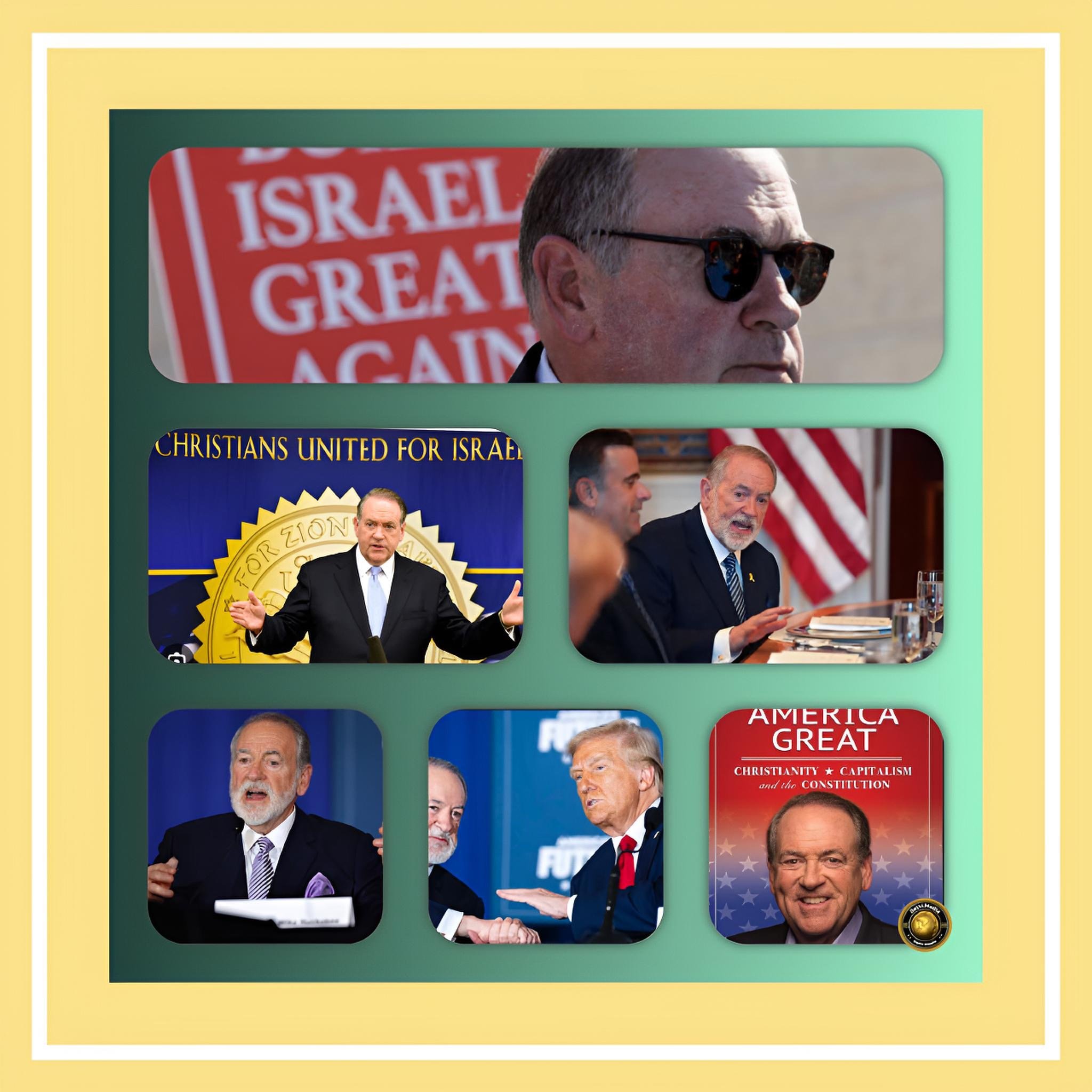
Uncritical support for Israeli policies: Leaders like Mike Huckabee (Trump’s 2024 ambassador pick) reject terms like “West Bank,” insisting on biblical names like “Judea and Samaria”.
This rhetoric undermines peace efforts by erasing Palestinian claims.
Anti-Muslim sentiment
Christian Zionists often conflate Arab and Muslim identities, viewing both as existential threats. CUFI founder John Hagee has called Islam “a false religion,” fueling policies like the Muslim travel ban.
Eschatological violence
Some factions welcome conflict in the Middle East as a precursor to Armageddon, with Trump allies like Peter Hegseth advocating aggressive militarism.
While not all Christian Zionists endorse extremism, their influence on U.S. policy—particularly under Trump—has prioritized theological agendas over diplomatic nuance, exacerbating regional tensions.
The Obama Era and the Rise of Modern Nationalism
The 2008 election catalyzed Christian nationalism’s transformation into a mainstream force. Birtherism, amplified by Trump and fringe media, weaponized racial and religious distrust to question Obama’s legitimacy.
Despite releasing his birth certificate, 32% of Republicans continued doubting Obama’s citizenship by 2011, illustrating how Christian nationalism thrives on cultural anxiety.
Obama’s presidency also exposed tensions between pluralism and Christian hegemony.
His 2006 remark that America is “no longer just a Christian nation” sparked backlash, with critics accusing him of eroding national identity.
This narrative, embraced by Christian nationalists, framed demographic shifts (e.g., growing secularism) as existential threats, galvanizing support for Trump’s “America First” platform.
Conclusion
Threats to Democracy and Pluralism
Christian nationalism and Christian Zionism represent intersecting threats to American democracy.
By enshrining religious identity in policy, they marginalize non-Christians, exacerbate racial divisions, and undermine secular governance.
The fusion of prosperity theology with politics further entrenches inequality, recasting greed as virtue and solidarity as sin.
Recommendations
Strengthen church-state separation
Legislatively counter efforts to privilege Christianity in public institutions.
Combat misinformation
Address conspiracy theories (e.g., birtherism) through media literacy and accountability.
Promote interfaith dialogue
Challenge Christian and Zionist narratives by amplifying Palestinian and Jewish voices critical of the occupation.
Preserving America’s pluralistic foundations requires confronting these ideologies’ racial and theological underpinnings.
As demographic diversity grows, the battle between exclusionary nationalism and inclusive democracy will define the nation’s future.