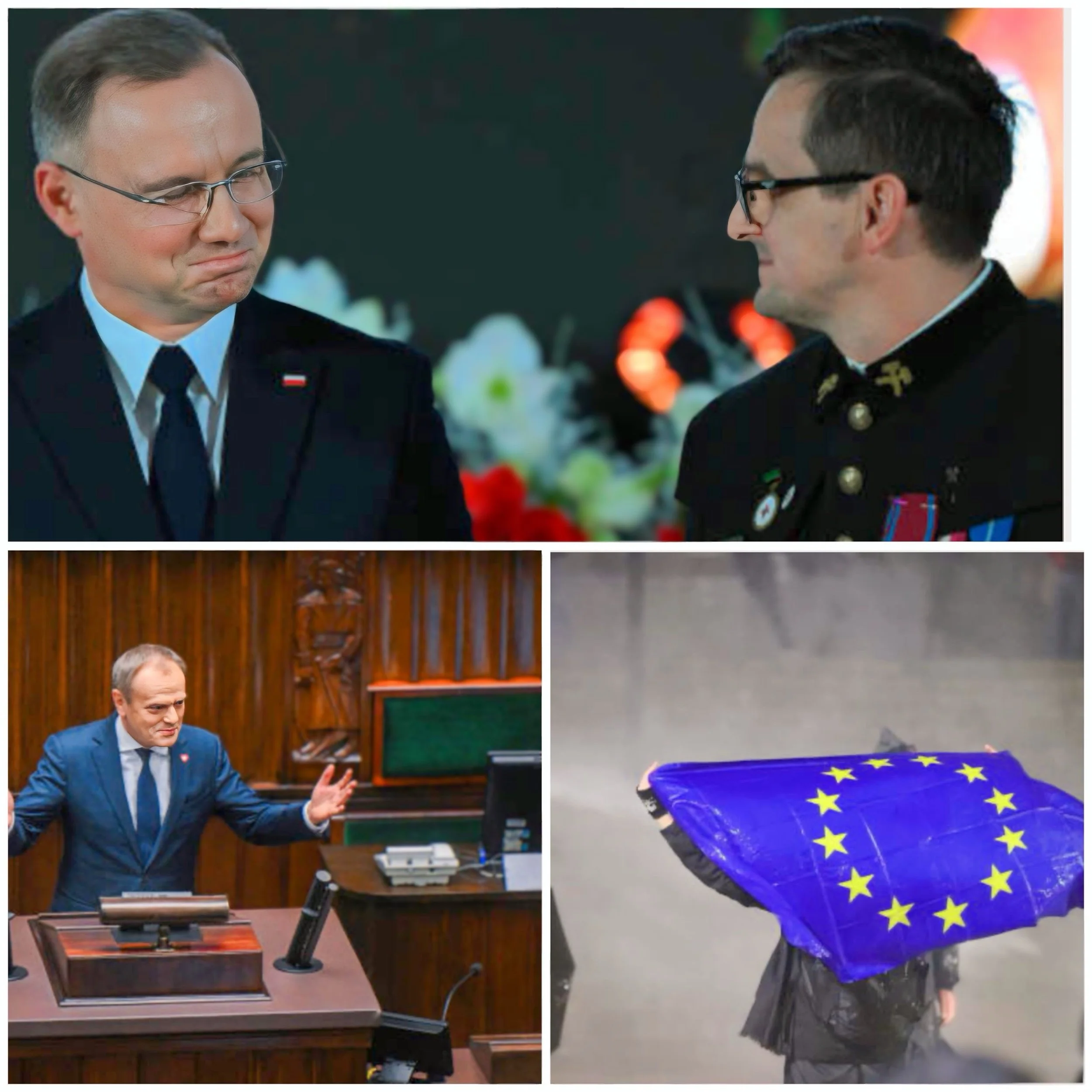
Polish Presidential Elections 2025: A Critical Runoff Between Liberal and Conservative Candidates
Introduction
Poland concluded a pivotal presidential election on Sunday, June 1, 2025, in a closely contested runoff between liberal Warsaw Mayor Rafał Trzaskowski and conservative historian Karol Nawrocki.
This election carries significant implications for Poland’s relationship with the European Union and the continuation of rule-of-law reforms initiated by the current government.
The race emerged from a first round held on May 18, 2025, where Trzaskowski secured 31.36% of the vote compared to Nawrocki’s 29.54%, setting up an extremely tight contest that opinion polls predicted would be decided by narrow margins.
FAF, Europe.Fo analysis of the outcome will determine whether Poland continues its pro-European trajectory or potentially returns to the confrontational stance that characterized the previous relationship between the law and justice government and Brussels.
The Presidential Candidates and Electoral Context
Rafał Trzaskowski: The Liberal Incumbent Government’s Choice
Rafał Trzaskowski, the 52-year-old Mayor of Warsaw, represents the Civic Platform party and has emerged as the standard-bearer for Poland’s current pro-European government coalition.
As the runner-up in the 2020 presidential election, Trzaskowski brings significant political experience and has positioned himself as a champion of liberal democratic values.
The governing coalition led by Prime Minister Donald Tusk, which came to power in December 2023 after defeating the Law and Justice party in parliamentary elections, supports his candidacy.
Trzaskowski’s platform emphasizes collaboration with the current government to achieve key reforms, particularly regarding abortion access and judicial independence.
Following his narrow first-round victory, he promised to work with the Tusk administration to restore legal access to abortion for Polish women up to the 12th week of pregnancy and to continue efforts to restore the rule of law in the judiciary.
His candidacy represents continuity with the current government’s efforts to repair Poland’s relationship with European institutions and implement democratic reforms stalled under the previous administration.
Karol Nawrocki: The Conservative Alternative
Karol Nawrocki, a historian and museum director, represents the conservative opposition despite running as an officially “independent” candidate. In practice, he is closely associated with and backed by the Law and Justice Party (PiS), which governed Poland from 2015 to 2023.
Nawrocki has positioned himself as a fierce critic of Donald Tusk’s coalition government. He has indicated his intention to use presidential veto powers extensively, potentially more frequently than the current conservative president, Andrzej Duda.
The conservative candidate’s platform appeals to voters who supported the previous government’s nationalist and traditionalist policies.
In the first round, Nawrocki benefited from support across the right-wing spectrum. However, the fragmented nature of conservative votes among multiple candidates created challenges for coalition-building in the runoff.
His candidacy represents a potential return to the confrontational approach toward European Union institutions that characterized the PiS government’s tenure.
EU Involvement and Rule of Law Concerns
Historical Context of EU-Poland Tensions
The European Union’s deep involvement in Polish politics stems from a prolonged constitutional crisis that began when the Law and Justice Party came to power in 2015.
The PiS government implemented sweeping judicial reforms that European institutions deemed incompatible with democratic principles and the rule of law.
These reforms included changes to the Constitutional Tribunal, the establishment of a disciplinary chamber for judges, and modifications to the National Council of the Judiciary that effectively placed judicial appointments under political control.
The European Commission responded to these developments by launching Article 7 proceedings against Poland in December 2017, marking the first time this mechanism had been used against a member state.
This procedure, designed to address serious breaches of EU values, could theoretically suspend a member state’s voting rights.
The conflict escalated over several years, with the European Court of Justice imposing daily fines of up to €1 million on Poland for refusing to comply with interim orders to suspend its judicial reforms.
Financial Consequences and Recovery
The rule-of-law dispute had significant financial implications for Poland, preventing it from accessing billions of euros in EU funds.
The European Commission activated an “offset mechanism” to deduct accumulated penalties from Poland’s share of the EU budget, ultimately withholding €320.2 million in funds.
Additionally, Poland’s access to post-pandemic Recovery and Resilience Facility funds worth €59.8 billion was blocked due to concerns about judicial independence.
The situation changed dramatically after Donald Tusk's coalition was elected to power in the 2023 parliamentary elections.
The new government immediately signaled its commitment to restoring the rule of law and rebuilding relationships with European institutions.
In February 2024, Justice Minister Adam Bodnar presented a comprehensive action plan to address EU concerns. This plan led to the unblocking of EU funds and the eventual closure of Article 7 proceedings in May 2024.
Electoral Dynamics and Political Significance
First Round Results and Coalition Mathematics
The first round of voting on May 18, 2025, revealed a highly fragmented political landscape that will influence the runoff dynamics.
Beyond the two leading candidates, the election featured significant support for other political alternatives: Sławomir Mentzen of the Confederation party, representing the far right, received 14.81% of votes, while Grzegorz Braun captured 6.34%.
Government coalition candidates Szymon Hołownia and Magdalena Biejat received 4.99% and 4.23%, respectively, while left-wing candidate Adrian Zandberg secured 4.86%.
The close margin between Trzaskowski and Nawrocki—only 1.82 percentage points—suggests that the runoff outcome will depend heavily on how supporters of eliminated candidates vote.
Political analysts note that Trzaskowski would need to attract voters from both left and right-wing alternatives to secure victory, as the combined support for government coalition candidates amounts to only about 40.6% of the total vote.
This mathematical reality has made coalition-building and voter mobilization critical in the final campaign phase.
Presidential Powers and Governance Implications
The significance of this election extends beyond symbolic representation, as the Polish presidency wields substantial hostile powers that could significantly impact the current government’s reform agenda.
The president can veto legislation, and the ruling coalition lacks the parliamentary supermajority needed to override such vetoes.
This institutional arrangement means that a Nawrocki presidency could effectively block key government initiatives, particularly those related to social issues, judicial reform, and European integration.
President Andrzej Duda, who is term-limited and will leave office in August 2025, has used his veto power extensively to frustrate the Tusk government’s policy objectives. Since assuming office 18 months ago, Tusk has struggled to fulfill many campaign commitments due to presidential obstruction and internal coalition divisions.
The election outcome will, therefore, determine whether the government can advance its legislative agenda or will continue to face institutional gridlock.
Recent Developments and Reform Progress
Judicial System Restoration Efforts
The current government has made significant progress in addressing the rule-of-law crisis that defined Poland’s relationship with the EU during the PiS era.
The most visible success has been the restoration of Poland’s standing within European institutions and unblocking billions of euros in EU funding.
In February 2024, Poland joined the European Public Prosecutor’s Office, demonstrating its renewed commitment to European legal cooperation.
However, the reform process faces complex challenges, particularly regarding the status of “neo-judges” appointed through contested procedures under the previous government.
The current administration has chosen a deliberative approach, engaging in extensive consultations with stakeholders, including judges and civil society organizations, rather than pursuing rapid changes.
This methodical approach has drawn praise for its democratic character and criticism for its slow pace from supporters eager to see swift reversals of PiS-era policies.
Media and Civil Society Restoration
Beyond judicial reforms, the Tusk government has worked to restore independence to public media and civil society organizations that were brought under political control during the PiS era.
The previous government had replaced public service broadcasters with party loyalists and curtailed support for ideologically hostile NGOs while promoting organizations favorable to PiS.
The current administration’s efforts to reverse these changes have met with mixed reactions, with some observers raising concerns about the methods used to dismiss media professionals.
The government has also emphasized its commitment to implementing judgments from the European Court of Human Rights and the Court of Justice of the European Union regarding rule-of-law issues.
These international court decisions serve as guidelines for planned justice system reforms, representing a significant shift from the previous government’s approach to challenging EU law and the European Convention on Human Rights.
Conclusion
The 2025 Polish presidential election represents a defining moment for Poland’s democratic trajectory and its relationship with European institutions.
The choice between Rafał Trzaskowski and Karol Nawrocki essentially presents voters with two distinct visions for the country’s future: continued integration with European democratic norms under Trzaskowski or a potential return to the confrontational nationalism that characterized the Law and Justice era under Nawrocki.
The extremely close first-round results underscore the deep political divisions within Polish society and suggest that the outcome will have profound implications for the government’s ability to continue its reform agenda.
The European Union’s intense interest in this election reflects the broader challenges facing European democracy and the rule of law.
Poland’s experience during the PiS years demonstrated how quickly democratic institutions can be undermined, while the subsequent restoration efforts under the Tusk government have shown both the possibilities and limitations of democratic recovery.
The presidential election outcome will determine whether Poland continues toward complete restoration of democratic norms or faces renewed institutional conflict that could once again strain its relationship with European partners and potentially impact the broader European project.