The Trump Dynasty: Analyzing the Resurgence of American Nationalist Politics Through the Lens of Ivanka, Eric, Donald Jr., Lara, and Kai Trump – Historical Contexts and Modern Ramifications.
Introduction
The Trump surname has established itself as a formidable force in American politics, with mounting evidence suggesting its enduring presence for decades.
This phenomenon represents more than mere political ambition; it embodies a deeper resurgence of nationalist sentiment that has historical precedents in American political movements, from Jacksonian democracy to the wartime presidencies of the 20th century.
FAF, Washington.Forum analyzes the current political moment, which reflects a convergence of economic discontent, cultural anxieties, and institutional distrust, creating fertile ground for the continuation of Trump-style populist nationalism.
Understanding this trajectory requires examining the family’s political positioning, the historical patterns of American political realignments, and the underlying voter sentiment that has propelled the “Make America Great Again” movement beyond a single electoral cycle.
The Trump Political Dynasty
Structure and Succession
The concept of a Trump political dynasty has moved from speculation to serious consideration among political observers and the Trump family itself.
Donald Trump recently acknowledged this possibility when asked about the future of the MAGA movement, stating, “I think there could be, yeah,” regarding a Trump dynasty and emphasizing, “My kids are very competent.”
This significantly evolved from family business involvement to deliberate political succession planning.
The Trump family’s political structure has already demonstrated its organizational capacity and public appeal.
Ivanka Trump
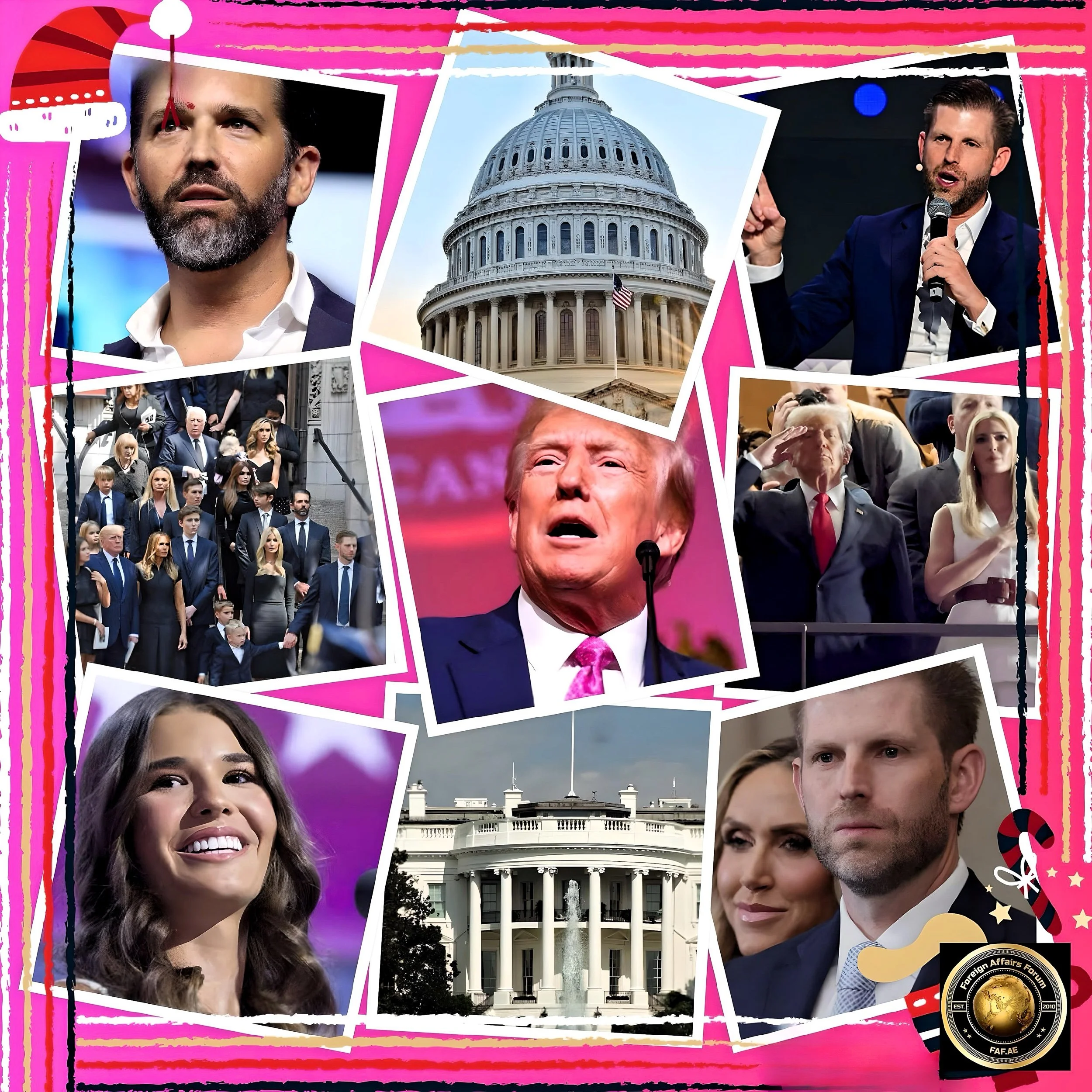
During Trump’s first presidency, daughter Ivanka Trump and son-in-law Jared Kushner served as senior White House advisers, while sons Eric and Donald Jr. managed the Trump Organization.
However, the second term presents a different configuration, with family members pursuing distinct political paths rather than concentrating on traditional White House roles.
This diversification strategy suggests a more sophisticated approach to building lasting political influence across multiple institutions and levels of government.
Lara Trump
Lara Trump has emerged as the most politically active family member, serving as co-chair of the Republican National Committee during the 2024 campaign.
Her role in helping Republicans secure control of the House, Senate, and presidency has elevated her status within the party, with conservative legislators and media figures advocating for her appointment to replace Senator Marco Rubio.
This positioning demonstrates how the Trump family strategically places members in key institutional roles that could serve as launching pads for future campaigns.
Donald Trump Jr
Donald Trump Jr. represents another significant political asset for the family dynasty.
As Executive Vice President of the Trump Organization and a prominent spokesperson for conservative causes, he has built a devoted following among the MAGA base.
His combative public persona and controversial social media presence align closely with his father’s political style, positioning him as a natural heir to the Trump political brand.
Campaign manager Brad Parscale described the Trump family as “a dynasty that will last for decades,” specifically citing Donald Jr.’s “amazing capabilities.”
The family’s German ancestral roots are traced back to Johannes Trump in the late 18th century, and the surname’s evolution from “Drumpf” to “Trump” during the Thirty Years’ War provides an interesting historical foundation for their American political emergence.
The name itself, derived from either a German word for “drum” or an English occupational term for “trumpeter,” carries connotations of announcement and proclamation that seem fitting for a family that has mastered political communication.
Kylie (Kai) Trump -Gen Z
Identity and Background
Kai Madison Trump, frequently misidentified as “Kylie,” is Donald Trump's eldest granddaughter and the daughter of Donald Trump Jr. and Vanessa Haydon. Born on May 12, 2007, she will turn 18 in May 2025. As the eldest of five siblings, she attends The Benjamin School in Palm Beach Gardens, Florida.
Social Media Presence and Gen Z Influence
Kai has established herself as a significant Gen Z influencer, amassing a considerable following across various digital platforms with 7 million followers.
Her content intentionally blends lifestyle elements, family insights, golf, fashion, and behind-the-scenes access to the Trump family and political events.
This approach has enabled her to create a more relatable narrative that contrasts with the more reserved personas of family members such as Melania Trump.
Political and Public Activities
Kai debuted nationally in the political arena by addressing the 2024 Republican National Convention, where her speech humanized her grandfather and shared personal stories that highlighted their relationship.
The speech garnered extensive media coverage and was commended for portraying a more personable side of Donald Trump, leading to a significant increase in her social media following.
She has taken on the White House's “in-house vlogger” role, chronicling pivotal events like campaign activities, election night, and inauguration day from a Gen Z perspective.
Her vlogs often feature exclusive content, including flights on Trump Force One, attendance at SpaceX launches alongside Elon Musk, and unique insights into Mar-a-Lago and the White House.
Golf and Personal Brand
A competitive golfer with a +0.5 handicap, Kai has won club championships at Trump International Palm Beach.
She has also committed to playing collegiate golf at the University of Miami since 2026.
Her athletic accomplishments have led to developing a personal brand valued at over $1.2 million, bolstered by substantial sponsorship deals with companies such as Callaway and TaylorMade. Kai is a part of Callaway Next, representing the upcoming generation of Callaway Tour Professionals.
Role in Trump Family Strategy and Future Prospects
Kai’s rising influence is part of a strategic initiative by the Trump family to engage younger voter demographics, particularly young women, through authentic and relatable social media interactions.
Her presence offers the GOP a refreshing perspective that contrasts with the traditional male-dominated narratives.
Although she has publicly stated no intention of pursuing a political career—asserting, “I just stay out of that and focus on golf”—her increasing visibility and influence within the media landscape suggest a potential for significant involvement in the Trump political dynasty’s future.
Her developmental trajectory mirrors that of Lara Trump and positions her for a gradual shift from influencer to potential political operative
Public Perception
Kai is generally perceived as relatable, authentic, and grounded. Both supporters and critics acknowledge her capability to present a modern and wholesome image of the Trump family.
While her content—from dance videos to candid vlogs—has elicited varying degrees of praise and minor controversy, she is typically defended as an everyday teenager navigating extraordinary circumstances.
As a prominent and influential figure in Gen Z, Kai Trump effectively leverages her unique position as Donald Trump’s granddaughter to construct a formidable social media brand and act as a conduit between the Trump family and younger audiences.
While she is not actively pursuing a formal political career, her public activities and persona suggest she is being strategically positioned as a key asset in the Trump family's ongoing political and media endeavors.
Historical Precedents in American Political Movements
The Trump phenomenon bears striking resemblances to historical American political movements, particularly the Jacksonian democracy of the 1830s-1850s.
Jacksonian democracy represented “a 19th-century political philosophy in the United States that restructured several federal institutions” and “became the nation’s dominant political worldview for a generation.”
Like contemporary Trumpism, Jacksonian democracy emerged from economic anxiety and popular discontent with established elites.
The parallels between Andrew Jackson’s movement and Trump’s political coalition are particularly instructive.
Jacksonian democracy was “characterized by a democratic spirit” built upon “Jackson’s equal political policy, after ending what he termed a monopoly of government by elites.”
This populist framework closely mirrors Trump’s campaign rhetoric against the Washington establishment and his appeals to working-class voters who feel abandoned by traditional political institutions.
James K. Polk, Jackson’s protégé who served as the 11th president from 1845-1849, demonstrated how a successor could successfully implement Jacksonian principles.
Polk was “so closely aligned with Jackson he was sometimes called ‘Young Hickory’” and successfully expanded American territory while maintaining Jackson’s democratic ideals.
This historical precedent suggests that political movements can successfully transition from their founding figures to aligned successors who carry forward core principles while adapting to contemporary circumstances.
Theodore Roosevelt's presidency (1901-1909) provides another relevant historical model for understanding nationalist political movements in American history.
Roosevelt’s “New Nationalism” emphasized strong national identity and insisted that citizens had to be “100% American, not a ‘hyphenated American’ who juggled multiple loyalties”.
This echoes contemporary debates about American identity and cultural values that have been central to Trump’s political appeals.
Franklin D. Roosevelt’s presidency offers insights into how political realignments can reshape American politics for generations.
FDR “implemented the New Deal, building the New Deal coalition, and realigning American politics into the Fifth Party System.”
His ability to create lasting institutional changes and political coalitions demonstrates how transformative presidencies can establish enduring political legacies far beyond individual office terms.
Contemporary Political Dynamics and Voter Sentiment
The 2024 election results reveal deep structural factors that favor continued Trump family political influence. Economic discontent played a decisive role, with “the share of people saying they’ve gotten worse off under the current administration (45%) is the highest in presidential exit polls that have asked the question—even surpassing the 42% ‘worse off’ in 2008, in the teeth of the Great Recession”.
This economic dissatisfaction created opportunities for Trump’s promises to “raise tariffs and bring manufacturing jobs back,” which “resonated with a wide range of voters, particularly across ethnic groups.”
Polling data indicates significant skepticism about the Biden presidency’s historical legacy: “54% of U.S. adults expect that Joe Biden will go down in history as a below-average or poor president.”
This negative assessment of the current administration creates political space for alternative approaches and suggests voter openness to dramatic policy changes.
The comparison to Richard Nixon’s historical rating, with Biden receiving a similar -42 net rating, indicates substantial public dissatisfaction that could benefit Trump-aligned candidates in future elections.
Immigration emerged as a more pressing issue in 2024 than in previous elections, with “even many Latino voters, the largest immigrant bloc, expressed concerns about illegal immigration.”
Trump’s success in winning “54% of the Latino male vote, a significant increase from 36% in 2020” demonstrates his ability to expand beyond traditional Republican constituencies.
This broader appeal suggests that Trump-style politics may have more durable electoral foundations than previously understood.
Cultural and demographic factors also contribute to the Trump movement’s staying power.
Trump’s appeal to white voters, particularly evangelical Christians, remained strong, and he won “the white vote by 11 points.”
The research finding that “the belief that being a Christian is an integral part of what it means to be a ‘true American’ is the most significant factor which separates the creedal nationalists and the disengaged from the restrictive and ardent nationalists” helps explain the religious dimension of Trump’s political coalition.
The Resurgence of American Nationalism
The Trump presidency has significantly shaped contemporary American nationalism and shows signs of becoming a lasting political force.
Research on varieties of American nationalism identifies four distinct categories: disengaged, creedal/civic nationalists, ardent nationalists, and restrictive nationalists.
The Trump movement appears to draw primarily from the “ardent nationalist” category, which comprised “about 24% of their study” and represented those who “closely identified with the United States, were very proud of their country and strongly associated themselves with factors of national hubris.”
The Trump administration was described as representing a “nationalist wing” within the federal government, with officials like Steve Bannon, Stephen Miller, and others promoting “populist economic nationalist” policies.
This nationalist approach was “modeled on the ‘populism’ of the 19th-century U.S. President Andrew Jackson” and introduced through Trump’s Republican National Convention speeches.
The historical connection to Jacksonian populism provides ideological continuity and suggests that Trump nationalism represents a revival of longstanding American political traditions rather than an entirely novel phenomenon.
Academic research on American populism traces direct connections between historical and contemporary movements.
The “emergence of Donald Trump in 2016 reflects the enduring presence of populist sentiments in American politics,” with modern populism emerging during economic globalization similar to the 1890s.
This historical parallel suggests that Trump-style politics address fundamental tensions in American society that are likely to persist regardless of individual political careers.
The nationalist sentiment extends beyond Trump himself to encompass broader cultural and political movements.
Contemporary American nationalist political commentators during the Trump era included “Rush Limbaugh, Ann Coulter, Michelle Malkin, Lou Dobbs, Alex Jones, Charlie Kirk, Laura Ingraham, Candace Owens, Michael Savage, Tucker Carlson, Mike Cernovich, and Nick Fuentes.”
This extensive media ecosystem provides institutional support for nationalist politics that could sustain the movement beyond Trump’s direct involvement.
International comparisons illuminate the staying power of nationalist movements. FAF research and analysis on populism’s “deep roots” demonstrates how economic disruption from globalization creates lasting political changes, with effects that “materialize slowly” but create enduring constituencies for populist appeals.
This suggests that the economic and cultural conditions that produced Trump’s political success will likely persist, creating ongoing opportunities for Trump family members and aligned politicians.
Conclusion
The Trump surname appears poised to exert considerable influence within American politics for the foreseeable future, bolstered by strategic family positioning, conducive electoral circumstances, and a resonance with persistent nationalist sentiment in the U.S. political landscape.
The Trump family's intentional navigation of political roles across various institutions—from Lara Trump’s leadership within the Republican National Committee to Donald Jr.’s prominent media presence to Kai Trump Gen Z White House vlogger —reflects a nuanced approach to succession planning, transcending conventional political dynasties.
Historical examples, ranging from Jacksonian democracy to the Roosevelt presidency, reveal how transformative political movements can fundamentally reshape American political paradigms over generations.
The current resurgence of nationalist sentiment, fueled by economic discontent and cultural anxieties, establishes a favorable backdrop for the Trump family's continuing political relevance.
The 2024 election outcomes reveal widespread dissatisfaction with entrenched institutions and a growing receptiveness to populist rhetoric, indicating that the conditions favorable to Trump-style politics are likely to endure.
The interplay of familial ambition, institutional positioning, and prevailing public sentiment creates numerous avenues for perpetuating the Trump political brand.
Whether through direct electoral initiatives by family members or ongoing influence within the broader conservative movement, the Trump political identity is positioned to remain a salient force in American political discourse.
The "Make America Great Again" slogan has evolved beyond a mere campaign catchphrase to embody a lasting political identity. It supplies an ideological framework that can transcend individual candidates and electoral cycles.
Future political developments will hinge on the family's capacity to sustain popular support while navigating evolving circumstances, the Republican Party’s dynamics with Trump-style politics, and the effectiveness of Democratic strategies in countering nationalist appeals.
Nevertheless, current evidence implies that claims regarding the decline of the Trump political movement have been significantly overstated.
This suggests that American politics has entered a phase of nationalist resurgence with profound implications for political competition and governance.