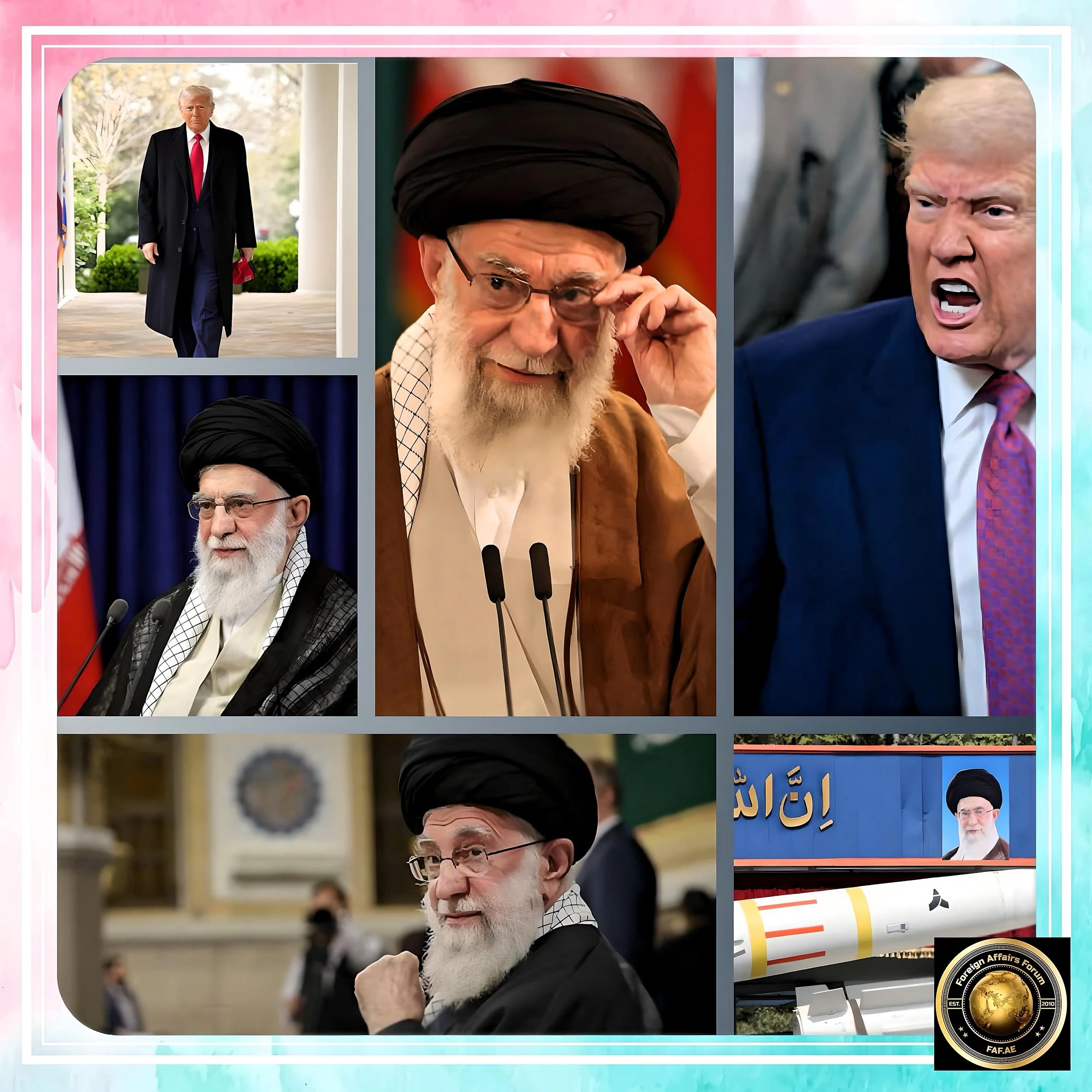
Current Situation: A Rapidly Evolving Crisis - Ayatollah Khomeini on target
Introduction
The Middle East stands at a critical juncture as Israel and Iran engage in their most direct and severe military confrontation in decades.
Beginning on June 13, 2025, Israel launched “Operation Rising Lion,” a massive assault targeting Iranian nuclear facilities, military installations, and key leadership figures across Iran.
This operation has reportedly damaged critical nuclear sites, including the Natanz facility and Isfahan’s uranium conversion facility, while also claiming the lives of several high-ranking Iranian military commanders.
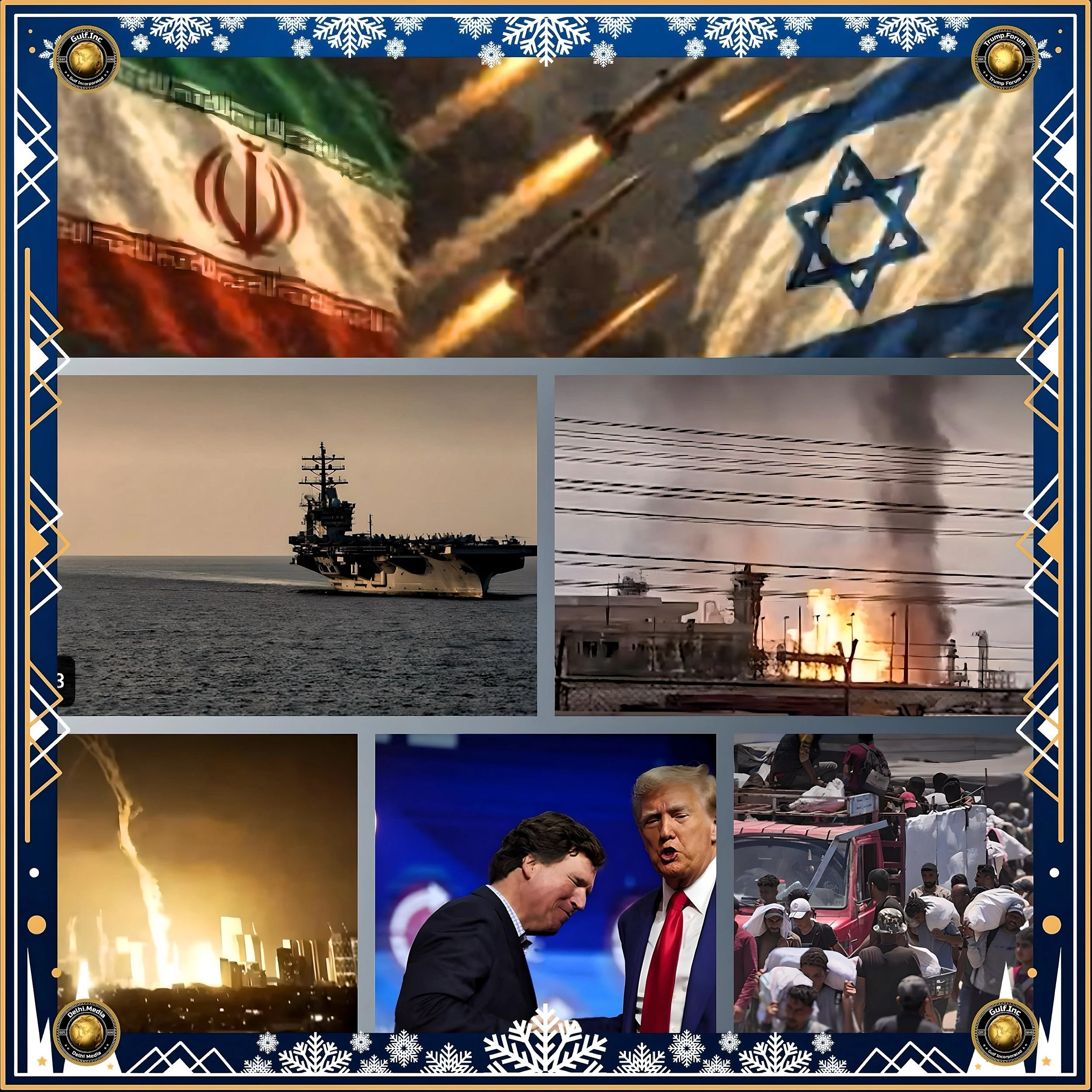
In response, Iran has launched multiple waves of ballistic missiles and drones against Israel, resulting in civilian casualties and infrastructure damage in major Israeli cities, including Tel Aviv, Haifa, and Jerusalem.
The death toll continues to rise on both sides, with Iran reporting at least 224 casualties (predominantly civilians, according to their claims) and Israel confirming at least 24 fatalities.
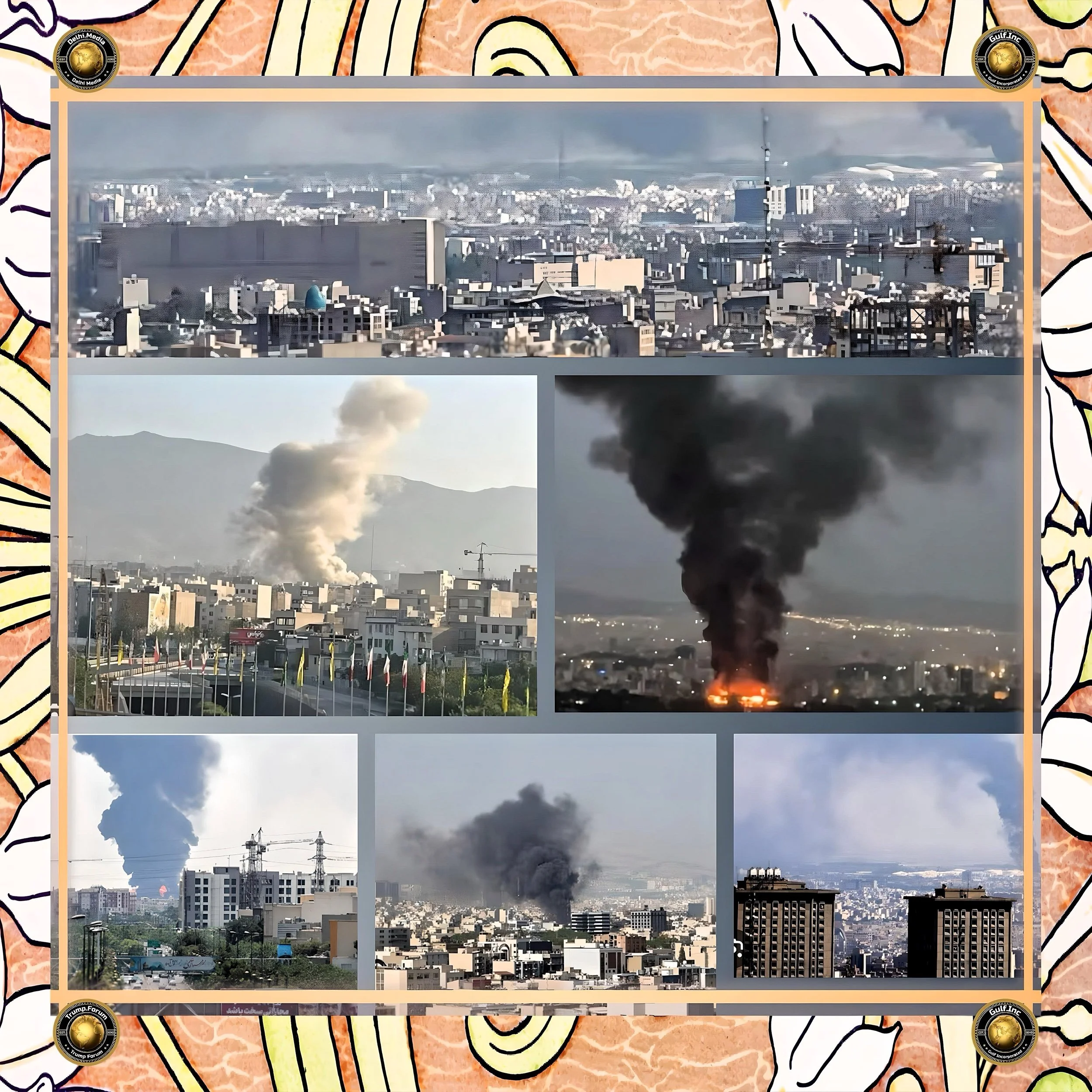
The conflict has prompted unprecedented evacuation orders. Israel has directed residents in parts of Tehran to evacuate immediately ahead of strikes on “military infrastructure.”
Similarly, US President Donald Trump posted on his Truth Social platform urging “everyone to immediately evacuate Tehran” while also asserting that “IRAN CANNOT HAVE A NUCLEAR WEAPON.”
Trump departed the G7 summit in Canada a day early, citing the urgency of the situation in the Middle East.
Meanwhile, China has closed its embassy in Tehran and instructed its officials to leave Iran via land routes as Iranian airspace remains closed.
Chinese authorities have also urged their citizens in Israel to depart immediately through land border crossings into Jordan, citing the deteriorating security situation.
Historical Parallels and Contemporary Context
The ongoing confrontation reminds us of past Middle Eastern conflicts involving leaders such as Saddam Hussein and Muammar Gaddafi.
The geopolitical landscape appears to have changed little since their executions, directly or indirectly orchestrated by the US and, in Gaddafi's case, via NATO intervention.
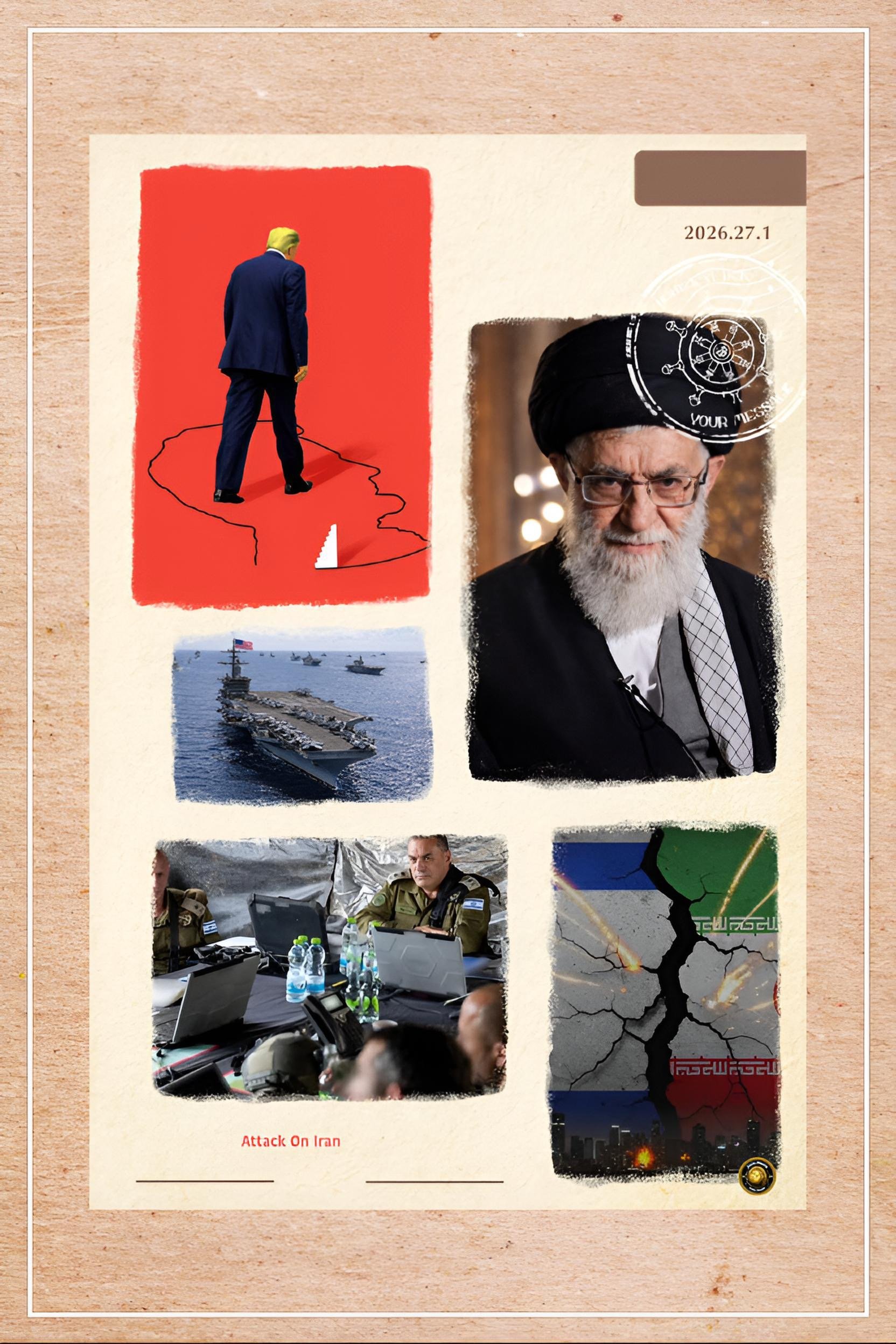
Currently, Ayatollah Khomeini is being positioned as a pariah state leader, akin to others who have opposed American imperial interests.
It is evident that the US is leveraging its ally Israel to conduct operations that many view as genocidal in nature.
The current conflict between Israel and Iran has elicited a more complex range of international responses, with Gulf states remaining largely silent and acting as extensions of US policy.
While many nations have condemned Israel's destabilizing actions in the region, the hypocrisy of enforcing a double standard becomes clear: why can't Iran pursue a nuclear program when Israel reportedly possesses around 90 nuclear warheads?
The question of rogue states arises frequently; while Israel has been implicated in actions considered genocidal against Palestinians, and has been involved in military assaults on Syria, it continues to question Iran’s right to self-defense.
Of particular concern is the potential for regional escalation. The conflict has already resulted in airspace closures over Israel, Iran, and Iraq, with Jordan, Syria, and Lebanon temporarily halting flight operations.
The involvement of proxy forces considerably complicates the situation further, increasing the risk of broader regional conflict.
The Concept of “Greater Israel” and Its Regional Implications
The concept of “Greater Israel” encompasses significant historical, religious, and political dimensions that are crucial for interpreting the current situation.
In its narrowest form, it refers to Israel's ambitions to control territories that extend beyond internationally recognized borders, including the West Bank, Gaza Strip, and Golan Heights.
Broader interpretations—often based on biblical texts—envision Israeli sovereignty that could stretch into parts of Lebanon, Syria, Jordan, and even Iraq.
Certain far-right Israeli political figures have actively advocated for territorial claims based on these historical and religious narratives.
The current military actions by Israel, particularly its incursions deep into Iranian territory, could potentially galvanize support for such expansionist ideologies.
The implications of these developments extend well beyond the immediate confrontation, impacting the entire regional balance of power and future geopolitical stability.
Regional Power Dynamics
Israel’s ability to strike targets throughout Iran, including claiming “full air supremacy” over Tehran’s airspace, represents a significant shift in regional power dynamics.
Airspace remains open on both sides as airstrikes are being concluded. Israel media news on ‘Israel control of air space seems misleading and war tactics.’
Nuclear Proliferation Concerns
Iran has threatened to withdraw from the Non-Proliferation Treaty (NPT) in response to Israeli strikes, potentially accelerating nuclear proliferation in the region.
Humanitarian Crisis
The conflict has already resulted in hundreds of casualties and displaced populations, with the potential for a larger humanitarian crisis if it continues to escalate.
Global Economic Impact
Disruptions to oil production and shipping routes in the Middle East could significantly impact global energy markets and economic stability.
The Question of “Rogue States”
The concept of “rogue states” has been a fixture of US foreign policy for nearly three decades, targeting countries accused of hostility to American interests, support for terrorism, pursuit of weapons of mass destruction, or serious human rights violations.
As of June 2025, this list includes nations such as Iran, North Korea, Russia, Cuba, and Venezuela.
Interestingly, just days before the current conflict erupted, the US Senate approved a decision to remove Syria from this long-standing list of “rogue states.”
This development highlights the fluid and often politically determined nature of such designations.
The criteria for inclusion on this list have been criticized as subjective and reflective of US geopolitical interests rather than objective standards of international behavior.
The current conflict may lead to a reassessment of which nations are designated as “rogue states” and how the international community responds to them.
It also raises questions about the effectiveness of sanctions, diplomatic isolation, and military pressure in changing the behavior of states labeled as such.
Resurgence of Imperialistic Tendencies
The current conflict can be viewed within a broader context of what some analysts describe as a “new age of imperialism.”
This perspective suggests that several nations, including Russia, Turkey, Iran, and China, are increasingly willing to expand their influence at the expense of their neighbors, sometimes using military power to pursue these goals.
These neo-imperialist tendencies are characterized by
Territorial Ambitions
Historical or cultural claims often justify the desire to control territory beyond internationally recognized borders.
Identity Politics
Efforts are being made to undermine the sovereignty of neighboring states and their distinct national identities.
Military Assertiveness
A willingness to use military force to achieve geopolitical objectives.
Historical Romanticism
A romanticized view of past imperial glory that informs current geopolitical aspirations.
The Israel-Iran conflict, with its religious and historical dimensions, territorial implications, and military escalation, exhibits several of these characteristics.
It represents a significant challenge to the post-1945 international order, which was based on respect for state sovereignty and the prohibition of territorial conquest.
Conclusion
A Transformed World Order
The assertion that “the world will not be the same” following this conflict has merit.
The direct military confrontation between Israel and Iran, with the potential involvement of other regional and global powers, represents a significant departure from the patterns of proxy warfare and covert operations that have characterized their relationship in the past.
Several factors suggest a fundamental transformation in the international order
Erosion of Norms
The willingness of states to launch preemptive strikes against perceived threats challenges international norms regarding the use of force.
Nuclear Proliferation
Iran’s threat to withdraw from the NPT could trigger a nuclear arms race in one of the world’s most volatile regions.
Great Power Competition
The divergent responses of the US, China, Russia, and European powers to the conflict highlight the fragmentation of the international system and the return of great power competition.
Regional Realignment
The conflict may accelerate the realignment of Middle Eastern states into new security arrangements and alliances.
As this crisis unfolds, its full implications for regional stability, international norms, and global security remain to be seen.
What is clear, however, is that the direct military confrontation between Israel and Iran marks a significant turning point in Middle Eastern geopolitics and the broader international order