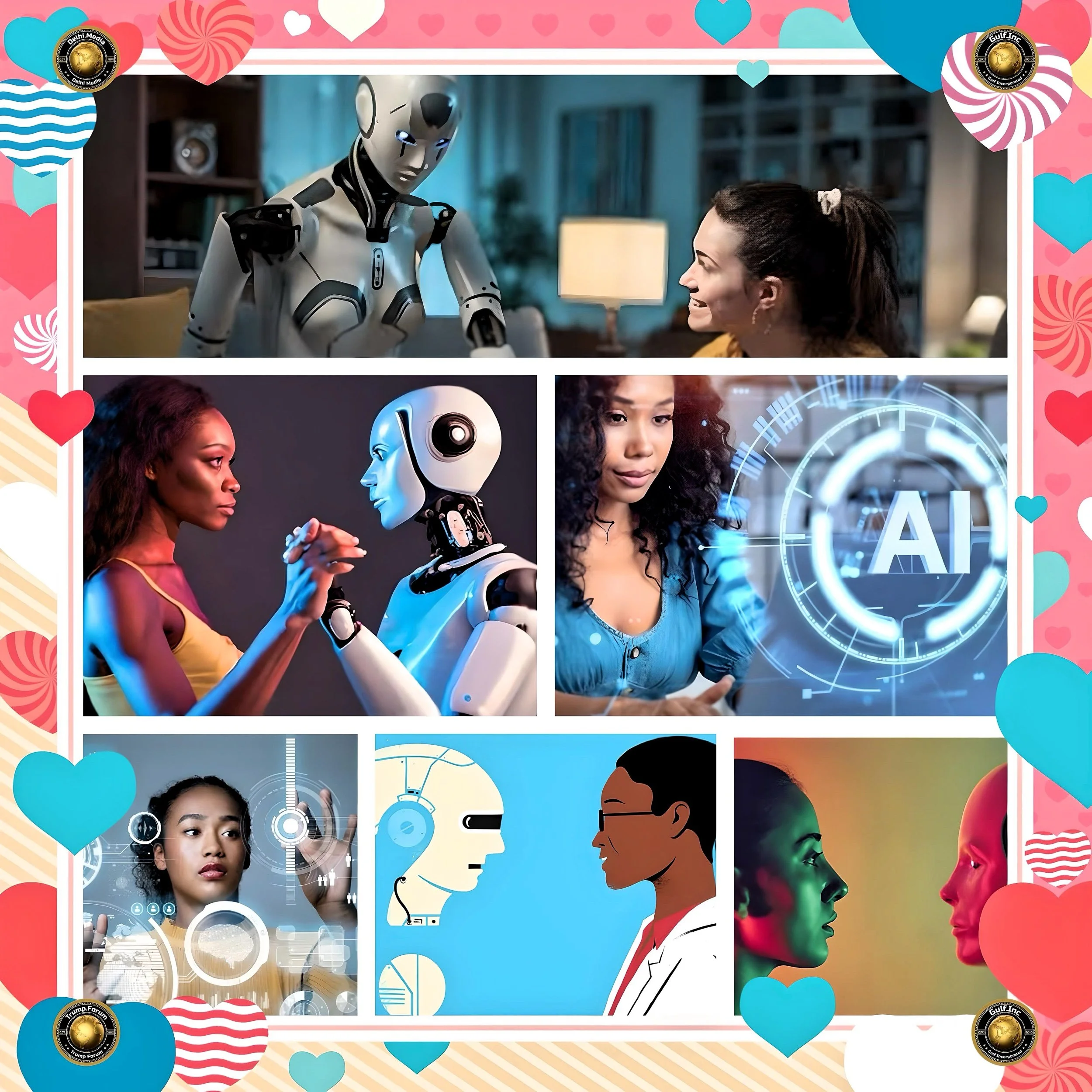
How AI is Reinventing Misogyny: The New Age of Digital Sexism
Introduction
Artificial intelligence is transforming our digital landscape, but this transformation has a dark side that disproportionately affects women and girls.
Far from being neutral technological tools, AI systems are amplifying and institutionalizing gender bias at an unprecedented scale, creating what experts describe as a “new age of sexism.”
FAF, comprehensive analysis examines how AI is reinventing misogyny, the specific dangers it poses to women and girls, and what we currently understand about these emerging threats.
The Foundation of AI Gender Bias
Data-Driven Discrimination
AI systems learn from vast datasets that reflect existing societal biases, creating a feedback loop that perpetuates and amplifies discrimination against women.
When machine learning models are trained on historical data that carries conscious or unconscious bias, they interpret and reinforce the notion that men and women are suited for different roles and opportunities.
A Berkeley Haas Center study analyzing 133 AI systems across different industries found that approximately 44% showed gender bias, while 25% exhibited gender and racial prejudice.
The root cause of this bias lies in “bad data collection,” where training datasets are incomplete or biased, particularly when they only include data from male-dominated industries.
This creates models that struggle to recognize women in leadership or technical positions, resulting in less accurate and potentially discriminatory systems.
The Male-Dominated Development Landscape
The demographic composition of AI development teams significantly contributes to embedded bias.
AI programmers are overwhelmingly white men, leading to biases in developing AI tools and cybersecurity systems.
One expert noted, “Can you imagine if 20-year-old men raised all the toddlers worldwide?
That’s what our AI looks like today. “However, women comprise only 22% of AI talent globally and hold just 14% of senior executive roles.
Manifestations of AI-Powered Misogyny
Workplace Discrimination and Economic Impact
AI systematically disadvantages women in employment through biased hiring algorithms and workplace assessment tools.
These systems often favor traditionally masculine traits like assertiveness and confidence while penalizing qualities more commonly associated with women.
Research shows that existing gender inequalities teach algorithms that women are paid less than men, that men are more likely to receive business loans, and that men are more likely to occupy higher-status positions.
Women in AI roles typically earn less than their male counterparts and receive fewer promotions, creating a cycle discouraging women from continuing in the field.
Low-wage earners, who are disproportionately women, are 14 times more likely than higher-paid counterparts to lose jobs to AI automation.
Digital Harassment and Deepfake Abuse
Perhaps the most disturbing manifestation of AI-powered misogyny is the proliferation of non-consensual deepfake pornography.
Research indicates that 96% of deepfakes are of non-consensual sexual nature, and of those, 99% target women.
This technology is being weaponized to control, humiliate, and silence women through various means:
Image-based sexual abuse
AI tools can create realistic pornographic content using any woman’s photograph with just a click
Psychological warfare
Deepfakes force women into non-consensual activities, causing significant psychological distress, including trauma, anxiety, depression, and PTSD
Professional sabotage
With employers conducting internet searches on job candidates, deepfake content can negatively impact women’s employability
Silencing effect
The threat of deepfake harassment contributes to women’s withdrawal from online discourse and public participation
Algorithmic Content Amplification
Social media algorithms are systematically amplifying misogynistic content, creating echo chambers that normalize abuse against women.
Studies demonstrate that videos containing misogynistic or defamatory content about women are significantly more likely to be recommended compared to neutral or positive content.
When users engage with misogynistic material, algorithms detect this behavior and promote similar content, creating a self-reinforcing cycle that escalates harassment.
Content moderation systems also exhibit gender bias, with approximately 30% of English statements receiving arbitrary moderation decisions that can change based on random factors.
These systems disproportionately affect different demographic groups, making algorithmic content moderation potentially discriminatory.
Reinforcing Harmful Stereotypes
Virtual Assistants and Subservient Femininity
Tech companies have intentionally designed virtual assistants to perpetuate gender stereotypes around feminine obedience and the “good housewife.”
Default female voices, womanly names like Alexa, Siri, and Cortana, and subservient manners are calculated to make users connect to these technologies by reproducing patriarchal stereotypes.
Historically, this has included submissive attitudes toward verbal sexual harassment, with assistants flirting with aggressors and thanking offenders for abusive comments.
Beauty Standards and Body Image
AI-powered beauty filters and image-generation tools are reinforcing narrow and unrealistic beauty standards.
By constantly presenting AI-edited, flawless faces as the standard, these technologies reinforce a distorted idea of what beauty should look like, leading to unhealthy comparisons, especially on social media.
Search engines also disproportionately filter out images of female bodies, often mischaracterizing them as inappropriate, which hinders access to vital information on women’s health and medical research.
Language and Professional Representation
Large Language Models exhibit clear gender bias in their outputs.
Research reveals that women are described as working in domestic roles four times more often than men and are frequently associated with words like “home,” “family,” and “children.” At the same time, male names are linked to “business,” “executive,” “salary,” and “career”.
When generating professional profiles, AI systems stress communal skills for women while highlighting financial achievements for men.
Emerging Threats and Surveillance
Menstrual Surveillance and Privacy Violations
AI-powered period tracking applications represent a new form of gender-specific surveillance that could be weaponized for discrimination.
While marketed as health tools, these systems collect intimate biological data that could be used for workplace discrimination, insurance purposes, or reproductive rights violations.
This represents what experts call “operationalized menstrual surveillance.”
Facial Recognition and Enforcement
Governments are increasingly using AI for gender-based enforcement and control.
Iran has announced the use of facial recognition algorithms to identify women breaking hijab laws, representing a technological escalation of gender-based oppression.
Gender recognition systems also show significant bias, with up to 35% error rates for darker-skinned females compared to just 1% for lighter-skinned males.
Sexualized AI Interactions
AI chatbots marketed as companions are sexually harassing users, including minors.
Research analyzing over 150,000 user reviews identified around 800 cases where chatbots introduced unsolicited sexual content, engaged in predatory behavior, and ignored user commands to stop.
This represents a systematic failure of AI safety measures that disproportionately affects female users.
The Scale of the Problem
Statistical Reality
Current data reveals the extent of gender inequality in AI development and deployment
Only 22% of AI workers globally are women
72% of women in tech have experienced gender bias affecting their promotion opportunities
56% of women in tech have faced discrimination that hindered career progression
85% of women in tech report experiencing imposter syndrome
52% of women observe pay gaps in their organizations
Industry Response and Gaps
Despite growing awareness, meaningful change remains limited. In 2023, around 14% of global tech leaders were women, the same percentage as in 2022.
Only 21% of women in tech say it’s “easy for women to thrive” in the industry, compared to 45% of senior HR leaders in tech companies.
This disconnect between leadership perception and lived experience highlights the persistent nature of these challenges.
Solutions and Regulatory Responses
Feminist AI Frameworks
Feminist Artificial Intelligence (FAI) has emerged as a critical framework for addressing these systemic issues.
FAI leverages intersectional feminism to address biases and inequities in AI systems, emphasizing interdisciplinary collaboration, systemic power analysis, and iterative theory-practice loops.
By embedding feminist values of equity, freedom, and justice, FAI seeks to transform AI development to ensure inclusivity and social sustainability.
Regulatory Measures
Governments worldwide are implementing regulatory measures to address algorithmic discrimination.
These approaches include principled regulation emphasizing equal protection, preventive controls requiring impact assessments, and consequential liability frameworks.
The European Union’s AI Act and similar legislation in other jurisdictions are beginning to address these issues, though enforcement remains challenging.
Technical Solutions
Addressing AI bias requires technical measures, including unbiased dataset frameworks, improved algorithmic transparency, and continuous monitoring for discriminatory outcomes.
Organizations are implementing bias detection tools, diversifying development teams, and conducting regular algorithmic audits.
However, these technical fixes must be accompanied by systemic changes to address underlying power imbalances.
Conclusion
The Urgent Need for Action
AI is not simply reflecting existing gender bias—it is systematically amplifying and institutionalizing misogyny at a scale and speed previously impossible.
From deepfake harassment to workplace discrimination, from beauty standard manipulation to surveillance systems, AI technologies are creating new forms of gender-based harm while reinforcing historical patterns of discrimination.
The evidence is clear: without immediate and comprehensive intervention, AI will continue to reinvent and intensify misogyny, creating a digital landscape that is increasingly hostile to women and girls.
This requires technical solutions and fundamental changes in who develops AI, how it’s governed, and what values guide its deployment.
As feminist AI scholars argue, addressing these challenges requires moving beyond technical fixes to tackle the systemic power imbalances and cultural biases embedded in our technological systems.
The future of AI—and its impact on gender equality—depends on our collective action to ensure that these powerful technologies serve justice rather than perpetuate oppression.