Melilla, Spain -The Forbidden Investigation - Genocide?
Introduction
The term “forbidden investigation” refers to the systematic obstruction and cover-up surrounding one of the deadliest massacres at a European border in recent memory.
On June 24, 2022, what Spanish and Moroccan authorities have attempted to suppress from full scrutiny represents a coordinated effort to prevent accountability for what human rights organizations describe as a racially motivated massacre.
Where is Melilla?
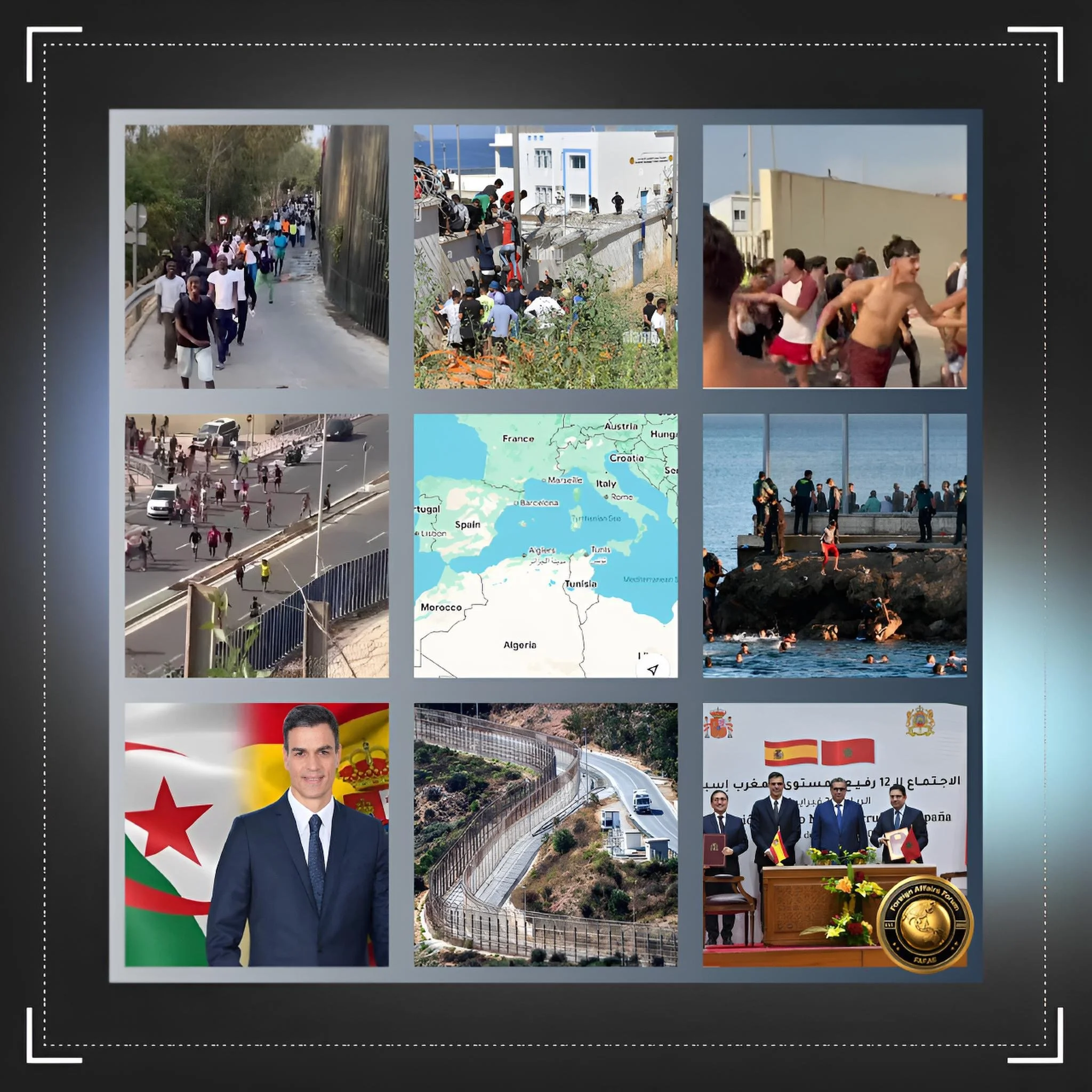
Melilla is a Spanish autonomous city located on the northern coast of Africa, bordering Morocco. It's one of two Spanish autonomous cities in mainland Africa, the other being Ceuta.
Melilla is separated from the Spanish mainland by the Mediterranean Sea.
The Melilla Massacre: June 24, 2022
What Happened?
On June 24, 2022, approximately 2,000 migrants and asylum seekers, primarily from Sudan, Chad, and other Sub-Saharan African countries, attempted to cross the heavily fortified border fence separating the Moroccan city of Nador from the Spanish enclave of Melilla.
The violent repression by Spanish and Moroccan security forces transformed the Barrio Chino border crossing into what investigators now call a “death trap.”
The official Moroccan death toll stands at 23, but human rights organizations estimate at least 37 people died, with 77 others remaining missing to this day.
The Moroccan Association for Human Rights in Nador reports that over 70 people are still unaccounted for.
The Violence Documented
Multiple investigations have revealed the systematic nature of the violence that unfolded.
Survivors and video evidence document that Moroccan authorities deliberately channeled migrants toward the border crossing, then trapped them in an enclosed courtyard before launching an intensive tear gas attack.
At least 20 tear gas canisters were fired in under 10 minutes into the confined space.
Spanish forces collaborated in the violence, firing rubber bullets at asylum seekers and participating in approximately 470 pushbacks.
Spanish authorities shot a total of 65 rubber bullets, and at least 85 gas canisters were used.
Survivors reported being beaten unconscious and then dragged from Spanish territory back to Morocco.
The “Forbidden” Nature of the Investigation
Government Obstruction and Denial
The investigation became “forbidden” through systematic government obstruction on both sides of the border.
Spanish Interior Minister Fernando Grande-Marlaska has consistently denied that any deaths occurred on Spanish soil despite mounting evidence to the contrary.
Even when confronted with video evidence showing at least one death occurring in Spanish territory, the government maintained its denial.
Both Spanish and Moroccan authorities have refused to release crucial evidence, including
Complete CCTV footage from border cameras
Complete lists of victim names and causes of death
Autopsy reports
Official documentation of the events
Silencing Journalists and Investigators
The Spanish government’s response to media investigations has been to attack their credibility rather than address the evidence.
When major European newspapers, including El País, BBC, and collaborating organizations published detailed reconstructions of events, Spanish authorities dismissed them as “accusations without evidence.”
Government officials have gone further, with some reportedly threatening journalists investigating the case.
As one investigative journalist noted: “Powerful people have threatened to order the police to take action against us. The journalists who took part in this investigation, I felt terrified personally”.
Parliamentary Obstruction
Political efforts to establish independent investigations have been systematically blocked.
Spanish lawmakers from both the ruling Social Democrats and Conservative opposition have twice vetoed the establishment of a parliamentary commission of inquiry into the deaths.
Basque separatist MP Jon Inarritu, who has fought for transparency, describes June 24th as a “state secret.”
Inarritu spent five months battling for the government to release police camera footage from the day, meeting strong resistance.
Socialists, conservatives, and the right-wing Vox party rejected his request to create a parliamentary commission.
What Independent Investigations Have Revealed
Border Forensics Counter-Investigation
The most comprehensive independent investigation, conducted by Border Forensics in collaboration with human rights organizations, concluded that the deaths “were no accident.”
Their year-long counter-investigation found that migrants were “repeatedly directed towards the Barrio Chino border crossing and violently repressed by Moroccan and Spanish law enforcement agents once they were trapped there.”
The investigation revealed evidence of premeditation, showing that Moroccan authorities had stepped up militarization of the border in the days leading up to June 24 while simultaneously preventing migrants from accessing food and shelter in the mountains.
Media Reconstructions
Multiple major media investigations have contradicted official accounts. Working with El País, Le Monde, Der Spiegel, and other outlets, Lighthouse Reports used advanced 3D modeling and testimony from 40 witnesses to reconstruct the events.
Their investigation included confidential interviews with senior Guardia Civil officers, one of whom admitted that deaths “probably” took place on Spanish soil - the first such admission by Spanish police.
BBC investigations also documented excessive force and confirmed at least one death occurring in Spanish-controlled territory.
The Systematic Cover-Up
Concealment of Evidence
Authorities have engaged in what human rights organizations describe as a “deliberate and concerted cover-up.” This includes:
Refusing to provide families access to morgues to identify bodies
Blocking efforts by human rights organizations to search for the missing
Failing to conduct proper autopsies six days after the tragedy
Burying bodies without proper identification procedures
Judicial Impunity
Rather than investigating their forces, both countries have prosecuted the survivors.
Morocco has sentenced at least 100 survivors to prison terms, while Spain’s prosecutor closed its investigation in December 2022, concluding there was no evidence of criminal wrongdoing by Spanish security forces.
The UN Committee Against Torture has criticized Spain for its “lack of effective investigation” and urged the country to “promptly and impartially investigate any possible responsibility of the members of the security forces.”
International Complicity
The European Union’s role in supporting these border policies has also been scrutinized.
The investigation reveals how EU policies of “externalizing migration control” created the structural conditions that made the massacre possible.
Despite the deaths, the EU has continued to strengthen cooperation with Morocco on migration control.
The Broader Context: Structural Racism
Historical Colonial Dimension
The Border Forensics investigation places the massacre within a broader context of what they term “border apartheid” - a system of racialized violence targeting Black migrants specifically.
Their analysis of data since 2014 shows that 46% of documented deaths at the border involved people from Central, East, and West African countries, despite these migrants representing a smaller proportion of overall border crossers.
The colonial history of Melilla, occupied by Spain since 1497, continues to shape contemporary border policies.
The enclave served as a Spanish colonial prison in the 19th century, where formerly enslaved Black people from Cuba were among those imprisoned.
Ongoing Violence and Impunity
This massacre was not an isolated incident but part of a pattern of violence that has continued for decades.
Previous massacres, including the Tarajal incident, have similarly resulted in impunity for security forces.
Human rights organizations have documented a regime of impunity consolidated over more than 10 years of litigation.
Current Status and Demands for Justice
Two and a half years after the massacre, the “forbidden investigation” continues.
Families are still denied access to information about their loved ones, 22 bodies remain unidentified in a Moroccan morgue, and survivors continue to face judicial harassment.
Human rights organizations and survivors continue to demand
Independent and impartial investigations by both Spanish and Moroccan authorities
Full disclosure of all evidence, including video footage and official documents
Identification and repatriation of victims’ remains
Accountability for those responsible for the violence
Reparations for victims and their families
An end to the criminalization of survivors
The case represents what activists describe as a test for European values and human rights commitments.
As one survivor stated: “Justice must prevail, persons and young people must be released from prison, and the missing persons must
We, too, have friends who have disappeared, and we want to know whether they are dead or alive”.
The Melilla investigation remains “forbidden” not because the evidence doesn’t exist but because powerful governments have chosen to suppress it in service of maintaining policies that treat Black migrants as, in the words of investigators, “massacre.”