The Rise of Masculinism: Violence and Misogyny Online—A Comprehensive Factual Report - International Day for the Elimination of Violence against Women
Executive Summary
The rapid proliferation of masculinist ideologies online represents a multifaceted threat to gender equality, public safety, and democratic institutions globally.
Once confined to fringe internet forums, the “manosphere”—a loosely networked collection of misogynistic online communities—has metastasized into a transnational, politically mobilized movement with documented links to mass violence and terrorism.
What distinguishes contemporary digital misogyny from historical sexism is its systematic organizational structure, algorithmic amplification, and explicit ideological framework that positions women as threats to male interests and society itself.
This phenomenon warrants urgent, evidence-based intervention across individual, institutional, and governmental levels
Introduction
Understanding Masculinism: Origins and Evolution
Definitional Framework and Nomenclature
Masculinism refers to a structured ideology that advocates prioritization of male interests and explicitly opposes feminist movements.
Unlike traditional gender activism, contemporary masculinism has evolved into what researchers term “misogynistic violent extremism”—an ideology that weaponizes male insecurity and transforms it into systematic hostility toward women.
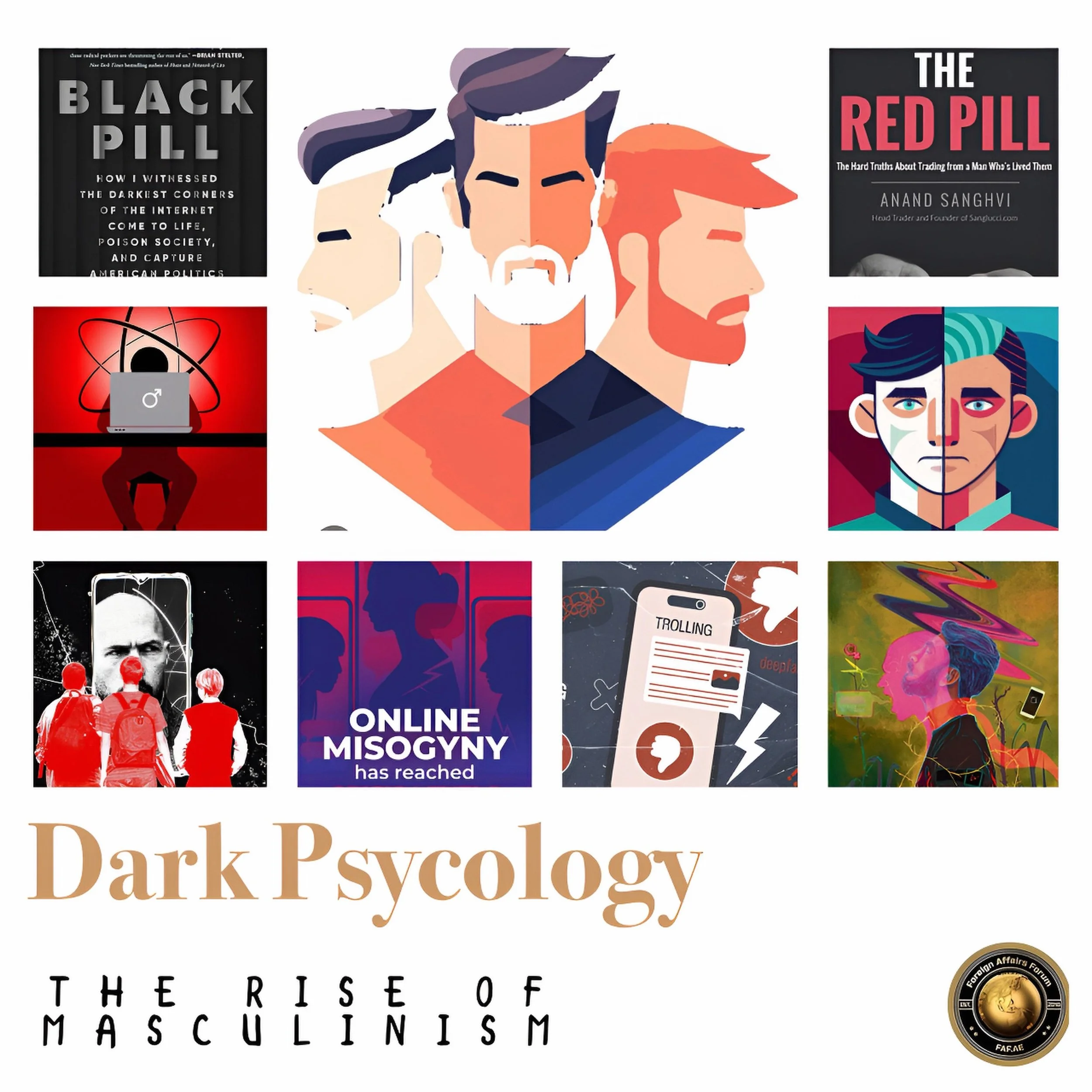
The manosphere encompasses multiple subgroups, including incels (involuntary celibates), men’s rights activists (MRAs), men going their own way (MGTOW), and proponents of the “red pill” and “black pill” ideologies.
Key distinction
The manosphere is fundamentally different from legitimate gender discourse.
Rather than advocating for male welfare through policy reform, it operates through dehumanization, normalization of violence, and the propagation of pseudoscientific frameworks that position gender relations as zero-sum competition.
Historical Development
The incel community, which originated in the 1990s as a gender-inclusive support forum for individuals experiencing loneliness, underwent a critical schism in the mid-2000s that fractured it into two distinct trajectories.
The original inclusive “Incel Support” community diverged from the virulently misogynistic “Love Shy” forum, with the latter subsequently merging into the broader misogynistic manosphere.
The ideological radicalization of this community became nationally visible in 2014 when Elliot Rodger, a 22-year-old self-identified incel, perpetrated a mass shooting in Isla Vista, California, killing six people and injuring fourteen others.
Rodger distributed a manifesto and video articulating explicitly incel grievances, blaming women (“Stacys” in incel terminology) for his sexual rejection and advancing white supremacist ideology alongside misogyny.
Critically, subsequent violent incels have explicitly venerated Rodger, establishing him as the “incel founding father” and inspiration for further violence.
Global Geographic Distribution and Regional Manifestations
North America: Epicenter of Documented Violence
Canada and the United States have been the primary theaters for incel-attributed mass violence.
Alek Minassian’s April 2018 Toronto van attack resulted in ten deaths and numerous injuries, making it the deadliest incident attributed to the incel movement.
Minassian explicitly identified himself as an incel to police and claimed to represent the “incel rebellion” initiated by Rodger.
Notably, in 2018, Canada established global precedent by indicting Minassian under existing terrorism legislation, recognizing misogynistic violence as a terrorist threat.
Research compiled by the Rand Corporation and cited by counterterrorism analysts documents approximately 50 fatalities in the United States and Canada attributable to incel-inspired or incel-motivated violence between 2009 and 2022.
The U.S. Department of Homeland Security has invested research funding specifically into understanding the incel movement, underscoring its national security implications.
East Asia: Emerging Crisis Zone
South Korea represents perhaps the most alarming geographic expansion of masculinist extremism outside North America.
Young South Korean men have mobilized anti-feminist narratives with unprecedented virulence, identifying themselves as a persecuted “male minority.”
The movement has achieved such political salience that the ruling government under President Yoon Suk-Yeol has adopted explicitly anti-feminist policy positions, with floor leaders declaring that gender equality legislation will not be amended.
The psychological mechanisms underlying this phenomenon reflect what researchers term “male anger,” which has proven highly receptive to misogynistic narratives.
Documented misogynistic attacks in South Korea have employed tactics such as
(1) semen terrorism (deliberate ejaculation on women’s personal belongings)
(2) attacks targeting women in train stations, parks, and universities, yet legal systems have frequently categorized these as “property damage” rather than sex crimes, contributing to severe underreporting.
Japan similarly faces rising misogynistic violence. Like South Korea, Japan exhibits the emergence of incel-adjacent ideologies targeting women, with limited legal recognition of these attacks as distinct criminal categories.
The convergence of aging demographics, economic stagnation, and traditional gender role rigidity appears to intensify masculine grievance narratives.
China presents a distinct variant. Chinese social media platforms host misogynistic terminology and narratives directly paralleling Western incel communities.
Anti-feminist influencers such as Zhu Zhou have gained substantial followings through content encouraging women to fulfill “reproductive duties,” amalgamating misogyny with state-endorsed natalist ideology.
Europe and Anglophone Nations
United Kingdom
The UK Home Office has emerged as a global leader in policy recognition, announcing in 2024 that severe misogyny will be formally classified as extremism requiring counter-terrorism intervention.
Home Secretary Yvette Cooper explicitly acknowledged the rising tide of “both digital spaces and in our communities” extremism rooted in misogyny.
Australia
Australian law enforcement agencies including ASIO (Australian Security Intelligence Organisation) and the Office of the eSafety Commissioner have acknowledged the link between misogyny and violent extremism.
However, Australia lacks officially designated cases of misogynistic violent extremism in its legal framework, despite incidents fitting the description, such as Matthew Sean Donaldson’s 2021 attack against a female sex worker.
Germany
The Weizenbaum Institute has conducted longitudinal research on radicalization dynamics within incel forums, publishing peer-reviewed studies examining how platform usage during COVID-19 lockdowns correlated with increased radicalization cues and content intensity.
Social, Economic, and Ideological Drivers
Socioeconomic Factors
Research demonstrates that incel community participants predominantly occupy middle-class socioeconomic strata, contradicting simplistic depictions of extremism exclusively affecting economically marginalized populations.
Demographic analysis from 2023 surveys in the United States and United Kingdom reveals that over 35 percent of U.S. incels aged 22-25 represent the largest cohort, while UK incels predominantly cluster in the 26-29 age range, with heterosexual orientation predominating at approximately 97 percent.
Critically, these individuals are not economically deprived but rather experience subjective deprivation—the psychological perception of unfair disadvantage relative to perceived peers.
This phenomenon aligns with classical relative deprivation theory, wherein economic improvement without corresponding status enhancement in sexual or romantic hierarchies generates acute psychological distress.
Psychological Vulnerabilities and the “Dual Pathways Hypothesis”
Contemporary psychological research has identified two distinct trajectories leading to incel extremism, termed the “dual pathways hypothesis.
Experiential Vulnerability comprises individuals who experienced
Autism spectrum conditions (documented in approximately 30-40% of incels compared to 1-2% population prevalence).
Documented bullying and social ostracism during adolescence (85% of study participants reported bullying histories).
Low self-perceived mate value and associated depression
Abuse or trauma
General social isolation
Dispositional Extremism encompasses individuals exhibiting
Dark Triad personality traits.(narcissism, Machiavellianism, psychopathy)
Psychopathic and narcissistic characteristics.
Extreme right-wing political orientation
Antisocial personality features.
Importantly, both pathways converge through the “3N model”: Psychological Needs (loneliness, depression, suicidal ideation), Ideological Narratives (particularly “black pill” fatalism), and Online Networks that amplify and reinforce these beliefs.
When these three elements interact, the risk of hostile sexism, displaced aggression, and violence escalates dramatically.
Mental Health Prevalence
Empirical research documents elevated mental health disturbance among incel communities:
Depression: 68% of respondents
Anxiety: 74% of respondents
Suicidal ideation: elevated prevalence (specific percentages variable across studies)
Autism spectrum diagnosis: 40% reporting
Self-identified “mentalcels” (incels attributing their condition to mental illness)[cambridge]
Approximately 71% of incels view their circumstances as permanent, a conviction that correlates with hopelessness and contributes to the “negative triad” (negative self-view, negative world-view, negative future outlook) observed in clinical depression.
Ideological Architecture: Red Pill and Black Pill
The ideological framework distinguishes between two philosophical orientations.
Red Pill Ideology
Originating from The Matrix metaphor, the red pill represents a perspective that men can strategically navigate sexual and romantic dynamics through self-improvement, understanding gender dynamics, and employing dominance behaviors.
While toxic, red pill adherents maintain the belief that personal agency and effort can improve outcomes.
Black Pill Ideology
Representing the nihilistic endpoint of radicalization, the black pill asserts that romantic and sexual success is biologically predetermined and entirely unchangeable.
According to black pill logic, physical appearance and genetic traits entirely determine romantic success, rendering personal effort meaningless.
This ideology propagates a fatalistic worldview wherein no amount of self-improvement can overcome inherent genetic disadvantage, leading to resigned resentment toward women and society.
The transition from red to black pill marks a critical radicalization threshold, signifying shift from adaptive narrative to nihilistic resignation and violent ideation.
Empirical research reveals that black pill adherence, combined with intense loneliness and online community reinforcement, substantially predicts violent ideation and justification of violence
Dark Psychology and Personality Pathology
The Dark Triad and Dark Tetrad
Research examining personality pathology in misogynistic extremism identifies particularly concerning correlations with what psychologists term the “Dark Triad”.
Research directly examining the Dark Triad reveals that narcissism and Machiavellianism function as unique negative predictors of feminist attitudes, with higher scores on these dimensions correlating with lower support for gender equality.
Social Rejection and Dark Personality Development
Emerging research documents a potentially bidirectional relationship between social rejection and dark personality trait development.
A 2025 study published in the Journal of Personality indicates that early social rejection during adolescence—particularly bullying and sexual rejection—may facilitate emergence of Dark Triad characteristics through heightened loneliness as a psychological intermediary.
This research suggests that while some incels follow a trajectory wherein pre-existing antisocial personality traits drive ideological extremism, others experience reactive personality changes following prolonged social ostracization.
Both pathways ultimately converge on similar ideological extremism and violent ideation risk.
Displaced Aggression and Ideological Violence
The psychological mechanism of “displaced aggression”—redirecting frustration originating from one source onto substitute targets—operates prominently in incel ideological radicalization.
Individuals experiencing romantic rejection, social ostracism, or low self-perceived mate value psychologically displace this frustration onto women as a category, consistent with incel ideology’s assertion that women collectively are responsible for male suffering.
Technological and Algorithmic Amplification
Platform Architecture and Radicalization Pipelines
The digital infrastructure enabling masculinist extremism operates through algorithmic recommendation systems deliberately engineered to maximize user engagement through escalating emotional intensity.
Research from the French think tank Iris documents that algorithms can recommend extremist content to young male internet users within 30 minutes of initial platform access, a phenomenon termed the “radicalization pipeline.”
Documented pathways include
Fitness and self-improvement content → Red pill content → Anti-feminist ideology → Incel communities
Casual misogynistic memes → Organized anti-feminist rhetoric → Far-right extremism
Alpha masculinity content → Anti-feminist narratives → Conspiracy theories
Platform-Specific Vulnerabilities
Research examining content recommendation algorithms across major platforms reveals concerning patterns:
TikTok
An average 16-year-old male user can expect to receive alpha-masculinity content and misogynistic material even without actively searching for such content.
Reactionary right-wing content appears within 30 minutes of platform engagement.
YouTube
Alpha masculinity represents the most commonly recommended toxic content to adolescent males, followed by anti-feminism, reactionary right-wing content, and conspiracy theories.
X (formerly Twitter)
Generation Z social media users encounter misogynistic content with highest frequency on X compared to other major platforms.[statista]
Reddit and 4chan
Dedicated incel forums on Reddit and anonymous boards on 4chan serve as ideological hubs for radicalization and community reinforcement, with 82% of incel forum threads classified as misogynistic.
Deepfakes and Synthetic Media
The emergence of generative AI has intensified online violence against women through:
Deepfake pornography without consent, proliferating across Facebook, WhatsApp, and Telegram
Coordinated, sexualized attacks leveraging AI-generated imagery.
Violation of women’s privacy through synthetic sexual imagery
Prevention and Intervention Frameworks
Individual-Level Interventions
Mental Health Services and Therapeutic Support
Empirical evidence demonstrates that psychological support services directly addressing depression, suicidal ideation, anxiety, and social isolation reduce vulnerability to extremist narratives. Interventions should specifically address the following.
Cognitive distortions underlying black pill ideology
Depression and hopelessness management
Social skills development and community reintegration
Identity formation alternatives to incel community membership
Digital Literacy and Critical Thinking
Educational programming equipping young men with capacity to recognize propaganda, pseudoscientific justifications, and manipulative rhetoric substantially reduces susceptibility to radicalization.
Programs should address
Recognition of algorithmic manipulation and filter bubbles
Evaluation of pseudoscientific claims about gender and genetics
Understanding of cognitive biases in ideological extremism
Early Warning Sign Recognition
Parents, educators, and mental health professionals require training to identify indicators of radicalization, including:
Sudden engagement with red pill or incel content
Expressions of hopelessness and fatalism regarding romantic prospects
Dehumanizing language directed at women or feminists
Isolation from previously maintained social relationships
Consumption of content glorifying previous attackers (Elliot Rodger, Alek Minassian)
Community and Institutional Interventions
School-Based Prevention Programming
Educational curricula addressing gender equality, healthy relationship dynamics, and resistance to extremist narratives provide protective effects during critical developmental periods.
Australian research recommends curriculum integration specifically addressing misogynistic extremism beyond generic violence prevention frameworks.
Youth Mentorship and Community Engagement
Mentorship programs connecting at-risk individuals with prosocial role models mitigate isolation and provide alternative identity formation pathways.
Gaming communities and esports organizations, identified as recruitment vectors for extremism, represent strategic intervention sites.
Counter-Narratives and Alternative Messaging
Credible messengers—former extremists, researchers, and community leaders—can effectively articulate counter-narratives undermining black pill determinism and misogynistic victimhood mythology.
Workplace and Professional Training
Organizations can implement awareness training enabling managers and human resources professionals to identify and respond appropriately to employees exhibiting radicalization indicators.
Governmental and Legal Interventions
Legal Classification and Counter-Terrorism Framework:
The United Kingdom’s 2024 designation of misogyny as extremism represents a critical policy innovation. This framework:
Formally recognizes misogynistic violence as a terrorism concern requiring dedicated law enforcement resources
Enables proactive monitoring and investigation of radicalization pathways
Allocates research funding for understanding and countering misogynistic extremism
Canada’s 2018 prosecution of Alek Minassian under terrorism legislation established precedent, recognizing that incel-motivated violence constitutes terrorism under existing legal frameworks.
Comprehensive Gender-Based Violence Legislation
The U.S. Violence Against Women Act (VAWA), reauthorized in 2022, establishes comprehensive federal frameworks for prevention and response, including
Survivor support services and legal assistance
Prevention programming and public awareness
Housing protections and economic security initiatives
Law enforcement training and specialized response protocols
Tribal jurisdiction restoration enabling accountability
Research and Data Collection
Governments must fund longitudinal research examining radicalization pathways, platform algorithmic mechanisms facilitating extremism, and intervention effectiveness.
The Five-Eyes nations (Canada, United States, United Kingdom, Australia, New Zealand) have recognized this imperative, with RCMP and CSIS collaborating on coordinated research frameworks.
Platform Accountability and Algorithmic Reform
Content Moderation Policy Enhancement
The Institute for Strategic Dialogue (ISD) recommends that platforms
Explicitly recognize misogynistic content as hate speech subject to removal
Implement gender-informed counter-extremism frameworks
Develop tools identifying misogynistic pathways to radicalization
Establish backtracking and propagation protocols ensuring consistent moderation across reply chains and original source content
Algorithmic Auditing and Transparency
Platforms must undergo independent auditing examining whether recommendation algorithms amplify misogynistic content to vulnerable populations.
Specific measures include
(1) Disaggregated data collection tracking demographic characteristics of flagged and removed content
(2) Transparency reports detailing content moderation decisions and outcomes
(3) Third-party research access enabling academic investigation of algorithmic bias
Platform Design Modifications
Algorithmic recommendation systems should be redesigned to.
Reduce escalation to extreme content through recommendation pathways.
Implement friction mechanisms slowing radicalization pipelines.
Prioritize diverse content exposure over engagement maximization.
Enable user control over algorithmic ranking.
International Cooperation and Diplomatic Coordination
The transnational character of the manosphere necessitates coordinated international response.
The Five-Eyes collaboration on youth radicalization represents promising precedent, with participating nations committing to whole-of-society coordination across security, education, mental health, and community services.
Documented Cases and Real-World Manifestations
Elliot Rodger (2014) – Isla Vista, California
On May 23, 2014, 22-year-old Elliot Rodger perpetrated a mass shooting killing six people and injuring fourteen.
Rodger created YouTube videos and a manifesto articulating incel ideology, expressing rage over sexual rejection and identifying women as the source of his suffering.
Critically, Rodger explicitly articulated white supremacist ideology alongside misogyny, identifying “Stacys” (attractive women) and “Chads” (attractive men, particularly those of non-white ethnicities) as targets.
His actions established the archetype for subsequent incel violence, with Rodger posthumously elevated to “founding father” status within incel online communities.
Alek Minassian (2018) – Toronto Van Attack
On April 23, 2018, Alek Minassian rented a van and deliberately drove it along Yonge Street in Toronto, killing ten people and injuring thirteen. Minassian identified himself to police as an incel and claimed to represent the “incel rebellion” initiated by Rodger.
Investigation revealed that Minassian had maintained online contact with Rodger prior to Rodger’s 2014 attack, had participated in incel forums on Reddit and 4chan, and glorified Rodger’s violence.
The judge presiding over Minassian’s case noted difficulty establishing precise motivation, with some evidence suggesting notoriety motivation, though misogynistic ideology likely played a substantial contributory role.
Canada became the first nation to indict an incel perpetrator under terrorism legislation, establishing critical legal precedent.
Allen, Texas Mass Shooting (2023)
Prior to a mass shooting in Allen, Texas in 2023 resulting in nine deaths, the perpetrator articulated gender-based grievances as a primary motivation, alongside white supremacist and fascist beliefs.
Public discussion subsequently focused on fascist ideology while largely discounting the influence of misogynistic beliefs on ideological development and radicalization pathways.
Owen Lawrence (2025) – Leeds Shooting
In 2025, Owen Lawrence described plans for “terrorism, revenge and misogynistic rage” in a Facebook manifesto prior to shooting two women dead in Leeds, United Kingdom.
This incident exemplifies misogynistic violent extremism’s evolution into explicit terrorism planning with digital manifestation.
Contemporary Knowledge and Research Gaps
Established Findings
Contemporary research has established several robust conclusions.
Radicalization operates through multiple pathways with both psychological vulnerability and ideological exposure contributing to extremism.
Online platforms function as incubators for radicalization, with algorithmic recommendation systems deliberately amplifying extreme content.
Misogynistic extremism exhibits transnational characteristics, with ideologies, tactics, and inspiration spreading across geographic boundaries.
Mental health factors substantially mediate radicalization, with depression, anxiety, and suicidal ideation prevalent among extremists.
Early intervention and community-based prevention can disrupt radicalization trajectories prior to violence escalation.
Dark personality traits (Dark Triad) constitute risk factors for both ideological adoption and violence justification.
Research Gaps and Future Directions
Substantial research gaps persist
Longitudinal intervention research
Limited evidence exists regarding long-term effectiveness of specific prevention interventions, particularly for severe cases of radicalization.
Gender-diverse populations
Research has overwhelmingly focused on male incels, with limited investigation of radicalization pathways among non-binary and female individuals within the manosphere.
Desistance and deradicalization
Minimal research examines mechanisms enabling individuals to exit incel communities and reconstruct alternative identities.
Algorithmic mechanism specificity
While algorithmic amplification is documented, detailed understanding of specific algorithmic features facilitating escalation remains limited.
Cross-cultural variation
Understanding why East Asian contexts exhibit particular susceptibility to incel ideology compared to other regions requires investigation.
Intersection with other extremisms
The relationship between misogynistic extremism and other ideological extremisms (white supremacy, fascism, religious extremism) requires deeper theoretical and empirical examination.
Societal Implications and Democratic Concerns
The expansion of misogynistic extremism transcends individual violence; it operates as a force reshaping democratic discourse and institutional function.
The manosphere’s narratives have achieved mainstream political incorporation, with governments adopting anti-feminist policy positions and public intellectuals legitimizing misogynistic arguments.
In South Korea, the phenomenon manifests as direct state alignment with misogynistic ideology, with government refusing gender equality reforms on explicitly anti-feminist grounds.
This represents a qualitatively novel threat: institutionalized misogyny replacing individual extremism as the operating framework of state power.
Additionally, the alignment between misogynistic ideology and far-right extremism creates hybrid radicalization pathways wherein individuals can transition from gender-based grievances into broader fascist, white supremacist, or authoritarian commitments.
Recommendations for Comprehensive Response
Individual and Family Level
Develop accessible mental health services specifically addressing depression, isolation, and suicidal ideation in young men
Create parent and educator training programs enabling early identification of radicalization indicators
Establish peer support networks offering alternative community identity to incel forums
Community and Institutional Level
Implement school-based curricula addressing healthy masculinity, consent, gender equality, and resistance to extremist narratives
Develop targeted mentorship and youth engagement programs
Create counter-narrative campaigns utilizing credible messengers
Establish workplace training and professional accountability mechanisms
Governmental and Policy Level
Formally designate misogynistic extremism as a national security concern requiring dedicated law enforcement resources.
Implement comprehensive gender-based violence legislation with adequate funding for implementation.
Fund longitudinal research examining radicalization pathways, prevention effectiveness, and intervention outcomes.
Establish cross-agency coordination mechanisms enabling whole-of-government response.
Conduct international diplomatic coordination through Five-Eyes and broader multilateral frameworks.
Platform and Technology Level
Audit algorithmic recommendation systems for bias amplifying misogynistic content.
Implement robust content moderation policies recognizing misogynistic content as hate speech.
Provide transparent reporting on content moderation outcomes disaggregated by demographic characteristics.
Modify platform design to reduce radicalization pipeline escalation.
Enable independent research access for academic investigation of algorithmic mechanisms.
Conclusion
The rise of masculinism and online misogyny represents a systemic threat requiring comprehensive, multidisciplinary response transcending traditional counter-extremism frameworks.
The phenomenon’s transnational reach, ideological sophistication, documented links to mass violence, and expanding political influence demand urgent policy action.
Effective response requires simultaneous intervention at individual, community, institutional, governmental, and technological levels, grounded in rigorous evidence regarding radicalization mechanisms and prevention effectiveness.
The experiences of Canada, the United Kingdom, and emerging research initiatives in Australia and Germany provide instructive models for comprehensive policy development.
Critically, addressing misogynistic violent extremism represents both a public safety imperative and a democracy protection measure, as the ideological framework fundamentally contradicts principles of universal human rights, gender equality, and democratic pluralism.
Without robust preventive action, the trajectory suggests continued escalation of both online harassment and real-world violence, alongside deepening institutional capture of misogynistic ideology within state structures—particularly in East Asian contexts where this process is most advanced.