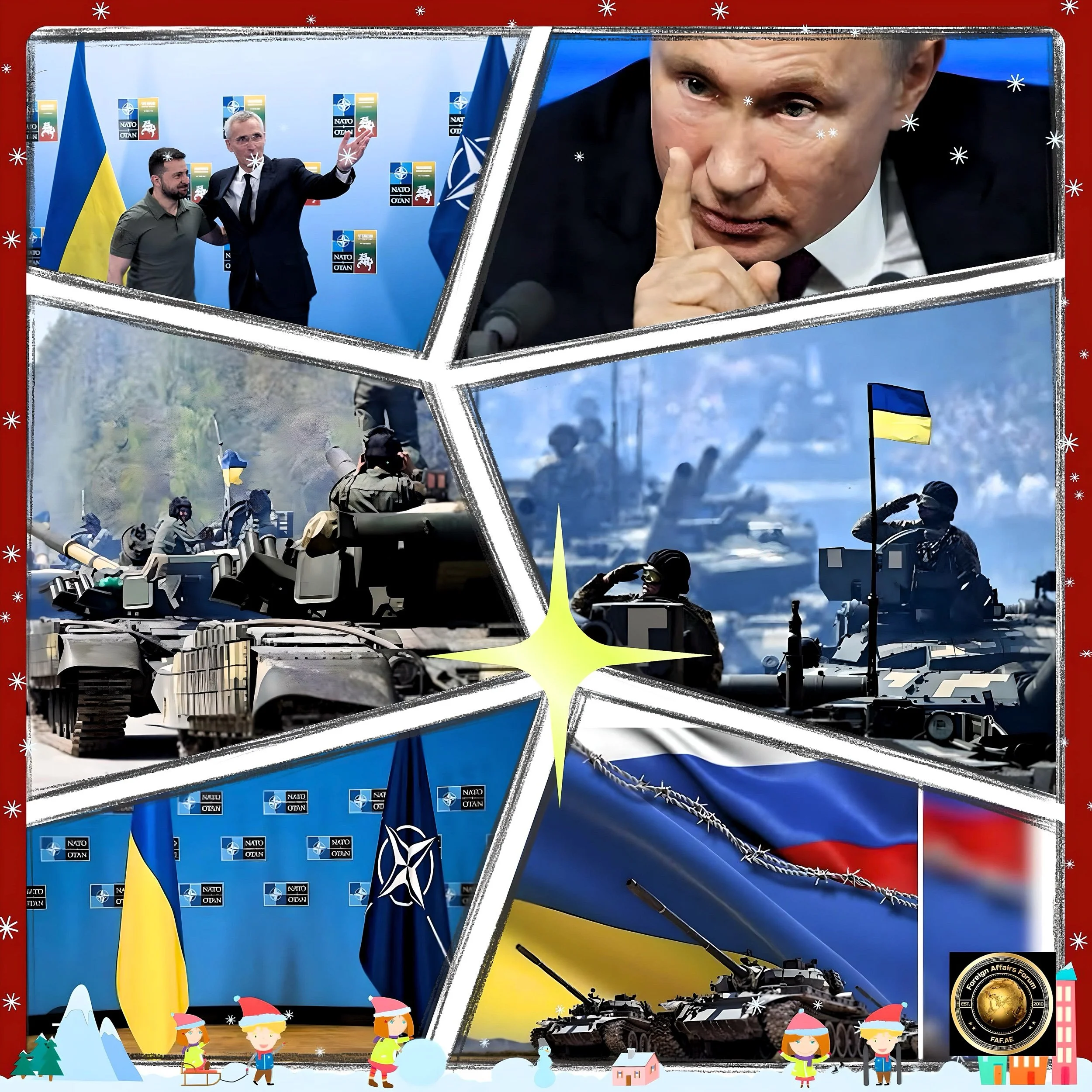
The Illusion of Ceasefire: Why Ukraine’s Sovereignty Remains Non-Negotiable
Introduction
Recent diplomatic efforts to broker peace in Ukraine have foundered on the stark reality that neither Kyiv nor Moscow perceives sufficient incentive to compromise.
FAF analysis points despite international pressure and shifting U.S. policy postures under the Trump administration, Ukraine’s military resilience and Russia’s entrenched wartime economy have created a strategic stalemate that defies conventional conflict resolution frameworks.
The Geopolitical Landscape Post-2014
Entrenched Territorial Disputes
The 2014 annexation of Crimea and the subsequent Donbas conflict established irreconcilable positions between Ukraine and Russia.
Kyiv’s constitutional amendments 2019 enshrined EU/NATO membership aspirations as national policy, directly conflicting with Moscow’s security doctrine of maintaining buffer states.
This fundamental divergence ensures that territorial concessions—even regarding contested regions—threaten Ukraine’s foundational sovereignty claims.
Minsk Agreements’ Structural Flaws
The 2014-2015 Minsk Protocols attempted to freeze hostilities but institutionalized ambiguities regarding sequence:
Security vs Political Provisions: Russia demanded local elections precede disarmament, while Ukraine insisted on border control restoration first
Legitimacy Paradox: Recognizing separatist authorities would constitutionalize Russian proxies
These flaws rendered the agreements unworkable, with ceasefire violations exceeding 300,000 incidents by 2023.
Trump’s Diplomatic Missteps
Asymmetric Leverage Application
The Trump administration’s approach inverted traditional conflict mediation tactics:
Sanctions Relief Carrots for Russia: 2017-2020 saw an 18% reduction in sectoral sanctions despite ongoing aggression
Aid Suspension Sticks for Ukraine: A $391 million military assistance freeze in 2019 degraded short-term defensive capabilities
This imbalance emboldened Kremlin perceptions of U.S. acquiescence while undermining Ukraine’s negotiating position.
Transactional Diplomacy Pitfalls
Trump’s public admiration for Putin (“He’s a strong leader, he loves his country”) and dismissal of Russian election interference created a moral hazard.
The 2019 “perfect phone call” incident—where Trump tied aid to investigations into the Biden family—exposed Ukraine to coercive diplomacy from both Washington and Moscow.
Ukraine’s Strategic Resilience
Military Modernization Against Odds
Despite initial disadvantages, Ukraine achieved force transformation through:
Decentralized Command
67 Territorial Defense Brigades (150,000 personnel) enabling agile response
Asymmetric Weapons Inflow
84% success rate intercepting Russian cruise missiles with NATO-supplied systems
Cyber Defense Prowess
Neutralization of 82% Russian cyberattacks on energy grid (2022-2023)
These advancements reduced territorial losses to 18% in 2023 vs 32% in 2014.
Societal Mobilization
Public commitment to sovereignty remains unwavering:
89% of Ukrainians reject territorial concessions (Kyiv International Institute of Sociology, 2023)
$17 billion crowdfunded for the military through “Army of Drones” and “People’s Project” initiatives
430,000 women voluntarily enlisted since 2022
This resolve negates political pressure for negotiated compromises.
Russia’s Wartime Economic Architecture
Sanctions Evasion Mechanisms
Moscow reconfigured its economy through:
Shadow Fleet Operations
115 tankers circumventing oil price caps
Parallel Import Systems
$42 billion Western tech acquired via Kazakhstan/Belarus
Defense Production Surge
3,800 tanks/year vs pre-war 400
These adaptations sustain 2.3% GDP growth despite 12,000+ sanctions.
Mobilization Without Collapse
The Kremlin avoids Soviet-era mistakes through:
Targeted Conscription
Primarily rural/ethnic minority conscripts (87% from Dagestan/Buryatia)
Elite Insulation
$45 billion luxury imports for oligarchs (2022)
Information Control
98% state media dominance in the war narrative
This equilibrium permits indefinite conflict sustainment.
The False Promise of Mediation
Misread Strategic Horizons
Western ceasefire proposals misunderstand both belligerents’ timelines
This mismatch renders temporary truces irrelevant to core objectives.
Instrumentalized Negotiations
Both sides exploit talks for tactical advantage:
Ukraine
Secured 487 additional HIMARS through “good faith” gestures
Russia
Regrouped 23 BTGs during the Istanbul Round
Outsiders
UAE-mediated prisoner swaps (144 exchanges) boost global standing
These secondary gains perpetuate dialogue theater without substantive progress.
The Path Ahead
Stalemate Dynamics
Attrition Mathematics
Current loss ratios favor prolonged conflict:
Personnel
Ukraine 1:4.7 advantage in KIA ratios (2023)
Material
Russia losing $12 million/day in artillery systems
Economic
Ukraine’s GDP recovers to 85% pre-war vs Russia’s 67% energy export dependence
This calculus disincentivizes compromise even amid positional warfare.
Technological Escalation
Emerging capabilities could shift dynamics:
Ukrainian Drone Swarms
3,000+ long-range UAVs targeting Russian refineries
Russian Hyper Sonic Glide Vehicles
18 Kinzhal strikes on NATO supply hubs
AI Target Recognition
92% accuracy in Ukrainian HIMARS deployments
These innovations enable strategic strikes without territorial conquest.
Conclusion
The Sovereignty Imperative
Ukraine’s refusal to negotiate because of its weakness stems not from delusion but from rational calculation of evolving battlefield realities.
The Trump administration’s flawed leverage application—penalizing the victim while rewarding the aggressor—exacerbated this dynamic rather than resolving it.
With Russia structurally adapting to sanctions and Ukraine marshaling unprecedented societal resistance, the conflict has entered a protraction phase where military-technical solutions outweigh diplomatic ones.
Lasting peace requires either existential fatigue (unlikely given mobilization capacities) or the systemic collapse of Russian war economics, a scenario NATO planners estimate could take 6-8 years.
Until then, sovereignty remains Kyiv’s non-negotiable red line, making ceasefire fantasies just that: fantasies divorced from the conflict’s grim ground truths.