The Empty Arsenal of Democracy to ‘Empty Arsenal’ : America’s Critical Defense Industrial Base Challenge
Introduction
The United States faces a profound strategic vulnerability that threatens its ability to serve as the global “Arsenal of Democracy” in an era of intensifying great power competition.
FAF, Defense.Forum analyzes that while America maintains the world’s largest military budget, the underlying defense industrial base has deteriorated significantly since the Cold War, creating dangerous gaps in production capacity, supply chain resilience, and strategic stockpiles.
The convergence of multiple security crises—from supporting Ukraine’s defense against Russia to preparing for potential Chinese aggression against Taiwan—has exposed the stark reality that America’s defense manufacturing capabilities are insufficient to meet the demands of prolonged, high-intensity conflicts with peer adversaries.
This erosion of industrial capacity, combined with increasing consolidation in the defense sector and over-reliance on foreign suppliers, represents a fundamental threat to American national security and the stability of the rules-based international order.
Historical Context: From Arsenal to Atrophy
The Original Arsenal of Democracy
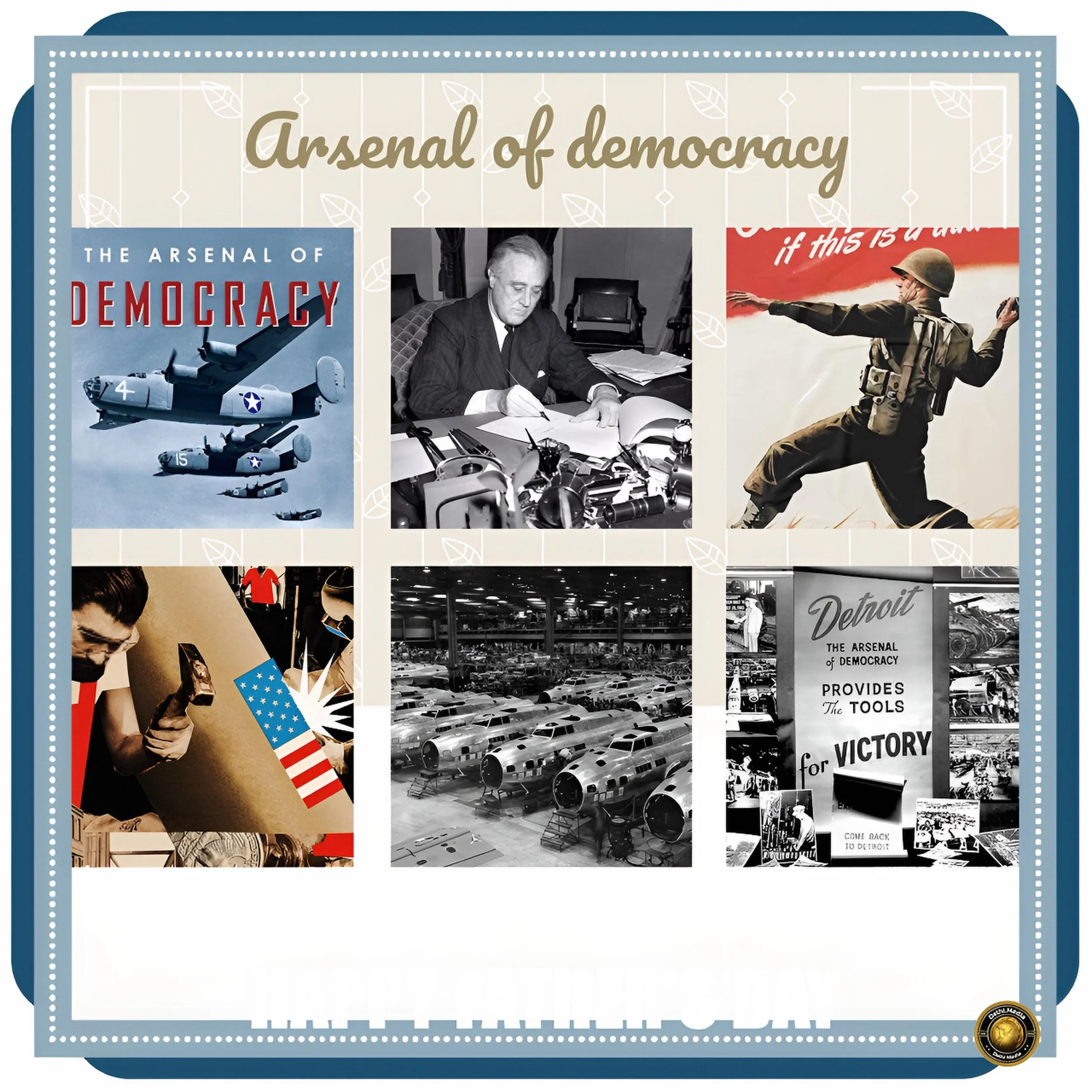
America as the “Arsenal of Democracy” originated during World War II.
President Franklin D. Roosevelt used this phrase in his December 29, 1940, radio address to describe the essential role American industry should play in supporting Allied nations against Nazi Germany.
Roosevelt’s vision transformed the United States into the primary supplier of military materiel for the Allied war effort, with American industry producing extraordinary quantities of weapons and equipment that proved decisive in achieving victory.
During World War II, the United States demonstrated remarkable industrial capacity, producing 17 aircraft carriers, 300,000 planes, and roughly 50,000 Sherman tanks between 1942 and 1945 alone.
This massive production capability fully mobilized American industrial resources, with companies like Ford transitioning from automobile manufacturing to tank production.
The “Arsenal of Democracy” became synonymous with America’s ability to outproduce its adversaries and supply its allies with the tools necessary for victory.
This model's success during World War II established a template for American strategic thinking that persisted through the Cold War.
However, technological changes and evolving strategic circumstances have challenged the fundamental assumptions underlying this approach—that the United States would have time to mobilize industrial capacity and that conflicts would be prolonged enough to allow for this mobilization.
Post-Cold War Consolidation and Decline
The end of the Cold War triggered what defense analysts call the “Peace Dividend,” which fundamentally restructured the American defense industrial landscape.
This period saw massive consolidation in the defense sector, with major defense suppliers shrinking from more than 50 companies to just five that now control approximately 70% of defense contracts by value.
Lockheed Martin receives about 40% of major defense contracts, highlighting the industry's extreme concentration.
This consolidation has created dangerous vulnerabilities in the defense supply chain. Before the end of the Cold War, the government could source tactical missiles from 13 suppliers; by 2022, only three remained.
Similarly, the number of fixed-wing aircraft suppliers declined from eight to three, satellite suppliers fell from eight to four, and surface ship suppliers decreased from eight to two.
Perhaps most concerning, nearly two-thirds of major defense programs now have only one bidder, eliminating competition and reducing innovation incentives.
The human capital dimension of this decline is equally troubling. Over the past decade, the number of small companies supplying the Defense Department declined by more than 40%.
The defense industrial base has lost 17,045 independent companies in the last five years.
This loss of suppliers has created a fragile ecosystem where disruptions to any major contractor can cascade effects across the entire defense production system.
Contemporary Challenges
Multiple Fronts, Limited Capacity
Supporting Multiple Allies Simultaneously
The current global security environment has forced the United States to confront a fundamental question: can America simultaneously arm Taiwan, Ukraine, and Israel while maintaining its military readiness? a
The evidence suggests that there has not been a material delay in weapon deliveries to Taiwan or Israel due to Ukraine's support.
However, the underlying industrial capacity remains insufficient for sustained, large-scale conflicts.
The war in Ukraine has served as a stark wake-up call regarding American ammunition production capabilities.
According to National Security Advisor Jake Sullivan, Ukraine burned through a year’s worth of U.S. production of 155mm artillery shells “literally in a matter of weeks” during the early phases of the conflict.
This revelation highlighted the shallow depth of American precision weapon inventories and the inadequate production capacity to sustain prolonged conflicts.
Estimates suggest that U.S. forces in A major Pacific conflict require approximately 5,000 long-range precision missiles per week.
Current American stockpiles number only in the tens of thousands, and the defense industry cannot rapidly replenish these arsenals.
This gap between operational requirements and production capacity represents a critical vulnerability that could prove decisive in a conflict with China.
Supply Chain Vulnerabilities and Foreign Dependencies
Perhaps most alarmingly, many of America’s most critical long-range missiles—including Harpoons, Tomahawks, JDAMs, and JRAMs—cannot be manufactured without dozens of Chinese suppliers.
This dependency on a potential adversary for critical weapons components represents a fundamental breach of national security principles and could prove catastrophic in a conflict scenario.
The defense industrial base strategy recently introduced by the Department of Defense acknowledges these vulnerabilities while pointing to the increasing risk from a shrinking supplier base.
The concentration of defense production among just six vendors, which received two-thirds of all procurement dollars, down from 50 vendors in 1990, has created systemic risks beyond simple capacity limitations.
Traditional defense companies received $406 billion in contracts last year, while venture-
Backed companies—which could represent new entrants to the defense market—received only $4 billion.
This disparity suggests that the current acquisition system is failing to incentivize the expansion of the defense industrial base to include non-traditional suppliers who could bring innovation and additional capacity to the sector.
The Taiwan Crisis
Economic and Strategic Implications
Military Preparations and Escalating Tensions
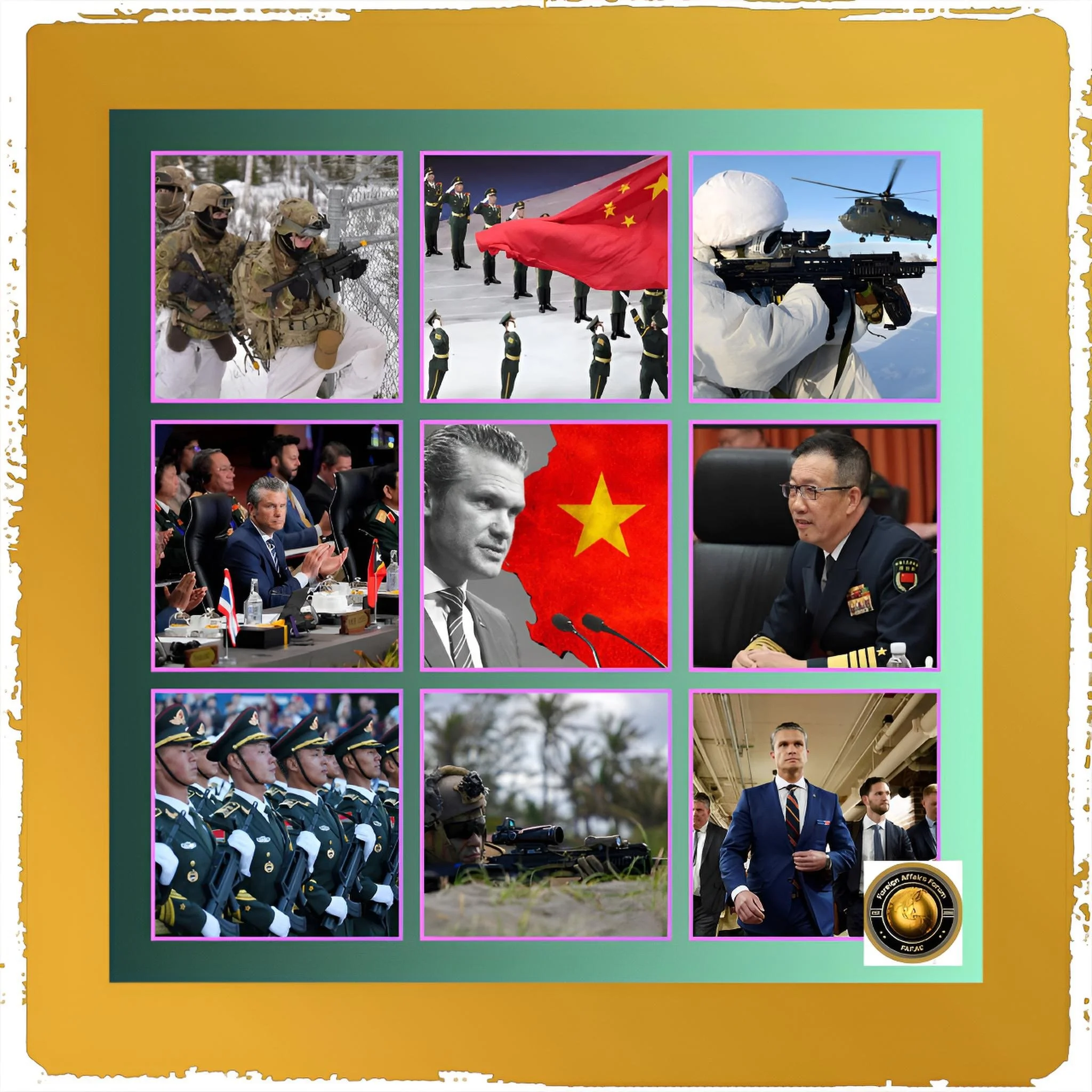
China’s increasing military pressure on Taiwan has created the most dangerous flashpoint for potential U.S.-China conflict.
Recent military exercises demonstrate Beijing’s growing willingness to use force to assert its territorial claims.
In April 2025, China deployed 19 warships around Taiwan in 24 hours, including the Shandong aircraft carrier group—the highest number recorded since May of the previous year when 27 vessels were reported.
Beijing described these exercises as practicing for “precision strikes” and blockade operations.
They involved “sea-air combat-readiness patrols, joint seizure of comprehensive superiority, assault on maritime and ground targets, and blockade on key areas and sea lanes.”
The sophisticated nature of these operations suggests that China is developing concrete operational plans for military action against Taiwan rather than engaging in mere posturing.
The appointment of Pete Hegseth as U.S. Defense Secretary has added another dimension to the crisis, with Beijing's sharp responses to his statements about ensuring “credible deterrence” across the Taiwan Strait.
Increased Chinese military activity and evolving American leadership approaches have created an environment where miscalculation could easily lead to conflict.
Economic Consequences of Conflict
The economic implications of a Taiwan conflict would be catastrophic for all parties involved.
Bloomberg Economics has estimated that a full-scale war would cost the global economy $10 trillion, equivalent to 10% of global GDP.
This estimate dwarfs the economic impact of Russia’s war against Ukraine, the COVID-19 pandemic, and the 2008 global financial crisis combined.
For China specifically, such a conflict would result in a 16.7% blow to GDP, while Taiwan’s economy would suffer a devastating 40% decline.
Even a more limited military blockade of Taiwan would impose significant costs, with Bloomberg Economics modeling a 12.2% hit to Taiwan’s economy, 8.9% for mainland China, and 3.3% for the United States.
These economic projections underscore a critical strategic reality: China’s economy depends on exports and global integration.
A war that severs access to international markets would be devastating, potentially leading to factory closures, rising unemployment, and accelerated exodus of multinational corporations to more stable regions such as India, Vietnam, and Mexico.
The disruption to global supply chains, particularly in semiconductors and electronics manufacturing, would create ripple effects throughout the world economy that could persist for years.
Financial Market Implications and Investor Sentiment
The mere possibility of conflict has already begun affecting global financial markets and investor behavior.
Taiwan stocks plummeted almost 10% in April 2025 following U.S. President Trump’s announcement of new import tariffs, with Taiwan’s benchmark index dropping to its lowest level in more than a year.
The panic selling pressure was so intense that Taiwan’s financial regulator imposed temporary curbs on short-selling to help stabilize markets.
Foreign investors have withdrawn nearly $11 billion from Taiwan stocks in 2025, driven by concerns over tariffs and the broader geopolitical situation.
Investment professionals increasingly view a Chinese invasion of Taiwan as a “tail-risk scenario” they must prepare for, though they struggle to identify effective hedging strategies.
As one fund manager noted, “You can’t finalize any trades; the currency could vanish entirely. You either proceed as if everything is normal or choose to stay away”.
The betting market Polymarket shows the likelihood of a Chinese invasion of Taiwan has surged to 12%, a significant increase from nearly zero earlier in the year.
This shift in perceived risk reflects growing uncertainty about U.S. strategic commitments under the Trump administration and concerns about the reliability of American support for Taiwan.
Rebuilding the Arsenal: Strategic Imperatives and Solutions
Industrial Base Modernization and Expansion
Rebuilding America’s defense industrial capacity requires fundamental changes to acquisition processes and industrial policy.
The current system, which relies heavily on traditional defense contractors operating under multi-year development cycles, is poorly suited to the rapid production requirements of modern warfare.
Instead, the Pentagon must embrace market-based signals through meaningful production contracts to incentivize capacity expansion.
The key to successful industrial base expansion is leveraging capitalist incentives to encourage traditional and non-traditional suppliers to invest in production capacity.
This means moving beyond the current model, in which venture-backed companies receive only $4 billion in contracts compared to $406 billion for traditional defense firms.
Large-scale, multi-year production contracts to a broader base of suppliers could stimulate the investment and capacity expansion necessary to rebuild the Arsenal of Democracy.
Specific recommendations include investing in modernizing existing arsenals to include more sophisticated systems, artificial intelligence software, and commercial satellite imagery.
The Pentagon also needs greater spending flexibility to respond rapidly to emerging threats and technological opportunities.
These changes must be accompanied by reforms to the acquisition system that reduce bureaucratic delays and enable faster contracting with non-traditional suppliers.
Stockpile Management and Strategic Reserves
The shallow depth of current U.S. weapons stockpiles represents an immediate vulnerability that must be addressed through systematic stockpiling of critical munitions.
This requires increased production and strategic decisions about which weapons systems to prioritize for stockpiling based on likely conflict scenarios and consumption rates.
The experience in Ukraine has demonstrated that modern conflicts can quickly exhaust precision munitions stockpiles.
Building adequate strategic reserves requires understanding the consumption patterns of different weapon systems and maintaining sufficient inventory to sustain operations while production capacity is expanded.
This is particularly critical for long-range precision missiles, where current stockpiles would be insufficient for sustained operations in a Pacific conflict.
Strategic stockpile management must consider different weapons systems' shelf life and maintenance requirements.
Unlike traditional military supplies, modern precision weapons often contain sophisticated electronics and software that require regular updates and maintenance.
A comprehensive stockpile strategy must account for these lifecycle costs and maintenance requirements while ensuring that stored weapons remain operationally effective.
Supply Chain Security and Domestic Production
Addressing the dangerous dependence on Chinese suppliers for critical weapons components requires a comprehensive supply chain security strategy.
This includes restoring critical production capabilities and developing alternative suppliers in allied countries.
The current situation, in which key missiles cannot be produced without Chinese components, is untenable and represents a fundamental national security vulnerability.
Developing domestic production capabilities for critical components will require significant investment and policy support.
This may include tax incentives for companies willing to establish domestic production facilities, guaranteed purchase agreements to reduce investment risk, and targeted research and development funding to overcome technical challenges associated with domestic production.
The United States must also work with allies to develop resilient supply chains that reduce dependence on potentially hostile nations.
This includes expanding defense industrial cooperation with partners like Japan, South Korea, Australia, and European allies who can be reliable suppliers of critical components and subsystems.
Conclusion
The transformation of America from the World War II “Arsenal of Democracy” to today’s Biden and Trump-era “Empty Arsenal” represents one of the most critical strategic challenges facing the United States in the 21st century.
The convergence of great power competition with China, the pressing support needs in Ukraine and Israel, and the alarming decline of our domestic defense manufacturing capabilities have created a formidable storm of vulnerabilities.
These threats jeopardize America’s capacity to defend its interests and effectively support its allies.
The stakes are exceptionally high. Economists project that a conflict over Taiwan could result in a staggering $10 trillion hit to the global economywhile Chinese military maneuvers around Taiwan grow increasingly aggressive. The United States is teetering on the edge of scenarios where our current defense industrial capacity falls woefully short.
Incremental reforms will no longer suffice; we urgently require a bold national initiative to restore American defense manufacturing capabilities on a scale reminiscent of the original Arsenal of Democracy mobilization.
Achieving this objective demands unprecedented collaboration between government and industry, sweeping reforms to defense acquisition processes, and steadfast political commitment from multiple administrations.
We cannot afford to entertain a scenario in which an unprepared America confronts the conflicts that will define the 21st century.
As President Roosevelt articulated in 1940, being the Arsenal of Democracy transcends economic goals; it is a strategic necessity essential for safeguarding freedom and democracy in an increasingly dangerous world.
The path forward is decisive: we must act swiftly on several fronts. This includes expanding the defense industrial base to include non-traditional suppliers, stockpiling essential munitions, securing supply chains against foreign dependencies, and empowering the Pentagon to respond rapidly to emerging threats.
The fundamental question looms: ‘Is America a democracy?’ In a time when global leadership is faltering, we cannot afford to project anything less than a strong political and economic stance to our allies and citizens.
American defense power is not merely about democracy; it is vital to international stability. We must not allow our commitment to global institutions to wane or compromise our own education system.
Only through decisive, comprehensive actions can America reclaim its stature as the Arsenal of Democracy, ensuring we remain fully equipped to defend our interests and those of our allies in the challenging decades ahead.