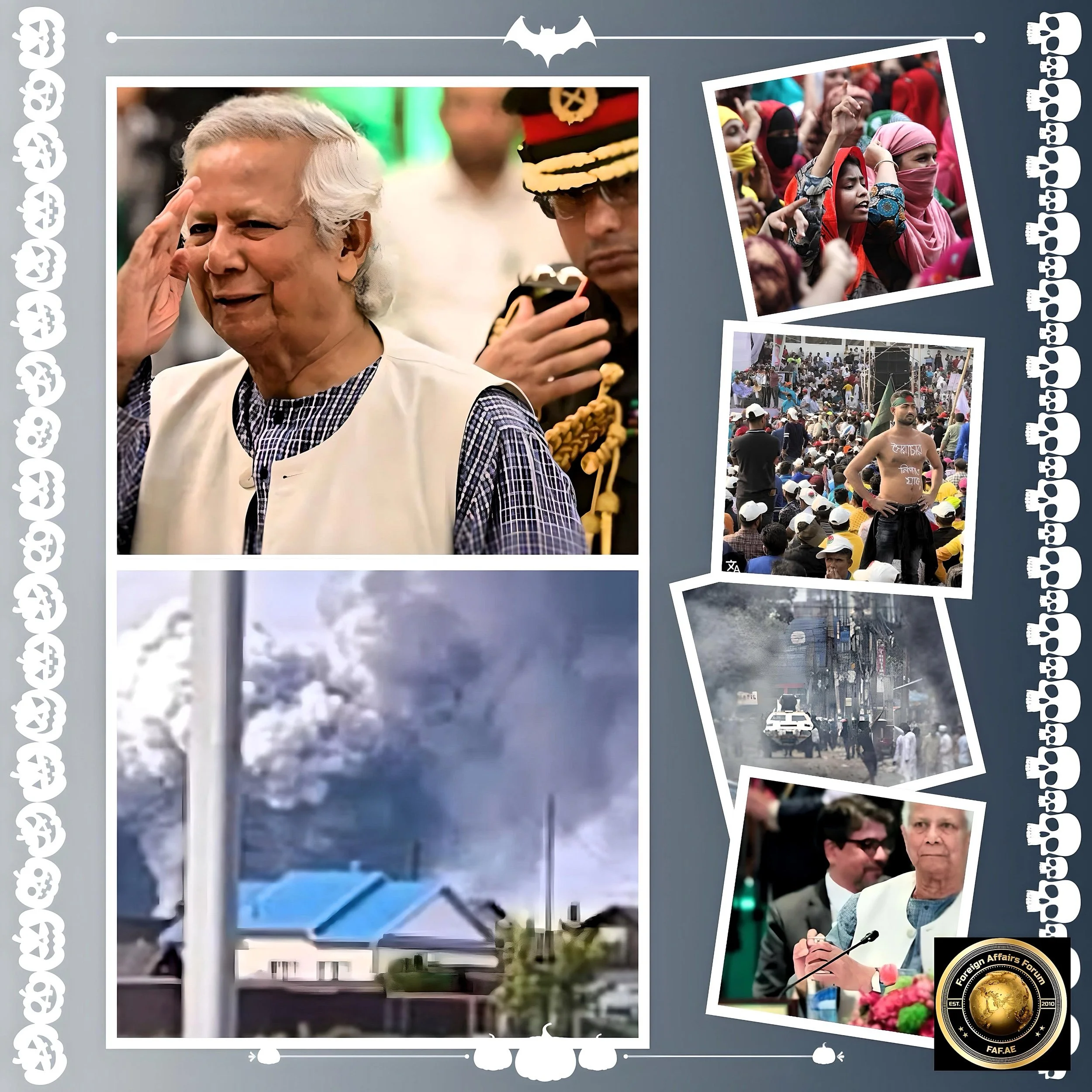
Mounting Political Tensions in Bangladesh: Elections, Civil Society, and Military Dynamics
Introduction
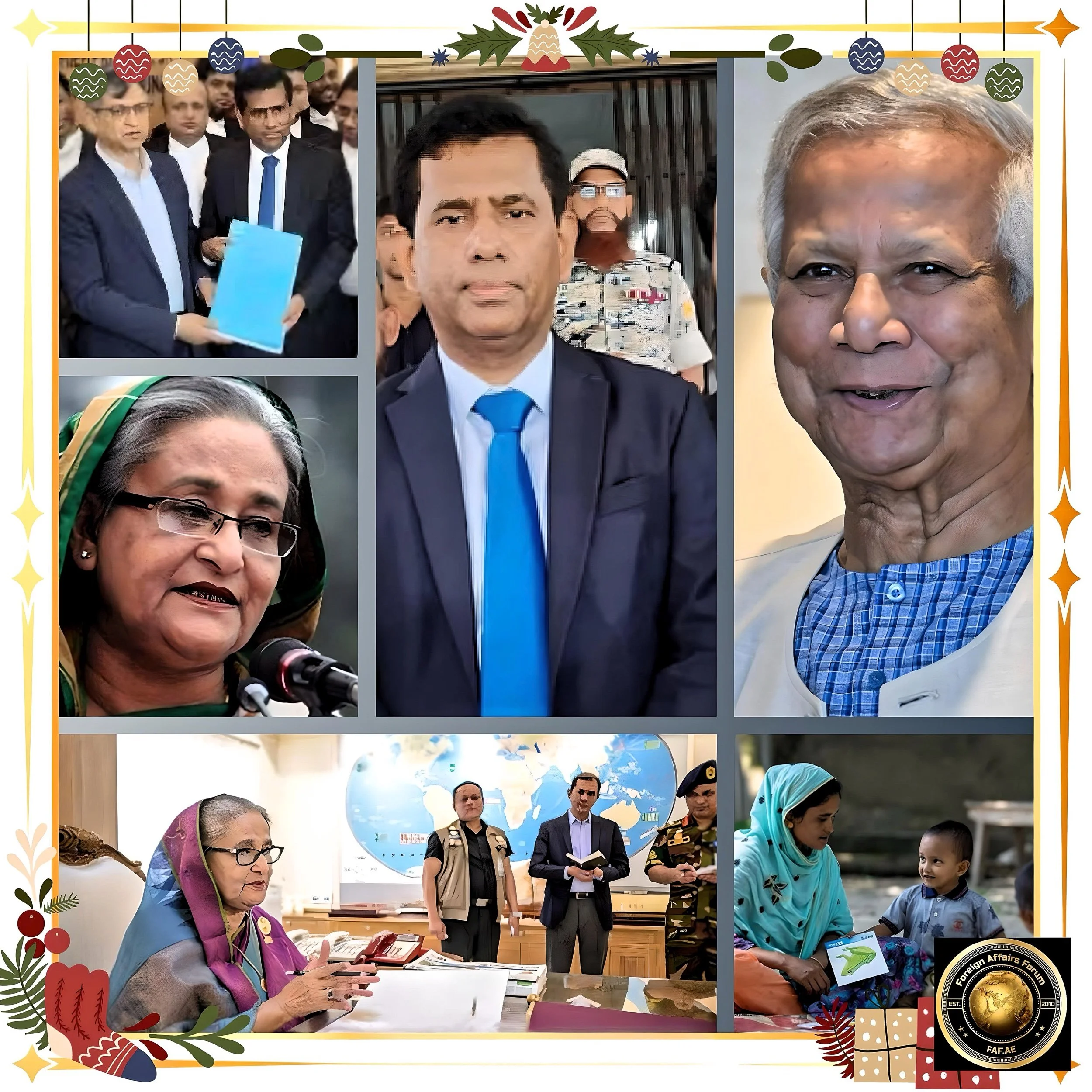
As Bangladesh approaches its next general election cycle, the political landscape has become increasingly fractious, with Nobel laureate Muhammad Yunus unexpectedly emerging as a focal point in the struggle between civil society and state power.
Contrary to initial reports, FAF reports that Yunus does not hold any formal interim leadership position—a misconception likely stemming from his symbolic role as a moral authority in Bangladesh’s governance debates.
The tensions instead center on the ruling Awami League’s consolidation of power, opposition demands for electoral reforms, and the military’s evolving role in maintaining political stability.
Electoral Context and Democratic Backsliding
Erosion of Caretaker Government Provisions
Bangladesh’s abolition of the constitutional caretaker government system in 2011 fundamentally altered election dynamics.
The current framework requires elections to be administered by the incumbent government; a structure opposition parties argue institutionalizes bias.
The Bangladesh Nationalist Party (BNP) and its 20-party alliance have boycotted previous elections under these conditions, reducing voter turnout to 42% in 2014 and 49% in 2018.
With the next election constitutionally mandated by January 2024, the BNP demands the restoration of the caretaker model, while Prime Minister Sheikh Hasina’s government maintains the current system ensures continuity.
Civil Society Mobilization
Muhammad Yunus’s Grameen Bank network—comprising 8.7 million members, 97% women—has become an unlikely political battleground.
The government’s 2023 push to install state-aligned leadership at Grameen through court orders ($250 million in alleged tax violations) is widely perceived as targeting Yunus’s moral authority.
This confrontation has mobilized civil society groups. In 2023, the “White Flag Movement” saw 500,000 micro-borrowers rally in Dhaka demanding institutional independence.
The Yunus Factor: Microfinance to Macro Politics
From Economic Empowerment to Political Symbol
Yunus’s Nobel Peace Prize (2006) and global stature have complicated government efforts to neutralize his influence.
The Awami League administration has pursued multiple legal avenues against him since 2010, including:
2011 forced retirement from Grameen Bank at age 70
2020 money laundering charges (later dismissed)
2023 labor law violations case involving Grameen Telecom
These actions have galvanized international attention, with 160 global leaders, including Barack Obama and Malala Yousafzai, signing a 2023 open letter decrying “politically motivated harassment.”
Opposition Coalescence Risks
While Yunus maintains no formal party affiliation, his persecution has created common ground between the BNP and smaller parties.
The 2023 “National Consensus Front” united 15 opposition groups under demands for electoral reform and Yunus’s legal immunity—a coalition controlling 38% of union councils according to local election results.
Military’s Expanding Governance Role
From Crisis Manager to Political Arbiter
The Bangladesh Armed Forces have historically played kingmaker during political deadlocks, staging 21 coups and counter-coups since 1971.
Under current Chief of Army Staff General Aziz Ahmed, the military has adopted more subtle influence mechanisms:
Civil-Military Fusion
127 active officers hold dual roles in civilian agencies
Economic Penetration
Military-controlled firms account for 12% of GDP through conglomerates like Sena Kalyan Sangstha
Digital Surveillance
The National Telecommunication Monitoring Center (NTMC) has been administered by Signal Corps since 2020
This institutional reach gives the military unprecedented leverage in election security operations, encompassing 600,000 personnel during voting periods.
Neutrality Concerns and Rent-Seeking
Analysts note the military’s $2.3 billion annual budget depends on parliamentary approvals, creating structural incentives to back the incumbent.
The 2023 Defense Policy Paper formalized military involvement in “development-security nexus” activities, including:
Infrastructure projects along India/Myanmar borders
Cybersecurity oversight of election management software
“Community policing” programs in opposition strongholds
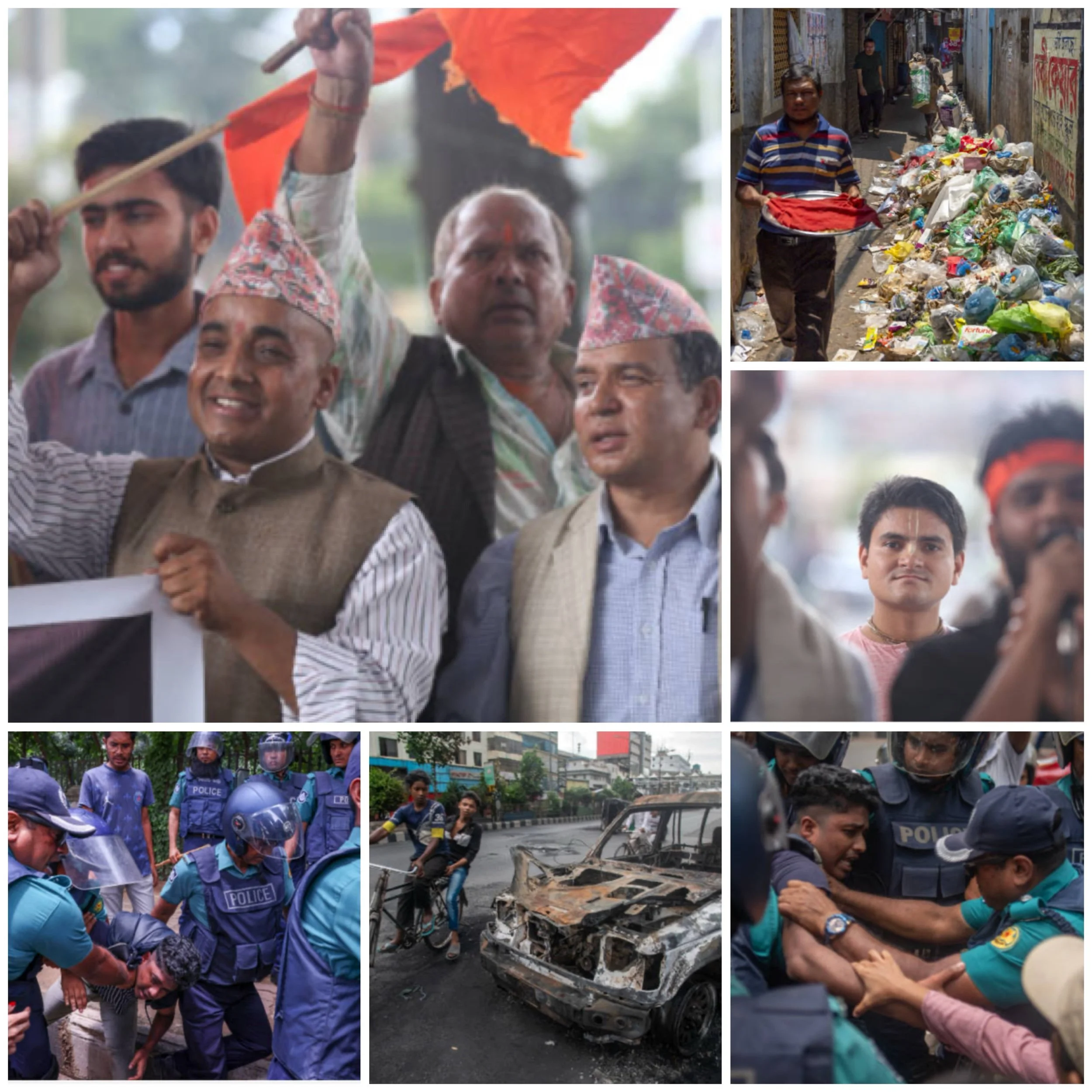
These developments blur traditional civil-military boundaries, with Human Rights Watch documenting 214 cases of enforced disappearances linked to military intelligence in 2022 alone.
International Dimensions and Economic Fallout
Great Power Competition
Bangladesh’s strategic location and $416 billion GDP have made it a battleground for influence:
China
$38 billion BRI investments in Padma Bridge/Rooppur Nuclear Plant
India
$8 billion loan package tied to transit corridors
USA
2023 visa restrictions on 65 officials over election violence
The Yunus factor complicates these relations, with the U.S. Congress proposing sanctions under the Global Magnitsky Act against Yunus’s persecutors.
Garment Sector Vulnerabilities
Political instability threatens the $42 billion ready-made garment industry, which employs 4.4 million workers.
The 2023 Hartal (general strike) campaign resulted in $700 million in canceled orders, prompting European brands to diversify 15% of procurement to Vietnam and India.
Pathways to Resolution
Electoral Confidence-Building Measures
Potential compromise solutions include
UN-supervised voter registration update (last conducted 2008)
Military withdrawal from civil administration posts
International observation missions with binding recommendations
Constitutional Reform Prospects
The 17th Amendment (2018) created scope for judicial election oversight, but implementation remains stalled.
Opposition demands focus on restoring Article 58 (caretaker government) through a parliamentary supermajority, a remote possibility given the Awami League’s 288/350 seat control.
Conclusion
A Precarious Crossroads
Bangladesh’s political crisis transcends conventional party rivalries, embodying a struggle between authoritarian consolidation and pluralistic governance.
Muhammad Yunus’s paradoxical position—simultaneously a global icon and domestic target—highlights the government’s intolerance for independent power centers.
With the military’s shadow governance network and $7.6 billion in foreign reserves (3 months’ import cover), the Awami League appears positioned to weather short-term storms. However, the looming climate catastrophe (20% GDP at risk by 2050) and youth unemployment (31.8% among graduates) suggest underlying vulnerabilities that could explosively converge with political grievances.
The international community’s response—whether principled intervention or realpolitik accommodation—will likely determine whether Bangladesh stabilizes as a democracy or transitions into competitive authoritarianism.