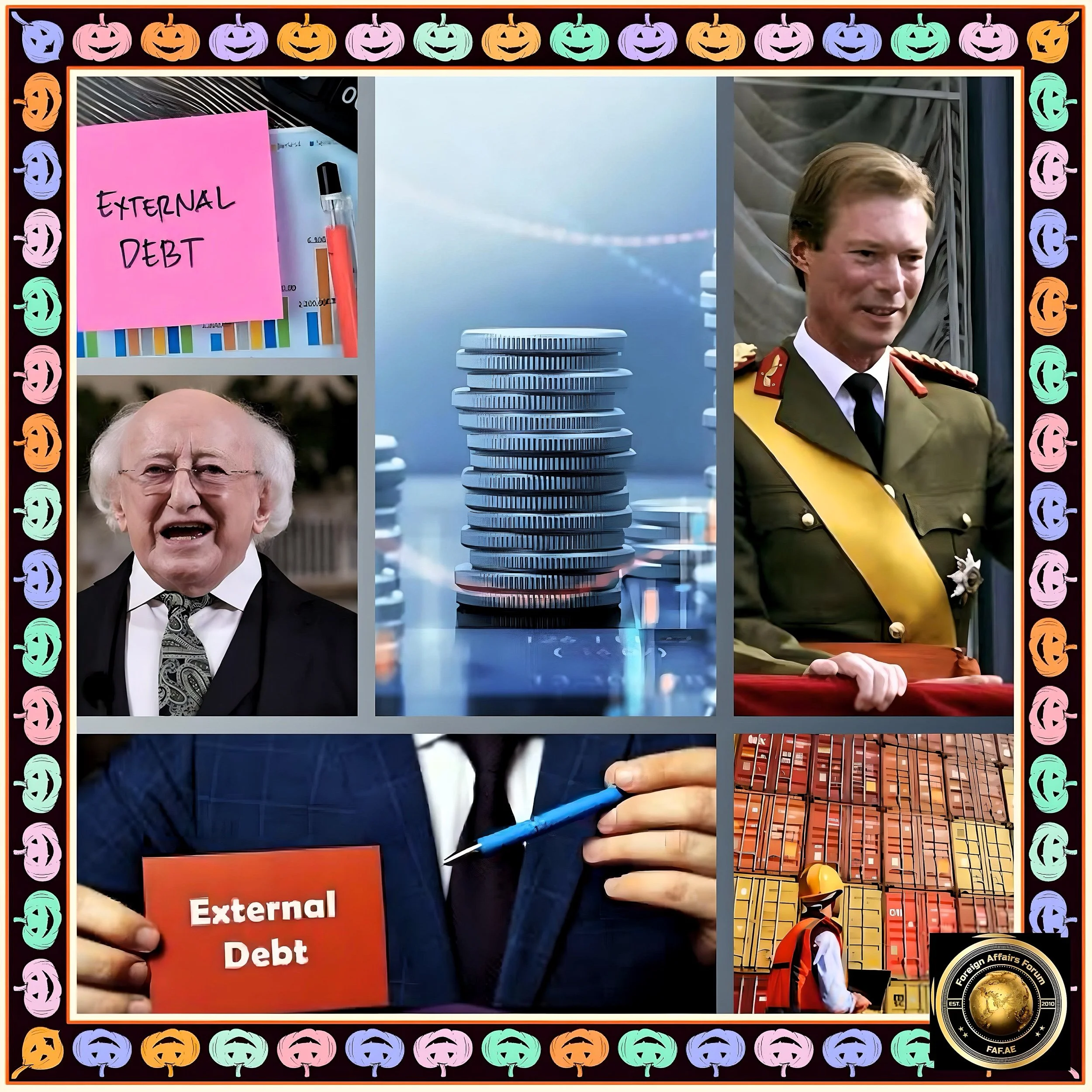
Debt Profiles and Management Strategies in Luxembourg and Ireland: A Comparative Analysis
Executive Summary
Luxembourg and Ireland, both prominent financial hubs in the European Union, exhibit distinct debt profiles shaped by their economic structures.
Luxembourg’s government debt remains modest at 26.6% of GDP ($24.3 billion) as of September 2024, but its external debt is exceptionally high at €3.53 trillion ($3.93 trillion), driven by its international financial sector.
Ireland’s government debt stands at 40.9% of GDP (€218.2 billion) as of 2024, while its external debt reaches $3.18 trillion.
However, this figure is inflated by multinational corporate activities and the International Financial Services Centre (IFSC).
FAF, Economy. Inc. analyzes that reducing external debt in these economies requires tailored strategies that address structural factors, including fiscal discipline, sectoral reforms, and international cooperation.
Debt Profiles of Luxembourg and Ireland
Luxembourg: A High-External-Debt Economy
Government Debt Dynamics
Luxembourg’s government debt-to-GDP ratio of 26.6% in September 2024 reflects prudent fiscal management, well below the EU average.
The nominal debt of $24.3 billion is manageable, supported by robust GDP growth and a diversified economy.
However, the country’s fiscal surplus has narrowed due to temporary stimulus measures to counter post-pandemic economic headwinds.
External Debt Challenges
Luxembourg’s external debt, at 4,446.8% of GDP ($3.93 trillion), is the highest globally. This stems from its global investment fund hub role, where cross-border financial intermediation inflates liabilities.
The external debt is predominantly private-sector-driven, with multinational corporations and investment vehicles leveraging Luxembourg’s regulatory framework.
While this debt does not directly burden public finances, it exposes the economy to global financial volatility, as seen during the 2018 liquidity crunch.
Ireland: Balancing Public and External Liabilities
Government Debt Trajectory
Ireland’s government debt decreased to 40.9% of GDP (€218.2 billion) in 2024, down from 43.3% in 2023, aided by fiscal surpluses and GDP growth.
A landmark €14 billion capital transfer from a European Court ruling bolstered revenues, while corporate tax inflows rose 11.1% year-on-year.
Despite progress, debt remains sensitive to corporate tax volatility, which accounts for 25% of total revenue.
External Debt Complexity
Ireland’s gross external debt reached $3.18 trillion in December 2024, but excluding IFSC entities, it falls to 300% of GDP ($224 billion).
The IFSC, hosting over 1,000 financial firms, inflates liabilities through intra-company lending and speculative flows.
Domestic sectors, however, face manageable net external debt of 95% of GDP, concentrated in non-financial corporations and households.
The Central Bank of Ireland emphasizes that headline figures obscure the economy’s net international investment position, which totaled -98% of GDP in 2024.
Comparative Analysis of Debt Sustainability
Structural Drivers of Debt
Luxembourg
The financial sector contributes 35% of GDP, with external debt tied to asset management and holding companies. Public debt sustainability is robust, but external liabilities necessitate vigilance against liquidity shocks.
Ireland
Reliance on multinational corporations (MNCs) and the IFSC creates a dual economy. While MNCs drive GDP growth, their profit repatriation and tax strategies limit domestic fiscal multipliers.
Risk Exposures
Rollover Risk
Luxembourg’s short-term external debt (27.7%) requires continuous refinancing, exposing it to market sentiment shifts. Ireland’s debt maturity profile is more extended, but non-bank financial institutions pose systemic risks due to opaque reporting.
Currency Risk
Both countries denominate debt in euros, mitigating exchange rate volatility. However, Luxembourg’s external assets (€12.3 trillion) offset liabilities, whereas Ireland’s net liabilities are more pronounced.
Recommendations for Reducing External Debt
Strengthening Macroeconomic Frameworks
Luxembourg
Maintain fiscal surpluses to buffer against financial sector shocks. The IMF recommends targeted temporary measures over broad stimulus to avoid distorting capital flows.
Ireland
Diversifying revenue sources, such as broadening property taxes and reducing reliance on corporate taxes, can enhance tax base resilience.
Sector-Specific Reforms
Financial Sector Regulation
Luxembourg should enforce stricter liquidity requirements for investment funds to curb speculative borrowing.
Ireland must improve transparency in non-bank financial intermediation, aligning with EU-wide stress-testing protocols.
Promoting Export-Led Growth
Both nations should incentivize high-value-added sectors (e.g., Ireland's tech and Luxembourg's green finance) to boost foreign exchange earnings.
Debt Management Innovations
Debt Swaps for Sustainability
Ireland could explore climate-linked bonds to refinance debt, tying repayments to environmental targets.
Luxembourg might leverage its AAA rating to issue long-term bonds, locking low rates amid ECB tightening.
Active Liability Management
As the IMF suggested, buybacks and swaps could reduce Ireland’s legacy debt from the 2008 crisis.
International Cooperation
EU-Level Risk Sharing
Advocate for a European Safe Asset to mutualize sovereign debt risks, reducing fragmentation.
Tax Harmonization
Support OECD global minimum tax initiatives to prevent profit shifting and stabilize corporate tax revenues.
Conclusion
Navigating Debt in Financial Hubs
Luxembourg and Ireland exemplify how structural economic roles shape debt profiles.
While Luxembourg’s external debt reflects its financial intermediation prowess, Ireland’s liabilities are bifurcated between multinational-driven flows and domestic obligations.
Reducing these debts requires nuanced strategies: Luxembourg must prioritize financial stability measures, whereas Ireland needs to fortify its tax base and sectoral balance.
Both nations benefit from proactive debt management and EU-level coordination, ensuring their fiscal frameworks withstand global shocks.
The IMF notes that “sound macroeconomic policies and targeted reforms remain the bedrock of debt sustainability in open economies.”