ISRAEL’s pattern - Greater Isreal - Middle East Current Affairs: Israel’s Wildfires, Regional Conflicts, and Territorial Dynamics
Introduction
Recent developments across the Middle East showcase multiple overlapping crises involving Israel, from natural disasters to military operations.
FAF examines these interconnected events while analyzing their broader implications for regional stability.
Israel’s Jerusalem Wildfires
Natural Disaster or Human-Caused?
Israel has recently battled what officials called “perhaps the largest fire ever in the country,” with blazes ravaging the Jerusalem hills for nearly 30 hours before being brought under control.
The fires scorched approximately 5,000 acres (20 square kilometers), including 3,000 acres of forest, prompting Prime Minister Netanyahu to declare a national emergency.
The cause of the wildfires remains disputed. While Netanyahu attributed the fires to arson and claimed 18 people had been arrested, police later clarified that only three suspects were detained.
Contradicting the Prime Minister’s claim, Israel’s fire service reportedly made a preliminary assessment indicating the blazes were likely caused by negligent hikers in the Mesilat Zion area, where an unusually high number of people had passed through before the fire started.
President Isaac Herzog offered another perspective, stating that the fires were “part of the climate crisis, which must not be ignored.”
This viewpoint aligns with environmental data showing that Israel’s mean annual temperature has increased by 1.8°C in the past decade, with the eastern Mediterranean warming 20% faster than the global average.
A perfect storm of environmental conditions exacerbated the severity of the wildfires: temperatures reaching 39°C, humidity below 10%, and dry winds gusting up to 80 km/h.
These conditions follow what the Israel Meteorological Service recorded as the driest winter.
International Response
The crisis prompted international assistance, with firefighter planes deployed from Greece, Cyprus, Croatia, Italy, and other nations.
Despite the extensive damage, no fatalities were reported, although several people required treatment for smoke inhalation and minor injuries.
Yemen’s Missile Attacks on Haifa and Central Israel
Yemen’s Houthi forces have intensified their missile campaign against Israel, with multiple launches targeting various parts of the country in recent days.
The most recent barrage occurred Saturday morning (May 3), activating air raid sirens across central Israel after a missile launch from Yemen.
On Friday (May 2), two missile alerts were triggered in northern Israel, with the first targeting the Ramat David Airbase around 5:30 a.m. and resulting in shrapnel landing in a kindergarten in Mishmar HaEmek.
A second barrage at 1:30 p.m. activated sirens in Haifa, the Carmel area, and the Jezreel Valley.
The Houthis claimed success in these operations, stating: “The strike was executed using a Palestine-2 hypersonic ballistic missile that successfully hit its target” and claiming that “the enemy’s defense systems failed to intercept the missile.”
However, the IDF reported intercepting the projectiles, and no significant damage or casualties have been reported beyond one person injured while running to a shelter.
Despite ongoing U.S. airstrikes against Yemen that have reportedly struck over 800 Houthi targets, the group appears to maintain its missile launch capabilities.
An Israeli defense official downplayed the threat, describing it as “mostly an annoying nuisance” and suggesting patience with the American-led campaign against the Houthis.
Israel’s West Bank and Gaza Operations
Operation Iron Wall in the West Bank
On January 21, 2025, Israel launched “Operation Iron Wall” in the West Bank, initially targeting the Jenin Brigades before expanding to Tulkarm and other Palestinian cities.
This operation has resulted in widespread displacement and destruction, with the UN agency UNRWA reporting that approximately 40,000 Palestinian refugees have been forcibly displaced from the northern West Bank.
Israel’s military approach in the West Bank has grown increasingly aggressive, with the use of air strikes, armored bulldozers, and advanced weaponry becoming commonplace-described by UNRWA as “a spillover of the war in Gaza.”
On May 1, Israel provided Palestinian officials with a new map detailing 106 structures slated for demolition in Tulkarem and Nur Shams refugee camps.
Defense Minister Israel Katz directed troops to remain in the refugee camps for a year to prevent residents from returning while stating that the military was dismantling weapons and infrastructure “on a large scale.”
The Israeli military has claimed it killed 60 militants and apprehended 280 others during the operations.
Ongoing Airstrikes in Gaza
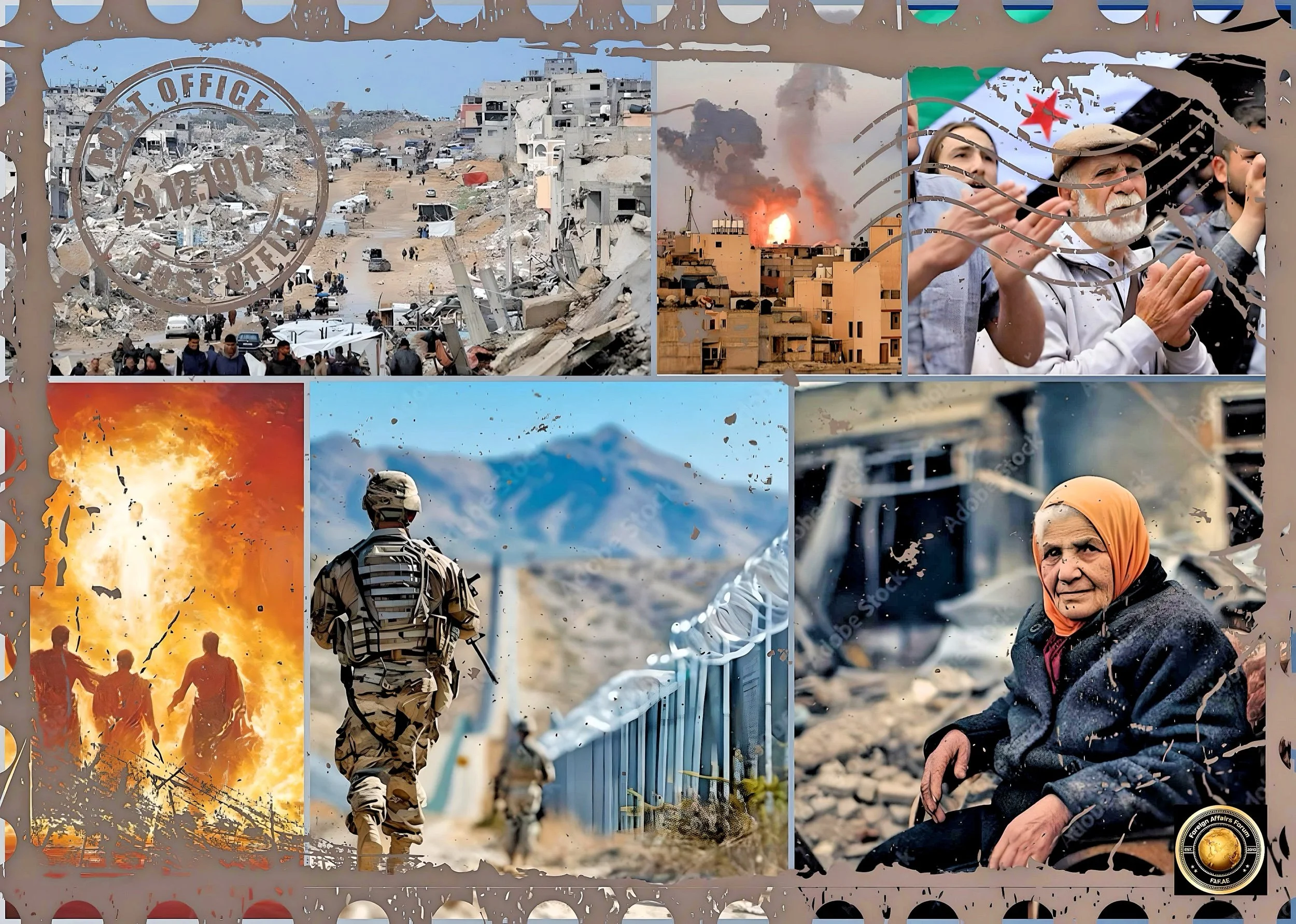
Despite a reported ceasefire that halted the Gaza war on January 19, 2025, airstrikes continue to impact civilians in Gaza.
On May 1, 2025, at least 13 Palestinians were killed in Israeli airstrikes targeting multiple areas across the Gaza Strip.
The victims included three civilians killed while farming in the Al-Mawasi area, a father and his two sons in Gaza City’s Al-Tuffah neighborhood, and displaced people sheltering in tents in Deir al-Balah.
The overall death toll in Gaza since October 7, 2023, has reportedly reached 52,418, with 118,091 others injured.
Israel’s Syrian Intervention and Druze Protection Claims
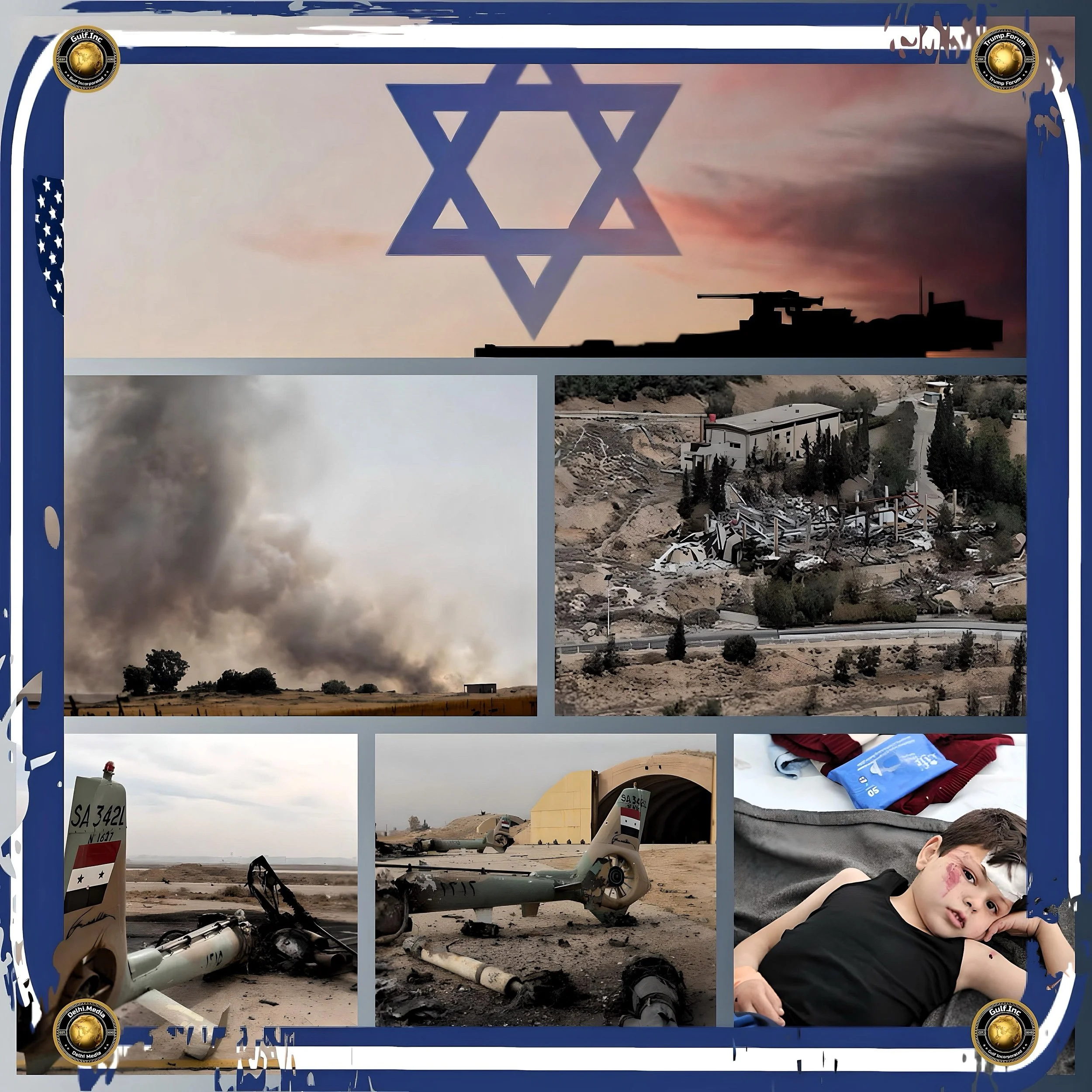
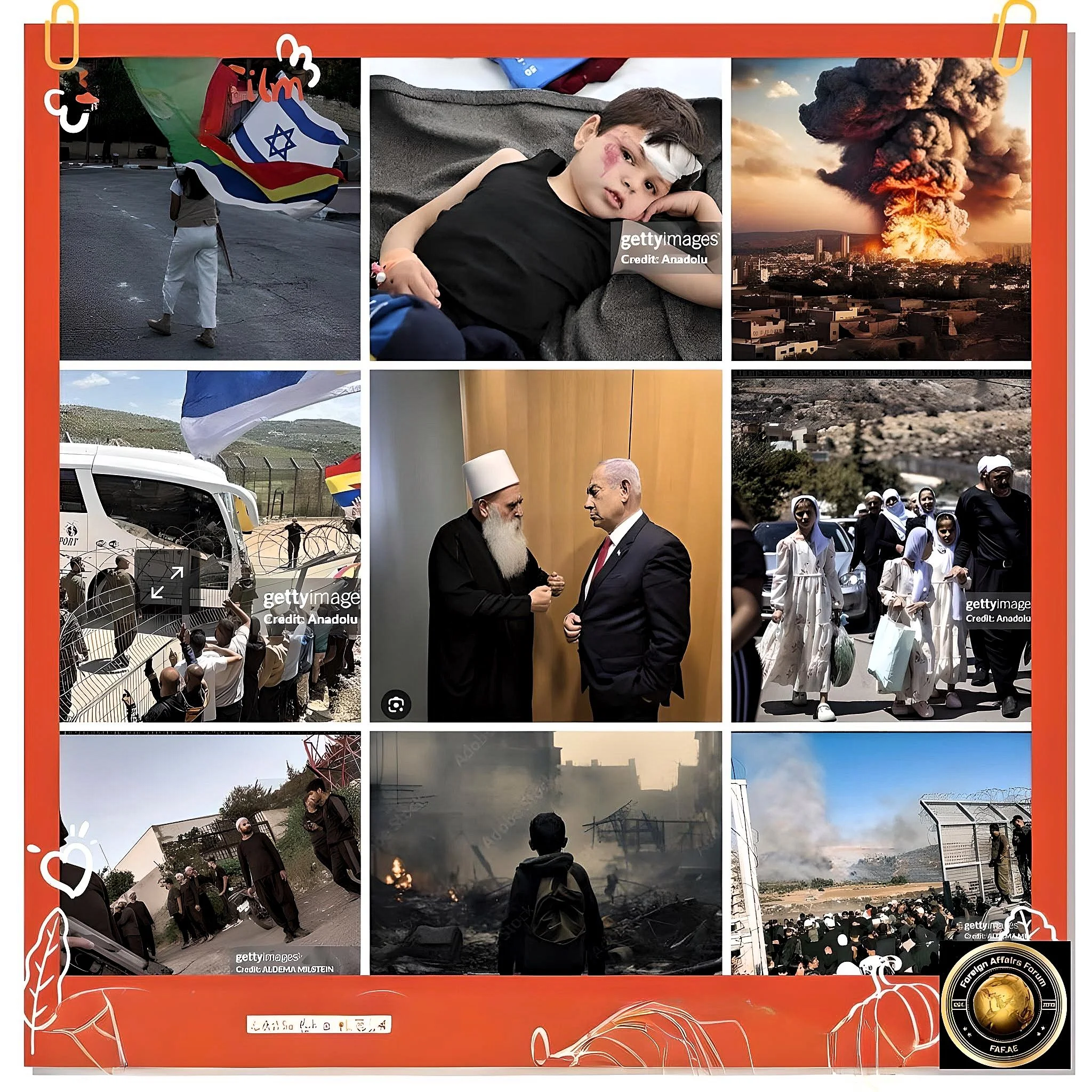
Israel recently announced the deployment of forces in southern Syria, claiming to protect the Druze minority and prevent “hostile forces” from entering their areas.
This move follows a series of Israeli airstrikes across Syria, including attacks near Damascus and in southern Syria.
The Israeli army also reported evacuating five injured Syrian Druze to Israel for medical treatment.
This intervention comes amid reported clashes between Syrian Druze fighters and pro-government forces, which Israel appears to be exploiting to escalate its presence.
However, this protective stance toward the Druze community raises questions about Israel’s motivations.
According to reports, Druze leaders have denied requesting Israeli assistance and instead affirmed their loyalty to Syria.
Critics argue that Israel’s sudden interest in protecting the Druze follows a pattern similar to previous territorial expansions, with the Israeli government “openly declaring its desire to see Syria split along sectarian and ethnic lines.”
Contrasting Approaches to Minority Communities
While Israel positions itself as a protector of the Druze, its approach to other minority groups has varied significantly.
Israel has provided some humanitarian assistance to Yazidi women recovering from ISIS trauma, with Bar-Ilan University researchers working with Yazidi mental health workers from Iraq.
Regarding the Kurds, Israel’s position appears strategically flexible.
New Israeli Foreign Minister Gideon Sa’ar recently stated that Israel should reach out to the Kurds, a move seen as a response to Turkey’s support for Palestinians.
However, this support has historically fluctuated based on Israel’s relations with Turkey, suggesting a pragmatic rather than principled approach to minority protection.
Regional Military Confrontations
The situation has escalated to include direct military confrontations between Israeli forces and those of other countries.
In a significant incident, Turkish F-16s intercepted Israeli F-35s conducting unauthorized strikes near Damascus.
Despite Turkish warnings, the Israeli aircraft proceeded with their operation before being escorted out of Syrian airspace by the Turkish jets.
The tensions between Israel and Turkey have reached a breaking point, with Turkish President Recep Tayyip Erdogan announcing the severing of all ties with Israel over its actions in Gaza.
The “Greater Israel” Question
These various military operations and territorial involvements have revived discussions about whether Israel is pursuing what some call a “Greater Israel” agenda.
Critics point to settlement expansions in the West Bank and military operations in Gaza, Lebanon, and now Syria as evidence of territorial ambitions beyond Israel’s internationally recognized borders.
The concept of “Greater Israel” has different interpretations.
While the most expansive biblical view (extending to the Nile and Euphrates) seems unrealistic, the annexation of the West Bank appears to be underway despite the absence of formal declarations.
The International Court of Justice ruled 2024 that annexation is effectively happening, even without official announcements.
Israeli Finance Minister Bezalel Smotrich has openly called for the annexation of the West Bank and Gaza and has reportedly talked about extending Israeli control as far as Damascus.
However, supporters of Israeli policy argue these actions are defensive measures in response to security threats, not territorial expansion.
Conclusion
Whereas Israel focuses on the burning of its 5,000 acres of land, we must ask: what about igniting real and meaningful change in the lives of Palestinians, Lebanese, and Syrians, with Jordan and Egypt also affected?
The current situation in the Middle East represents a complex interplay of natural disasters, military operations, and geopolitical maneuvering.
Israel’s wildfires, while possibly starting as a natural disaster exacerbated by climate change, have become politicized amid competing claims about their cause- The Israel pattern of antisemitism. When will be stop crying over this term? Next five or ten centuries?
Meanwhile, Israel’s military operations continue to expand geographically, from Gaza to the West Bank and now into Syria, raising significant humanitarian concerns and questions about long-term territorial intentions.
The increasing involvement of regional powers like Turkey and continued missile threats from Yemen’s Houthis further complicate an already volatile situation.
As these crises unfold simultaneously, the prospect for regional stability appears increasingly remote. Each new development adds another layer of complexity to an already intricate conflict landscape.