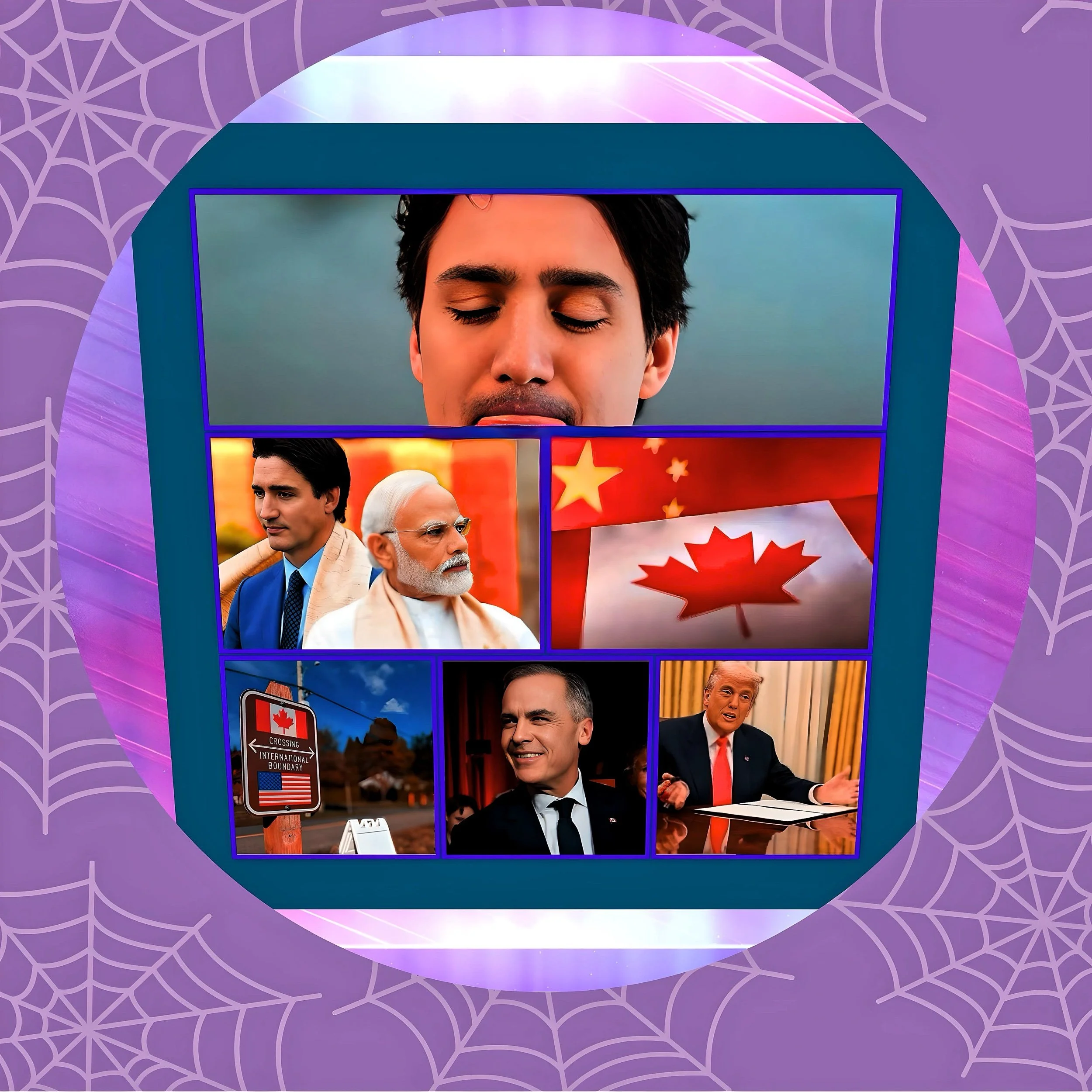
Trump Factor in Recent Elections: How Tariffs Influenced Victories in Australia and Canada
Introduction
Anthony Albanese’s center-left Labor Party secured a resounding victory in Australia’s May 3, 2025, election, while Mark Carney’s Liberal Party achieved a surprising comeback win in Canada’s April 28 election.
Both victories appear significantly influenced by Donald Trump’s aggressive trade policies and rhetoric, with citizens rallying around leaders they perceived could provide stability in uncertain times.
Trump’s Impact on Australia’s Election
Prime Minister Anthony Albanese secured a historic second term, becoming Australia’s first leader in 21 years to win back-to-back elections.
This victory came after his government had spent months trailing the opposition in polling, only to gain rapid support following President Trump’s confrontational international policies.
Trump’s administration had imposed a baseline 10% tariff on all Australian exports to the United States just one month before the election, citing Australia’s biosecurity laws- particularly its ban on U.S. beef imports—as justification.
Albanese called these measures “totally unwarranted” and emphasized they had “no basis in logic,” describing them as “not the act of a friend.”
The impact of these tariffs was substantial. Election analyst Tony Barry noted“Trump had a massive effect on changing people’s perception of risk.”
Political experts observed that Peter Dutton’s perceived “Trump-lite” policies-such as plans to cut public service jobs-turned voters away.
This connection became so pronounced that 35% of undecided voters reported feeling less inclined to support Dutton due to Trump.
Canada’s Trump-Defined Election
Mark Carney’s Liberal Party victory in Canada represents an even more dramatic comeback. Three months before the election, the Liberals trailed the Conservatives by approximately 20 percentage points in polling.
This dynamic shifted dramatically after Trump imposed 25% tariffs on Canada and repeatedly suggested annexing Canada as “the 51st state”.
Carney, a former governor of both the Bank of Canada and the Bank of England, positioned himself as the leader best equipped to handle Trump’s economic aggression.
In his victory speech, Carney declared, “President Trump is trying to break us so that America can own us - that will never happen.”
The election became almost entirely defined by Trump’s actions.
Political strategist Peter Donolo stated plainly: “Trump has been the decisive factor in this campaign.”
A POLITICO/Focal data poll found Trump emerged as a primary concern for nearly 40% of Canadian voters, second only to the cost of living issues.
Rising Nationalism and Citizen Solidarity
Australian Response
In Australia, Trump’s tariffs significantly shifted voter sentiment toward stability and experienced leadership.
One 67-year-old business owner voting in Sydney’s Bondi Junction said, “Trump is impacting everyone. What transpires on the outside is significantly more crucial than internal matters. I simply wish to maintain the status quo”.
Political analyst Henry Maher of the University of Sydney noted, “In times of instability, we expect people to return to a steady incumbent.”
This sentiment was reflected in Albanese’s messaging that explicitly positioned his government as providing “calm but effective leadership” during global volatility.
Canadian Nationalism Surge
In Canada, Trump’s actions triggered an even more visible nationalist response.
The threats of annexation sparked what observers called the “Elbows” movement, which was derived from a hockey tactic and represented Canadian resistance to Trump’s aggressive policies.
Canadian flags appeared prominently across the country, grocery stores highlighted Canadian-made products, and citizens began boycotting American goods and canceling cross-border travel.
The resulting surge in patriotism was so strong that hockey fans-in an extraordinary departure from tradition-even booed the American national anthem.
Trump’s threats effectively transformed what was expected to be a referendum on a tired Liberal government into a battle for national identity and sovereignty.
Comparative Electoral Impacts
Both elections demonstrate how external threats can reshape domestic politics.
In Australia, Albanese’s Labor Party secured what appears to be its most significant election victory since World War II. Opposition leader Peter Dutton lost the election and his parliamentary seat—a first for an Australian federal opposition leader.
Similarly, in Canada, Conservative leader Pierre Poilievre, who had been leading by 20 points in January, lost the election and his seat in Ontario’s Carleton district.
The Liberals secured approximately 169 districts compared to the Conservatives’ 144.
Conclusion
The evidence strongly suggests that Trump’s aggressive trade policies and rhetoric significantly influenced both elections.
While domestic issues like the cost of living remained important, Trump’s actions created a unifying external threat that benefited incumbents and center-left parties as defenders of national interests.
Albanese expressed the following sentiment in his victory speech: “During this period of worldwide uncertainty, Australians have opted for hope and resilience.”
Similarly, Carney declared that “the era of our prior relationship with the United States, characterized by increasingly deep integration, has concluded,” signaling a new chapter in both nations’ approaches to dealing with their powerful ally.
These elections may represent a broader pattern emerging across the democratic world, where Trump’s policies inadvertently strengthen his critics and reshape traditional political calculations.