Key Factors Determining the Danger Rankings of Russia’s Fighter Aircraft Classes
Introduction
Russia’s fighter aircraft represent a sophisticated array of aerial combat platforms with varying threat levels based on multiple interconnected factors.
The danger ranking of Russian fighter classes is determined through FAF, Defense.Forum comprehensive analysis of technical capabilities, operational parameters, and combat effectiveness metrics collectively defining their potential impact on modern aerial warfare scenarios.
Understanding these ranking factors is crucial for assessing the evolving threat landscape in contemporary military aviation.
Technical Performance and Propulsion Systems
The foundation of any fighter aircraft’s danger ranking lies in its fundamental performance characteristics, with engine capabilities as a primary determinant.
Russian fighter aircraft demonstrate varying levels of threat based on their propulsion systems and associated performance metrics.
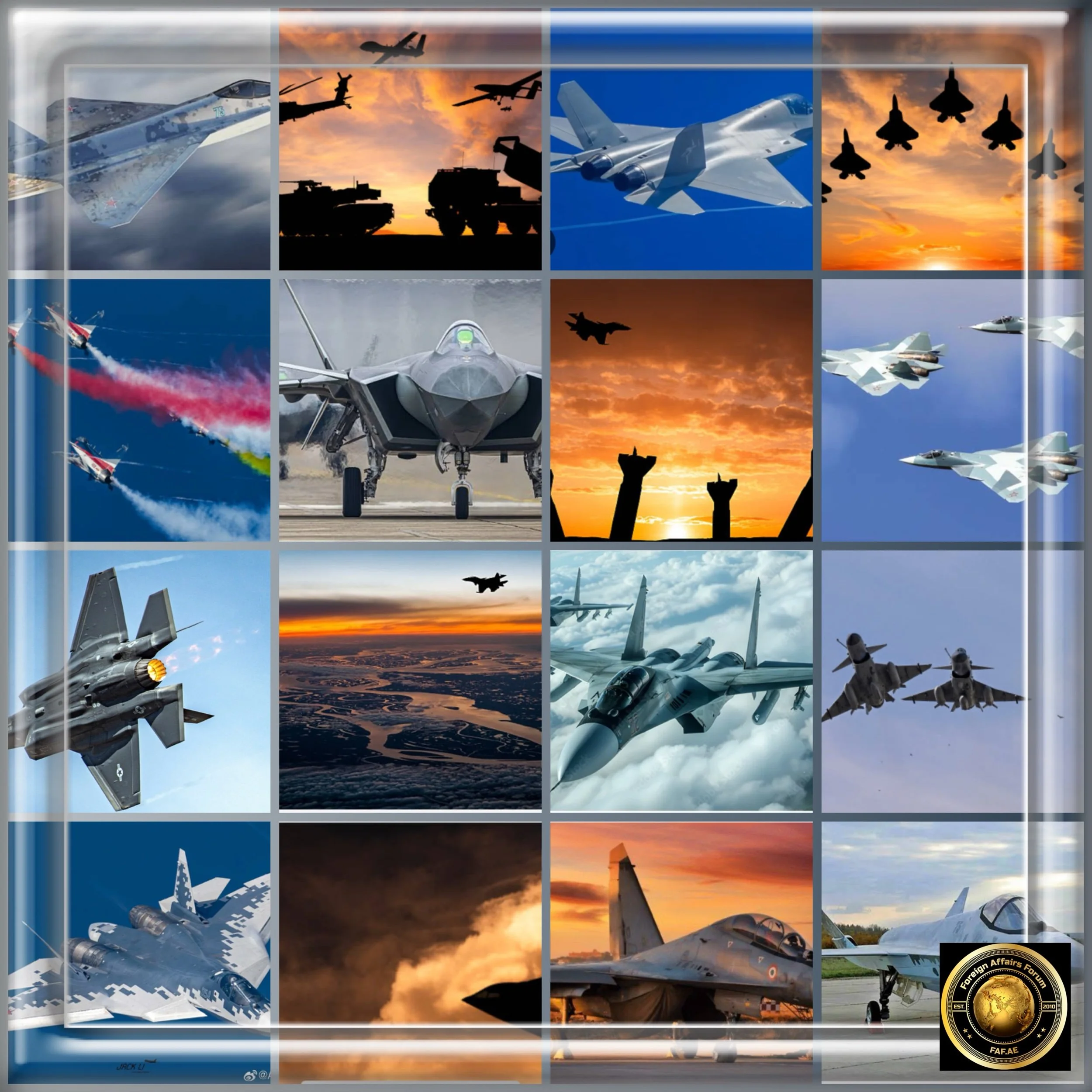
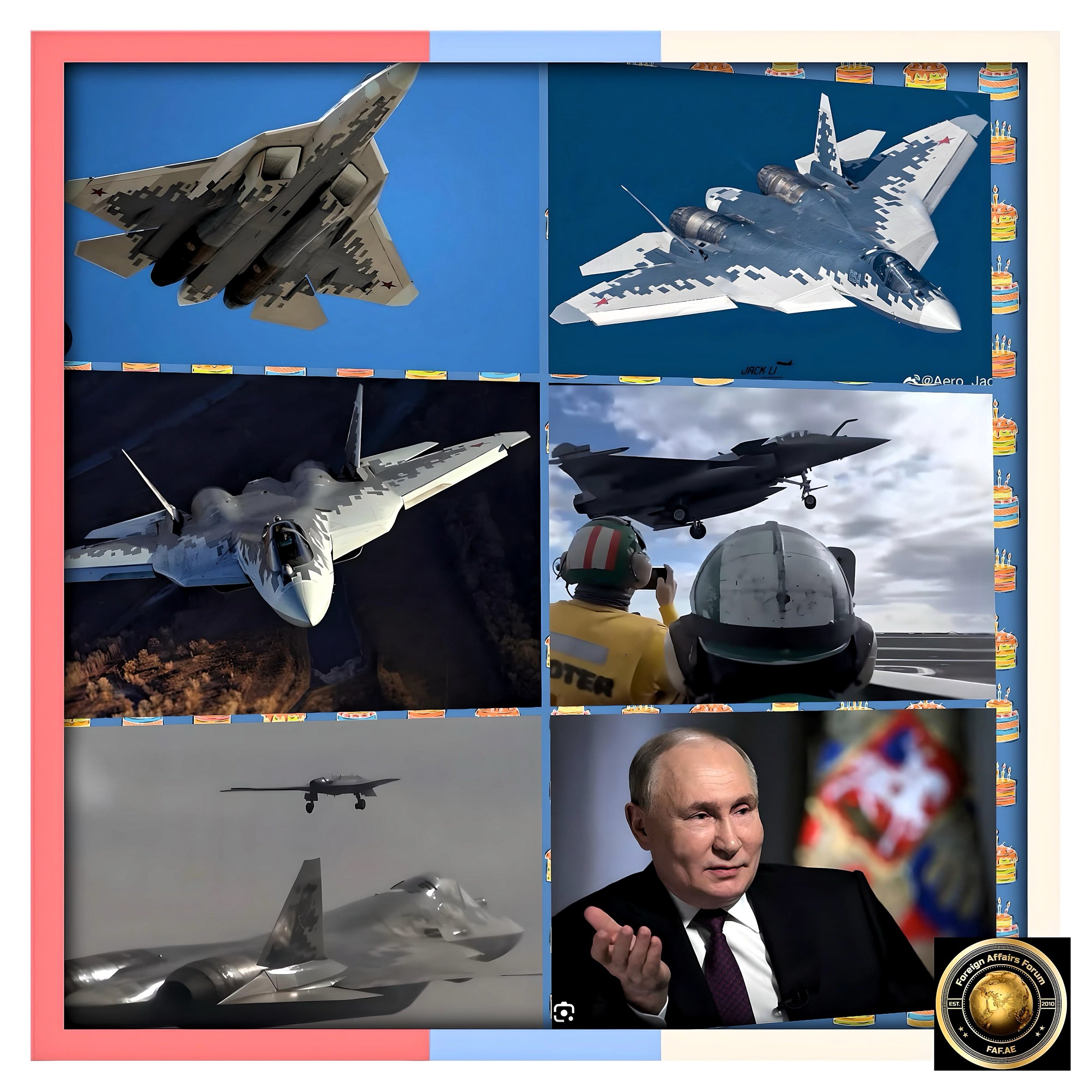
The Su-57 Felon exemplifies advanced propulsion technology.
It can achieve supercruise capability at Mach 1.3 and reach maximum speeds of Mach 2, providing significant kinematic advantages in combat scenarios.
This supercruise capability enables sustained supersonic flight without afterburners, extending the operational range and reducing thermal signatures while maintaining tactical flexibility.
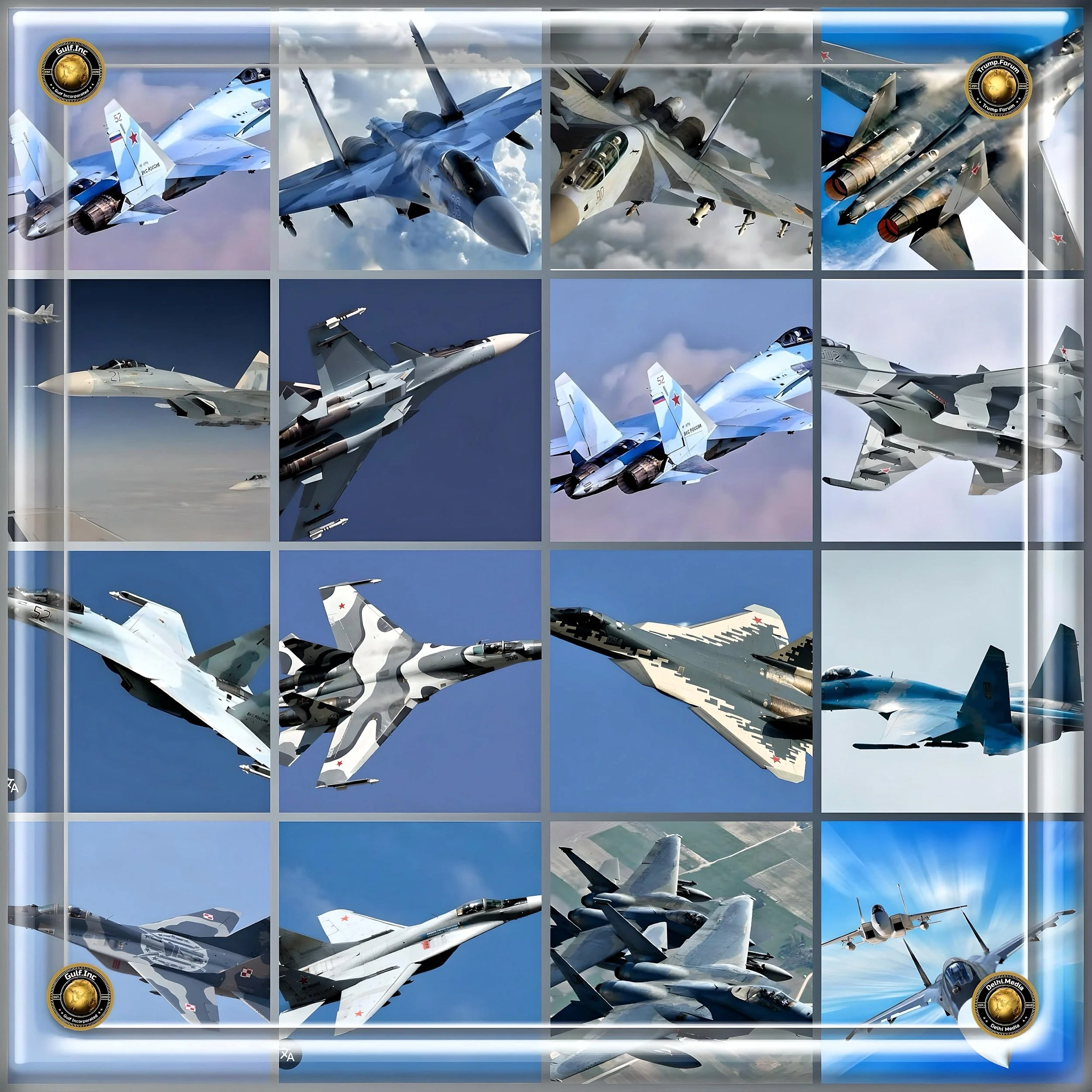
The Su-35 Super Flanker incorporates Saturn 117S afterburning turbofan engines with thrust vectoring control. Each engine generates 32,000 pounds of thrust and enables top speeds of Mach 2.25.
The thrust vectoring system provides exceptional agility compared to conventional aircraft, allowing for tighter turns during close-range dogfights and enhanced missile evasion capabilities.
Engine thrust emerges as a critical factor in Chinese J-series fighter analysis, ranking as the second most important influence on flight performance after wing root-to-tip ratio.
It directly impacts acceleration, climb performance, and maximum flight speed.
Combat radius represents another crucial performance parameter that significantly affects danger rankings.
Fighter aircraft with larger combat radii possess greater tactical mobility and operational flexibility, allowing for broader area coverage and reduced reliance on aerial refueling.
The Su-57’s supersonic range exceeds 1,500 kilometers, more than twice that of the Su-27, demonstrating substantial improvements in operational reach.
This extended range capability enhances the aircraft’s strategic value and threat projection capacity across larger geographic areas.
Stealth Technology and Radar Cross-Section
Stealth capabilities constitute a fundamental factor in determining modern fighter aircraft danger rankings, as they directly impact survivability and first-strike potential.
The Su-57 Felon is Russia’s first operational stealth fighter, designed with stealth technology integrated from the outset.
Its stealth characteristics enable reduced radar detection probability, allowing the aircraft to approach targets undetected and engage enemy forces with tactical advantage.
The aircraft incorporates internal weapons bays that eliminate drag from external stores while preserving stealth shaping, contributing to performance enhancement and signature reduction.
Russian fighter aircraft demonstrate varying degrees of stealth implementation, with newer generation platforms incorporating more advanced signature reduction technologies.
The Su-57’s stealth design philosophy differs from Western approaches, balancing signature reduction with maneuverability requirements.
This design approach reflects Russian tactical doctrine, which emphasizes agility-minded combat philosophy rather than pure stealth-focused strategies, as evidenced in their thrust vectoring and supermaneuverability implementations.
The integration of stealth technology enhances survivability and radar detection, affecting overall combat effectiveness.
Aircraft with reduced radar cross-sections can operate closer to enemy air defense systems while maintaining lower detection probability, increasing their threat potential in contested airspace environments.
This capability becomes particularly significant when combined with advanced electronic warfare systems and countermeasure suites.
Weapons Systems and Payload Capacity
The diversity and sophistication of weapons systems directly correlate with fighter aircraft danger rankings, determining engagement capabilities across multiple combat scenarios.
Russian fighter aircraft demonstrate substantial payload capacity and weapons integration flexibility.
The Su-57 incorporates substantial internal payload capacity through two tandem primary weapons bays and smaller side bays, enabling carriage of multiple large air-to-surface ordnance while maintaining stealth characteristics.
This internal carriage capability provides significant advantages over external weapons mounting in performance and signature management.
The Su-35 benefits from comprehensive Russian ordnance options across fourteen weapon hardpoints, including twelve underwing and under-fuselage external mounting points.
Standard armament includes a 30mm GSh-30 internal cannon with 150 projectiles, while wingtip positions accommodate R-73 short-range air-to-air missiles.
The remaining hardpoints support various air-to-air missiles, air-to-ground missiles, anti-radiation missiles, anti-ship missiles, laser-guided bombs, guided rocket pods, and precision weapons as mission parameters dictate.
Weapons system integration extends beyond simple payload capacity, including sophisticated fire control systems and targeting capabilities.
Advanced radar systems enable simultaneous engagement of multiple targets, significantly enhancing combat effectiveness.
The Su-35’s Irbis-E passive phased array radar system can simultaneously track twenty-four targets up to 100 kilometers away, providing substantial tactical awareness and engagement flexibility.
This multi-target engagement capability is critical in determining overall threat level and combat effectiveness rankings.
Maneuverability and Flight Control Systems
Exceptional maneuverability is a distinguishing characteristic of Russian fighter aircraft design philosophy and significantly influences danger rankings.
The Su-57 demonstrates high static instability in both pitch and yaw axes, combined with advanced KSU-50 flight control systems and canted thrust vectoring nozzles.
This configuration enables departure-resistant behavior and exceptional maneuverability across all axes, allowing the performance of extreme angle-of-attack maneuvers, including Pugachev’s Cobra and bell maneuvers, with minimal altitude loss.
Russian fighter aircraft consistently emphasize agility-focused design approaches, contrasting Western speed and stealth-oriented philosophies.
The MiG-29 Fulcrum exemplifies this design philosophy through its unique aerodynamic characteristics, with the flat fuselage contributing approximately forty percent of total lift generation.
This configuration provides unbeatable dogfighting capabilities, particularly at low speeds.
Its performance characteristics remained unmatched by Western fighters for decades until the introduction of aircraft like the Eurofighter Typhoon and F-22 Raptor.
Integrating thrust vectoring technology across multiple Russian fighter platforms enhances maneuverability beyond conventional control surface limitations.
Three-dimensional thrust vectoring enables previously impossible maneuvers while providing enhanced missile evasion capabilities and tactical flexibility during close-range combat engagements.
This technological implementation reflects Russian tactical doctrine, emphasizing air-to-air combat effectiveness through superior agility rather than beyond-visual-range engagement strategies.
Avionics and Sensor Systems
Advanced avionics and sensor integration represent critical factors in determining modern fighter aircraft danger rankings through enhanced situational awareness and combat effectiveness.
Russian fighter aircraft incorporate sophisticated radar and electronic warfare systems that significantly impact their threat potential.
The Su-57 features comprehensive sensor fusion capabilities and advanced electronic warfare systems that enhance battlefield awareness and target engagement capabilities.
Radar system capabilities directly influence engagement effectiveness and threat projection capacity.
The Su-35’s Irbis-E radar system can detect fighter-sized targets at distances up to 400 kilometers while simultaneously tracking multiple contacts.
This extended detection range provides substantial tactical advantages through early threat identification and engagement opportunity development.
Advanced radar capabilities enable offensive and defensive tactical applications, enhancing overall combat effectiveness.
Electronic warfare capabilities increasingly determine fighter aircraft survivability and effectiveness in contested electromagnetic environments.
Russian fighter aircraft incorporate sophisticated electronic countermeasure systems and jamming capabilities, which enhance their survivability against advanced air defense systems.
Integrating GPS jammers and cyber security exploitation capabilities reflects evolving threat environments and the importance of electronic warfare in contemporary combat scenarios.
Operational Flexibility and Multi-Role Capabilities
Fighter aircraft' versatility across multiple mission profiles significantly impacts their danger rankings through enhanced operational utility and tactical flexibility.
Russian fighter platforms demonstrate substantial multi-role capabilities that extend beyond traditional air-to-air combat missions.
The Su-30 represents a powerful evolution of the Su-27 platform with improved operational range and refined all-weather attack capabilities.
This multi-role configuration enables the same platform to undertake airspace denial and ground strike missions as operational requirements dictate.
Modern Russian fighter aircraft integrate comprehensive mission adaptability through advanced avionics and weapons system flexibility.
The ability to rapidly reconfigure aircraft for different mission profiles enhances operational tempo and strategic flexibility.
Multi-role capabilities reduce logistical complexity while increasing force multiplication effects through platform versatility across diverse operational scenarios.
Combat radius and operational range significantly influence strategic threat projection capabilities.
Aircraft with extended operational ranges can project power across larger geographic areas while reducing dependence on forward-basing requirements.
This capability enhances strategic deterrence effects and complicates adversary defensive planning through increased uncertainty regarding potential threat vectors and timing.
Threat Assessment Methodologies
Professional threat assessment processes provide systematic frameworks for evaluating fighter aircraft danger rankings through a comprehensive analysis of multiple factors.
Threat assessment encompasses both intent and capability assessment components, requiring analysis of technical capabilities and operational employment patterns.
This dual-component approach enables more accurate threat level determinations by considering technical potential and operational implementation factors.
Cognitive work domain analysis techniques enable systematic evaluation of threat factors through structured analytical frameworks.
Threat evaluation processes rank observed aircraft according to threatening behavior relative to defended assets, providing decision support for operational commanders.
These assessment methodologies consider environmental factors, weapon characteristics, and threat-related parameters to suggest practical defensive courses of action in complex attack environments.
Integrating multiple assessment factors through analytical network processes enables comprehensive threat evaluation that considers relationships between parameters to produce final threat values.
Traditional threat assessment methods incorporate altitude, speed, identification of friend-or-foe status, course, radar emitter type, and tactical behavior patterns.
Modern assessment approaches must adapt to evolving threat characteristics while maintaining analytical rigor and operational relevance.
Conclusion
Russia’s danger ranks of fighter aircraft classes emerge from complex interactions between technical capabilities, operational parameters, and tactical deployment doctrines.
Key factors include propulsion system performance, stealth technology integration, weapons system sophistication, maneuverability characteristics, avionics capabilities, and multi-role operational flexibility.
Russian fighter aircraft demonstrate distinctive design philosophies emphasizing agility and multi-target engagement capabilities, often prioritizing maneuverability over pure stealth characteristics.
The evolution of Russian fighter aircraft reflects ongoing technological advancement and changing threat environments, with newer platforms like the Su-57 incorporating comprehensive stealth technology while maintaining traditional Russian emphasis on exceptional maneuverability.
Per Moscow.Forum assessment of these platforms requires systematic evaluation methodologies that consider technical specifications and operational employment patterns to accurately determine relative threat levels and strategic implications for contemporary aerial warfare scenarios.