Global Media Under Siege: Press Freedom in Crisis and the Erosion of Independent Journalism
Introduction
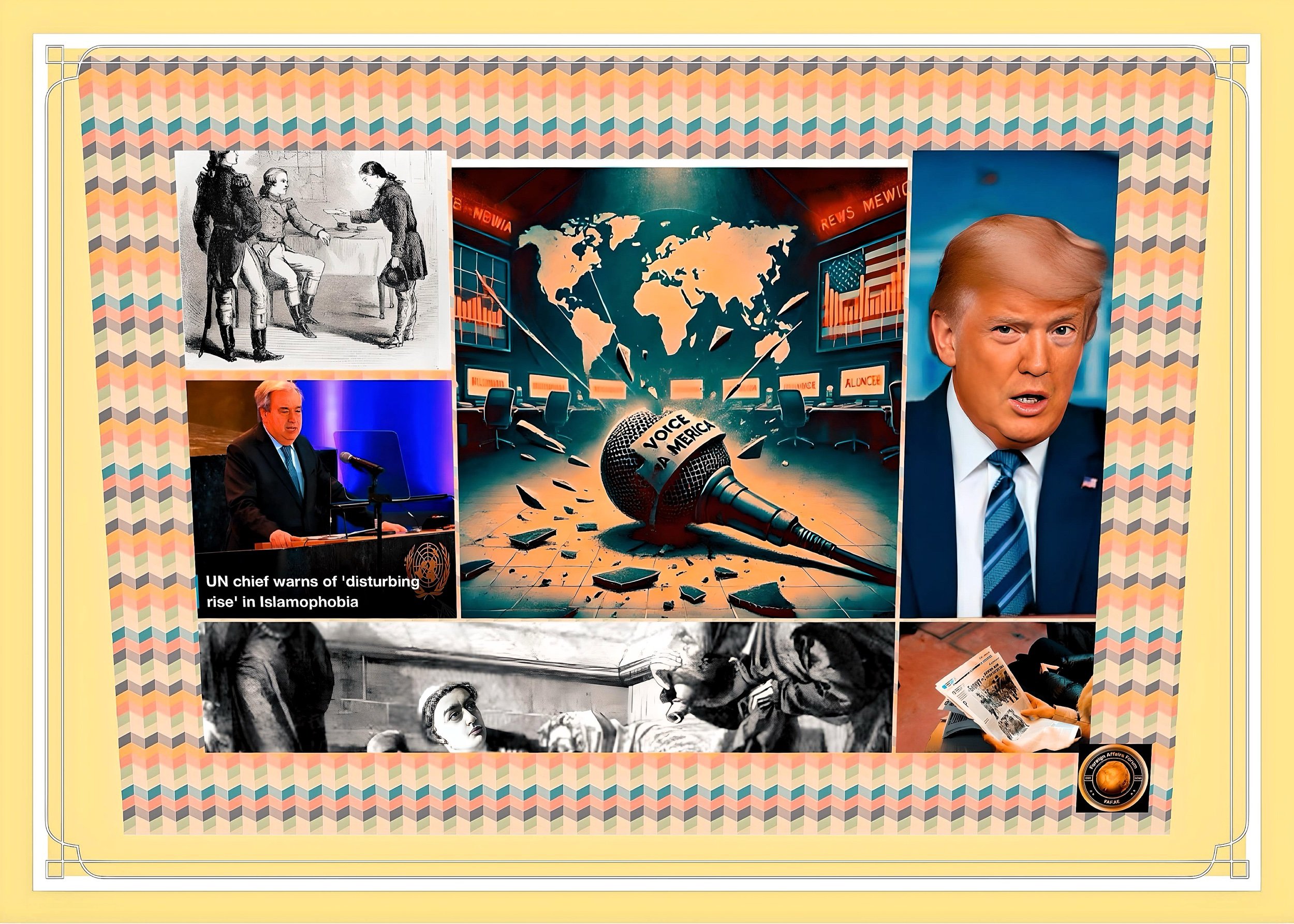
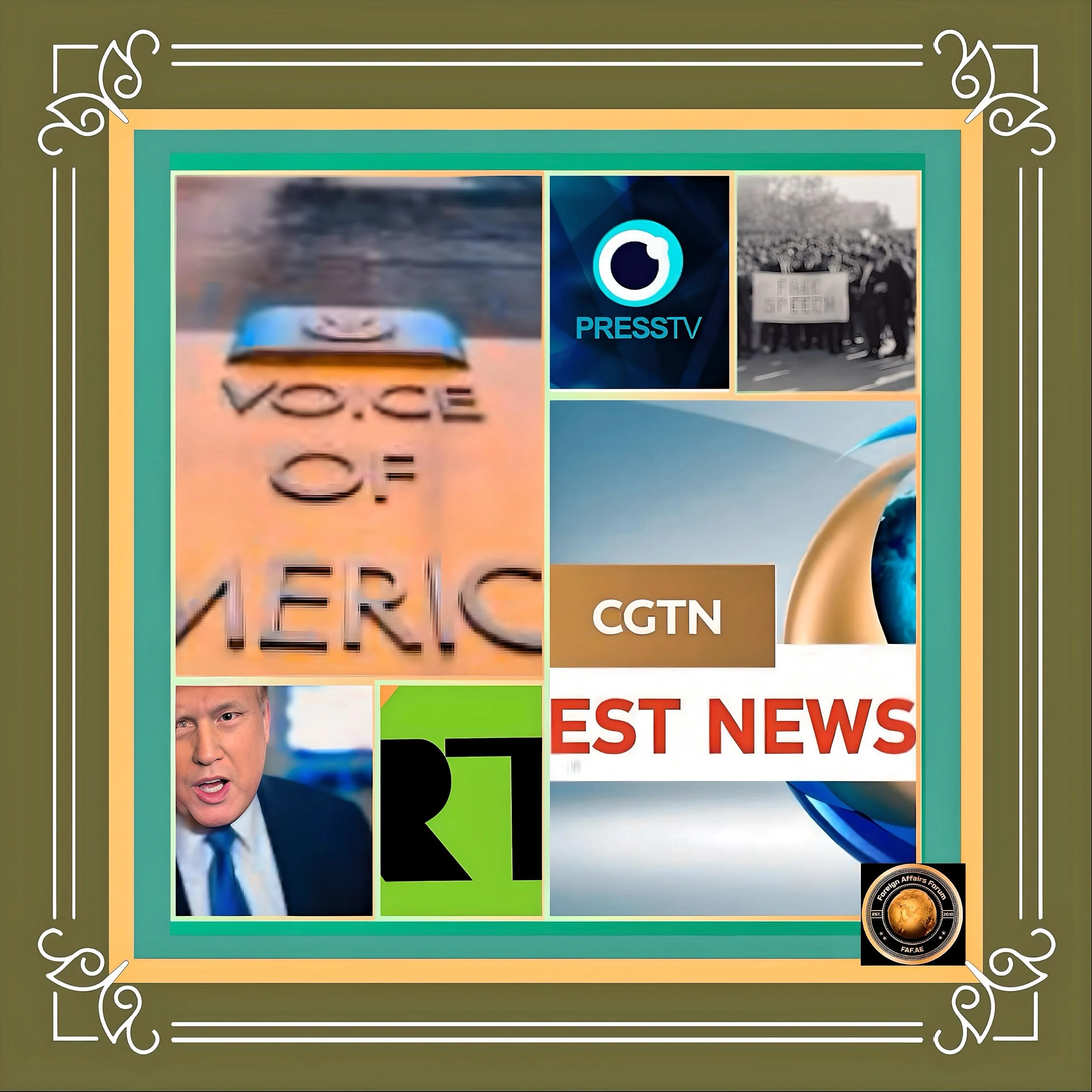
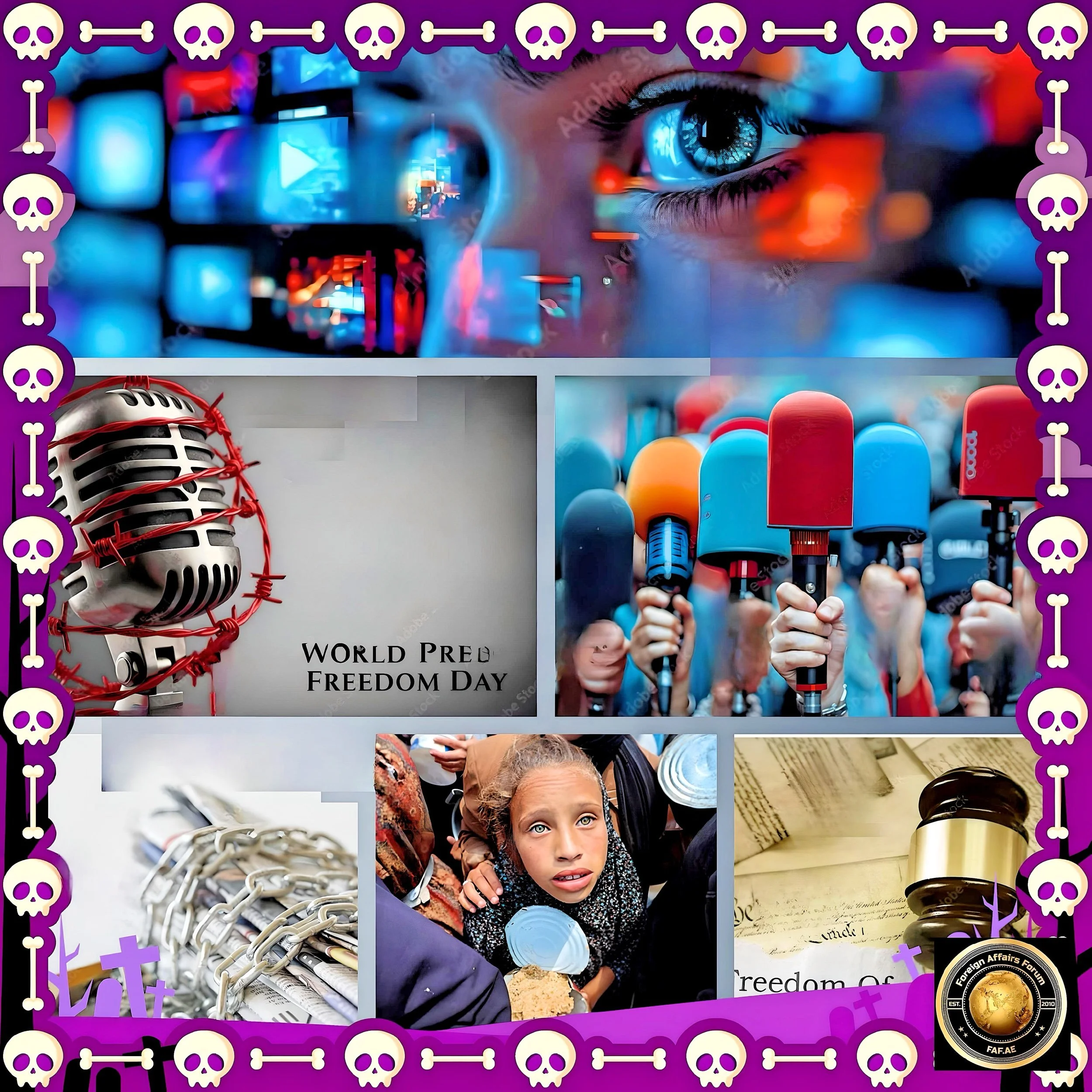
The global media landscape in 2025 presents a deeply troubling picture of press freedom under unprecedented assault, with traditional bastions of journalistic integrity facing scandals while authoritarian regimes intensify their control over information flows.
According to Reporters Without Borders (RSF), press freedom has reached an “all-time low,” with more than half of the global population living in countries with “dire” situations for media independence.
FAF analyzes this deterioration, which encompasses not only outright censorship in authoritarian states but also economic pressures, ownership concentration, and scandals that have tarnished even established media organizations like the BBC.
At the same time, sophisticated manipulation schemes such as TRP fraud reveal modern journalism's complex challenges.
The Global Press Freedom Crisis
Unprecedented Deterioration in Media Independence
Global press freedom has reached its most critical point in modern history.
RSF’s 2025 World Press Freedom Index revealed a global average score of just 55 points—the lowest ever recorded since tracking began 23 years ago.
For the first time in the organization’s history, RSF has classified the global situation for press freedom as " difficult,” marking a watershed moment in the decline of independent journalism worldwide.
This deterioration represents more than statistical variation; it reflects fundamental shifts in how governments, corporations, and other powerful actors view and treat media independence.
The scope of this crisis extends far beyond traditional authoritarian regimes, encompassing democratic nations that were once considered strongholds of press freedom.
Economic pressures have emerged as particularly insidious threats, with 160 out of 180 assessed countries facing significant challenges regarding the financial stability of media outlets.
Despite its constitutional protections for press freedom, the United States has been described in the media as the “leader of the economic depression,” with its economic indicators falling 14 places in just two years.
This economic dimension represents what RSF calls a “more insidious” threat than physical attacks, as financial instability makes media outlets vulnerable to external influence and compromises their ability to maintain editorial independence.
The Rise of Self-Censorship as a Survival Strategy
Self-censorship has emerged as one of the most pervasive and concerning trends in contemporary journalism, representing what experts describe as a “survival strategy” that allows journalists to report on some issues while avoiding complete crackdowns by authorities.
This phenomenon extends beyond traditional authoritarian contexts, increasingly affecting journalists in European democracies and other regions previously considered safe for independent reporting.
The practice of self-censorship creates what researchers term an “information void,” which authoritarian governments and their allies readily fill with propaganda and disinformation to manipulate public opinion.
The prevalence of self-censorship reflects modern governments' sophisticated methods to control information without overt censorship.
Journalists often voluntarily restrict their reporting because they fear economic retaliation, legal consequences, or physical threats.
This trend is particularly concerning because it operates largely invisibly, creating the appearance of press freedom while systematically undermining the media’s watchdog function.
European Union officials have been accused of self-censorship on topics deemed sensitive by China, demonstrating how economic and diplomatic considerations can compromise journalistic independence even in democratic societies.
The BBC’s Tarnished Reputation
Scandals and Editorial Failures
The British Broadcasting Corporation, long regarded as a global standard for public service broadcasting, has faced a series of scandals that have severely damaged its reputation and credibility.
The most significant blow came from the Diana interview scandal. Lord Dyson’s independent inquiry found that journalist Martin Bashir used “deceitful conduct” to obtain the 1995 interview with Princess Diana, followed by a “woefully ineffective” internal investigation covering the misconduct.
Culture Minister John Whittingdale described the BBC’s reputation as “badly tarnished,” noting that the failures were particularly shameful because they occurred at the nation’s public broadcaster.
The BBC’s problems extend far beyond the Diana interview scandal, encompassing a pattern of editorial failures and workplace culture issues that have raised fundamental questions about the organization’s governance and standards.
A 2025 review into the BBC’s workplace culture found that while there is not a widespread “toxic” culture, “a minority of people” engage in unacceptable behavior that is not adequately addressed by management.
BBC Chairman Samir Shah acknowledged “deep-seated issues” and warned that people who “abuse power or punch down or behave badly” have no place at the corporation.
Bias Allegations and Editorial Controversies
The BBC has faced persistent allegations of bias in its political, religious, and international coverage.
Critics have accused the organization of exhibiting “client journalism” that favors the governing Conservative Party, pointing to personnel connections between BBC leadership and Conservative politicians.
The network’s coverage of the Israel-Palestine conflict has generated particular controversy, with allegations ranging from pro-Israeli bias to antisemitism, culminating in a February 2025 scandal where the BBC allegedly mistranslated Arabic dialogue in a Gaza documentary, systematically replacing references to “Jews” with “Israeli forces.”
Recent high-profile departures have further damaged the BBC’s reputation, including celebrated pundit Gary Lineker’s resignation following controversy over a social media post that referenced antisemitic imagery.
These incidents reflect broader challenges facing the BBC in maintaining editorial standards and impartiality guidelines in an increasingly polarized media environment.
Indian Home Secretary Priti Patel described the BBC’s reputation as “highly damaged,” warning that the organization faces a “very significant and serious moment” during its upcoming mid-term charter review.
Is American and European Media Biased? Al Jazeera?
Media bias is widely recognized as a significant issue in the media landscapes of both American and European countries.
In the United States, most people perceive the media as biased: a 2018 Gallup poll found that 62% of Americans believed the media was prejudiced.
A 2023 survey found that half of Americans think national news organizations “intend to mislead, misinform or persuade the public to adopt a particular point of view.”
Studies show that both left-leaning and right-leaning media outlets exist, with right-wing media often forming isolated echo chambers.
At the same time, mainstream media is accused of both liberal and conservative biases depending on the observer’s perspective.
Media coverage is also influenced by economic incentives, audience preferences, and ownership structures, which can reinforce certain narratives or omit others.
In Europe, media bias also persists, though its nature varies by country.
For example, a V-Dem study found that media bias in favor of governing parties increased in Italy, Germany, and Sweden between 1997 and 2017, while France showed some improvement.
The UK’s media is perceived as right-wing, with 26% of survey respondents describing their press as “too right-wing” compared to 17% who said it was “too left-wing.”
Across the EU, media freedom is under pressure from government influence, concentrated ownership, and threats to journalists, all of which can contribute to biased reporting and low public trust.
Key Points
Media bias exists in the US and Europe, shaped by political, economic, and social factors.
Public trust in media is low, with many believing news organizations are deliberately misleading or biased.
Ownership concentration, government influence, and audience demand all shape media narratives.
Is Al Jazeera the Only Media “Spitting the Truth,” or Is It Biased Too?
Al Jazeera is not free from bias. Multiple independent media monitors rate Al Jazeera English as “Left-Center” or “Lean Left,” indicating a tendency to favor left-leaning perspectives in story selection and framing.
While Al Jazeera is often praised for offering coverage and viewpoints underrepresented in Western media—especially on issues like the Israel-Palestine conflict—it is also criticized for its own biases:
Editorial Bias
Al Jazeera English is generally considered more objective than its Arabic counterpart, but both have been found to exhibit biases, particularly in coverage of Middle Eastern politics.
For example, studies have shown that Al Jazeera tends to promote the Palestinian perspective in its reporting on the Israel-Gaza conflict.
At the same time, outlets like the BBC may favor the Israeli view.
State Influence
The Qatari government funds Al Jazeera. While it claims editorial independence, critics argue its coverage sometimes aligns with Qatari foreign policy interests, especially in Arabic-language reporting.
Fact-Checking
Al Jazeera has published some stories that failed fact checks or were found to be misleading.
It has also been accused of using loaded language and omitting right-wing perspectives in its coverage.
Public Perception
Among journalists and media analysts, Al Jazeera English is generally regarded as reputable and reliable, but with a distinct pan-Arab and Israel-critical point of view.
It is valued for providing coverage that is often missing in Western outlets, but compared to all other media, it is not seen as uniquely or universally “truthful.”
Key Points
Al Jazeera is not uniquely unbiased; it has a left-leaning bias and is influenced by its Qatari ownership, especially in Arabic-language reporting.
Its English-language service is more independent but still shows bias, particularly in Middle Eastern coverage.
No major news outlet, including Al Jazeera, is free from bias; all are shaped by their funding, editorial policies, and audience expectations.
What Do We Know Today?
Media bias is a global phenomenon: American and European media show significant bias shaped by ownership, government influence, economic incentives, and audience preferences.
Al Jazeera offers valuable alternative perspectives, especially on underreported issues, but it is subject to bias. It particularly favors left-leaning and pro-Palestinian views and, in some coverage, reflects Qatari interests.
No outlet is “spitting the truth” alone: All major media organizations, including Al Jazeera, should be read critically and in context, with an awareness of their particular biases and limitations.
American and European media are indeed biased, and Al Jazeera, while offering critical alternative perspectives, is also shaped by its own biases and interests.
Critical media consumption—seeking multiple sources and perspectives—is essential for getting closer to the truth.
India TRP Mafia?
The Indian Television Rating Scandal
The Television Rating Point (TRP) manipulation scandal in India 2020 revealed sophisticated schemes to artificially inflate viewership numbers for financial gain, highlighting vulnerabilities in media measurement systems worldwide.
Mumbai Police discovered that channels, including Republic TV, Fakt Marathi, and Box Cinema, allegedly paid families in slums between Rs 400-500 per month to keep specific channels switched on, thereby manipulating audience measurement data.
The scandal demonstrated how the media industry’s dependence on advertising revenue incentivizes fraudulent behavior that undermines the integrity of the entire system.
The TRP scam investigations revealed the substantial financial stakes involved in viewership manipulation.
The Enforcement Directorate alleges three channels generated Rs 46 crore in advertisements using manipulated ratings.
The case highlighted how easily measurement systems could be compromised when just five households with barometers could generate 25% of a channel’s total TRP in Mumbai.
This vulnerability in audience measurement systems raises broader questions about the reliability of media metrics globally and the potential for similar manipulation in other markets.
Enforcement Actions and Industry Impact
The TRP scandal prompted extensive enforcement actions by Indian authorities, including money laundering investigations by the Enforcement Directorate and property attachments worth Rs 32 crore.
However, the case’s ultimate resolution proved controversial. In 2024, Mumbai Police sought to withdraw prosecutions against Republic TV and its anchor Arnab Goswami, which a magistrate court accepted.
This outcome raised questions about the consistency of enforcement and the influence of influential media personalities on legal proceedings.
The scandal’s broader impact extends beyond individual prosecutions to fundamental questions about media industry practices and regulatory oversight.
The case revealed how television channels' 70% revenue dependence on advertising makes them particularly vulnerable to ratings manipulation pressures.
Broadcasting Audience Research Council (BARC) was forced to fine networks, including TV Today Network, Rs 5 lakh for viewership manipulation, demonstrating the widespread nature of the problem.
The World’s Worst Offenders
Authoritarian Regimes and Total Information Control
The most severe restrictions on press freedom remain in authoritarian regimes that exercise total control over information flows.
North Korea maintains its position as one of the world’s most censored countries, with a system that combines traditional Confucian ideals of social order with Stalinist authoritarianism to create what experts describe as the “world’s deepest information void.”
All domestic radio and television receivers in North Korea are locked to government-specified frequencies.
At the same time, content is supplied almost entirely by the official Korean Central News Agency, which provides relentless propaganda promoting “Dear Leader” Kim Jong Il while completely ignoring the country’s poverty and humanitarian crises.
The 2025 World Press Freedom Index confirms that the worst conditions for journalists exist in Eritrea (ranked 180th), North Korea (179th), China (178th), Syria (177th), and Iran (176th).
These countries share common characteristics, including total state control of media, formal censorship regulations, systematic use of violence and imprisonment against journalists, jamming of foreign broadcasts, and severe restrictions on internet access.
China’s score of 14.80 reflects its sophisticated digital censorship apparatus, which forces media companies and citizens to engage in extensive self-censorship to avoid government retaliation.
Regional Patterns of Oppression
The global distribution of press freedom violations reveals concerns about regional patterns, with Sub-Saharan Africa and East Asia experiencing particularly severe deterioration.
Eritrea’s position at the bottom of the rankings reflects its status as the only country in Sub-Saharan Africa without a single private media outlet. At least 15 journalists are held incommunicado in secret detention centers.
When the Committee to Protect Journalists sought information about imprisoned journalists, Eritrea’s Information Minister Ali Abdou dismissively stated, “It’s up to us what, why, when, and where we do things.”
The Middle East presents another region of severe concern, with countries like Syria and Iran maintaining repressive systems that systematically target independent journalism.
Libya’s media environment has been described as “the most tightly controlled in the Arab world,” representing “an anachronism even by regional standards.”
As outlined in his Green Book, Colonel Muammar Qaddafi’s approach to press control explicitly rejected the concept of independent media, declaring that “the press is a means of expression for society: it is not a means of expression for private individuals or corporate bodies.”
Living in Scary Times: The Broader Implications
Democratic Backsliding and Information Warfare
The deterioration of press freedom occurs within a broader context of democratic backsliding and increasingly sophisticated information warfare that threatens the foundations of open societies.
The concentration of media ownership, which affects 46 countries, including traditionally free nations like Australia, Canada, and France, creates conditions that encourage self-censorship and limit media diversity.
This trend toward ownership concentration represents a fundamental shift in the media landscape, where economic power increasingly translates into editorial control.
The emergence of “news deserts” in regions like the United States, combined with the economic depression affecting journalism globally, creates opportunities for disinformation and propaganda to flourish.
When local journalism collapses due to economic pressures, communities lose access to reliable information about local governance, creating accountability gaps that authoritarian forces can exploit.
The RSF report warns that “when journalists are impoverished, they no longer have the means to resist the enemies of the press—those who champion disinformation and propaganda.”
Technological Challenges and Editorial Interference
Integrating artificial intelligence and other emerging technologies into journalism presents opportunities and threats that fundamentally reshape the media landscape.
The 2025 World Press Freedom Day theme focused on “the impact of Artificial Intelligence (AI) on journalism, media, and human rights,” recognizing that technological change creates new vulnerabilities for press freedom.
These technological challenges compound existing problems of editorial interference, which the RSF report identifies as affecting over half of the countries evaluated. Media owners routinely interfere with editorial decisions in 21 countries.
The proliferation of digital platforms has created new avenues for censorship and manipulation as governments develop increasingly sophisticated methods to control online information flows.
China’s experience demonstrates how authoritarian regimes can leverage technology to create comprehensive surveillance and censorship systems that extend beyond traditional media to encompass social media, gaming, and other digital platforms.
Western companies seeking access to Chinese markets have increasingly engaged in self-censorship, which affects the quality of content available to citizens in other countries.
Conclusion
The global media landscape in 2025 presents an unprecedented crisis of press freedom that extends far beyond traditional concerns about authoritarian censorship to encompass economic manipulation, institutional failures, and technological challenges that threaten the fundamental role of journalism in democratic societies.
Per FAF, the BBC’s reputation damage, TRP manipulation scandals, recent disabled Western media, and the continued repression in countries like North Korea, China, Russia, and Eritrea represent different facets of a broader assault on independent journalism that requires urgent attention from policymakers, media organizations, and civil society.
The evidence suggests that we live through particularly challenging times for media freedom.
Half the world’s population now lives under conditions characterized as “very serious” for press freedom.
The combination of economic pressures, ownership concentration, technological disruption, and political polarization has created a perfect storm that threatens the viability of independent journalism globally.
However, the continued efforts of organizations like Reporters Without Borders to document these challenges, along with the resilience demonstrated by journalists working under increasingly difficult conditions, suggests that the fight for press freedom remains far from over.
The critical question moving forward is whether democratic societies can develop effective responses to these multifaceted threats before the damage to media independence becomes irreversible.