Trump’s Manufacturing Ultimatum: Apple’s Dilemma Between Tariffs and Production Realities
Introduction
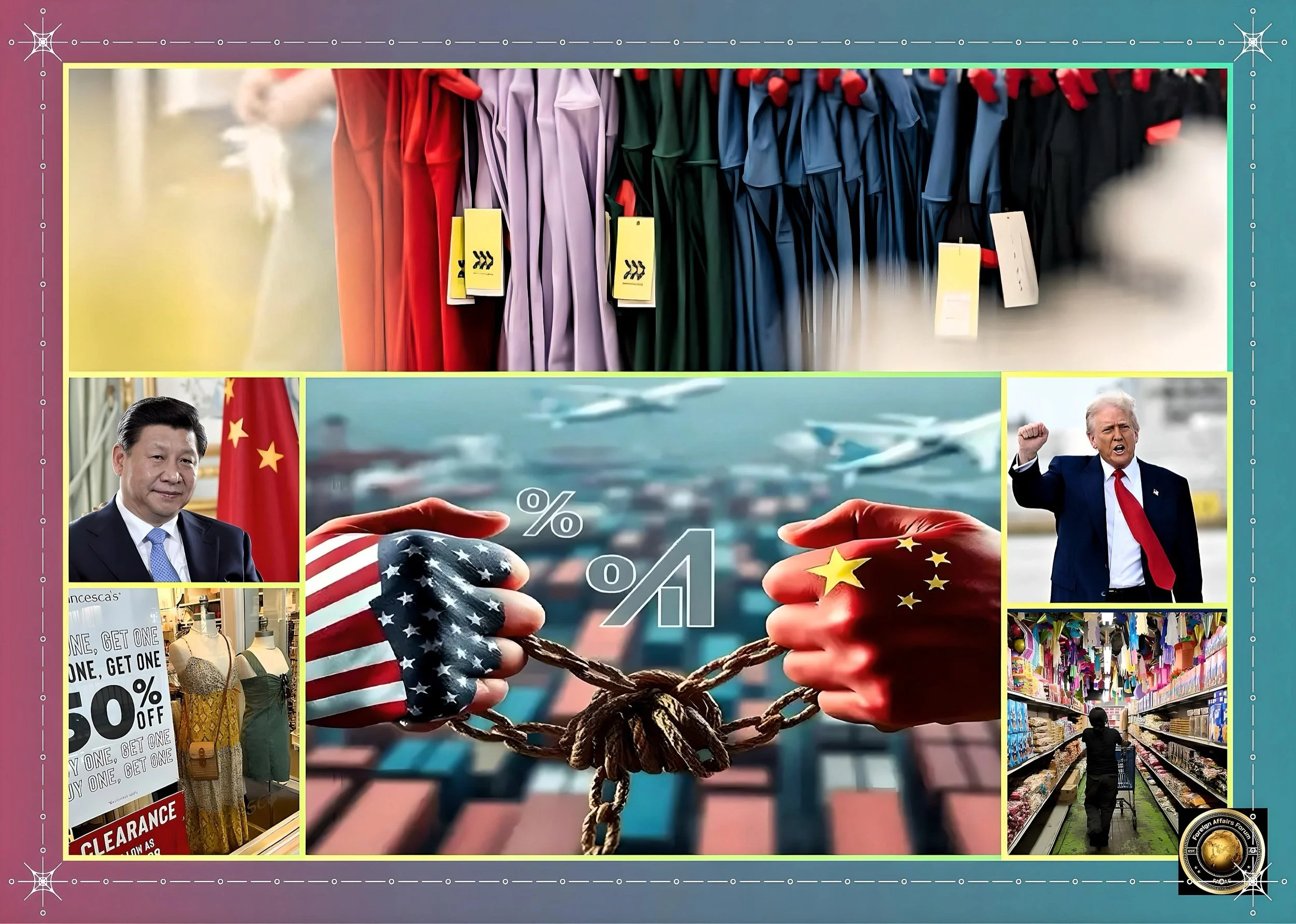
President Donald Trump has escalated his trade war rhetoric by threatening Apple and other smartphone manufacturers with a 25% tariff on devices not produced in the United States. This move significantly escalates his efforts to bring manufacturing jobs back to American soil.
This ultimatum represents a critical juncture for Apple, which currently produces zero percent of its iPhones for commercial sale in the United States. At the same time, approximately 80% of the products are manufactured in China, and 20% are manufactured in India.
FAF analyzes the implications of this policy, which extend far beyond Apple’s corporate strategy. It potentially reshapes global supply chains, affects three major economies, and fundamentally alters the smartphone market dynamics that have dominated the technology sector for over a decade.
Let's explore who ultimately gains or loses.
Current iPhone Manufacturing Landscape
Global Production Distribution
Apple’s current manufacturing footprint reveals the company’s heavy dependence on Asian production facilities, with no meaningful iPhone production currently taking place in the United States.
According to recent data, approximately 80% of the 60+ million iPhones sold annually in the US market are manufactured in China.
India has rapidly emerged as a secondary production hub, accounting for roughly 20% of global iPhone production.
This represents a dramatic shift from just a few years ago when India’s contribution was negligible.
The scale of Apple’s Chinese operations is staggering. The company sells over 60 million iPhones annually in the US alone, nearly all originating from Chinese factories operated by contract manufacturers like Foxconn.
China’s dominance stems from its sophisticated manufacturing ecosystem, which can recruit, house, and rotate hundreds of thousands of workers seasonally.
Foxconn can hire 50,000 new workers within weeks while providing comprehensive infrastructure, including dormitories, canteens, and transportation.
India’s growing role in Apple’s supply chain represents the company’s most significant diversification effort.
Apple now assembles its iPhone range in India, including the more expensive titanium Pro models. Production reached $22 billion worth of devices in the past year, a 60% increase over the previous year.
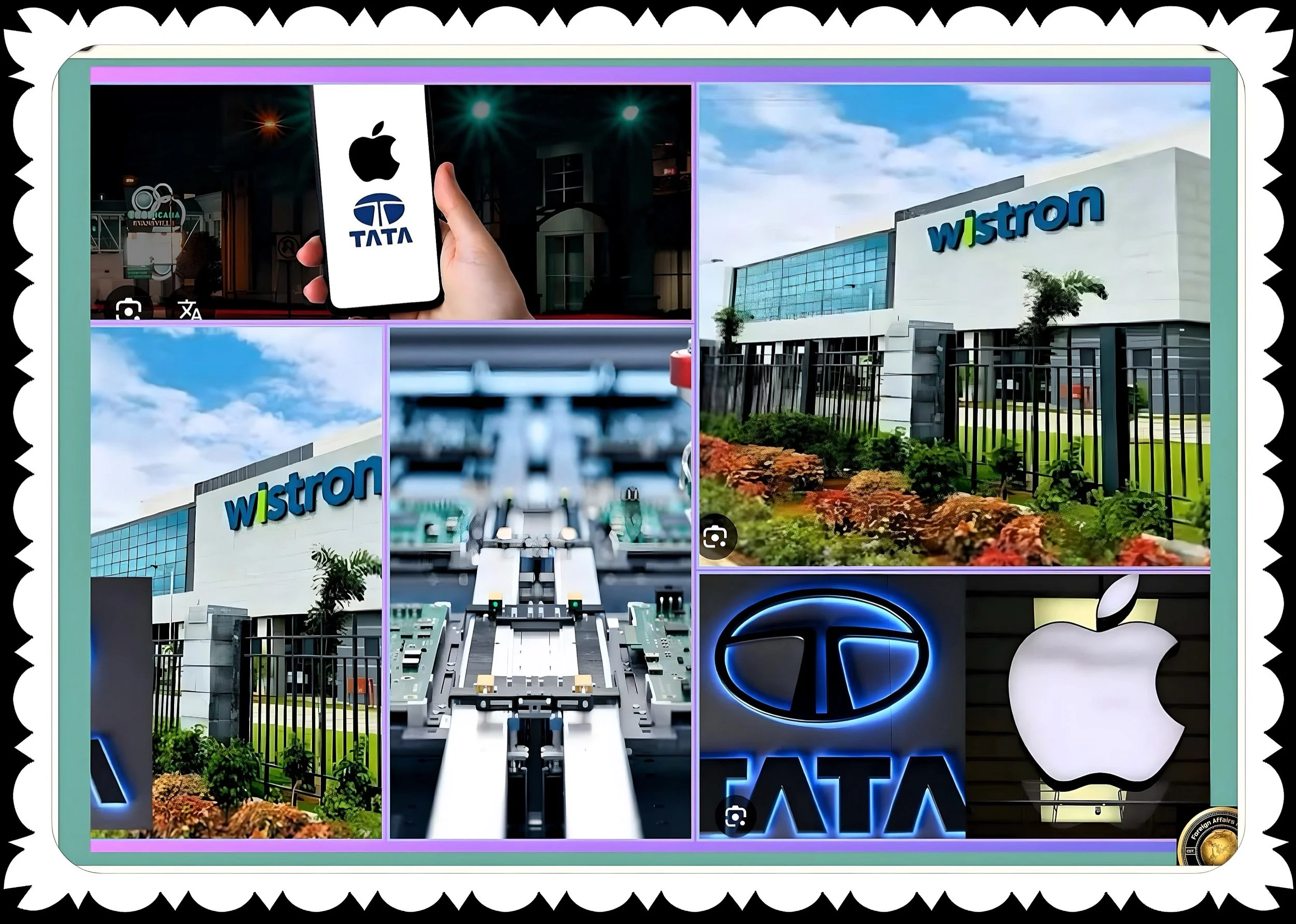
Most India-made iPhones are assembled at Foxconn Technology Group’s factory in southern India.
Another key supplier is Tata Group’s electronics manufacturing arm, which acquired Wistron Corp. and controls Pegatron Corp.’s operations.
Strategic Shift Toward India
Apple’s acceleration of Indian production has been driven by multiple factors, including the ongoing US-China trade tensions and India’s emergence as a viable alternative manufacturing hub.
The company has been working with Indian authorities to establish streamlined logistics, creating a “green corridor” at Chennai airport that reduced customs clearance time from 30 to just six hours.
This efficiency improvement has enabled Apple to charter six cargo flights carrying approximately 600 tons of iPhones—an estimated 1.5 million devices—from India to the United States since March.
The Indian government has actively supported this transition through Prime Minister Narendra Modi’s manufacturing hub initiatives, providing state subsidies and production-linked incentives (PLI) that make India increasingly attractive for electronics manufacturing.
India has removed import taxes for some mobile phone production components, creating a more competitive environment for companies like Apple to establish significant manufacturing operations.
Trump’s Tariff Threat and Policy Implications
The 25% Tariff Ultimatum
President Trump’s latest threat represents a significant escalation in his longstanding effort to bring Apple manufacturing to the United States. In a Truth Social post, Trump stated: “I have long ago informed Tim Cook of Apple that I expect their iPhones that will be sold in the United States of America will be manufactured and built in the United States, not India, or anyplace else. If that is not the case, a Tariff of at least 25% must be paid by Apple to the US”.
This ultimatum extends beyond Apple to include Samsung and other smartphone manufacturers selling devices in the American market.
The threat marks a shift in Trump’s position regarding who bears the cost of tariffs.
While he previously suggested that other countries absorb tariff costs, Trump now explicitly states that companies like Apple would be responsible for paying these import taxes, which would likely be passed on to consumers through higher retail prices.
This policy approach represents a fundamental change in the administration's view of trade enforcement mechanisms.
Trump’s frustration stems from his expectation that Apple would prioritize US manufacturing over other locations.
During recent meetings with Apple CEO Tim Cook, Trump expressed disappointment over the company’s continued expansion in India, stating: “I had an understanding with Tim that he wouldn’t be doing this.
He said he was going to India to build plants. I said, ‘It’s OK to go to India, but you won’t sell here without tariffs.’
Broader Trade War Context
The iPhone tariff threat occurs within the broader context of Trump’s comprehensive trade war strategy, which has already imposed tariffs reaching 145% on Chinese imports and significant levies on other countries, including India (26%) and Vietnam (46%).
Apple is particularly vulnerable because China accounts for approximately 80% of its production capacity, and nearly 90% of iPhones are assembled there.
The cumulative impact of these trade policies has left Apple “stranded without a life raft,” according to technology analysts, as the company lacks short-term options to quickly reduce tariff impacts while maintaining current production volumes and cost structures.
The smartphone maker has been diversifying its supply chain from China for years, but the process remains incomplete and insufficient to address the scale of Trump’s proposed tariffs.
Economic Implications for China, India, and the United States
Impact on Chinese Economy
China’s economy faces significant challenges from Trump’s escalating tariff policies, particularly given the country’s role as the dominant manufacturer of Apple products and numerous other consumer electronics.
The potential loss of Apple’s manufacturing business would represent a substantial blow to China’s electronics manufacturing sector, which has invested heavily in developing the sophisticated supply chain infrastructure that currently supports iPhone production.
China’s manufacturing ecosystem has benefited enormously from hosting assembly lines for one of the world’s most valuable companies, serving as a calling card to the West for quality manufacturing and helping spur local innovation.
The relationship between Apple and China runs deep, with the company having collaborated with Beijing to establish manufacturing operations without forming joint ventures with local companies—a requirement that many other US firms face.
The broader implications extend beyond direct manufacturing jobs to encompass the extensive supplier network that has developed around Apple’s operations.
Chinese suppliers represent approximately 40% of Apple’s overall supply chain, meaning that a significant reduction in Apple’s Chinese operations could have cascading effects throughout the country’s technology sector.
Additionally, China represents a crucial market for Apple, generating $67 billion in annual sales, making any deterioration in US-China relations potentially costly for both the company and Chinese consumers.
Opportunities and Challenges for India
India stands to benefit significantly from the manufacturing shift, but also faces new challenges as Trump targets the country with potential tariffs.
The growth of iPhone production in India has already created an estimated 200,000 direct jobs, with projections suggesting the entire ecosystem could generate more than 600,000 jobs in the future.
This job creation extends beyond assembly work to include skill development for engineers and workers, contributing to India’s broader technological advancement.
The iPhone manufacturing push has nurtured a vibrant ecosystem in India, with local suppliers, logistics players, and ancillary industries growing rapidly.
States like Tamil Nadu and Karnataka are emerging as key electronics hubs, attracting fresh foreign direct investment and positioning India as a legitimate competitor to China in high-quality manufacturing.
Apple’s presence projects India’s manufacturing and infrastructural capabilities on the global stage, potentially attracting other multinational corporations to establish operations in the country.
However, Trump’s threat to impose 26% tariffs on Indian-made products, including iPhones, creates uncertainty for India’s manufacturing ambitions.
The president has characterized India as “one of the highest tariff nations in the world,” suggesting that improved trade relations would require India to reduce its own import barriers.
This dynamic creates a complex negotiating environment where India must balance its desire to attract manufacturing investment with potential retaliatory measures from the US.
Implications for the US Economy
The potential return of iPhone manufacturing to the United States would create domestic manufacturing jobs but at significant economic costs that could outweigh the benefits.
Building iPhones in the US would require massive investments in workforce development, supply chain reengineering, and factory infrastructure that currently do not exist at the scale necessary for Apple’s production requirements.
The United States currently lacks the large-scale smartphone manufacturing facilities necessary to support iPhone production, with estimates suggesting that establishing such capabilities would take several years and cost billions of dollars.
Previous attempts by Apple to manufacture products in the US have encountered significant challenges, including difficulties sourcing basic components like screws and finding reliable workers for assembly operations.
The economic impact on American consumers would be substantial, with analysts estimating that iPhones manufactured in the US could cost between $2,000 and $3,500 compared to current prices around $1,200.
This price increase would make iPhones less accessible to many American consumers and could potentially reduce Apple’s competitiveness against rivals like Samsung, whose devices manufactured in Vietnam would remain exempt from Chinese tariffs.
Feasibility and Timeline for US Manufacturing
Technical and Logistical Challenges
The feasibility of moving iPhone production to the United States faces numerous technical and logistical obstacles that make rapid implementation extremely difficult.
Apple’s current supply chain represents decades of development and optimization, with CEO Tim Cook having engineered much of the complex supplier network during the 1990s while working under company co-founder Steve Jobs.
This sophisticated system cannot be easily replicated in the United States without substantial time and investment.
Apple’s operations team has previously concluded that producing iPhones and other devices in the US would be unfeasible, according to internal assessments conducted by the company.
A decade ago, Apple encountered significant difficulties when attempting to manufacture Mac computers in Texas, struggling to source basic components like screws and find dependable workers for assembly operations.
These experiences highlight the fundamental challenges of establishing high-volume consumer electronics manufacturing in the United States.
The scale requirements for iPhone production present particular challenges for US manufacturing.
Foxconn’s ability to hire 50,000 new workers within weeks while providing comprehensive support infrastructure including dormitories, canteens, and transportation systems would be extremely difficult to replicate in the United States.
The American labor market lacks both the scale and flexibility that have made China’s manufacturing ecosystem so effective for consumer electronics production.
Infrastructure and Investment Requirements
Establishing iPhone manufacturing in the United States would require unprecedented investments in manufacturing infrastructure, supplier development, and workforce training.
The country would need to build new factories, develop local supplier networks, and create the specialized manufacturing expertise currently concentrated in Asia.
These investments would likely take several years to implement and could cost billions of dollars without any guarantee of achieving the efficiency levels currently available in China and India.
The complexity extends beyond basic manufacturing facilities to encompass the entire supply chain ecosystem.
Apple sources components from suppliers across Asia, including South Korea, Japan, Taiwan, and other countries, with parts often being transported between multiple locations before final assembly.
Replicating this network in the United States would require convincing numerous international suppliers to establish American operations or developing entirely new domestic suppliers—both of which would require substantial time and investment.
Manufacturing experts suggest that even with significant investment, iPhone production in the US would require much greater automation than current operations in China due to the smaller available workforce and higher labor costs.
This automation would require additional capital investment and could potentially reduce the job creation benefits that Trump seeks to achieve through his manufacturing requirements.
Timeline Estimates and Industry Projections
Industry analysts estimate that moving even a small portion of Apple’s production capacity to the United States would require many years to accomplish.
Bloomberg Intelligence estimated in 2022 that it would take eight years to move just 10% of Apple’s production capacity out of China, highlighting the enormous challenge of relocating the company’s entire manufacturing operations.
Moving production to the United States would face even greater challenges than shifting to other Asian countries like India or Vietnam.
The timeline for establishing meaningful iPhone production in the United States would likely extend well beyond Trump’s current presidential term, making the immediate tariff threat more of a negotiating tactic than a realistic short-term policy implementation.
Apple has been working to diversify its supply chain away from China for several years, but this process has focused on other Asian countries rather than returning production to the United States.
Current industry projections suggest that Apple will continue expanding its Indian operations, with plans to source all US-bound iPhones from India by the end of 2026.
This timeline reflects the company’s assessment that India represents a more viable alternative to Chinese manufacturing than attempting to establish large-scale production in the United States.
The acceleration of Indian production demonstrates that Apple can move relatively quickly when suitable infrastructure and workforce capabilities exist, but these conditions do not currently exist in the United States for smartphone manufacturing.
Consumer Impact and Pricing Implications
Price Increases for US Consumers
The most immediate and significant impact of moving iPhone production to the United States would be substantial price increases for American consumers.
Industry analysts consistently estimate that iPhones manufactured in the US would cost significantly more than current models, with price projections ranging from $2,000 to $3,500 compared to current prices around $1,200.
These dramatic price increases would fundamentally alter the iPhone market and potentially price out many consumers who currently purchase Apple products.
Wayne Lam, an analyst with TechInsights, characterized the idea of US iPhone manufacturing as “absurd” and “not economically feasible” in the short term, noting that Apple would need to rely on much more automation than current Chinese operations due to the smaller US workforce.
This increased automation would require substantial additional capital investment that would be reflected in higher consumer prices.
The price impact stems from multiple factors including higher labor costs, the need for greater automation, infrastructure development expenses, and the inefficiencies associated with establishing entirely new supply chains.
Manufacturing costs in India are already 5-8% higher than in China, with some cases showing differences of up to 10%, suggesting that US manufacturing costs would be substantially higher still.
Competitive Implications
Higher iPhone prices resulting from US manufacturing requirements could significantly impact Apple’s competitiveness in the domestic smartphone market.
Samsung devices, which are manufactured in Vietnam and would remain exempt from Chinese tariffs, could become more competitively priced relative to US-made iPhones.
This competitive disadvantage could potentially reduce Apple’s market share and overall sales volume, undermining the intended benefits of the protectionist policy.
The pricing disparity could also accelerate consumer adoption of alternative smartphone platforms and brands that maintain more cost-effective manufacturing operations.
Apple’s premium pricing strategy has historically been supported by the company’s ability to deliver high-quality products at relatively competitive prices within the premium segment.
Dramatic price increases could push iPhones beyond the reach of many consumers and force them to consider alternatives.
Apple’s potential loss of competitiveness in its home market represents a scenario that Trump has historically been reluctant to accept, as it could undermine American companies’ global leadership in key technology sectors.
The administration would need to balance its manufacturing objectives with the risk of weakening Apple’s competitive position against international rivals.
Strategic Alternatives and Industry Response
Apple’s Current Diversification Strategy
Apple has been actively diversifying its manufacturing base away from China, but this strategy has focused on other Asian countries rather than returning production to the United States.
The company has significantly expanded its operations in India, Vietnam, and other countries that offer more favorable manufacturing conditions than the US while still providing cost advantages over Chinese production.
Apple CEO Tim Cook has indicated that most iPhones sold in the US during the current quarter would be manufactured in India, while other devices like iPads would come from Vietnam.
This geographic diversification represents Apple’s pragmatic approach to managing trade risks while maintaining operational efficiency and cost competitiveness.
The company’s $500 billion investment commitment to the United States, announced in February, focuses primarily on research and development, retail operations, and other high-value activities rather than large-scale manufacturing.
This investment strategy reflects Apple’s assessment that the US can best contribute to its operations through innovation and design rather than assembly and manufacturing.
Industry-Wide Implications
Trump’s tariff threats extend beyond Apple to include Samsung and other smartphone manufacturers, potentially reshaping the entire consumer electronics industry’s approach to manufacturing and pricing.
The broad application of these policies could force multiple companies to make similar decisions about production location, creating industry-wide disruption and potentially driving up prices across all smartphone brands.
The policy implications extend beyond smartphones to other consumer electronics categories, with Trump suggesting that additional investigations into semiconductors and the broader electronics supply chain could lead to further tariff implementations.
This comprehensive approach could affect numerous technology companies that rely on Asian manufacturing and supply chains.
Other technology companies are likely monitoring Apple’s response to Trump’s ultimatum as an indicator of how the administration will enforce its manufacturing requirements.
The precedent set by Apple’s decision could influence broader industry strategies and potentially accelerate or slow the trend toward supply chain diversification depending on the ultimate outcomes.
Conclusion
Trump’s 25% tariff threat against Apple represents a high-stakes confrontation between protectionist trade policy and global economic realities that have developed over decades.
While the administration’s goal of returning manufacturing jobs to the United States has political appeal, the practical implementation faces enormous challenges that make rapid success unlikely.
The current iPhone manufacturing landscape, with zero percent produced in the US, approximately 80% in China, and 20% in India, reflects economic efficiencies and supply chain optimization that cannot be easily reversed.
The economic implications extend far beyond Apple’s corporate strategy to affect three major economies in different ways.
China faces the potential loss of substantial manufacturing revenue and employment, while India emerges as both a beneficiary of increased production and a target of new tariff threats.
The United States could see some manufacturing job creation but at the cost of dramatically higher consumer prices and potential loss of competitive advantage for American technology companies.
The feasibility analysis reveals that establishing meaningful iPhone production in the United States would require many years, billions of dollars in investment, and substantial technological and logistical innovations that do not currently exist.
Consumer impact projections suggesting iPhone prices could reach $2,000-$3,500 if manufactured domestically highlight the fundamental tension between protectionist policies and consumer affordability.
Apple’s current strategy of diversifying production to India and other Asian countries represents a more realistic approach to managing trade risks while maintaining operational efficiency, suggesting that the company is likely to continue this path rather than attempting the enormously challenging transition to US manufacturing.